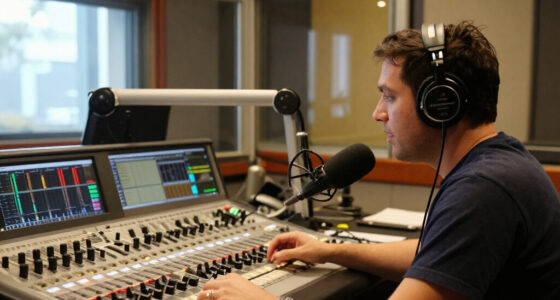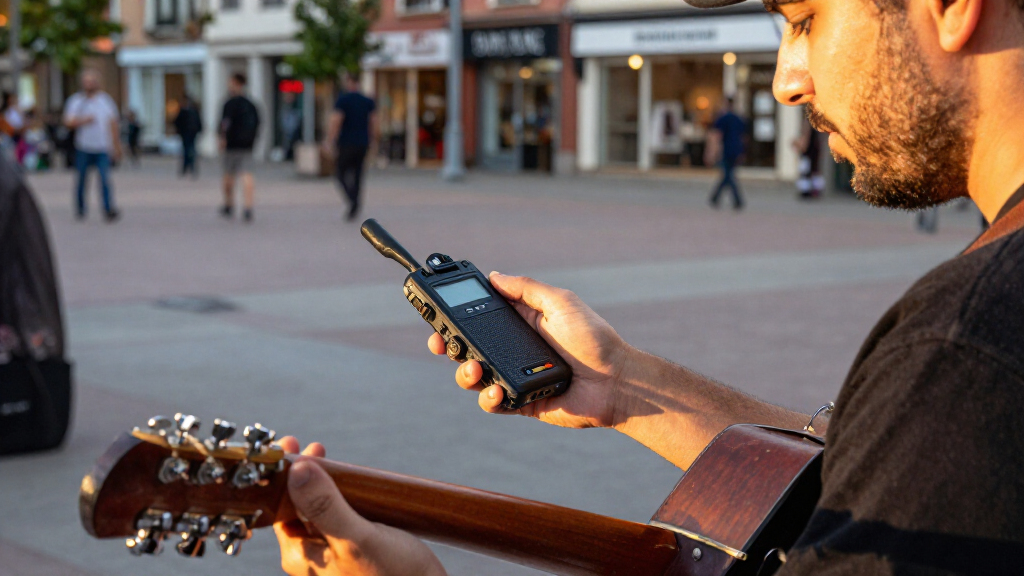
For most people comparing portable audio recorders, I’d start with the Zoom H1essential: its stereo recording and 32-bit float format suit a wide range of everyday and field recording needs. The Zoom H4essential is a stronger fit when you need more inputs, while the Zoom H1 XLR makes more sense for a compact setup built around XLR microphones. The main tradeoffs are recording control and input flexibility versus simple operation, storage capacity, and ease of transferring files. This roundup also compares voice-focused recorders for lectures and notes with handheld models built for music and location sound. Read on for the full breakdown and guidance on choosing the right recorder for your workflow.

Get everyday essentials delivered free with Prime
- Fast, free delivery on millions of items
- Prime Video, Amazon Music and more included
- Member-only deals all year
Complete the kit



Key Takeaways
- The Zoom H1essential is the most balanced starting point in this lineup: 32-bit float recording and stereo capture give it broader use than the voice-focused models, without the input complexity of larger recorders.
- The Zoom H4essential and Zoom H1 XLR solve different expansion needs. The H4essential is the more versatile handheld choice when multiple input options matter; the H1 XLR prioritizes compact recording with XLR microphone connections.
- Voice recorders and audio recorders are not interchangeable. High-capacity models from Sunlan, EVISTR, Tonfarb, Elasound, Cappsu, and EVIDA emphasize speech, playback, and storage rather than the mic and input flexibility needed for music or field sound.
- Storage capacity alone does not determine recording quality. Models advertising 64GB to 136GB may suit long voice sessions, but buyers should check file formats, transfer options, microphone needs, and how recordings will be organized.
- Bundles are most useful when their accessories match the job. The Zoom H1essential bundles can simplify a ready-to-record setup, but buyers who already own a suitable mic or accessories may prefer the recorder-only version.
| Zoom H1essential Handy Recorder Bundle with Lavalier Microphone and Accessories |  | Best Recorder Bundle for Interviews | Recording format: 32-bit float | Onboard microphones: X/Y | Maximum sound pressure level: 120 dB SPL | VIEW LATEST PRICE | See Our Full Breakdown |
| Sunlan 16GB Digital Voice Recorder with Playback |  | Best for Simple Lecture Notes | Storage capacity: 16 GB | Recording format: WAV | Recording bitrate: 1536 kbps | VIEW LATEST PRICE | See Our Full Breakdown |
| Zoom H1essential Portable Stereo Recorder |  | Best Overall for Stereo Field Recording | Microphones: Built-in X/Y stereo | Recording format and bit depth: WAV, 32-bit float | USB interface: USB Type-C | VIEW LATEST PRICE | See Our Full Breakdown |
| EVISTR L357 64GB Digital Voice Recorder with Playback |  | Best for Long Meetings and Lectures | Storage: 64 GB | Microphone: Built-in stereo | Recording formats: WAV, MP3 | VIEW LATEST PRICE | See Our Full Breakdown |
| 16GB Digital Voice Recorder with Voice Activation, USB Charging, and MP3/WAV Playback |  | Best Compact Rechargeable Voice Recorder | Storage: 16 GB | Recording formats: MP3, WAV | Microphone: Built-in stereo | VIEW LATEST PRICE | See Our Full Breakdown |
| Zoom H1essential 2-Track 32-Bit Float Portable Audio Recorder Bundle with APH-1e Accessory Pack |  | Best for Flexible Stereo Recording | Recording format: 32-bit float | Tracks: 2 | Microphones: Stereo X/Y | VIEW LATEST PRICE | See Our Full Breakdown |
| Tonfarb Digital Voice Recorder, 136GB |  | Best for Long-Running Voice Notes | Storage: 136GB total: 8GB built-in and included 128GB TF card | Recording formats: MP3 and WAV | Audio recording: 1536 kbps PCM | VIEW LATEST PRICE | See Our Full Breakdown |
| 72GB Digital Voice Recorder with USB-C |  | Best for Easy File Transfer | Storage capacity: 72GB | Continuous recording time: Up to 35 hours | Recording format: WAV | VIEW LATEST PRICE | See Our Full Breakdown |
| Elasound Voice Activated Recorder with 128GB Storage and AI Noise Reduction |  | Best for Long Interviews and Meetings | Model: NZ007 | Storage: 128GB TF card; listing also states 136GB total | Audio storage claim: Up to 9,800 hours at 32 kbps | VIEW LATEST PRICE | See Our Full Breakdown |
| Cappsu Digital Voice Recorder with Playback, 32GB Built-In Memory |  | Best Compact Everyday Recorder | Storage: 32GB built-in | Maximum recording bitrate: 1536 Kbps | Continuous recording time: Up to 20 hours | VIEW LATEST PRICE | See Our Full Breakdown |
| Tonfarb 64GB Digital Voice Recorder with Playback |  | Best for Long, Simple Sessions | Memory: 64 GB | Audio formats: MP3, WAV | Maximum recording quality: 1536 kbps PCM | VIEW LATEST PRICE | See Our Full Breakdown |
| EVISTR L359 128GB Digital Voice Recorder with AI Transcription |  | Best for Transcription Workflows | Storage: 128 GB | Audio formats: MP3, WAV | Maximum recording bitrate: 3072 Kbps | VIEW LATEST PRICE | See Our Full Breakdown |
| EVIDA 128GB Digital Voice Recorder with Voice Activation, Playback, and Password Protection |  | Best for Organized Voice Notes | Storage: 128 GB | Recording formats: MP3 at 128 or 192 kbps; WAV at 1536 kbps | Maximum continuous recording: Up to 54 hours | VIEW LATEST PRICE | See Our Full Breakdown |
| Zoom H4essential Handheld Recorder |  | Best for Multitrack Field Recording | Tracks: 4 | Recording technology: 32-bit float | Maximum sample rate: 96 kHz | VIEW LATEST PRICE | See Our Full Breakdown |
| Zoom H1 XLR 2-Channel Portable Recorder |  | Best Compact XLR Recorder | Recording format: WAV | Recording resolution: 32-bit float, up to 96 kHz | Inputs: 2 locking XLR/TRS combo inputs; 3.5 mm stereo input | VIEW LATEST PRICE | See Our Full Breakdown |
| portable audio recorder | Storage | Microphone |
|---|---|---|
| Zoom H1essential Handy Recorde | — | — |
| Sunlan 16GB Digital Voice Reco | — | Built-in mono with noise cancellation |
| Zoom H1essential Portable Ster | SD card, up to 1 TB | — |
| EVISTR L357 64GB Digital Voice | 64 GB | Built-in stereo |
| 16GB Digital Voice Recorder wi | 16 GB | Built-in stereo |
| Zoom H1essential 2-Track 32-Bi | SD card | — |
| Tonfarb Digital Voice Recorder | 136GB total: 8GB built-in and included 128GB TF card | — |
| 72GB Digital Voice Recorder wi | — | Built-in 360° omnidirectional mono |
| Elasound Voice Activated Recor | 128GB TF card; listing also states 136GB total | Built-in microphone with noise-cancellation mode |
| Cappsu Digital Voice Recorder | 32GB built-in | — |
| Tonfarb 64GB Digital Voice Rec | — | Built-in stereo |
| EVISTR L359 128GB Digital Voic | 128 GB | Built-in mono |
| EVIDA 128GB Digital Voice Reco | 128 GB | Built-in mono with noise cancellation |
| Zoom H4essential Handheld Reco | SD card; listed memory capacity 1 TB | — |
| Zoom H1 XLR 2-Channel Portable | — | — |
More Details on Our Top Picks
Zoom H1essential Handy Recorder Bundle with Lavalier Microphone and Accessories
The H1essential bundle is my pick for buyers who want a portable recorder ready for both room sound and a close-miked speaker. Its 32-bit float recording helps handle unpredictable volume without constant level adjustments, while the onboard X/Y microphones capture stereo sound up to 120 dB SPL. The included lavalier, windscreen, memory card, and batteries make this a more complete starting kit than the standard Zoom H1essential Portable Stereo Recorder, which has the same core recorder but no listed accessory bundle. It also adds overdubbing, pre-record, and auto record for flexible capture. The tradeoff is that it remains a compact two-mic recorder, not a multichannel setup, and the supplied card is 32GB even though the listed storage capacity reaches 1 TB. Its listed microphone operation mode is mono, a point to check if lavalier stereo capture matters.
Pros:- 32-bit float recording reduces the need to set levels precisely before unpredictable takes.
- Onboard X/Y microphones capture stereo sound and handle up to 120 dB SPL.
- Bundle includes a lavalier microphone, furry windscreen, 32GB card, and four AAA batteries.
- Pre-record, auto record, overdubbing, and playback-speed adjustment expand its recording uses.
Cons:- The included card is 32GB, well below the listed maximum storage capacity of 1 TB.
- The listed microphone operation mode is mono, which may not suit buyers seeking stereo lavalier capture.
- The compact format does not offer the expanded input options of larger recorders.
Best for: Interviewers, video creators, and field recordists who want a compact recorder with a lavalier and basic accessories included.
Not ideal for: Musicians needing multiple external mic inputs or buyers who require a clearly specified stereo lavalier signal.
- Recording format:32-bit float
- Onboard microphones:X/Y
- Maximum sound pressure level:120 dB SPL
- Maximum listed storage capacity:1 TB
- Included memory card:32GB microSDHC
- Headphone jack:3.5 mm
- Bundle contents:Recorder, lavalier condenser microphone, furry windscreen, 32GB microSDHC card, four AAA batteries, cloth
Our verdict“Choose this bundle for portable interviews when the included lavalier and accessories matter more than expanded inputs.”
Sunlan 16GB Digital Voice Recorder with Playback
The Sunlan is the simplest choice here for recording spoken notes, lectures, or meetings without managing a larger field recorder. One-button recording, voice activation, playback, and A-B repeat keep the basic workflow direct; that makes it less involved than the Zoom H1essential Portable Stereo Recorder, which adds stereo capture and 32-bit float for more demanding audio. Its 16GB storage and stated recording time of more than 30 hours fit recurring speech capture, and the small 35 g body is easy to carry in a pocket. The compromise is sound flexibility: its built-in mono microphone is aimed at voice rather than spatial ambience or music. Playback is listed at seven hours, so it is less suited to long listening sessions than its recording capacity might suggest.
Pros:- One-button recording and playback simplify quick voice capture.
- Voice activation can start recording when sound is detected.
- A-B repeat supports reviewing a specific section of a recording.
- At 35 g, it is easy to carry for classes and meetings.
Cons:- The mono microphone is less suited to music and spatial audio than the Zoom H1essential’s X/Y stereo microphones.
- Listed playback time is seven hours.
- The feature set is focused on voice notes rather than flexible field recording.
Best for: Students and meeting attendees who want a lightweight, pocketable recorder for straightforward speech capture and review.
Not ideal for: Field recordists, musicians, or users who need stereo recordings, extended playback, or higher-quality ambient capture.
- Storage capacity:16 GB
- Recording format:WAV
- Recording bitrate:1536 kbps
- Microphone:Built-in mono with noise cancellation
- Voice-activated recording:Yes
- Recording time:More than 30 hours
- Playback time:7 hours
- Dimensions and weight:0.5 × 1.4 × 3.3 inches; 35 g
Our verdict“Pick the Sunlan for uncomplicated, lightweight speech recording rather than stereo audio work.”
Zoom H1essential Portable Stereo Recorder
The standard H1essential earns my lead spot for buyers who want a genuinely capable portable audio recorder without needing a bundle of extras. Its X/Y stereo microphones capture ambience, interviews, and music in a more spatial way than the mono Sunlan 16GB Digital Voice Recorder. 32-bit float recording also gives more room for changing volume levels, while USB-C microphone mode lets the recorder serve calls, streaming, and voiceovers as well as field capture. Spoken menu guidance and a straightforward workflow help keep setup approachable. The tradeoffs are practical: it needs two AAA batteries, recordings go to an SD card rather than internal storage, and the listed recording time is up to 10 hours. Compared with the bundle version, this model does not include a lavalier, card, or batteries, so buyers should plan for those separately.
Pros:- X/Y stereo microphones capture spatial audio without an external mic.
- 32-bit float recording helps accommodate sudden changes in sound level.
- USB-C microphone mode supports streaming, calls, and voiceovers.
- Spoken menu guidance makes the recording workflow more accessible.
Cons:- Requires two AAA batteries and an SD card, both of which add setup needs.
- Listed recording time is up to 10 hours.
- Unlike the H1essential bundle, this version does not list a lavalier or other included accessories.
Best for: Independent video makers, musicians, and field recordists who need portable stereo capture with flexible level handling and USB-C use.
Not ideal for: Buyers who want a ready-to-go accessory kit, internal storage, or a recorder designed around several external microphones.
- Microphones:Built-in X/Y stereo
- Recording format and bit depth:WAV, 32-bit float
- USB interface:USB Type-C
- Storage:SD card, up to 1 TB
- Battery:Two AAA batteries
- Recording time:Up to 10 hours
- Dimensions:5.38 × 2.12 × 1.14 inches
- Weight:92 g
Our verdict“Choose the standard H1essential for versatile stereo field recording if you are comfortable supplying batteries and an SD card.”
EVISTR L357 64GB Digital Voice Recorder with Playback
The EVISTR L357 is a practical fit for people who record long sessions and want more storage than the 16GB Sunlan or 16GB digital voice recorder in this roundup. Its 64GB capacity, stereo built-in microphone, and WAV/MP3 support give it a broader speech-recording toolkit, while voice activation with adjustable sensitivity can cut down on silent stretches. USB-C handles both charging and file transfer, a useful everyday advantage over recorders that depend on older connectors. It is still a voice recorder first: unlike the Zoom H1essential Portable Stereo Recorder, it does not list 32-bit float or USB-C microphone mode for streaming and voiceover use. The one-inch screen is small for navigating files, and its listed continuous recording time is up to 32 hours, so it is not a substitute for unattended multi-day capture.
Pros:- 64GB storage provides more room than the 16GB voice recorders listed here.
- Built-in stereo microphone and WAV/MP3 recording cover common speech-recording needs.
- Adjustable voice activation can reduce quiet intervals and unnecessary file content.
- USB-C supports charging and file transfer.
Cons:- The one-inch screen can make file navigation less convenient.
- Up to 32 hours of continuous recording may not cover very long unattended sessions.
- It lacks the 32-bit float and USB microphone features of the Zoom H1essential.
Best for: Students, researchers, and meeting attendees who need roomy local storage and voice-activated recording for long speech sessions.
Not ideal for: Creators who need USB microphone operation, 32-bit float capture, or a larger display for managing recordings.
- Storage:64 GB
- Microphone:Built-in stereo
- Recording formats:WAV, MP3
- Maximum recording bitrate:Up to 1536 kbps
- Battery capacity:500 mAh
- Battery life:Up to 32 hours recording; up to 35 hours playback
- Charging and transfer:USB Type-C
- Dimensions and weight:3.86 × 1.2 × 0.47 inches; 2.24 ounces
Our verdict“Choose the L357 for speech-heavy recording where 64GB storage and USB-C convenience matter more than creator-focused features.”
16GB Digital Voice Recorder with Voice Activation, USB Charging, and MP3/WAV Playback
This 16GB recorder is a strong match for buyers who want a small, rechargeable device for spoken notes and interviews, with more playback controls than the basic Sunlan 16GB Digital Voice Recorder. Its built-in stereo microphone and MP3/WAV recording offer flexibility for voice capture, while voice activation can limit quiet sections. A-B repeat and variable playback speed are handy for reviewing interviews or lecture passages, and password protection adds a layer of control over saved files. At 1.6 ounces, it is easy to carry; the tradeoff is endurance, with up to 20 hours of recording and eight hours of playback with earphones. It also transfers files through Micro USB, unlike the USB-C EVISTR L357, and its 199-file limit may constrain buyers who keep many short recordings.
Pros:- Stereo microphone supports a wider recording image than the Sunlan’s mono microphone.
- Voice activation, A-B repeat, and variable playback speed help with capture and review.
- Rechargeable battery and compact 1.6-ounce body suit everyday carry.
- Password protection and timestamped filenames add useful file-management features.
Cons:- Recording files are limited to 199, which may restrict users who make frequent short clips.
- Micro USB transfer is less convenient than the USB-C connection on the EVISTR L357.
- Playback is listed at eight hours with earphones, and recording time at up to 20 hours.
Best for: People who want a pocket-size rechargeable recorder for personal notes, interviews, and repeated review of specific passages.
Not ideal for: Users who record many short files, want USB-C transfer, or need longer playback and a high-capacity recording workflow.
- Storage:16 GB
- Recording formats:MP3, WAV
- Microphone:Built-in stereo
- Battery:Rechargeable 3.6 V, 300 mAh lithium-ion
- Battery life:Up to 20 hours recording; 8 hours playback with earphones
- Maximum digital recording time:Up to 1,120 hours at 32 kbps
- Connectivity:Micro USB; USB, USB 2.0, USB 3.0
- Dimensions and weight:0.46 × 1.37 × 3.26 inches; 1.6 ounces
Our verdict“Pick this model for compact, rechargeable speech recording and review, but not for large or frequently updated audio libraries.”
Zoom H1essential 2-Track 32-Bit Float Portable Audio Recorder Bundle with APH-1e Accessory Pack
I’d choose the Zoom H1essential when portable recording needs to cover more than spoken notes. Its 32-bit float recording reduces the need to set input gain before recording, while the stereo X/Y microphones handle sound levels up to 120 dB SPL. That makes it a stronger fit for music, field ambience, and unpredictable events than voice-focused models such as the Tonfarb Digital Voice Recorder. It also doubles as a USB microphone for computers and mobile devices, so it can move between location recording and desk use. The tradeoff is that this is a two-track stereo recorder rather than a storage-heavy voice recorder, and the required SD card is not listed among the bundle contents. Its windscreen and case add practical field protection, but the setup is less pocket-note oriented than simpler voice recorders.
Pros:- 32-bit float recording reduces the need to set recording gain in advance
- Stereo X/Y microphones capture audio up to 120 dB SPL
- Can work as a USB microphone with PC, Mac, iOS, and Android devices
- Bundle includes a padded case, hairy windscreen, AC adapter, and USB-C cable
Cons:- SD card is required but is not listed among the included accessories
- Two-track recording is less suited to multichannel projects than larger recorders
- Costs more in complexity and capability than a basic voice-focused recorder
Best for: Musicians, field recordists, and mobile creators who want stereo capture, flexible levels, and USB-microphone use in one compact recorder
Not ideal for: Lecture note-takers who mainly need long-duration voice storage and do not need stereo microphones or 32-bit float recording
- Recording format:32-bit float
- Tracks:2
- Microphones:Stereo X/Y
- Maximum sound pressure level:120 dB SPL
- Maximum sample rate:96 kHz
- Storage:SD card
- Connectivity:USB-C; USB microphone compatible with PC, Mac, iOS, and Android
- Accessibility:Audio guidance function
- Included accessories:Hairy windscreen, padded shell case, AC adapter, and USB-C cable
Our verdict“Choose the Zoom H1essential if stereo field recording and flexible input levels matter more than built-in storage for everyday voice notes.”
Tonfarb Digital Voice Recorder, 136GB
For lectures, meetings, and interviews where capacity matters more than stereo production, the Tonfarb Digital Voice Recorder offers a practical mix of storage and hands-off features. It includes 8GB of built-in memory plus a 128GB TF card, along with voice activation and one-touch recording that can start from a powered-off state. Compared with the Cappsu Digital Voice Recorder, it is better suited to keeping a large archive on hand; the Cappsu instead keeps things simpler with built-in memory only. Tonfarb also adds A-B repeat and password protection for reviewing or managing recordings. The advertised 68-hour battery life and extended recording capacity depend on settings, and the listing gives conflicting weight figures. Its built-in microphones and noise reduction suit spoken material, not stereo music or detailed ambient capture.
Pros:- Includes 8GB built-in storage and a 128GB TF card
- Voice activation and dual noise reduction support hands-free spoken-word recording
- One-touch recording can start while the device is powered off
- A-B repeat, password protection, and USB-C transfer add useful review and file-management options
Cons:- The listed weight differs between the product description and specifications
- The claimed maximum recording time depends on MP3 settings and may not apply to WAV
- Built-in voice-recording design is less suitable for stereo music or environmental recording
Best for: Students, interviewers, and meeting attendees who want substantial onboard-plus-card storage and voice-activated recording
Not ideal for: Musicians and field recordists who need stereo capture, external recording controls, or consistent published weight information
- Storage:136GB total: 8GB built-in and included 128GB TF card
- Recording formats:MP3 and WAV
- Audio recording:1536 kbps PCM
- Battery life:Up to 68 hours
- Battery:1100 mAh rechargeable lithium battery
- Screen:1.44-inch LCD
- Connectivity:USB-C; USB 2.0 interface
- Audio features:Built-in dual noise-reduction microphones, voice activation, A-B repeat, and password protection
- Dimensions and weight:0.47 × 1.45 × 4 inches; weight listed as 100 g in specifications and 97 g in description
Our verdict“Pick the Tonfarb if you need a large, ready-to-use voice-recording archive and can accept capacity claims that vary with format and settings.”
72GB Digital Voice Recorder with USB-C
The main appeal here is convenience: the built-in USB-C connector lets this recorder plug directly into compatible devices for file transfer, without relying on a separate data cable. Its voice activation, timestamped files, and adjustable recording segments also help keep long spoken-word sessions organized. Compared with the Tonfarb Digital Voice Recorder, this model emphasizes direct USB-C access and automatic file organization rather than a stated mix of built-in and removable storage. It offers 72GB of capacity and up to 35 hours of continuous recording, but the much larger low-bitrate recording-time claim is not a guide to full-quality WAV use. The microphone is mono and omnidirectional, so it captures a single-channel voice recording rather than the stereo image available from the Zoom H1essential. I’d treat it as a simple voice recorder, not a general-purpose field recorder.
Pros:- Built-in USB-C connector supports direct file transfer to compatible devices
- Voice activation can pause during quiet periods and resume when sound returns
- Timestamped filenames and adjustable 10-to-240-minute segments help organize recordings
- Low-battery auto-save is designed to protect recordings before shutdown
Cons:- The 7,600-hour capacity claim applies to low-bitrate recording, not typical WAV use
- Built-in microphone records mono rather than stereo
- Continuous recording is listed at up to 35 hours, so long sessions still depend on battery planning
Best for: Students and office users who want a voice recorder with direct USB-C transfer, timestamped files, and adjustable recording segments
Not ideal for: Musicians, stereo field recordists, or buyers who need long recording sessions at higher-quality settings without checking battery and format limits
- Storage capacity:72GB
- Continuous recording time:Up to 35 hours
- Recording format:WAV
- Microphone:Built-in 360° omnidirectional mono
- Noise reduction:DSP
- Connectivity:Built-in USB Type-C; compatible with laptops, PCs, and smartphones
- Headphone jack:3.5 mm
- Segment saving:Adjustable from 10 to 240 minutes
- Included accessories:USB-C to USB-A cable, 3.5 mm headphones, USB-C to 3.5 mm headphone cable, five replacement refills, screwdriver, and manual
Our verdict“Choose this model for uncomplicated spoken-word recording and convenient USB-C transfers, but look elsewhere for stereo capture or music recording.”
Elasound Voice Activated Recorder with 128GB Storage and AI Noise Reduction
The Elasound NZ007 is aimed at spoken-word sessions where long runtime and automatic starts matter more than hands-on audio control. Its voice activation and one-touch recording make it straightforward to capture meetings or lectures, while the listing claims up to 100 hours of continuous recording. The included clip-on microphone gives it a more flexible setup than the built-in-microphone-only 72GB Digital Voice Recorder, especially when the recorder can’t sit close to the speaker. The bundle also includes headphones and OTG adapters for basic monitoring and connection options. There are caveats: the storage is described as both 128GB and 136GB, and the 9,800-hour figure depends on a 32 kbps setting. MP3 recording and the lack of a stated stereo microphone arrangement keep this firmly in the voice-recorder category, rather than alongside the Zoom H1essential for field audio.
Pros:- Voice activation can start recording when sound is detected
- One-touch operation and step-by-step instructions support straightforward use
- USB-C connection supports file transfer to compatible devices
- Bundle includes a clip-on microphone, headphones, and OTG adapters
Cons:- Storage is described as both 128GB and 136GB
- The 9,800-hour capacity figure depends on recording at 32 kbps
- MP3-focused voice recording is less suited to detailed stereo or music capture
Best for: People recording long meetings, lectures, or interviews who want voice activation, extended claimed runtime, and a clip-on microphone
Not ideal for: Creators who need stereo WAV recording, precise manual control, or clearly specified storage capacity and recording duration at higher quality
- Model:NZ007
- Storage:128GB TF card; listing also states 136GB total
- Audio storage claim:Up to 9,800 hours at 32 kbps
- Continuous recording time:Up to 100 hours
- Audio format:MP3
- Connection:USB Type-C
- Microphone:Built-in microphone with noise-cancellation mode
- Headphone jack:3.5 mm
- Included accessories:Clip-on microphone, headphones, OTG adapters, and USB-C cable
Our verdict“The Elasound suits long spoken-word sessions that benefit from voice activation and a clip-on mic, but its capacity claims and MP3 focus limit its appeal for higher-fidelity work.”
Cappsu Digital Voice Recorder with Playback, 32GB Built-In Memory
The Cappsu V02 makes a straightforward case for everyday voice capture: it has 32GB of built-in storage, a one-button recording control, and no memory card to buy or manage. At 1.6 ounces, it is an easy choice for someone who wants a recorder to carry between classes, interviews, or meetings. Voice activation can pause during silence, with the listing giving up to 50 hours in that mode compared with up to 20 hours of continuous recording. Against the Tonfarb Digital Voice Recorder, Cappsu is simpler and lighter to carry, while Tonfarb offers more total listed storage and features such as password protection. This model also includes an external microphone, but the recording source still needs to be placed near the speaker for balanced results. It is a practical spoken-word option, not a stereo recorder like the Zoom H1essential.
Pros:- 32GB of built-in memory means no separate card is needed
- Voice activation can conserve battery and storage during silent moments
- One-button recording keeps operation simple
- Lightweight 1.6-ounce design and included external microphone support portable use
Cons:- Continuous recording is listed at up to 20 hours per charge
- For more balanced recordings, the recorder should be placed close to the sound source
- Voice-focused setup does not provide the stereo capture of the Zoom H1essential
Best for: Students, reporters, and interviewers who want a lightweight recorder with built-in storage and simple one-button operation
Not ideal for: People recording distant speakers, music, or long sessions that require more than 20 hours of continuous recording per charge
- Storage:32GB built-in
- Maximum recording bitrate:1536 Kbps
- Continuous recording time:Up to 20 hours
- Voice-activated recording time:Up to 50 hours
- Interface:USB Type-C
- Headphone jack:3.5 mm
- Dimensions:4.16 × 1.46 × 0.47 inches
- Weight:1.6 ounces
- Included accessories:USB-C cable, 3.5 mm earphones, external microphone, and user manual
Our verdict“Choose the Cappsu for light, simple voice recording with built-in storage, but skip it if you need stereo sound or extended continuous runtime.”
Tonfarb 64GB Digital Voice Recorder with Playback
The Tonfarb 64GB suits buyers who want a straightforward recorder for lectures, meetings, or personal notes without the setup demands of the Zoom H4essential. Its one-click recording, including the ability to start and save while powered off, keeps operation simple, while voice activation can reduce recordings of long silences. MP3 and WAV support gives you a choice between smaller files and higher-quality PCM recording, and the 3.5 mm jack lets you monitor playback with headphones. The tradeoff is that its headline 48-hour battery figure applies to 32 kbps MP3 recording, not every setting; higher-quality recording can change runtime and capacity. Its built-in stereo microphone also offers less input flexibility than the Zoom H4essential’s XLR/TRS connections.
Pros:- One-click recording and saving can start even when the recorder is powered off.
- Voice activation can reduce silent sections and conserve storage.
- Records and plays MP3 and WAV files, with USB file transfer.
- Includes a 3.5 mm headphone jack, password protection, and playback tools.
Cons:- The up-to-48-hour runtime is specified only for 32 kbps MP3 recording.
- Recording time and file capacity vary with quality and format settings.
Best for: Students, meeting attendees, and interview note-takers who want one-touch operation, built-in storage, and long low-bitrate recording sessions.
Not ideal for: Musicians and location recordists who need external microphone inputs, multitrack recording, or clearly specified long runtime at high-quality settings.
- Memory:64 GB
- Audio formats:MP3, WAV
- Maximum recording quality:1536 kbps PCM
- Continuous recording:Up to 48 hours at 32 kbps MP3
- Microphone:Built-in stereo
- Display:1.44-inch screen
- Connections:3.5 mm headphone jack; USB 2.0
- Battery:600 mAh; listed battery type is 1 AAA battery
Our verdict“Choose the Tonfarb for uncomplicated voice capture and long low-bitrate sessions, but pick the Zoom H4essential if you need external inputs or multitrack flexibility.”
EVISTR L359 128GB Digital Voice Recorder with AI Transcription
The EVISTR L359 is the most workflow-oriented voice recorder here: its defining extra is access to AI transcription in 113 languages through the AI DVR Link app, alongside summaries, speaker identification, and other app tools. That can make it a better fit than the EVIDA VR01 for people who need searchable text as well as audio. Its 128GB storage, voice activation, password encryption, and wired USB-C OTG transfer support a portable routine, including moving files directly to a phone without Bluetooth. The main compromise is that transcription depends on the app rather than happening as a standalone recorder function. Its built-in microphone records in mono, so the Zoom H4essential is a stronger choice for stereo ambience, musical sources, or external-mic setups.
Pros:- AI app offers transcription in 113 languages and additional tools such as summaries and speaker identification.
- 128GB storage and voice activation support extended voice-recording use.
- Wired USB-C OTG can transfer recordings directly to a compatible phone.
- Password encryption and a HOLD switch help protect files and prevent accidental operation.
Cons:- Transcription and related AI features require the AI DVR Link app.
- The built-in microphone records in mono.
- Uses an included nonstandard battery rather than a readily specified common battery type.
Best for: Journalists, researchers, and students who record spoken material and want an app-assisted path from audio files to searchable transcripts.
Not ideal for: Stereo field recordists or buyers who want transcription without an app, or who need XLR microphone inputs.
- Storage:128 GB
- Audio formats:MP3, WAV
- Maximum recording bitrate:3072 Kbps
- Recording time:Up to 33 hours
- Microphone:Built-in mono
- Transcription languages:113 through the AI DVR Link app
- Connectivity:USB Type-C wired OTG
- Weight and dimensions:2.24 oz (65 g); 0.39 × 1.25 × 4 in
Our verdict“Pick the L359 if app-based transcription is central to your recording workflow; choose the Zoom H4essential instead for stereo capture and external microphones.”
EVIDA 128GB Digital Voice Recorder with Voice Activation, Playback, and Password Protection
The EVIDA VR01 prioritizes organizing and reviewing spoken recordings rather than connecting a full production setup. Its six voice-activation sensitivity levels give buyers more control over when recording starts than the simpler voice-activation feature listed for the Tonfarb 64GB. Four folders, bookmarks, and A-B repeat also help when sorting long interviews or revisiting a specific passage, while 128GB storage leaves room for a sizable archive. It records MP3 or WAV and can double as a USB drive and MP3 player. Those conveniences come with practical limits: the built-in microphone is mono, there is no headphone jack for direct monitoring, and the listed battery requirement is a C battery. The EVISTR L359 is a better fit if direct phone transfer and app-based transcription matter more.
Pros:- 128GB storage supports a large collection of recordings.
- Six voice-activation sensitivity levels allow more control over silence and faint sounds.
- Four-folder organization, bookmarks, and A-B repeat aid playback and file management.
- Records MP3 and WAV and can also serve as a USB flash drive and MP3 player.
Cons:- No headphone jack for direct monitoring or private playback.
- The built-in microphone records in mono.
- The listed battery requirement is one C battery.
Best for: Students and interview note-takers who want substantial built-in storage, adjustable voice activation, and tools for sorting and replaying recordings.
Not ideal for: Buyers who need headphone monitoring, stereo recording, or a recorder with clearly stated external microphone inputs.
- Storage:128 GB
- Recording formats:MP3 at 128 or 192 kbps; WAV at 1536 kbps
- Maximum continuous recording:Up to 54 hours
- Microphone:Built-in mono with noise cancellation
- Voice activation:6 sensitivity levels
- Display:1.5 inches
- Interface:USB 2.0
- Weight and dimensions:3.35 oz; 2.59 × 0.41 × 0.77 in
- Battery:1 C battery required
Our verdict“Choose the EVIDA VR01 for organized, high-capacity voice notes, but favor the EVISTR L359 for phone transfers and transcription or the Zoom H4essential for stereo recording.”
Zoom H4essential Handheld Recorder
The Zoom H4essential is the most capable production recorder in this group, built for capturing several sources rather than simply logging voice notes. Its four-track recording, built-in stereo microphones, and two XLR/TRS inputs let you record an ambient pair alongside external microphones or instruments. 32-bit float recording up to 96 kHz gives more room to handle changing levels than the Tonfarb 64GB or EVIDA VR01, which are aimed at simpler voice capture. USB-C also supports recording or streaming to a phone, tablet, or computer while saving a backup to an SD card. That flexibility brings a more involved workflow, SD-card dependence, and a listed runtime of 10 hours on two AA batteries. For a dedicated two-input setup, the Zoom H1 XLR is a simpler alternative.
Pros:- Four-track recording combines built-in stereo microphones with two XLR/TRS inputs.
- 32-bit float recording up to 96 kHz accommodates sources with changing volume levels.
- USB-C supports recording or streaming while backing up to an SD card.
- Spoken menu guidance and a color LCD support an accessible, guided workflow.
Cons:- Requires two AA batteries, with listed digital recording time of 10 hours.
- Uses SD-card storage rather than built-in memory.
- More recording flexibility brings a more involved setup than a simple voice recorder.
Best for: Musicians, podcasters, video creators, and field recordists who need stereo onboard mics, external inputs, and multiple tracks in one portable device.
Not ideal for: People who only need simple lecture or meeting notes and prefer built-in storage, minimal setup, or longer stated battery runtime.
- Tracks:4
- Recording technology:32-bit float
- Maximum sample rate:96 kHz
- Microphones:Built-in stereo
- Inputs:2 XLR/TRS
- Storage:SD card; listed memory capacity 1 TB
- Connectivity and display:USB-C; 2-inch color LCD
- Power and recording time:2 AA batteries; listed digital recording time 10 hours
- Weight and dimensions:243 g; 66.9 × 156.1 × 38 mm
Our verdict“Choose the H4essential for multitrack work with onboard stereo mics and external inputs; the H1 XLR is a more focused pick when two external inputs are enough.”
Zoom H1 XLR 2-Channel Portable Recorder
The Zoom H1 XLR is a compact choice for creators who already use external microphones or instruments and want a recorder centered on two balanced inputs. Its two locking XLR/TRS combo inputs help keep cables connected, while 32-bit float recording up to 96 kHz gives more flexibility when levels vary. An OLED waveform display makes it easier to check incoming audio than on the Tonfarb 64GB, which is designed around simple built-in-mic voice capture. Compared with the four-track Zoom H4essential, the H1 XLR is more focused: it has two combo inputs and a 3.5 mm stereo input, but its listed inputs do not include built-in microphones. It also relies on SDXC storage and two AA batteries, with up to 10 hours of battery life.
Pros:- Two locking XLR/TRS combo inputs support microphones and instruments.
- 32-bit float recording up to 96 kHz provides flexibility with changing input levels.
- OLED waveform display gives a visual check of recorded audio.
- Supports SDXC cards up to 1 TB and includes a 3.5 mm stereo input and headphone output.
Cons:- No built-in microphones are listed, so recording requires an external source.
- Requires two AA batteries, with battery life listed at up to 10 hours.
- SD-card capacity may exceed the listed 18.5 hours of digital recording time.
Best for: Mobile podcasters, videographers, and musicians who need a small two-input recorder for external microphones or line-level sources.
Not ideal for: Buyers who want onboard microphones, four-track recording, or an all-in-one recorder for capturing ambient stereo sound without extra gear.
- Recording format:WAV
- Recording resolution:32-bit float, up to 96 kHz
- Inputs:2 locking XLR/TRS combo inputs; 3.5 mm stereo input
- Output:3.5 mm headphone output
- Display:0.96-inch OLED
- Storage support:SDXC cards up to 1 TB
- Battery and battery life:2 AA batteries; up to 10 hours
- Digital recording time:18.5 hours
- Weight and dimensions:6.4 oz; 4.21 × 2.44 × 1.55 in
Our verdict“Pick the H1 XLR for a compact two-input recorder built around external gear, but choose the H4essential if you need onboard stereo microphones or four tracks.”
How We Picked
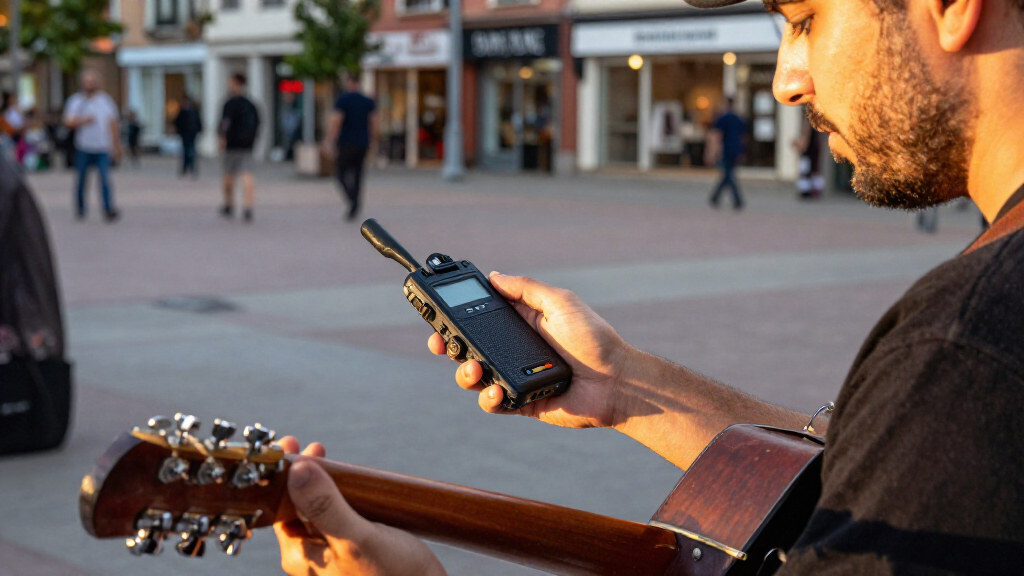
I compared these 15 portable recording options by the jobs they can realistically serve: speech capture, music and field recording, external-microphone use, and quick everyday recording. The main criteria were recording format and control, onboard and external microphone options, input flexibility, portability, storage and file transfer, and how much setup a buyer must manage. I also weighed whether included accessories add practical value or simply duplicate gear a buyer may already own.
The ranking favors recorders with broader recording capability and clearer workflow advantages for general portable audio work, which puts the Zoom H1essential family and the H4essential ahead of voice-first devices. Voice recorders remain useful picks for lectures, meetings, and notes, but their storage or transcription features do not automatically make them better choices for music and location sound. Closely related models and bundles are separated by their inputs, accessories, and intended use; buyers should verify the exact listed specifications and included items before ordering.
| portable audio recorder | Microphone |
|---|---|
| Zoom H1essential Handy Recorde | — |
| Sunlan 16GB Digital Voice Reco | Built-in mono with noise cancellation |
| Zoom H1essential Portable Ster | — |
| EVISTR L357 64GB Digital Voice | Built-in stereo |
| 16GB Digital Voice Recorder wi | Built-in stereo |
| Zoom H1essential 2-Track 32-Bi | — |
| Tonfarb Digital Voice Recorder | — |
| 72GB Digital Voice Recorder wi | Built-in 360° omnidirectional mono |
| Elasound Voice Activated Recor | Built-in microphone with noise-cancellation mode |
| Cappsu Digital Voice Recorder | — |
| Tonfarb 64GB Digital Voice Rec | Built-in stereo |
| EVISTR L359 128GB Digital Voic | Built-in mono |
| EVIDA 128GB Digital Voice Reco | Built-in mono with noise cancellation |
| Zoom H4essential Handheld Reco | — |
| Zoom H1 XLR 2-Channel Portable | — |
Factors to Consider When Choosing Portable Audio Recorders
Before choosing among these portable audio recorders, I’d start with the sound source and the next step in your workflow. A recorder for a lecture has different demands from one capturing a live performance, and large storage numbers do not replace microphone compatibility or reliable file handling. These broader checks can help narrow the field before you compare individual models.
Match the Recorder to the Sound Source
Start by deciding whether you mainly record speech, music, ambience, or more than one source at a time. Voice-first recorders can be convenient for meetings and spoken notes, while music and environmental sound often benefit from stereo microphones and more control over inputs. A common mistake is buying by storage capacity before checking whether the recorder can connect to the microphone you need. If you may add microphones later, look for a suitable input type and confirm how the recorder handles that connection. For occasional interviews, a simple recorder may be easier to carry and operate. For changing locations or sound sources, flexibility can matter more than a long feature list.
Choose a Recording Format for Your Skill Level
Recording formats affect editing options, file size, and how much care you need during a session. 32-bit float recording can offer more flexibility when levels vary unexpectedly, which may help solo operators who cannot monitor every moment. It does not repair poor microphone placement, wind noise, or a distorted source signal, so it should not be treated as a substitute for recording technique. Conventional formats can be perfectly suitable when you can set levels and monitor with headphones. Think about whether you will edit the files or simply replay and share them. A more forgiving format may be worth paying for when recordings are difficult or impossible to repeat.
Check Inputs Before Planning an Upgrade
Built-in microphones keep a setup light, but external inputs open the door to lavalier, handheld, or other microphones suited to a particular job. Input type and channel count matter more than a vague promise of compatibility: check what plugs in, how many sources can be recorded, and whether your intended microphone needs additional power. Do not assume that a compact recorder with an XLR connection offers the same expansion as a larger multitrack model. If you only record one speaker, extra inputs may add bulk without improving your result. If you expect to record multiple people or sources, limited inputs can become a frustrating ceiling. Choose for the next likely step in your setup, not every possible future scenario.
Treat Storage and Battery Life as Workflow Questions
More memory can reduce how often you need to offload files, but capacity is only one part of recording endurance. Longer sessions also depend on file format, battery performance, and whether you can recharge or replace power sources where you work. Check how recordings move to a computer or phone and whether the connection fits your routine. For lectures or long interviews, plan enough room for multiple takes and backup copies rather than filling a recorder to its limit. For field work, card or memory access may matter more than a very large advertised capacity. A dependable transfer and backup routine protects recordings better than storage alone.
Balance Portability Against Hands-On Control
A recorder that is easy to carry is not always the easiest to operate while recording. Consider button layout, screen visibility, headphone monitoring, and how quickly you can start or adjust a session. Simple controls help when you need to capture a moment quickly, while more inputs and settings can benefit planned sessions that allow time for setup. Small devices may be less convenient when you need to make adjustments in low light or while wearing gloves. If the recorder will be used for unattended recording, check which controls and indicators remain accessible at a glance. The best portable choice is the one you can operate confidently in the conditions where you record.
Pay for Features You Will Use, Not Just Bundled Gear
Bundles can save setup effort when they include accessories that fit your actual recording plan, such as a suitable microphone or useful carrying and connection items. They can also add pieces you already own or will never use. Compare the included accessories with your current kit and check whether each item solves a real problem. A more capable recorder is a sensible upgrade if you need its inputs, recording formats, or control options; extra complexity is less useful for simple voice notes. Beginners often benefit more from a clear workflow and a suitable microphone than from buying every accessory at once. Leave room in your setup for headphones, storage, and backups if those are still missing.
Frequently Asked Questions
Should I choose a voice recorder or a handheld audio recorder?
Choose a voice recorder if your main jobs are spoken notes, meetings, or lectures and you value straightforward playback and file storage. A handheld audio recorder is usually a better match for music, outdoor sound, or recording with external microphones. Check the inputs and recording formats rather than relying on the product name alone. If you expect your work to expand beyond speech, a more flexible handheld model may prevent an early replacement. If you only need clear spoken material, added inputs and controls may not be worth the extra setup.
Does 32-bit float mean I do not need to set recording levels?
32-bit float can provide more room to adjust levels after recording, which is helpful when a source gets louder than expected. It does not remove the need to place the microphone well, monitor sound, or avoid physical problems such as wind and handling noise. It also cannot restore audio that is unusable because of a poor connection or a sound source that overwhelms the microphone itself. Beginners may find the added flexibility reassuring, but basic recording habits still matter. If your sessions are controlled and repeatable, standard recording formats may already cover your needs.
Is a large advertised storage capacity enough for long recordings?
Not by itself: usable recording time depends on the file format, recording settings, and available memory. Higher-quality or less-compressed files generally take more space than smaller speech files. Battery endurance and the ability to transfer files during a session can also limit how long you can record in practice. For important or extended sessions, leave free capacity and make a backup plan rather than relying on a single full device. Check the recorder’s supported memory and file options before assuming a capacity figure guarantees a particular recording duration.
When should I pay more for external microphone inputs?
External inputs are worth paying for when you need a microphone suited to a particular speaker, location, or recording style, or when you need to connect more than one source. They can improve placement flexibility, but they add setup steps and may require compatible cables or power. If you only capture quick notes or a single nearby speaker, built-in microphones may be simpler. Before buying, confirm the exact connector and how many sources the recorder can handle at once. Choose based on the microphones you plan to use, not just the presence of an input.
Should I buy a recorder bundle or the standalone model?
A bundle makes sense when its included accessories match your immediate setup and let you start recording without sourcing extra pieces. A standalone recorder may be a better choice if you already own a microphone, cables, or other compatible gear. Compare the exact contents rather than assuming every bundle includes the same accessories. Also check that the included microphone suits your intended use; an accessory that is useful for an interview may not fit music or outdoor recording. Spending on a suitable microphone or headphones separately can be smarter than paying for a package with items you will not use.
Conclusion
For the broadest mix of portability and recording flexibility, I’d choose the Zoom H1essential as the best overall; its 32-bit float recording and stereo focus suit more than spoken notes. For a more expandable handheld setup, the Zoom H4essential is my premium pick, while the Zoom H1 XLR is the specific choice for buyers who want a compact recorder with XLR microphone connections. I’d point beginners who mainly record speech toward a straightforward voice recorder, such as a Sunlan, EVISTR, or Cappsu option, after checking its file transfer and playback features. For value, compare the EVISTR L357, Tonfarb, and other voice-first models against the exact storage, playback, and connection features you will use; the biggest capacity is not automatically the best fit. If long speech recordings, voice activation, or transcription are your priority, the Elasound and EVISTR L359 are more targeted options, but they are not substitutes for a flexible music recorder. Choose the device that fits your sound source and workflow first, then weigh bundles, memory, and extra controls.