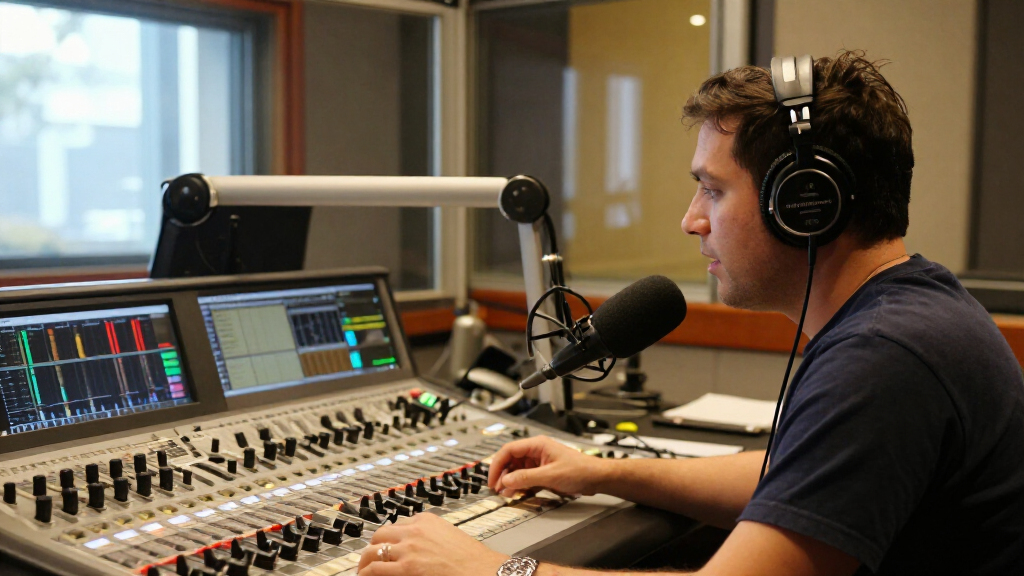
Among these broadcast headsets with microphones, I rank the Audio-Technica BPHS1 as the best overall for its broadcast-focused dynamic boom mic and stereo listening design. The Sennheiser HMD 26 is a strong alternative for buyers who want a dual-ear headset from a broadcast specialist, while the Audio-Technica BPHS2S suits users who need one ear free. The main tradeoffs are microphone pickup and connection compatibility versus comfort, isolation, and whether you need one or two earcups. Some models are purpose-built for intercom systems, while others suit studio monitoring or streaming better. Read on for the full breakdown and help matching a headset to your setup.

Get everyday essentials delivered free with Prime
- Fast, free delivery on millions of items
- Prime Video, Amazon Music and more included
- Member-only deals all year
Complete the kit


Key Takeaways
- The BPHS1 is the most balanced broadcast-focused pick: its dynamic cardioid boom microphone and stereo headset design make it a practical starting point for voice work and monitoring.
- Connection details can decide the purchase: the BPHS2-UT is unterminated, and the YTH-312M is built around a 4-pin XLR connection, so buyers should confirm their mixer or intercom wiring before ordering.
- One-ear and two-ear designs solve different problems: the BPHS2S leaves one ear open for room or crew awareness, while the HMD 26 and other dual-ear models offer more consistent headphone monitoring.
- Broadcast-specific and streaming-focused models are not interchangeable: the BPHS1 and Sennheiser HMD models prioritize communications, while the ATH-M50xSTS XLR is aimed at a streaming workflow.
- Not every headset here is an equal fit for production work: the talomen W550X, Yamaha CM500, and RØDE NTH-100M may suit more particular monitoring or communications needs, but buyers should compare their connection and microphone requirements against dedicated broadcast models.
| Audio-Technica BPHS1-XF4 Communications Headset with Cardioid Boom Microphone |  | Best for Intercom Compatibility | Brand: Audio-Technica | Model: BPHS1-XF4 | Microphone type: Dynamic | VIEW LATEST PRICE | See Our Full Breakdown |
| YTH-312M Dual-Side Intercom Headset with 4-Pin XLR and Dynamic Microphone |  | Best for Extended Intercom Shifts | Connector: 4-pin XLR | Driver size: 50 mm | Frequency response: 10 Hz–22 kHz | VIEW LATEST PRICE | See Our Full Breakdown |
| Sennheiser HMD 27 Wired Over-Ear Broadcast Headset with Microphone |  | Best for Long Broadcast Sessions | Brand: Sennheiser | Model: 506902 | Series: HMD 27 | VIEW LATEST PRICE | See Our Full Breakdown |
| talomen W550X Wired Studio Monitor Headphones with Detachable Boom Microphone |  | Best for Podcasting and Studio Use | Brand and model: talomen W550X | Connectivity: Wired | Connectors: 3.5 mm and 6.35 mm headphone jacks | VIEW LATEST PRICE | See Our Full Breakdown |
| Audio-Technica BPHS2S Single-Ear Broadcast Headset with Hypercardioid Dynamic Boom Microphone |  | Best for Single-Ear Monitoring in Noisy Broadcasts | Brand and model: Audio-Technica BPHS2S | Design: Single-ear, closed-back | Drivers: 45 mm | VIEW LATEST PRICE | See Our Full Breakdown |
| Audio-Technica BPHS2-UT Broadcast Stereo Headset with Hypercardioid Dynamic Boom Microphone, Unterminated, Black |  | Best for Noisy Broadcast Positions | Headphone design: Closed-back, on-ear | Driver size: 45 mm | Microphone: Hypercardioid dynamic boom | VIEW LATEST PRICE | See Our Full Breakdown |
| Audio-Technica BPHS1 Broadcast Stereo Headset with Dynamic Cardioid Boom Microphone |  | Best All-Round Broadcast Workhorse | Headphone design: Closed-back, over-ear | Microphone: Dynamic cardioid boom | Headphone frequency response: 20 Hz–20 kHz | VIEW LATEST PRICE | See Our Full Breakdown |
| Audio-Technica BPHS1 Broadcast Stereo Headset with Dynamic Boom Microphone and Knox Gear Hard-Shell Case |  | Best for Protected Transport | Model: Audio-Technica BPHS1 | Fit: Over-ear | Microphone: Dynamic cardioid boom | VIEW LATEST PRICE | See Our Full Breakdown |
| Audio-Technica ATH-M50xSTS XLR StreamSet Streaming Headset |  | Best for Mixer-Based Streaming | Headphone driver size: 45 mm | Microphone: Cardioid condenser | Headphone output: 3.5 mm | VIEW LATEST PRICE | See Our Full Breakdown |
| Sennheiser HMD 26 Dual-Ear Broadcast Headset |  | Best for Hearing Protection | Design: Dual-ear, supra-aural, closed-back | Headphone frequency response: 6 Hz–18,000 Hz | Microphone: Dynamic, super-cardioid | VIEW LATEST PRICE | See Our Full Breakdown |
| Yamaha CM500 Headset with Built-In Microphone |  | Best for Audio Labs and DJ Setups | Brand and model: Yamaha CM500 | Type: Wired headset with built-in microphone | Headphone frequency response: 20 Hz–20 kHz | VIEW LATEST PRICE | See Our Full Breakdown |
| RØDE NTH-100M Professional Over-Ear Headset |  | Best Premium for Broadcasting and Content Creation | Brand and model: RØDE NTH-100M | Type: Professional over-ear headset | Microphone: Detachable broadcast-quality microphone | VIEW LATEST PRICE | See Our Full Breakdown |
| broadcast headsets with microphone | Microphone | Weight | Warranty |
|---|---|---|---|
| Audio-Technica BPHS1-XF4 Commu | — | — | 1-year limited warranty |
| YTH-312M Dual-Side Intercom He | Dynamic cardioid with windscreen | — | — |
| Sennheiser HMD 27 Wired Over-E | — | 12.48 ounces | — |
| talomen W550X Wired Studio Mon | Detachable cardioid boom microphone | — | One year |
| Audio-Technica BPHS2S Single-E | Hypercardioid dynamic boom microphone | 16 ounces | U.S. two-year limited end-user warranty |
| Audio-Technica BPHS2-UT Broadc | Hypercardioid dynamic boom | 0.74 kg | U.S. two-year limited end-user warranty |
| Audio-Technica BPHS1 Broadcast | Dynamic cardioid boom | 9.3 oz | — |
| Audio-Technica BPHS1 Broadcast | Dynamic cardioid boom | 2.4 pounds | 1 year |
| Audio-Technica ATH-M50xSTS XLR | Cardioid condenser | 454 g | Two-year limited end-user warranty |
| Sennheiser HMD 26 Dual-Ear Bro | Dynamic, super-cardioid | 14.72 ounces | — |
| Yamaha CM500 Headset with Buil | — | 13.6 oz | — |
| RØDE NTH-100M Professional Ove | Detachable broadcast-quality microphone | 16 oz | — |
More Details on Our Top Picks
Audio-Technica BPHS1-XF4 Communications Headset with Cardioid Boom Microphone
The BPHS1-XF4 is my pick for broadcast teams whose setup is built around a 4-pin XLR intercom connection. Its dynamic cardioid boom mic focuses on speech while helping reduce off-axis noise, and the closed-back ear cups help keep surrounding activity from competing with what the wearer hears. The boom can be positioned on either side, a practical advantage when users have a preferred mic side or need to work around other gear. Compared with the YTH-312M, this Audio-Technica emphasizes a rugged, serviceable design with replaceable cable and ear pads rather than listing driver measurements and a supplied windscreen. The tradeoff is fit for purpose: its connector is not a general-purpose plug, so buyers should confirm their intercom wiring before choosing it. I would skip it for casual computer or mobile use.
Pros:- Dynamic cardioid microphone helps focus pickup on the speaker.
- Closed-back over-ear cups help reduce surrounding noise.
- Flexible boom can be positioned on either side.
- User-replaceable cable and ear pads support serviceability.
Cons:- The 4-pin XLR connection can limit compatibility with other equipment.
- An intercom-focused design may require additional interface gear for recording or computer use.
Best for: Broadcast and live-production crew members who need a durable headset for a compatible 4-pin XLR intercom system.
Not ideal for: Streamers or home podcasters using standard computer, USB, or mobile connections who do not have a compatible intercom interface.
- Brand:Audio-Technica
- Model:BPHS1-XF4
- Microphone type:Dynamic
- Microphone polar pattern:Cardioid
- Earpiece design:Over-ear, closed-back
- Connector:4-pin XLR
- Controls:Volume control
- Warranty:1-year limited warranty
Our verdict“Choose the BPHS1-XF4 if your production uses compatible 4-pin XLR intercoms and you value a serviceable, noise-conscious headset.”
YTH-312M Dual-Side Intercom Headset with 4-Pin XLR and Dynamic Microphone
The YTH-312M suits production crews who need a dual-side headset for interviews, stage work, or long stretches on an intercom. Its soft cushions support extended wear, while the directional dynamic mic includes a windscreen to help tame breath pops and some wind noise. The listed 50 mm drivers and 10 Hz–22 kHz response describe its audio range, though those figures alone do not establish how it will sound in a particular production chain. Compared with the Audio-Technica BPHS1-XF4, the YTH-312M makes its comfort and microphone windscreen more prominent; the BPHS1-XF4 instead calls out replaceable parts and a volume control. Both use 4-pin XLR, so compatibility remains the key gate. This is a crew headset, not a plug-and-play choice for a laptop or phone.
Pros:- Dual-side design provides listening on both ears.
- Directional dynamic cardioid microphone helps reduce background pickup.
- Included windscreen helps limit plosives and wind noise.
- Soft ear cushions are suited to longer communication sessions.
Cons:- The 4-pin XLR connector may not match non-intercom equipment.
- Listed driver and frequency figures do not specify actual isolation or microphone performance.
Best for: Stage managers, interview crews, and broadcast operators who need a cushioned dual-ear headset with a windscreen for compatible 4-pin XLR systems.
Not ideal for: Solo streamers or podcasters who need a standard computer connection or want a headset designed for general-purpose personal audio.
- Connector:4-pin XLR
- Driver size:50 mm
- Frequency response:10 Hz–22 kHz
- Sensitivity:96 dB
- Microphone:Dynamic cardioid with windscreen
- Design:Dual-side
Our verdict“Pick the YTH-312M for cushioned, dual-ear intercom work where its 4-pin XLR connection is already supported.”
Sennheiser HMD 27 Wired Over-Ear Broadcast Headset with Microphone
The HMD 27 is the most comfort-focused broadcast pick here, with a lightweight closed-back build, soft circumaural pads, and a two-piece headband designed for long commentary or engineering sessions. Its headband padding can be configured in a single-piece style, giving buyers another way to adjust the fit. Compared with the Audio-Technica BPHS1-XF4, which is explicitly oriented toward intercom use and has a 4-pin XLR connector, the HMD 27 lists a 3.5 mm headphone jack and a 600-ohm impedance. That high impedance makes the intended audio source worth checking: some portable or lower-powered gear may not drive it as effectively as a broadcast interface. The provided data also does not specify a microphone polar pattern or connector, so I would verify those details against the exact system before buying.
Pros:- Lightweight construction is suited to extended wear.
- Soft circumaural pads and closed cups provide passive noise attenuation.
- Headband can be configured in two-piece or single-piece style.
- Includes a microphone for broadcast communication.
Cons:- 600-ohm impedance may call for compatible, adequately powered audio equipment.
- Wired operation limits movement around a production space.
- The supplied product data does not specify microphone polar pattern or microphone connector.
Best for: Commentators and audio engineers who wear a headset for long sessions and have compatible wired broadcast equipment capable of driving a 600-ohm headset.
Not ideal for: Mobile creators seeking an easy phone connection, or buyers who need a clearly specified intercom microphone connector and pickup pattern.
- Brand:Sennheiser
- Model:506902
- Series:HMD 27
- Form factor:Over-ear, circumaural
- Design:Closed-back
- Driver type:Dynamic
- Impedance:600 ohm
- Connectivity:Wired; 3.5 mm headphone jack
- Weight:12.48 ounces
Our verdict“Choose the HMD 27 for long commentary sessions if your wired broadcast chain can drive its 600-ohm impedance and supports its microphone connection.”
talomen W550X Wired Studio Monitor Headphones with Detachable Boom Microphone
The W550X is the most flexible choice for creators who move between monitoring, recording, and voice communication. Its detachable cardioid boom microphone gives it a broadcast-style speaking option, while the 32-ohm impedance and supplied 3.5 mm and 6.35 mm connections suit a wider range of audio sources than the Audio-Technica BPHS1-XF4, which is aimed at 4-pin XLR intercoms. The included splitter, coiled cable, case, and replaceable cushions make it a practical studio package rather than a dedicated production intercom headset. That distinction matters: the product data does not give measured isolation performance, and its wired design still tethers the wearer. Compared with the Sennheiser HMD 27, it offers more connection accessories and a detachable mic, but less clearly specified broadcast-system integration.
Pros:- Detachable cardioid boom microphone supports voice recording and communication.
- 32-ohm impedance and 3.5 mm and 6.35 mm connections suit a variety of wired audio setups.
- Includes a coiled cable, microphone splitter, and protective case.
- Replaceable ear cushions and memory foam support extended sessions.
Cons:- Wired operation restricts movement.
- No specific noise-isolation performance measurements are provided.
- The supplied connection details do not identify a direct intercom connector.
Best for: Home podcasters, streamers, and studio creators who want one wired headset for monitoring and microphone use across 3.5 mm or 6.35 mm connections.
Not ideal for: Broadcast crews who need a purpose-built intercom headset, defined isolation performance, or a direct 4-pin XLR connection.
- Brand and model:talomen W550X
- Connectivity:Wired
- Connectors:3.5 mm and 6.35 mm headphone jacks
- Driver type and size:Dynamic, 50 mm
- Impedance:32 ohm
- Sensitivity:95 dB
- Microphone:Detachable cardioid boom microphone
- Included items:Coiled audio cable, mic Y-splitter cable, protective case, user manual, replaceable leather ear cushions
- Warranty:One year
Our verdict“Choose the W550X if your priority is a versatile wired podcast or studio headset, not a dedicated 4-pin XLR intercom system.”
Audio-Technica BPHS2S Single-Ear Broadcast Headset with Hypercardioid Dynamic Boom Microphone
The BPHS2S is designed for operators who need to hear the room as well as their program feed. Its single-ear format leaves one ear open, while the hypercardioid dynamic boom mic focuses pickup more tightly than the cardioid microphones listed for the BPHS1-XF4 and YTH-312M. That makes the BPHS2S a distinct fit for news and sports work where surrounding cues matter. Its detachable 3.3 m cable separates the microphone’s 3-pin XLR connection from the 6.3 mm headphone connection, so buyers should confirm both match their console or interface. Compared with the dual-ear YTH-312M, this is less suited to isolating the wearer from a busy environment; the single-ear design also rules it out for listeners who want stereo monitoring on both ears.
Pros:- Hypercardioid dynamic boom microphone is suited to focused speech pickup in noisy settings.
- Single-ear design leaves the other ear available for room and crew sounds.
- Detachable 3.3 m cable provides separation between microphone and headphone connections.
- Adjustable boom and replaceable memory foam padding support fit and upkeep.
Cons:- Single-ear listening does not provide stereo monitoring across both ears.
- Separate 3-pin XLR and 6.3 mm connections may require specific console inputs or adapters.
- At 16 ounces, it is heavier than the listed Sennheiser HMD 27.
Best for: News and sports broadcast operators who need focused microphone pickup while keeping one ear free for nearby cues.
Not ideal for: Commentators or engineers who want two-ear stereo monitoring, stronger enclosure from ambient sound, or a single standard headset plug.
- Brand and model:Audio-Technica BPHS2S
- Design:Single-ear, closed-back
- Drivers:45 mm
- Microphone:Hypercardioid dynamic boom microphone
- Connectivity:Wired
- Cable:3.3 m detachable cable
- Connectors:3-pin XLR microphone connector and 6.3 mm headphone connector
- Weight:16 ounces
- Warranty:U.S. two-year limited end-user warranty
Our verdict“Pick the BPHS2S if you need a focused broadcast mic and one open ear for live cues, rather than dual-ear monitoring.”
Audio-Technica BPHS2-UT Broadcast Stereo Headset with Hypercardioid Dynamic Boom Microphone, Unterminated, Black
The BPHS2-UT is the strongest fit here when focused vocal pickup matters more than plug-and-play setup. Its hypercardioid dynamic boom microphone is designed to concentrate on the speaker, while the closed-back earcups help limit surrounding sound—useful on busy sports or news sets. Compared with the Audio-Technica BPHS1, this model uses an on-ear fit rather than over-ear cups and a hypercardioid rather than cardioid mic pattern, giving it a different balance of fit and pickup focus. The 3.3 m cable detaches, but arrives unterminated with a TA6F connector, so buyers may need compatible wiring or adaptation before it can connect to their system. Memory foam adds comfort, though the on-ear shape may press on ears during long shifts.
Pros:- Hypercardioid dynamic boom mic is suited to focused speech pickup in noisy settings.
- Closed-back design and memory foam padding help with sound isolation and fit.
- Boom can be positioned on either side.
- Detachable 3.3 m cable and included windscreens support practical broadcast setup.
Cons:- Unterminated TA6F cable may require separate connectors, wiring, or adaptation.
- On-ear cups may become uncomfortable for some people during extended wear.
Best for: Broadcast operators in loud sports or news environments who need focused microphone pickup and can handle the TA6F cable connection.
Not ideal for: Buyers who need a headset ready to connect to standard XLR and headphone inputs, or who prefer over-ear cups for long sessions.
- Headphone design:Closed-back, on-ear
- Driver size:45 mm
- Microphone:Hypercardioid dynamic boom
- Cable:3.3 m detachable, unterminated
- Headset connector:TA6F
- Weight:0.74 kg
- Included accessories:Pouch, 3 windscreens, cable clip, 6.3 mm screw-on adapter
- Warranty:U.S. two-year limited end-user warranty
Our verdict“Choose the BPHS2-UT for focused speech pickup in loud broadcast settings if its unterminated TA6F connection suits your equipment.”
Audio-Technica BPHS1 Broadcast Stereo Headset with Dynamic Cardioid Boom Microphone
The BPHS1 makes a practical center point for traditional broadcast work: over-ear isolation, a flexible dynamic boom mic, and separate microphone and headphone outputs give it a familiar wired setup for announcing and interviews. Its cardioid pickup is less tightly focused than the hypercardioid mic on the BPHS2-UT, but the BPHS1 offers standard XLRM microphone and 6.3 mm headphone connections rather than an unterminated TA6F cable. That makes it the more straightforward choice for many mixer and interface setups. The tradeoff is a wired 3.3 m connection, which restricts movement, and it has no stated moisture protection. Compared with the HMD 26, it lacks switchable ActiveGard hearing protection, but its published connector details make system matching easy to assess.
Pros:- Closed-back, over-ear cups help reduce background sound.
- Cardioid dynamic mic provides focused, intelligible speech pickup.
- Boom can be positioned on the left or right.
- Separate XLRM mic and 6.3 mm headphone outputs suit common broadcast connections.
Cons:- The 3.3 m wired cable limits movement around a set.
- No water-resistance rating is specified.
- Lacks the HMD 26’s ActiveGard hearing-protection settings.
Best for: Announcers, interviewers, and small broadcast teams who want a conventional wired headset with separate XLR mic and quarter-inch headphone connections.
Not ideal for: Mobile presenters who need freedom from a cable, or professionals seeking built-in switchable hearing protection.
- Headphone design:Closed-back, over-ear
- Microphone:Dynamic cardioid boom
- Headphone frequency response:20 Hz–20 kHz
- Microphone frequency response:40 Hz–20 kHz
- Impedance:65 ohm
- Sensitivity:100 dB
- Cable length:3.3 m
- Connectors:8-pin headset connector, 3-pin XLRM microphone output, 6.3 mm TRS headphone output
- Weight:9.3 oz
Our verdict“Pick the BPHS1 for a dependable, conventional broadcast setup with over-ear isolation and clearly specified mic and headphone connections.”
Audio-Technica BPHS1 Broadcast Stereo Headset with Dynamic Boom Microphone and Knox Gear Hard-Shell Case
This BPHS1 bundle suits broadcasters who move gear between studios, venues, or remote locations and want a hard-shell case included. The headset itself shares the BPHS1’s over-ear fit and cardioid dynamic boom concept, so its appeal is less about a different microphone approach and more about carrying protection and a listed volume control. Compared with the BPHS1 listing, this package specifies a 6.35 mm headphone jack but does not detail the same separate XLRM microphone and 8-pin headset connections; check compatibility with your mixer before choosing it. The cushioned headband and ear pads support longer sessions, yet the wired design still limits movement, and no water resistance is specified. It is a practical travel-oriented alternative, not an upgrade for buyers seeking more advanced mic pickup.
Pros:- Cardioid dynamic boom mic is voice-focused and helps reduce off-axis sound.
- Over-ear fit with cushioned headband and ear pads is suited to longer sessions.
- Hard-shell case helps protect the headset during transport.
- Volume control is listed for convenient level adjustment.
Cons:- Wired connection restricts movement during reporting or production work.
- Listed connector information is less detailed than the BPHS1’s separate output specifications.
- No water-resistance rating is specified.
Best for: Broadcast crews who transport an over-ear headset regularly and want a hard-shell case and onboard volume control.
Not ideal for: Buyers who need clearly documented separate XLR and headset connectors, or who need a wireless setup for roaming.
- Model:Audio-Technica BPHS1
- Fit:Over-ear
- Microphone:Dynamic cardioid boom
- Connectivity:Wired
- Connector:6.35 mm headphone jack
- Controls:Volume control
- Included items:Headset and hard-shell case
- Weight:2.4 pounds
- Warranty:1 year
Our verdict“Choose this BPHS1 bundle if protected transport and onboard volume control matter more than a fully detailed connector specification.”
Audio-Technica ATH-M50xSTS XLR StreamSet Streaming Headset
The ATH-M50xSTS is the clearest choice here for streamers who want studio-style headphone sound paired with an XLR condenser mic. Its 45 mm drivers draw on the ATH-M50x headphone design, while the cardioid boom mic flips up to mute, a handy on-head control that the broadcast-focused BPHS1 does not list. The XLR output is a good match for a mixer or audio interface, but it means this headset is not a simple direct connection for every computer setup. Compared with the BPHS2-UT, it trades a hypercardioid dynamic mic and detachable cable for a condenser mic and a permanently attached lead. Two earpad styles let buyers favor isolation or breathability, though the fixed 2 m cable offers less replacement flexibility.
Pros:- Cardioid condenser boom mic pairs with studio-style headphone sound.
- Flip-up boom arm provides a convenient mute action.
- Two interchangeable earpad styles allow a choice between isolation and breathability.
- XLR microphone output connects to compatible mixers and audio interfaces.
Cons:- XLR microphone connection requires a compatible mixer or audio interface.
- Permanently attached 2 m cable cannot be replaced independently.
- Condenser mic and streaming orientation differ from the dynamic mics on the BPHS1 and BPHS2-UT.
Best for: Streamers and voice presenters who already use an audio interface or mixer with an XLR input and want a flip-to-mute boom.
Not ideal for: Broadcasters seeking a direct-to-computer headset, a detachable cable, or a dynamic microphone for their signal chain.
- Headphone driver size:45 mm
- Microphone:Cardioid condenser
- Headphone output:3.5 mm
- Microphone output:XLR
- Cable length:2 m
- Earpads:Two interchangeable styles
- Weight:454 g
- Included adapter:6.3 mm snap-on adapter
- Warranty:Two-year limited end-user warranty
Our verdict“Pick the ATH-M50xSTS if you stream through an XLR-equipped interface and value studio-style monitoring with an easy flip-to-mute mic.”
Sennheiser HMD 26 Dual-Ear Broadcast Headset
The HMD 26 is the specialist pick for professional TV, radio, and intercom work where hearing protection is part of the headset brief. Its ActiveGard system offers three switchable attenuation settings, a distinction the Audio-Technica BPHS1 does not provide. The HMD 26 also pairs passive isolation with a dynamic super-cardioid microphone and a shock-mounted capsule intended to absorb structure-borne noise. Its 300-ohm audio impedance makes equipment matching worth checking against your source, particularly when comparing it with the BPHS1’s stated 65-ohm impedance. The supra-aural fit keeps the headset compact but rests on the ears, which may be less comfortable over a long shift than over-ear alternatives. Choose it for broadcast safeguards and intercom-focused features, not for an around-the-house streaming setup.
Pros:- ActiveGard provides three switchable hearing attenuation settings.
- Dynamic super-cardioid microphone is designed for focused broadcast speech.
- Closed-back earcups provide passive noise isolation.
- Shock-mounted microphone capsule helps reduce structure-borne noise.
Cons:- Supra-aural cups may press on the ears during extended wear.
- 300-ohm impedance calls for checking compatibility with the intended audio source.
- The professional broadcast and intercom feature set may be more than casual streamers need.
Best for: TV, radio, and intercom professionals who need a dual-ear headset with switchable hearing protection and a dynamic super-cardioid mic.
Not ideal for: Listeners who prefer over-ear cups for long sessions, or buyers whose equipment is not suited to a 300-ohm headset.
- Design:Dual-ear, supra-aural, closed-back
- Headphone frequency response:6 Hz–18,000 Hz
- Microphone:Dynamic, super-cardioid
- Microphone frequency response:40 Hz–18,000 Hz
- Audio impedance:300 ohm
- Noise control:Passive noise isolation
- Hearing protection:ActiveGard with three switchable attenuation settings
- Weight:14.72 ounces
- Color:Black
Our verdict“Choose the HMD 26 for professional broadcast or intercom use when switchable hearing protection outweighs its on-ear fit and equipment-matching needs.”
Yamaha CM500 Headset with Built-In Microphone
The Yamaha CM500 is a straightforward wired choice for audio labs, DJ stations, and other fixed listening positions where a built-in mic is useful but a dedicated broadcast boom setup is unnecessary. Its 9-foot cable gives more room to move around a console than a short desk cable, and the included 1/8-inch plug with 1/4-inch adapter suits a range of audio connections. Closed-ear sound isolation can help keep playback separate from a busy room. Compared with the RØDE NTH-100M, the CM500 is simpler and lacks a detachable broadcast-quality microphone and replaceable components. Its tradeoff is a less purpose-built broadcast feature set: the cable tethers the listener, and the closed-ear fit may feel confining during long sessions. I’d choose it for practical, stationary audio work rather than frequent on-air use.
Pros:- Built-in microphone supports interactive audio work without a separate mic.
- Nine-foot cable provides useful reach around a workstation.
- 1/8-inch plug and 1/4-inch adapter fit varied audio equipment.
- Closed-ear isolation helps limit surrounding sound during monitoring.
Cons:- Wired connection restricts movement away from the audio source.
- Closed-ear design may feel confining during extended wear.
- Its built-in mic is less specialized for broadcast use than the detachable microphone on the RØDE NTH-100M.
Best for: DJ booths, school music labs, and fixed audio workstations that need a wired headset with basic two-way communication.
Not ideal for: Mobile presenters and broadcasters seeking a detachable, broadcast-focused boom microphone or a headset designed around long on-air sessions.
- Brand and model:Yamaha CM500
- Type:Wired headset with built-in microphone
- Headphone frequency response:20 Hz–20 kHz
- Microphone frequency range:100 Hz–20 kHz
- Impedance:120 ohms
- Cable length:9 ft
- Connectors:1/8-inch plug with 1/4-inch adapter
- Weight:13.6 oz
- Noise control:Sound isolation
Our verdict“Choose the CM500 for a stationary DJ or lab setup that values cable reach and connection flexibility over broadcast-specific microphone features.”
RØDE NTH-100M Professional Over-Ear Headset
The RØDE NTH-100M is the more complete choice here for broadcasters, podcasters, and streamers who want detailed monitoring paired with a dedicated detachable broadcast-quality microphone. Custom-matched drivers support accurate listening, while the mic’s plosive-rejecting design helps keep speech clear without adding a separate microphone to the desk. Alcantara cushions with CoolTech gel and user-replaceable parts make it better suited to long sessions and ongoing studio use than the simpler Yamaha CM500. The package also includes a carrying bag, splitter cable, and 1/4-inch adapter, making it easier to connect across common setups. The tradeoff is that its microphone has a one-year warranty, shorter than the lifetime warranty listed for the headphones. I’d pick it for a dedicated creator’s workspace, not for buyers who only need a basic headset.
Pros:- Detachable broadcast-quality microphone is purpose-built for clear speech.
- Custom-matched drivers provide detailed, accurate audio monitoring.
- Alcantara cushions with CoolTech gel support extended sessions.
- Replaceable components support maintenance over time.
Cons:- The microphone warranty is limited to one year, while the headphones carry a lifetime warranty.
- The feature set and included accessories may be unnecessary for basic audio-lab or DJ use.
- At 16 ounces, it is heavier than the Yamaha CM500.
Best for: Broadcasters, podcasters, and streamers who need accurate headphone monitoring, a dedicated speech microphone, and replaceable headset components.
Not ideal for: Casual or fixed-position listeners who need only a simple wired headset and do not need a broadcast-focused microphone or the included accessories.
- Brand and model:RØDE NTH-100M
- Type:Professional over-ear headset
- Microphone:Detachable broadcast-quality microphone
- Included accessories:NTH-100 headphones, NTH-Mic, carrying bag, 2.4 m TRRS cable, splitter cable, ID set, and 3.5 mm to 1/4-inch adapter
- Weight:16 oz
- Headphone warranty:Lifetime for NTH-100
- Microphone warranty:1 year for NTH-Mic
- Color:Black
Our verdict“Choose the NTH-100M if you need a creator-focused headset that pairs accurate monitoring with a dedicated broadcast microphone and serviceable parts.”
How We Picked
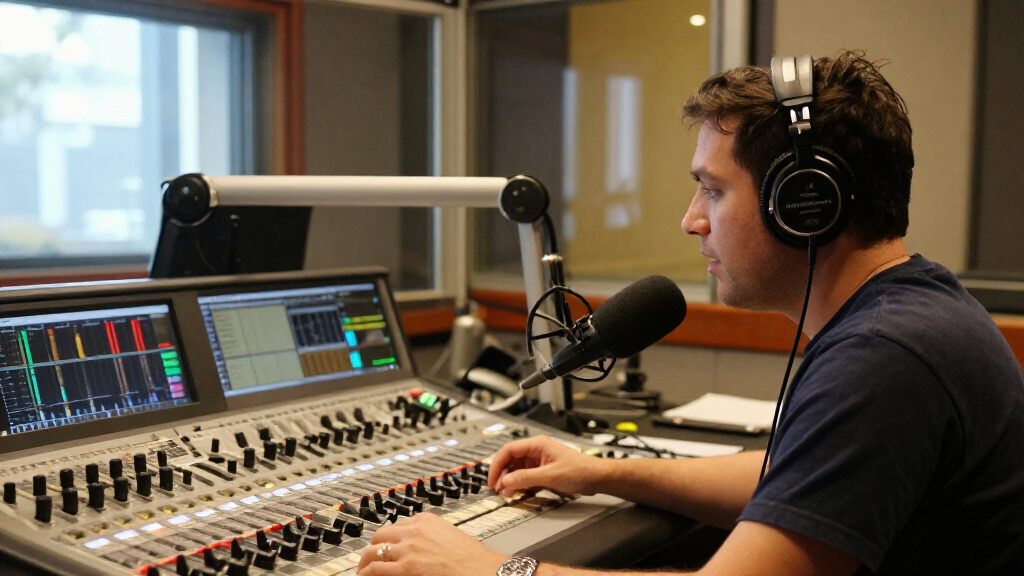
I compared the 12 headsets by how well their stated design fits broadcast communication: microphone type and boom placement, headset configuration, intended use, and the connection needed to reach a mixer, camera, or intercom. I gave greater weight to options with a clear broadcast or communications focus than to general monitoring headsets, since a headset that sounds good for listening may not suit a production talkback chain.
The order reflects practical fit across common buyer needs, not a claim that every headset works with every system. Models with an identifiable broadcast role and a useful balance of microphone, monitoring, and setup flexibility rank ahead of products whose appeal is narrower or whose connection needs warrant extra checking. I also considered wearing configuration, portability, and whether a model appears better suited to a specific workflow. Buyers should verify connector pinout, wiring, and compatibility with their equipment before purchase.
Factors to Consider When Choosing Broadcast Headsets With Microphones
Before choosing a headset, I would match the microphone and connector to the signal path first, then decide how much isolation and listening coverage the job calls for. A familiar brand or a broadcast label cannot compensate for a plug that does not fit your intercom or a microphone that is wrong for your recording environment.
Match the connector to the equipment, not just the product name
Connector names can hide differences in wiring, pinout, and the way microphone and headphone signals are carried. A 4-pin XLR headset may be intended for a particular intercom arrangement, while an unterminated model needs a compatible connector fitted before it can be used. A standard headphone plug may not carry a microphone signal at all. Before buying, check the equipment manual and identify the exact input and output connections, including whether an adapter changes wiring or only physical plug shape. A mismatch can leave the mic silent or the headphone channels incorrectly routed. When the setup is fixed or shared across a crew, compatibility should take priority over small differences in comfort or styling.
Choose microphone pickup for the room and the crew
Microphone pickup pattern affects how much surrounding sound enters the voice channel, but no pattern removes the need for good placement and sensible room noise control. A directional boom can help focus speech in a busy environment, while a less specialized microphone may be adequate for quiet, close-mic use. Boom position matters: a mic set too far from the mouth can encourage higher gain and bring up room noise. If several people are speaking nearby, favor a setup designed for focused communication and test it with the actual talkback system. Do not select by microphone type alone; confirm how it connects and whether the signal level suits the receiving equipment.
Decide whether you need one ear open or full headphone coverage
A single-ear headset can let a camera operator, stage manager, or field crew member hear both the headset feed and surrounding activity. That awareness comes at the cost of balanced stereo monitoring and can make long listening sessions less consistent. Dual-ear designs offer more even coverage and can help when you need to monitor a mix or reduce distraction, though they may isolate you from nearby conversation. Think about whether the job requires listening to a program feed, communicating with a crew, or doing both at once. Buyers sometimes choose the most isolating option for a role that depends on hearing room cues. Match the earcup layout to the task rather than treating isolation as an automatic upgrade.
Separate broadcast communication from studio monitoring
A headset made for broadcast talkback is not necessarily the best tool for judging a music mix, and a studio monitor headphone with a boom mic may not suit a wired intercom system. Ask whether the priority is intelligible speech, reliable crew communication, critical listening, or a mix of these jobs. Streaming models can bring together headphones and a microphone for a desk setup, but their connection and intended workflow may differ from production headsets. General-purpose options can work for calls or light monitoring, yet they may offer fewer broadcast-specific connection choices. Avoid paying for a monitoring feature that your work does not use, but do not assume that a detachable mic makes a headphone broadcast-ready. Confirm the complete signal path before treating two different headset types as substitutes.
Prioritize fit and maintenance for long shifts
Comfort depends on more than padding: clamping force, headset weight, headband shape, and whether the boom stays in position all affect use over a long call. A dual-ear headset can feel more secure but may become warm or restrictive, while a lighter or single-ear design may give up some isolation. Look into whether cushions, cables, or microphone parts can be replaced, especially if the headset will be shared or used daily. A hard-shell case can help protect gear in transit, but it does not replace checking cable strain points and storing the boom safely. If several people will wear the same headset, favor a fit that can be adjusted quickly and cleaned between users. When possible, confirm return and service arrangements before relying on one model for a critical production role.
Spend more for workflow fit, not a longer feature list
Paying more can make sense when a headset offers the exact broadcast connection, microphone design, or wearing arrangement your role requires. It is less useful when the extra capability does not solve a problem in your signal chain or working environment. For a first setup, a straightforward model with confirmed compatibility may be a better choice than an advanced headset that needs custom wiring. Conversely, a professional crew may lose more time to an ill-fitting or incompatible headset than the purchase price suggests. Set a budget only after listing must-haves such as connector, mic type, ear configuration, and intended use. Compare candidates against that list, and treat unverified compatibility as a reason to pause rather than a detail to sort out later.
Frequently Asked Questions
Can I connect any of these headsets directly to a computer?
No, direct computer compatibility depends on the headset’s connector and how its microphone and headphone signals are wired. A headset designed for an intercom or broadcast mixer may use an XLR connection that a computer cannot accept without suitable interface hardware. An unterminated model needs the correct connector fitted, not merely an adapter that changes plug shape. Check whether your computer interface supports the microphone type and connection level, and whether it provides a separate headphone output. If you need a simple desk setup, favor a model whose connection is explicitly compatible with your existing interface.
Is a single-ear headset a good choice for live production?
It can be, especially when you need to hear crew instructions through the headset while staying aware of people, cues, or sound in the room. The tradeoff is that you do not get the same even, two-ear monitoring as with a dual-ear model. That can make a single-ear design less suitable for checking a stereo program feed or working in a noisy space. Consider the role: a floor or camera operator may value awareness, while a mixer or control-room listener may prefer two earcups. If the headset will cover several jobs, a dual-ear design is usually the more flexible listening arrangement.
What should I check before buying an unterminated broadcast headset?
Confirm the required connector, wiring diagram, and pin assignment for the exact intercom or mixer you plan to use. An unterminated headset offers flexibility, but it also puts connector selection and installation on the buyer or a technician. Ask whether the microphone and headphone circuits need separate connections and whether the equipment expects a particular wiring standard. Do not assume that matching connector shapes means the headset will work correctly. If you cannot verify the wiring, choose a finished connector option that is documented for your system or get guidance from the equipment maker.
Should I choose a broadcast headset or a streaming headset for live commentary?
Choose based on the audio chain and work setting rather than the label. A broadcast headset is generally the more natural fit when the job uses a mixer, camera, or intercom connection and needs crew communication. A streaming headset may suit a desk-based commentary setup if its microphone and headphone connections match the audio interface or computer. For a live venue or production crew, check connector compatibility and mic routing before choosing a streaming-focused model. If the same headset must serve both studio and field work, list the connections needed in each setting and confirm that the model supports them without awkward adapters.
Is a dynamic boom microphone always the best choice for broadcast speech?
No. A dynamic boom mic can be a practical fit for close, spoken communication, particularly when the surrounding environment is not quiet, but the full setup matters. Pickup pattern, mic distance, gain, room noise, and the input circuitry all affect the result. A microphone that works well on an intercom may not be the best match for a recording interface or a particular voice. Check the headset’s intended use and confirm that your mixer or interface can accept its output. If sound quality is critical, test the mic in the actual room and signal chain before committing to a production-wide purchase.
Conclusion
For the broadest mix of broadcast speech and headphone monitoring, I would start with the Audio-Technica BPHS1 as best overall. The best value direction is the YTH-312M for buyers whose intercom specifically matches its 4-pin XLR setup, while the best premium choice is the Sennheiser HMD 26 for buyers seeking a dedicated dual-ear broadcast headset. Beginners should first confirm their equipment connection, then favor a straightforward, finished-connector model such as the BPHS1 rather than starting with the unterminated BPHS2-UT. For specific needs, choose the BPHS2S when keeping one ear free matters, the ATH-M50xSTS XLR for a compatible streaming workflow, or the BPHS2-UT when custom wiring is part of the plan. The right pick is the one that matches your signal chain and working conditions, not simply the one with the longest feature list.