
🔍 Read the full analysis: 10 Best USB Microphones For Your 2027 Recording And Streaming Setup on ThorstenMeyerAI.com

Get everyday essentials delivered free with Prime
- Fast, free delivery on millions of items
- Prime Video, Amazon Music and more included
- Member-only deals all year
TL;DR
This is a buying guide, not a report of a newly announced product or test. ThorstenMeyerAI.com names the Blue Yeti as its best overall pick, the FIFINE AM8 as a choice for noisy or untreated rooms, and Amazon Basics as an entry-level option; the source also discusses the TONOR TC-777, FIFINE K669B and Sennheiser Profile. It does not supply a complete list of 10 models or enough product-specific specifications to substantiate a ranked top 10.
ThorstenMeyerAI.com’s USB microphone guide names the Logitech Blue Yeti its best overall option for many creators and recommends the FIFINE AM8 for rooms with background noise, while positioning Amazon Basics as a basic entry-level choice. The source frames its advice around matching microphone design to the recording space, but it does not identify 10 distinct models or provide enough details to verify a complete 10-product ranking for 2027.
The guide’s central distinction is between condenser and dynamic microphones. It says condensers capture detail but can also pick up room noise, while dynamics are less sensitive to ambient sound and work better when the room is untreated. On that basis, the source singles out the FIFINE AM8 for noisy offices, bedrooms or gaming setups where keyboard sounds may be a concern.
For creators who need different recording patterns, the guide favors the Logitech Blue Yeti, describing its selectable patterns as useful for solo podcasts, interviews and ambient recording. That flexibility comes with a tradeoff: users need to manage microphone gain carefully, and the added patterns may be unnecessary for someone who records only solo voiceovers.
The source also mentions the Amazon Basics microphone, TONOR TC-777, FIFINE K669B and Sennheiser Profile. It characterizes budget models as straightforward voiceover options that may offer fewer on-device controls, while saying premium models can depend more on software support. These are the source’s assessments; it provides no test measurements, prices, model revisions or complete list of 10 recommendations.
The 10 picks
- 1
 Logitech Blue Yeti USB Condenser Microphone with Blue VO!CE, Four Pickup Patt…View on Amazon →
- 2
 Sennheiser Profile USB Cardioid Condenser Microphone with Table StandView on Amazon →
- 3
 FIFINE AmpliGame AM8 USB/XLR Dynamic Microphone for Gaming StreamingView on Amazon →
- 4
 FIFINE K669B USB Condenser MicrophoneView on Amazon →
- 5
 ZealSound Podcast Microphone for PC, Noise Cancellation USB Mic with Gain, Vo…View on Amazon →
- 6
 Amazon Basics USB Condenser Microphone with Adjustable StandView on Amazon →
- 7
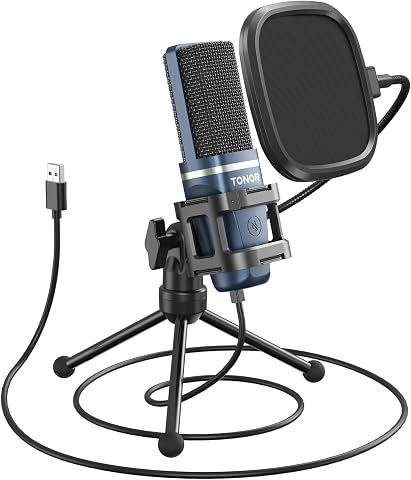 TONOR TC-777 USB Condenser Microphone with Tripod Stand, Shock Mount, and Pop…View on Amazon →
- 8
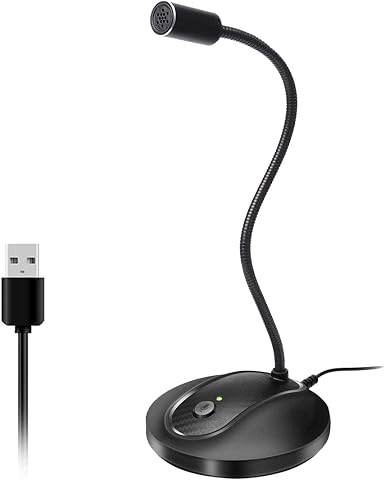 USB Microphone, 360 Degree Adjustable Gooseneck Design, Mute Button & LED Ind…View on Amazon →
- 9
 CMTECK USB Computer Microphone G009, Noise-Cancelling Recording Desktop Mic f…View on Amazon →
- 10
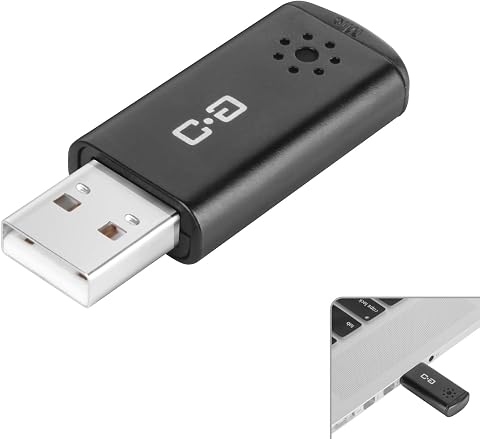 DUNGZDUZ Mini USB Microphone for Laptop & DesktopView on Amazon →
Room Noise Shapes the Choice
The guide’s advice matters because a microphone’s suitability depends on more than its price or advertised recording specifications. A sensitive condenser in a reflective bedroom can capture echoes, computer fans and keyboard clicks along with speech. A dynamic model may reduce some of those distractions, though the user generally needs to speak closer to it. Room conditions and microphone placement can affect the result as much as the model selected.
Controls also matter in live use. The source says physical mute, gain and volume controls make rapid adjustments easier for streamers than changing settings in software during a broadcast. Buyers should also account for the full setup cost: a desktop stand may leave a microphone too far away, while a boom arm, pop filter or shock mount can add expense. The guide argues that accessories and usability belong in the value calculation, not just the microphone’s price.
Products Worth Considering

Amazon Kindle Scribe Colorsoft 64GB with Premium Pen

Logitech MX Mechanical Wireless Illuminated Keyboard, Tactile Quiet, Graphite

Samsung 27-Inch Odyssey OLED G5 QHD Gaming Monitor (G50SF)
As an affiliate, we earn on qualifying purchases.
How the Guide Compares Microphones
ThorstenMeyerAI.com says it considered performance in a treated home studio, noisy office and typical bedroom. It describes its ranking approach as balancing audio quality with ease of use and build quality, and says it considered the cost of accessories and the amount of post-processing needed. The supplied material does not include test procedures, recordings, measurements or a dated publication record, so readers cannot independently assess those comparisons from the information provided.
The guide says most current USB microphones are plug-and-play with common computer operating systems, making basic setup less of a dividing line between products. It instead emphasizes polar patterns, hardware controls, mounting and software support. It notes that a cardioid pattern is suited to a single speaker, while omnidirectional and figure-eight patterns can serve group or face-to-face recording, but can capture sound from directions a solo streamer may want to exclude.
“The Logitech Blue Yeti stands out as the best overall choice for most creators due to its versatile polar patterns and robust build.”
— ThorstenMeyerAI.com guide
The Ten Picks Are Not Listed
The supplied source material does not name 10 distinct microphones. It identifies several models, but does not provide six additional picks or a complete ordered list. It also gives no current prices, retailer availability, model-year revisions, detailed specifications or direct test results. The headline’s promise of 10 recommendations therefore cannot be verified from this material alone.
Claims such as superior noise rejection and reliable long-term signal performance are presented as the guide’s judgments, but the material includes no test data or methodology detailed enough to reproduce those conclusions. Availability and compatibility may also depend on a product revision, operating system and software version; the source does not specify these for each model.
Verify Models Before Buying
Readers planning a 2027 setup should check the manufacturer’s current product pages for model availability, connection requirements and software support, then compare the total price with any required stand or accessories. The guide’s room-based distinction can help narrow the field, but buyers should listen to current sample recordings and confirm that a microphone’s controls and mounting options fit their setup.
A complete 10-item recommendation list would require additional model names and product-specific evidence. Until that information is available, the source supports a shortlist of named options rather than a verified ranking of 10 microphones.
Key Questions
Which microphone does the guide recommend for most creators?
ThorstenMeyerAI.com calls the Logitech Blue Yeti its best overall choice for many creators, citing its selectable polar patterns and build. This is the guide’s assessment, not an independently verified ranking.
Which model does the source favor for an untreated room?
The guide recommends the FIFINE AM8, describing its dynamic design as better suited to rejecting background noise than sensitive condenser models. It does not provide comparative audio measurements.
Does the supplied material actually list 10 microphones?
No. It names the Blue Yeti, FIFINE AM8, Amazon Basics microphone, TONOR TC-777, FIFINE K669B and Sennheiser Profile, but does not identify 10 distinct models.
What should buyers compare besides sound quality?
Consider room noise, polar pattern, physical controls, mounting and software support. Include the cost of a boom arm, pop filter or other accessories if the included stand does not suit your setup.
Source: ThorstenMeyerAI.com