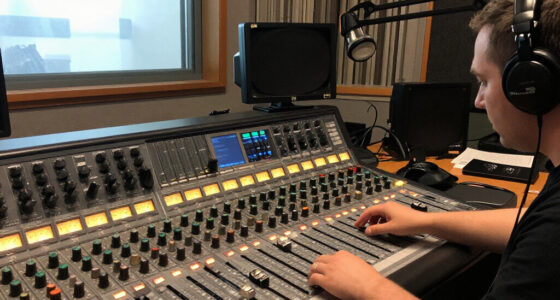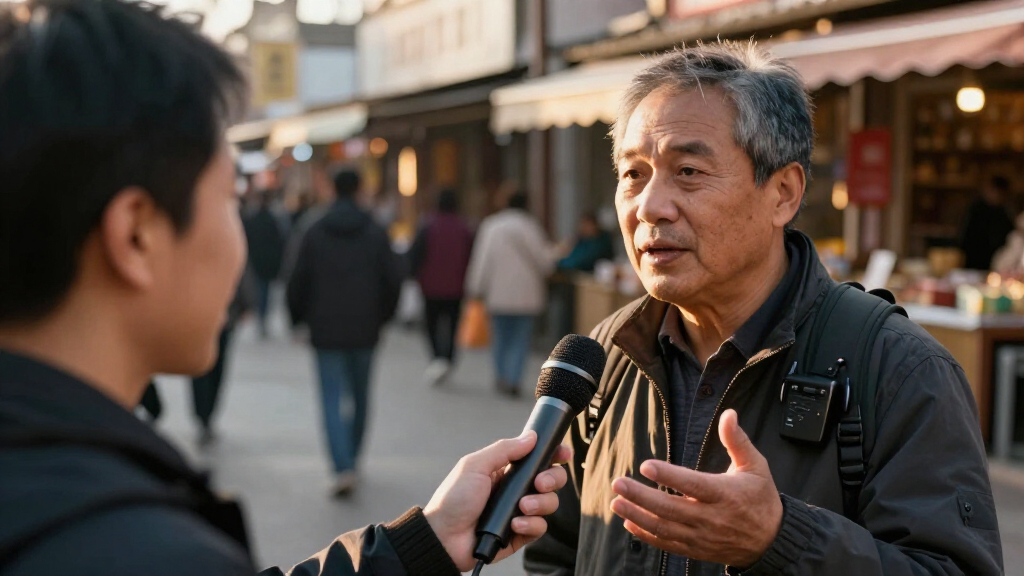

The best wireless microphones for interviews depend on how you record: my best overall pick is the Hollyland LARK A2 for a flexible two-person setup, while the DJI Mic Mini kits suit compact mobile recording and the RØDE Interview PRO is built for a dedicated handheld approach. The main tradeoffs are phone compatibility, number of speakers, recording workflow, and how much control you need. A small lavalier keeps subjects hands-free, but a handheld mic can make street interviews easier to manage. Continue reading for the full breakdown, buying advice, and answers to common setup questions.

Get everyday essentials delivered free with Prime
- Fast, free delivery on millions of items
- Prime Video, Amazon Music and more included
- Member-only deals all year
Complete the kit



Key Takeaways
- The Hollyland LARK A2 is the most balanced two-person option in this lineup, while the DJI Mic Mini offers a compact alternative with two transmitter and receiver configurations.
- Handheld and lavalier microphones serve different interview styles: the RØDE Interview PRO and COMICA Revo S suit interviewer-led street conversations, while the lavaliers leave both hands free.
- Phone-first buyers have many choices, but connector fit matters: several sets specify Lightning, USB-C, or both, so check the exact receiver against every device you plan to use.
- Charging cases are a recurring convenience, not a substitute for workflow checks: confirm how a kit connects, how many people it supports, and whether its controls suit your recording habits.
- Entry-level two-pack lavaliers prioritize simple access and multiple speakers; the dedicated DJI, Hollyland, and RØDE systems stand apart for buyers seeking a more specific interview setup.
| YUANRAN MS18 4-in-1 Wireless Lavalier Microphone with Desk Stand |  | Best for Flexible Phone Setups | Microphone type: Wireless lavalier | Connectors: Lightning and USB-C | Pairing: Automatic plug-and-play | VIEW LATEST PRICE | See Our Full Breakdown |
| Hollyland LARK A2 Wireless Microphone System with 2 Transmitters, 1 Receiver, and Charging Case |  | Best for Two-Person Interviews | Connectivity: 2.4 GHz wireless | Included configuration: 2 transmitters, 1 receiver, charging case | Audio resolution: 48 kHz/24-bit | VIEW LATEST PRICE | See Our Full Breakdown |
| COMICA Revo S Wireless Handheld Microphone |  | Best Handheld Interview Pick | Microphone type: 14 mm condenser | Polar pattern: Cardioid (unidirectional) | Recording quality: 48 kHz/24-bit | VIEW LATEST PRICE | See Our Full Breakdown |
| DJI Mic Mini Wireless Microphone Kit (2 Transmitters, 1 Receiver, Charging Case) | 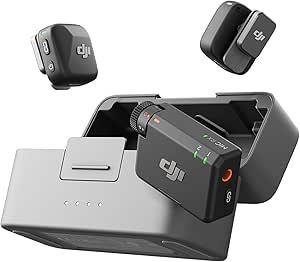 | Best for Long-Range Field Interviews | Included components: 2 transmitters, 1 receiver, charging case | Transmitter weight: 10 g | Maximum transmission range: Up to 400 m | VIEW LATEST PRICE | See Our Full Breakdown |
| Wireless Lavalier Microphone Set for iPhone, iPad, and Android, 2-Pack |  | Best Simple Two-Mic Value | Connectivity: 2.4 GHz wireless | Microphones included: 2 | Microphone type: Omnidirectional lavalier | VIEW LATEST PRICE | See Our Full Breakdown |
| Mini Mic Pro Wireless Lavalier Microphone for iPhone and Android | 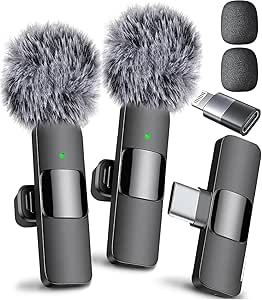 | Best for Simple Phone Interviews | Connectivity: Wireless | Connectors: Lightning and USB Type-C | Microphone pattern: Omnidirectional | VIEW LATEST PRICE | See Our Full Breakdown |
| MAYBESTA Wireless Mini Lavalier Microphone for iPhone and Android |  | Best for Beginner Phone Interviews | Microphone type: Mini lavalier | Connectors: Lightning and USB Type-C | Microphone pattern: Omnidirectional | VIEW LATEST PRICE | See Our Full Breakdown |
| Labstandard Dual Wireless Lavalier Microphone Set for iPhone, iPad, and USB-C Devices |  | Best for Two-Person Interviews | Connectivity: Bluetooth (as listed) | Connectors: Lightning and USB Type-C | Microphone pattern: Omnidirectional | VIEW LATEST PRICE | See Our Full Breakdown |
| RØDE Interview PRO Wireless Handheld Condenser Microphone |  | Best Premium Handheld Interview Mic | Microphone type: Handheld condenser | Connectivity: Wireless, 2.4 GHz | Microphone pattern: Omnidirectional | VIEW LATEST PRICE | See Our Full Breakdown |
| wedaniya Wireless Mini Lavalier Microphones, 2-Pack with USB-C and Lightning Receivers |  | Best for Monitored Two-Person Phone Interviews | Microphone type: Lavalier | Connectivity: Wireless; USB-C and Lightning receivers | Compatible devices: Android and iOS devices, laptops, smartphones, and tablets | VIEW LATEST PRICE | See Our Full Breakdown |
| DJI Mic Mini Wireless Microphone Kit (2 Transmitters, Mobile Receiver) |  | Best for Mobile Interviews | Transmitter weight: 10 g | Maximum transmission range: 300 m | Maximum operating time: 11.5 hours | VIEW LATEST PRICE | See Our Full Breakdown |
| Wireless Lavalier Microphone Set with Charging Case |  | Best for Long Interview Days | Connectivity: 2.4 GHz wireless | Connector: USB Type-C | Microphone type: Lavalier, omnidirectional | VIEW LATEST PRICE | See Our Full Breakdown |
| Mini Mic Pro Wireless Lavalier Microphone Kit with Charging Case |  | Best for USB-C and Lightning Flexibility | Connectivity: USB-C and Lightning | Microphone type: Omnidirectional lavalier | Compatible devices: Android, laptops, smartphones, tablets, and iPad | VIEW LATEST PRICE | See Our Full Breakdown |
| wireless microphones for interview | Connectivity | Compatible devices | Microphone type |
|---|---|---|---|
| YUANRAN MS18 4-in-1 Wireless L | — | Smartphones and tablets | Wireless lavalier |
| Hollyland LARK A2 Wireless Mic | 2.4 GHz wireless | — | — |
| COMICA Revo S Wireless Handhel | — | — | 14 mm condenser |
| DJI Mic Mini Wireless Micropho | Bluetooth, DJI OsmoAudio, USB Type-C | Camera and smartphone | — |
| Wireless Lavalier Microphone S | 2.4 GHz wireless | iPhone, iPad, Android phones, Windows PCs, and Mac computers | Omnidirectional lavalier |
| Mini Mic Pro Wireless Lavalier | Wireless | Android, laptop, smartphone, tablet, iPad, and iPhone | — |
| MAYBESTA Wireless Mini Lavalie | — | Android, laptop, smartphone, tablet, iPad, and iPhone | Mini lavalier |
| Labstandard Dual Wireless Lava | Bluetooth (as listed) | — | — |
| RØDE Interview PRO Wireless Ha | Wireless, 2.4 GHz | RØDE Series IV wireless receivers | Handheld condenser |
| wedaniya Wireless Mini Lavalie | Wireless; USB-C and Lightning receivers | Android and iOS devices, laptops, smartphones, and tablets | Lavalier |
| DJI Mic Mini Wireless Micropho | Bluetooth, Wi-Fi, USB Type-C | — | — |
| Wireless Lavalier Microphone S | 2.4 GHz wireless | iPhone, iPad, Android phones, Windows and Mac computers | Lavalier, omnidirectional |
| Mini Mic Pro Wireless Lavalier | USB-C and Lightning | Android, laptops, smartphones, tablets, and iPad | Omnidirectional lavalier |
More Details on Our Top Picks
YUANRAN MS18 4-in-1 Wireless Lavalier Microphone with Desk Stand
The YUANRAN MS18 is the most adaptable choice here for interviews that might shift from a seated desk conversation to a handheld street-style exchange. Its 4-in-1 design supports desk-stand, handheld, and phone-recording setups, while the included USB-C and Lightning connectors cover many current phones and tablets without an app-based pairing routine. One-touch noise reduction and a windscreen add useful help when recording outside or in a busy room.
Compared with the COMICA Revo S, the MS18 gives you more physical setup options, while COMICA offers stated 48 kHz/24-bit recording and longer battery life. The MS18’s mode changes are less self-explanatory: interview mode depends on placing the transmitter in the first slot, and setup instructions mention removing a protective film. Choose it for versatility, not for a clearly documented audio-resolution spec.
Pros:- Multiple configurations suit desk, handheld, and phone-recording interviews
- USB-C and Lightning connectors support compatible phones and tablets
- Automatic plug-and-play pairing avoids app or Bluetooth setup
- One-touch noise reduction and an included windscreen help with distracting sound
Cons:- Interview mode requires inserting the transmitter into the first slot
- Instructions include a protective-film removal step that can be easy to miss
- No audio-resolution or battery-runtime figure is provided in the supplied product data
Best for: Phone-based interviewers who alternate between seated desk recordings, handheld interviews, and casual video shoots.
Not ideal for: Buyers who prioritize published audio-resolution and battery-life figures, or who want a setup with no mode-specific steps.
- Microphone type:Wireless lavalier
- Connectors:Lightning and USB-C
- Pairing:Automatic plug-and-play
- Special features:4-in-1 design, noise reduction, handheld interview mode
- Compatible devices:Smartphones and tablets
- Enclosure materials:Metal and plastic
- Dimensions:5 × 5.9 × 1.4 inches
- Batteries:2 included
Our verdict“Choose the MS18 if you want one phone-friendly kit for several interview formats and can tolerate a small learning curve.”
Hollyland LARK A2 Wireless Microphone System with 2 Transmitters, 1 Receiver, and Charging Case
For interviews with a host and guest, the Hollyland LARK A2 stands out because its package includes two transmitters, and its listed 48 kHz/24-bit audio gives buyers a useful recording-quality benchmark. Adjustable AI noise cancellation and automatic audio limiting can help manage changing background sound and louder voices without constant manual adjustments. Each transmitter is rated for up to seven hours, while the case raises stated total battery life to as much as 42 hours.
Compared with the DJI Mic Mini, the LARK A2 lists a shorter maximum range and less total case-supported runtime, but provides a stated 24-bit recording specification and adjustable noise cancellation. Its range claim depends on recording conditions, and some features require the HollyAudio app. It makes more sense for planned two-person phone interviews than for buyers seeking a completely app-free workflow.
Pros:- Two transmitters support recording an interviewer and guest
- 48 kHz/24-bit recording is specified
- Adjustable AI noise cancellation and automatic limiting help handle changing sound levels
- Charging case provides up to 42 hours of total battery life
Cons:- Some listed features require the HollyAudio app
- The stated 200 m maximum range can vary with recording conditions
- USB Type-C connector may require an adapter for devices without USB-C
Best for: Interviewers recording a host and one guest who want two included transmitters, detailed audio specifications, and a charging case.
Not ideal for: Users who want every feature available without an app, or who need a system with a range specification beyond 200 m.
- Connectivity:2.4 GHz wireless
- Included configuration:2 transmitters, 1 receiver, charging case
- Audio resolution:48 kHz/24-bit
- Microphone pattern:Omnidirectional
- Wireless range:Up to 200 m (650 ft)
- Transmitter runtime:Up to 7 hours; up to 9 hours with AI Power Saving
- Total battery life with case:Up to 42 hours
- Transmitter weight:8.5 g
Our verdict“Pick the LARK A2 for two-person interviews where specified 24-bit recording and a long combined case runtime matter more than app-free operation.”
COMICA Revo S Wireless Handheld Microphone
The COMICA Revo S is the clearest fit for interviewers who want to hold a microphone toward the speaker instead of clipping a lavalier to clothing. Its cardioid pickup pattern favors sound from the front, which suits one-at-a-time questions and can reduce pickup from the sides compared with the omnidirectional lavaliers in the LARK A2 and dual wireless set. The 48 kHz/24-bit recording specification, one-key noise reduction, and three gain levels give buyers more defined control over the recorded voice.
Unlike the YUANRAN MS18, this is a dedicated handheld design rather than a multi-mode kit, so it is less adaptable for discreet, hands-free interviews. Its built-in battery is rated for up to 15 hours, but Lightning devices need a separate USB-C-to-Lightning adapter that supports OTG. Choose it for direct, face-to-face interviews, not when two people need separate microphones.
Pros:- Handheld format makes it easy to point the mic toward the person speaking
- Cardioid pickup is suited to focused, front-facing interviews
- 48 kHz/24-bit recording with three gain levels offers useful control
- Up to 15 hours of stated battery life
Cons:- Includes one channel, so it does not provide separate microphones for two speakers
- Lightning devices need a separate USB-C-to-Lightning OTG adapter
- Larger handheld form is less discreet than the lavalier transmitters in the Hollyland LARK A2
Best for: Solo interviewers who prefer a handheld microphone for street questions, sit-down conversations, or on-camera reporting.
Not ideal for: Two-person interview teams needing separate microphones, or Lightning-device users without a compatible OTG adapter.
- Microphone type:14 mm condenser
- Polar pattern:Cardioid (unidirectional)
- Recording quality:48 kHz/24-bit
- Noise reduction:One-key CalMix Denoise
- Gain adjustment:3 levels
- Battery:Built-in 350 mAh lithium battery
- Battery life:Up to 15 hours
- Channels:1
Our verdict“Choose the Revo S if you want a controllable handheld mic for one-at-a-time interviews rather than a clipped two-person lavalier system.”
DJI Mic Mini Wireless Microphone Kit (2 Transmitters, 1 Receiver, Charging Case)
The DJI Mic Mini is a strong match for interviews recorded while the interviewer and subject move around, or when the camera must stay well back. Its up to 400 m transmission range is the longest stated here, and the two-transmitter kit makes it ready for host-and-guest recording. The transmitters weigh 10 g, while two noise-cancellation levels and automatic limiting help keep speech manageable as surroundings and voice volume change.
Compared with the Hollyland LARK A2, DJI lists a longer range and up to 48 hours of battery life with its case; the LARK A2, by contrast, specifies 48 kHz/24-bit audio while this kit lists a 48 kHz sampling rate without a bit-depth figure. The DJI’s range is not a guarantee in every environment, and the kit is not waterproof. Osmo Mobile series users also need a first-generation DJI OM Multifunctional Module to connect.
Pros:- Two transmitters support interviewer-and-guest recording
- Up to 400 m stated transmission range suits wide or mobile setups
- Charging case provides up to 48 hours of battery life
- Lightweight 10 g transmitters and two noise-cancellation levels suit on-the-move interviews
Cons:- Not waterproof
- Osmo Mobile series connection requires a first-generation DJI OM Multifunctional Module
- The supplied specs list a 48 kHz sampling rate but do not state bit depth
Best for: Field interviewers who need two transmitters, a long stated wireless range, and extended case-supported runtime.
Not ideal for: People recording in wet conditions, or Osmo Mobile users who do not have the required first-generation multifunctional module.
- Included components:2 transmitters, 1 receiver, charging case
- Transmitter weight:10 g
- Maximum transmission range:Up to 400 m
- Sampling rate:48 kHz
- Maximum SPL:120 dB
- Battery life with charging case:Up to 48 hours
- Connectivity:Bluetooth, DJI OsmoAudio, USB Type-C
- Compatible devices:Camera and smartphone
Our verdict“Choose the DJI Mic Mini for mobile two-person interviews where range and case runtime take priority over a stated 24-bit recording specification.”
Wireless Lavalier Microphone Set for iPhone, iPad, and Android, 2-Pack
This two-microphone lavalier set is aimed at buyers who need a basic way to capture two interview participants without building a more elaborate recording setup. Its plug-in receiver avoids Bluetooth pairing and app setup, and USB-C plus an iOS adapter broaden phone compatibility; the receiver can also charge a phone during recording. Noise reduction and a mute function address practical interview needs, while the selectable reverb mode is an extra effect rather than a substitute for clean dialogue recording.
Compared with the Hollyland LARK A2, this set offers phone charging through the receiver but lists a shorter five-hour runtime, no audio-resolution figure, and a shorter 98-foot range. Android users must enable OTG, so connection is not equally direct on every device. It suits short, straightforward conversations better than long field days or buyers seeking detailed audio specifications.
Pros:- Two microphones let an interviewer and guest use separate transmitters
- Plug-in receiver avoids Bluetooth and app setup
- Receiver can charge a phone while recording
- Mute and noise-reduction functions offer practical control for interviews
Cons:- Up to five hours of battery life is limited for extended recording days
- Android devices require OTG to be enabled
- The supplied product data does not state audio resolution
Best for: Phone-based interviewers recording two people in short sessions who want a simple plug-in receiver and the option to charge their phone.
Not ideal for: People recording long sessions, Android users unable to enable OTG, or buyers who need a stated audio-resolution specification and longer range.
- Connectivity:2.4 GHz wireless
- Microphones included:2
- Microphone type:Omnidirectional lavalier
- Connectors:USB Type-C, with iOS adapter
- Wireless range:Up to 98 feet
- Battery life:Up to 5 hours
- Charging time:1.5 hours
- Compatible devices:iPhone, iPad, Android phones, Windows PCs, and Mac computers
Our verdict“Choose this set for short two-person phone interviews when easy setup and phone charging matter more than extended runtime or detailed audio specifications.”
Mini Mic Pro Wireless Lavalier Microphone for iPhone and Android
For straightforward interviews recorded on a phone, this Mini Mic Pro keeps setup simple: its included USB-C and Lightning adapters connect to compatible devices without an app or Bluetooth pairing. That makes it an easier fit for quick, mobile conversations than the RØDE Interview PRO, which needs a compatible RØDE receiver that is sold separately. Two lavalier microphones also let an interviewer and guest mic up separately, while the foam and deadcat covers offer useful protection across indoor and breezy locations.
The tradeoff is a stated six-hour maximum battery life, which leaves less room for long interview days than a kit designed around a charging case. The listed 2.4 GHz frequency is not a measure of audio quality, and the product details provide limited performance information. I’d choose it for portable, uncomplicated phone interviews, not demanding all-day production.
Pros:- USB-C and Lightning adapters support plug-and-play use with compatible devices.
- Two lavalier microphones can capture an interviewer and guest separately.
- Foam and deadcat covers suit indoor recording and help with outdoor wind.
- Compact, lightweight design is practical for mobile interviews.
Cons:- Up to six hours of battery life may not cover a full day of interviews.
- The supplied specifications offer little detail for judging audio performance.
Best for: Phone-based interviewers who want two clip-on mics, direct USB-C or Lightning connections, and minimal setup.
Not ideal for: Crews recording long sessions or needing detailed, production-grade audio specifications; the stated runtime is up to six hours and performance details are limited.
- Connectivity:Wireless
- Connectors:Lightning and USB Type-C
- Microphone pattern:Omnidirectional
- Battery life:Up to 6 hours
- Compatible devices:Android, laptop, smartphone, tablet, iPad, and iPhone
- Weight:80 g
- Dimensions:3 × 0.5 × 0.25 inches
- Included accessories:2 microphones, receiver, USB charging cable, 2 clips, 2 foam tips, and 2 deadcat tips
Our verdict“Choose this for uncomplicated two-person phone interviews; pick the RØDE Interview PRO instead if you need onboard backup recording and already own a compatible RØDE receiver.”
MAYBESTA Wireless Mini Lavalier Microphone for iPhone and Android
The MAYBESTA is aimed at interviewers who want a low-friction start: connect its Lightning or USB-C receiver to a compatible phone and record without app installation or Bluetooth setup. Its two lavalier microphones give a beginner a ready path to recording both sides of a conversation, while the mute function can silence a mic during pauses or off-camera discussion. Compared with the Mini Mic Pro, this model calls out noise reduction and mute controls, but it does not state a battery runtime or wireless range.
That missing information makes it harder to plan for interviews that run long or take place with the subject far from the phone. The 80 dB signal-to-noise ratio is listed, but the product details do not establish how it performs in varied real-world locations. I’d favor it for short, phone-first interviews where simple operation matters more than predictable session length.
Pros:- Lightning and USB-C receiver options support compatible iPhone and Android devices.
- Plug-and-play operation avoids app installation and Bluetooth pairing.
- Two lavalier microphones support a two-person interview.
- Noise reduction and a mute function provide useful basic recording controls.
Cons:- Battery runtime is not specified, making session planning uncertain.
- Wireless range is not provided, limiting confidence for interviews where the subject moves away from the receiver.
Best for: First-time mobile interviewers who need two lavalier mics, straightforward phone connection, and a way to mute during breaks.
Not ideal for: Interviewers planning long recordings or working at a distance from the phone, since runtime and wireless range are not specified.
- Microphone type:Mini lavalier
- Connectors:Lightning and USB Type-C
- Microphone pattern:Omnidirectional
- Signal-to-noise ratio:80 dB
- Frequency:2.4 GHz
- Channels:1
- Compatible devices:Android, laptop, smartphone, tablet, iPad, and iPhone
- Included items:1 receiver, USB charging cable, 2 sponge tips, 2 lavalier microphones, and 3 clips
Our verdict“Pick the MAYBESTA for simple, short phone interviews with two speakers, but choose a model with a stated runtime for sessions that need dependable duration planning.”
Labstandard Dual Wireless Lavalier Microphone Set for iPhone, iPad, and USB-C Devices
The Labstandard set puts two microphones and two-channel recording at the center of its appeal, making it a natural match for an interviewer and guest who both need to be mic’d. Its stated 0.008-second latency and real-time audio syncing are aimed at keeping speech aligned with video, while noise reduction is intended to help in less controlled locations. Compared with the single-channel MAYBESTA, the Labstandard is more explicitly built for capturing two voices; the Mini Mic Pro also includes two microphones, but this listing gives the Labstandard a clearer two-channel specification.
Its product details are less dependable than that advantage suggests: connectivity is described as Bluetooth even though the listed connections are Lightning and USB-C, and battery information mentions both about six hours and two C batteries. Compatibility also refers to 3.5 mm devices without listing a 3.5 mm connector. I’d choose it only after confirming the receiver and power setup suit your recording device.
Pros:- Two omnidirectional microphones and two channels suit interviewer-and-guest recording.
- Listed low latency supports tighter audio and video synchronization.
- Lightning and USB-C compatibility is stated for common mobile devices.
- Noise reduction is included for interviews outside quiet rooms.
Cons:- Connectivity and battery descriptions are inconsistent, making setup and power planning unclear.
- The listing mentions 3.5 mm compatibility but does not list a 3.5 mm connector.
Best for: Interviewers who need two clip-on mics and want a stated two-channel setup for recording both speakers.
Not ideal for: Buyers who need unambiguous connection and power details before a shoot, or who require confirmed 3.5 mm compatibility.
- Connectivity:Bluetooth (as listed)
- Connectors:Lightning and USB Type-C
- Microphone pattern:Omnidirectional
- Channels:2
- Latency:0.008 seconds
- Battery life:About 6 hours
- Weight:0.05 kg
- Included accessories:Rechargeable Lightning adapter, USB-C charging cable, and user manual
Our verdict“Choose the Labstandard when two-channel interview capture is the priority and you can verify its connection and battery details before recording.”
RØDE Interview PRO Wireless Handheld Condenser Microphone
The RØDE Interview PRO serves a different interview style from the clip-on kits here: its handheld format suits stand-up interviews, street reporting, and situations where a mic needs to pass between speakers. Its strongest differentiator is 32-bit float onboard recording, which creates a local backup instead of relying only on the wireless link. GainAssist can also adjust levels automatically, a useful safeguard when voices vary in loudness. Compared with the Mini Mic Pro or wedaniya lavaliers, this is a more purpose-built handheld option, but it is not a self-contained phone kit.
The main obstacle is that no receiver is included; it works with compatible RØDE Series IV receivers, so buyers without one must plan for that additional hardware. Its single handheld mic also differs from the two-mic lavalier sets, which are more convenient for recording both speakers at once. I’d select it for controlled handheld interview work, not for the simplest direct-to-phone setup.
Pros:- 32-bit float onboard recording provides a backup independent of the wireless link.
- GainAssist adjusts levels automatically as speaking volume changes.
- Handheld format suits stand-up interviews and passing the mic between speakers.
- Compatible with several RØDE Series IV wireless receivers.
Cons:- Wireless receiver is not included.
- Compatibility is limited to RØDE Series IV receivers.
- A single handheld mic is less convenient than two lavaliers for recording both speakers simultaneously.
Best for: Video journalists and creators who want a handheld interview mic with onboard backup recording and already have, or plan to add, a compatible RØDE Series IV receiver.
Not ideal for: Phone-first beginners or crews needing two separately mic’d speakers in one take; the receiver is not included and this is a single handheld mic.
- Microphone type:Handheld condenser
- Connectivity:Wireless, 2.4 GHz
- Microphone pattern:Omnidirectional
- Onboard recording:32-bit float
- Signal-to-noise ratio:74 dB
- Compatible devices:RØDE Series IV wireless receivers
- Included items:Interview PRO, RM3, SC34, windshield, and ZP2
- Warranty:2 years
Our verdict“Choose the Interview PRO for handheld reporting and onboard backup when you have a compatible RØDE receiver; choose a two-mic lavalier kit for simpler dual-speaker phone interviews.”
wedaniya Wireless Mini Lavalier Microphones, 2-Pack with USB-C and Lightning Receivers
For two-person phone interviews where the operator wants to hear the recording as it happens, the wedaniya stands out for real-time headphone monitoring alongside two microphones and both USB-C and Lightning receivers. That monitoring can help catch a loose clip, wind noise, or a connection problem before a long answer is lost. Compared with the Mini Mic Pro, it adds monitoring and standard, reverb, and mute modes; against the MAYBESTA, it also states a six-hour runtime and a one-hour charging time.
The modes offer flexibility, though reverb may not suit natural-sounding interview speech, so I’d keep the sound simple unless there is a clear reason to use an effect. Six hours still limits lengthy recording days, and the microphones need charging before use. Its listed 4.8 GHz frequency and 70 dB signal-to-noise ratio provide technical reference points, but they do not replace a clear account of performance in a particular location.
Pros:- Two microphones and USB-C and Lightning receivers support dual-speaker use across compatible devices.
- Real-time headphone monitoring helps catch recording issues during an interview.
- Noise reduction and included windshields suit varied recording environments.
- Up to six hours of battery life and a stated one-hour charging time aid session planning.
Cons:- Up to six hours of runtime may not cover a full day of recording.
- Microphones require charging before use.
- Reverb and other modes add choices that may be unnecessary for natural interview audio.
Best for: Mobile interviewers recording two speakers on a phone who want live headphone monitoring and both USB-C and Lightning receiver options.
Not ideal for: Crews recording extended sessions without charging breaks or buyers seeking a no-effects-only workflow with minimal mode choices.
- Microphone type:Lavalier
- Connectivity:Wireless; USB-C and Lightning receivers
- Compatible devices:Android and iOS devices, laptops, smartphones, and tablets
- Signal-to-noise ratio:70 dB
- Frequency response:4.8 GHz
- Battery life:Up to 6 hours
- Charging time:1 hour
- Weight:Under 1 oz
- Included items:2 microphones, USB-C and Lightning receivers, portable bag, 2 deadcat covers, and 2 sponge covers
Our verdict“Choose the wedaniya for monitored, two-person phone interviews with flexible device connections, but plan charging breaks for longer recording days.”
DJI Mic Mini Wireless Microphone Kit (2 Transmitters, Mobile Receiver)
For interviews recorded on a phone, this kit stands out for pairing two discreet 10 g transmitters with a mobile receiver and broad device compatibility. That setup suits a host and guest without the bulk of a handheld mic, while Basic and Strong noise-cancellation modes let you adapt to quieter rooms or noisier surroundings. Automatic audio limiting can also help restrain sudden peaks. Compared with the Wireless Lavalier Microphone Set with Charging Case, DJI offers a much longer stated transmission range and a higher listed signal-to-noise ratio, but this kit does not include a charging case and the other set claims more total use through its case. The 300 m range is useful for movement, though real-world obstacles can shorten it. Skip it for wet-weather reporting: it is not waterproof, and its small magnetic parts need careful handling.
Pros:- Two ultralight 10 g transmitters are discreet on interview subjects
- Two noise-cancellation levels and automatic audio limiting help manage changing recording conditions
- Listed operating time reaches 11.5 hours, with transmission range up to 300 m
- Compatible with iPhone, Android phones, PCs, and tablets
Cons:- Not waterproof, limiting use in wet outdoor conditions
- No charging case is listed, unlike the Wireless Lavalier Microphone Set with Charging Case
- Small parts and magnets require careful handling
Best for: Phone-based interviewers who need two lightweight mics, flexible noise reduction, and room to move between subjects
Not ideal for: Reporters working in rain or those who want a charging case for extended field days
- Transmitter weight:10 g
- Maximum transmission range:300 m
- Maximum operating time:11.5 hours
- Audio quality:48 kHz, 24-bit when directly connected to supported OsmoAudio devices
- Noise cancellation:Two levels: Basic and Strong
- Microphone pattern:Omnidirectional
- Signal-to-noise ratio:70 dB
- Connectivity:Bluetooth, Wi-Fi, USB Type-C
- Compatibility:iPhone, Android phones, PCs, and tablets
Our verdict“Choose the DJI Mic Mini for mobile two-person interviews where discreet transmitters, noise controls, and long-range flexibility matter more than a charging case or weather protection.”
Wireless Lavalier Microphone Set with Charging Case
The main reason I’d choose this set for interviews is its 1200 mAh charging case, which is listed to support up to 80 hours of total use. That makes it a practical pick for repeated short interviews when charging opportunities are limited. Two microphones let a host and guest record together, and plug-and-play pairing avoids app setup or Bluetooth pairing steps. Against the DJI Mic Mini Wireless Microphone Kit (2 Transmitters, Mobile Receiver), this set claims more total battery use with its case, but its stated 164-foot range is much shorter than DJI’s 300 m maximum. Its noise reduction and omnidirectional pickup suit casual field conversations, though the listed 60 dB signal-to-noise ratio is below DJI’s stated figure. The range applies to open areas, and compatibility details are not fully consistent between the product description and device list, so I’d confirm support for a specific computer before buying.
Pros:- Two microphones support recording an interviewer and guest at once
- Charging case is listed to provide up to 80 hours of total use
- Plug-and-play setup requires no Bluetooth pairing or app
- Noise reduction and omnidirectional pickup are suited to conversational recording
Cons:- The 164-foot maximum range is specified for open areas and is shorter than the DJI Mic Mini’s listed range
- Device compatibility information is inconsistent about computer support
- Listed signal-to-noise ratio is 60 dB, below the DJI Mic Mini’s stated 70 dB
Best for: Interviewers recording several short conversations across a long day who want two microphones and a case that can recharge the kit
Not ideal for: Users who need extended separation between interviewer and subject or require confirmed computer compatibility before purchase
- Connectivity:2.4 GHz wireless
- Connector:USB Type-C
- Microphone type:Lavalier, omnidirectional
- Maximum range:Up to 164 ft in open areas
- Microphone battery life:Up to 10 hours
- Total battery life with case:Up to 80 hours
- Charging case capacity:1200 mAh
- Charging time:2 hours
- Compatible devices:iPhone, iPad, Android phones, Windows and Mac computers
Our verdict“Pick this set for two-person interview days where case-supported runtime and straightforward setup matter more than long wireless range.”
Mini Mic Pro Wireless Lavalier Microphone Kit with Charging Case
This kit’s clearest advantage for interviewers is its USB-C and Lightning adapters, making it easier to switch between compatible Android and Apple devices without buying a separate receiver. It includes two microphones, plus foam and deadcat wind covers that can help reduce wind noise during outdoor conversations. Compared with the DJI Mic Mini Wireless Microphone Kit (2 Transmitters, Mobile Receiver), the Mini Mic Pro offers connector flexibility and wind accessories, while DJI provides a much longer stated range, longer operating time, and defined noise-cancellation modes. This kit is listed for up to six hours per charge, so it is better suited to shorter reporting sessions than an all-day schedule. I would also treat its listed 10,000 dB signal-to-noise ratio as unreliable: that figure appears unusually high, so it does not give a sound basis for comparing audio performance.
Pros:- USB-C and Lightning adapters support switching between compatible Apple and Android devices
- Two microphones allow a host and guest to record together
- Foam and deadcat covers provide options for reducing wind noise
- Compact kit weighs under an ounce
Cons:- Listed battery life is up to six hours per charge, shorter than the DJI Mic Mini’s stated 11.5 hours
- The 10,000 dB signal-to-noise figure appears implausible and is not a reliable comparison point
- Requires the included receiver and a compatible connector; no app or Bluetooth connection is listed
Best for: Mobile interviewers who alternate between USB-C and Lightning devices and want included wind covers for outdoor recording
Not ideal for: People recording long field days, or buyers who need dependable published audio-performance figures and a wireless connection without the included receiver
- Connectivity:USB-C and Lightning
- Microphone type:Omnidirectional lavalier
- Compatible devices:Android, laptops, smartphones, tablets, and iPad
- Battery life:Up to 6 hours per charge
- Signal-to-noise ratio:10,000 dB as listed; figure appears unusually high
- Included microphones:2
- Included wind protection:2 foam tips and 2 deadcat tips
- Enclosure material:Acrylonitrile butadiene styrene (ABS)
- Warranty:90-day refund guarantee and 6-month replacement or warranty
Our verdict“Choose the Mini Mic Pro for short mobile interviews across USB-C and Lightning devices, but favor the DJI Mic Mini for longer sessions and clearer published performance specifications.”
How We Picked
I ranked these wireless microphones for interview use by how clearly each product fits a real recording setup: one or two speakers, phone or camera recording, hands-free lavalier or handheld interviewing, and the receiver connections listed for compatible devices. I also weighed practical usability, including included transmitters and receivers, charging cases, and whether the format suits quick mobile interviews or a more deliberate production workflow.
The order reflects versatility and clarity of use, not a claim that every kit has the same sound or features. The Hollyland LARK A2 leads as a balanced two-person system; the DJI Mic Mini kits follow for compact mobile recording, with their different receiver bundles kept distinct. Dedicated handheld models rank well for interviewers who prefer that format, while simpler phone lavalier sets are better matched to budget-conscious or beginner setups. I avoid treating product names alone as proof of recording range, compatibility, or sound performance, so buyers should check the exact device and kit configuration before choosing.
Factors to Consider When Choosing Wireless Microphones For Interviews
Before choosing a kit, map out the interview you actually record: who speaks, where the audio goes, and how much setup time you can spare. These decisions often matter more than a long feature list, especially when a receiver must connect directly to a phone or camera.
Choose the mic format for the interview
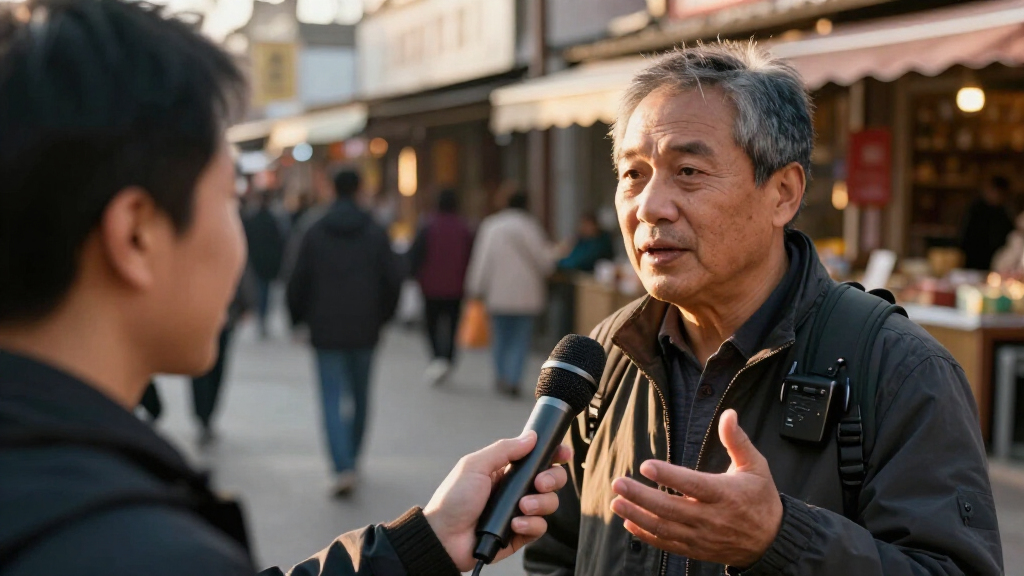
A lav mic clips onto clothing, keeping a subject’s hands free and the mic in a consistent position during sit-down or walking interviews. A handheld mic is easier to pass between speakers and can be pointed toward whoever is talking, which helps when the conversation is unscripted or outdoors. The tradeoff is visible equipment and a hand occupied throughout the interview. Avoid choosing a lav just because it is small if you need to move quickly between speakers, and avoid a handheld if you need both participants miked at once.
Match the system to the number of speakers
Count the people who need recorded audio at the same time, including the interviewer if their questions must be clear in the final edit. A two-transmitter kit can simplify a host-and-guest recording, but it may be unnecessary for solo reporting and can add setup steps. Two separate plug-in microphones may not work like a coordinated two-person system, so verify how transmitters pair with the receiver and whether both channels can be captured as needed. For rotating street interviews, a handheld mic passed between people can be simpler than fitting each guest with a transmitter.
Check the full connection path, not just the connector name
USB-C and Lightning compatibility describe a physical connection, but they do not answer every question about whether a mic works with a specific phone, camera app, or recording device. Check the receiver included in the exact kit and whether your phone case blocks the port. If you record on more than one device, consider what adapters or alternate receivers are required and whether they are included. A common mistake is buying a phone-only receiver for a camera workflow, then discovering that the planned setup needs a different connection.
Plan for noise and mic placement
Wireless connection alone does not make an interview sound clean: placement, clothing movement, distance, and surrounding noise all affect intelligibility. A lav should sit where it can capture speech without rubbing against fabric, while a handheld needs to stay close to the active speaker. For busy locations, think through where the interviewer will stand and how the mic will be aimed before recording. Do not assume that a small transmitter will hide neatly under every outfit; concealment can introduce fabric noise or muffle speech.
Balance convenience against control
A compact kit with a charging case can make quick phone interviews easier to carry and recharge, while a dedicated handheld or a more involved wireless system may better suit a repeatable production routine. Think about whether you need a receiver attached to a mobile device, a system suited to a camera, or a mic that can be passed between speakers. Extra components only help when they fit the workflow you use; otherwise they add setup and charging tasks. Before a real interview, check battery status, confirm the recording device receives audio, and make a short playback test.
Leave room for backup and monitoring
For an important conversation, plan how you will catch a connection problem before the interview ends. If your recording device permits it, monitor with headphones and confirm that speech is being captured rather than relying on a receiver light alone. Keep a backup recording option ready, such as a second device positioned nearby, when the interview cannot easily be repeated. A charging case helps with routine power management, but it does not replace a charged phone, a sound check, or a plan for crowded radio environments.
Frequently Asked Questions
Should I choose a lavalier or handheld mic for street interviews?
Choose a handheld mic if you often pass the mic between people or need to aim it quickly toward a speaker in a changing scene. A lavalier is a better fit when the same person speaks for longer stretches and needs to keep both hands free. If you interview strangers for short answers, the handheld format can reduce the time spent clipping on a transmitter. For a host and guest speaking together, a two-transmitter lavalier system may be more practical than one handheld mic.
Can one wireless mic kit work with both my phone and camera?
It depends on the exact receiver and the inputs on each recording device, not simply on whether the kit is called wireless. Check whether the listed package includes the receiver or cable needed for your phone and whether a separate connection is required for your camera. Some products in this roundup are described specifically for phone connections, while dedicated systems may suit a different workflow. If you switch devices often, confirm the complete connection chain before buying and test it with your recording app.
Do I need two transmitters if I interview one guest at a time?
Not always. If you only need the guest’s voice and can record your questions separately or off mic, a single-transmitter setup may be enough. Two transmitters make more sense when both the interviewer and guest need clear, hands-free audio in the same recording. They can also help when two guests speak together, provided the receiver and recording setup support the way you want to capture both voices. Paying for an extra transmitter is less useful if it adds setup without solving a real recording need.
Are phone lavalier kits suitable for interviews I plan to publish?
They can suit published interviews when the connection is stable, the mic is placed carefully, and the recording is checked before and after the conversation. The main risk is treating simple phone compatibility as a guarantee of dependable audio in every setting. Clothing friction, wind, room echo, and a blocked phone port can still spoil a take. Record a short test in the actual location, listen back with headphones, and keep a backup plan for important conversations.
When is a dedicated handheld system worth choosing over a compact lav kit?
A dedicated handheld system makes sense when your interview style depends on passing one mic between speakers, asking short questions in public, or keeping transmitters off guests’ clothing. It can also make mic position easy to adjust as a conversation moves. A compact lav kit is typically the more hands-free choice for longer sit-down interviews or two people speaking at once. Choose by the way you work, then check the exact receiver and recording-device connections; a different mic format does not automatically mean a better match for your setup.
Conclusion
For most two-person mobile interviews, I would start with the Hollyland LARK A2 as the best overall, while the DJI Mic Mini kits are strong alternatives for buyers who want a compact phone-oriented setup and can choose the receiver bundle that matches their workflow. The best premium pick for a dedicated handheld approach is the RØDE Interview PRO; the COMICA Revo S is another handheld option to compare. For beginners and value-focused phone recording, the simpler two-pack lavalier sets offer a direct way to outfit speakers, but check connectors and device compatibility carefully. If you need an especially specific setup—such as a handheld for street questions, a dual-transmitter kit for host and guest, or a compact single-person lav—choose by that need rather than by transmitter count alone.