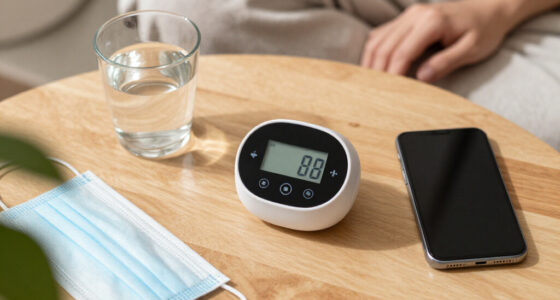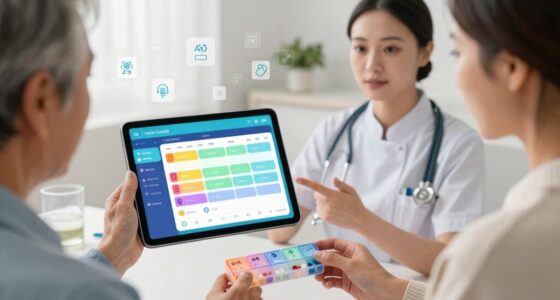
📊 Full opportunity report: Stay Organized With A TRT Lab And Symptom Log on IdeaNavigator AI — validation score, market gap, and execution plan.

Get everyday essentials delivered free with Prime
- Fast, free delivery on millions of items
- Prime Video, Amazon Music and more included
- Member-only deals all year
TL;DR
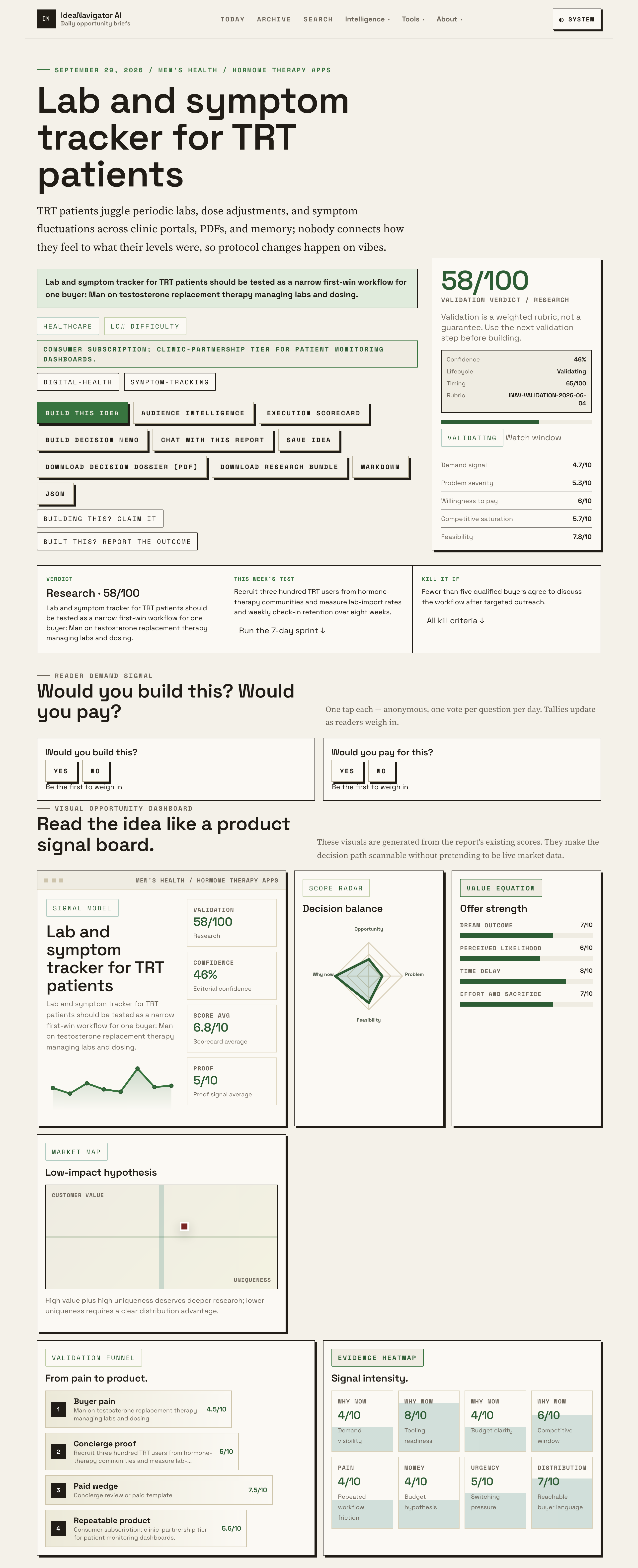
A proposal describes a lab and symptom tracker for men receiving testosterone replacement therapy, with PDF imports, dose timelines and daily check-ins. The idea has not been reported as a launched or clinically validated product; a proposed eight-week trial with 300 users would test whether patients use it regularly.
IdeaNavigator AI has proposed a lab and symptom tracking app for men on testosterone replacement therapy (TRT), designed to connect imported blood-test results and dose changes with daily symptom reports. The concept is at the proposal stage: no product launch, user-trial results or clinical benefit has been reported.
The proposed minimum version would let users import lab reports as PDFs, chart hormone results over time and mark when their TRT dose changes. Patients could also record symptoms each day, creating a timeline that might help them and their clinicians review how reported symptoms relate to lab measurements and treatment adjustments.
The outline also describes trend summaries for clinic visits and alerts when values move outside target ranges. It does not specify which hormone tests or reference ranges the app would support, who would set treatment targets, or how alerts would be reviewed. Those details matter because interpretation depends on a patient’s care plan and should not be inferred from a standalone app description.
The suggested business model combines a consumer subscription with a possible clinic partnership tier offering patient-monitoring dashboards. To assess demand, the proposal recommends recruiting 300 TRT users through hormone-therapy communities and measuring lab-import rates and weekly check-in retention across eight weeks. No recruitment, trial schedule or results are provided.
A Record for TRT Clinic Visits
For patients whose test results, dosing instructions and symptom notes sit in different places, a combined timeline could make information easier to bring to appointments. Consistent records may help patients describe changes over time, while a clinic dashboard could give participating providers a shared view of submitted information. These are potential uses, not demonstrated outcomes.
The proposal identifies fragmented care as the problem it aims to address. It says TRT patients may be managing labs and dose adjustments across clinic portals, PDF files and memory. If users do not import results or keep up with check-ins, however, the timeline could remain incomplete. The proposed retention measures are meant to test that basic engagement question before wider claims about usefulness can be made.
Any alert about a value outside a target range could also affect how a patient interprets their treatment. The outline does not establish that alerts would improve care, reduce risk or replace clinical review. The practical value would depend on accurate data, appropriate ranges and clear communication about what patients should do with a flag.
The Proposed Eight-Week Test
This is a product opportunity brief for a men’s health and hormone therapy app, rather than a report of a new prescription, clinical guideline or completed study. The proposal frames the intended user narrowly: a man receiving TRT who is managing lab results and dosing. It describes telehealth growth and increased TRT prescriptions as reasons the idea may be timely, but supplies no figures or cited evidence for those trends.
The suggested validation plan is specific about the measures but not the execution. It calls for 300 users recruited from hormone-therapy communities, with lab-import rates and weekly check-in retention tracked for eight weeks. The outline does not say whether participants have been recruited, what level of engagement would count as success, or whether clinicians would take part in the test.
The distinction matters: a planned test is not evidence that a product is being built or that users want it. At present, the documented development is the app concept, its proposed features and a way to measure early use.
Product and Trial Details Remain Open
No launch or trial status is given, and there are no user results to show whether patients would import lab reports or keep recording symptoms. The proposal also leaves open how the app would verify PDF data, define target ranges, handle missing entries and communicate alerts to patients or clinicians.
It is not clear whether any clinics have agreed to use a dashboard, what the subscription would cost, or how personal health information would be stored and shared. The outline does not provide clinical evidence that tracking symptoms alongside labs changes treatment decisions or improves health outcomes. Those questions would need answers before the concept’s safety, usefulness or commercial demand could be judged.
Evidence Needed Before Expansion
The next step described in the proposal is an eight-week test with 300 TRT users. Results on lab imports and weekly check-ins could show whether the core workflow attracts and retains users. No timetable, recruitment announcement or threshold for a successful test is specified.
If the test proceeds, further reporting would be needed on data accuracy, alert design, clinic participation and privacy practices. Until those details and results are available, the tracker should be understood as a proposed product idea rather than an operating patient service.
Source: IdeaNavigator AI
Key Questions
Has a TRT lab and symptom tracker launched?
No launch is reported. The available description outlines a product concept and possible features.
What would the proposed app track?
It would combine imported lab PDFs, hormone results, dose changes and daily symptom check-ins, with summaries and possible out-of-range flags.
Has the suggested 300-person trial started?
The proposal recommends an eight-week test with 300 users, but gives no confirmation that recruitment or testing has begun.
Would the app determine or change a patient’s TRT dose?
The outline describes tracking and alerts, not automated dosing. It provides no details about treatment decisions or a role replacing a clinician.
Source: IdeaNavigator AI
Halloween Picks
halloween
As an affiliate, we earn on qualifying purchases.