
TL;DR
Developer Thorsten Meyer reports that an AI model, given an open-ended brief to create its own stickman game, produced BEATDOWN, a rhythm-based stick-figure brawler. Continued prompting expanded it into a Stickman Arcade of nine free games and an animator, all browser-based and built from roughly 24,500 lines of dependency-free JavaScript.
A developer who asked an AI model to design its own stickman game says the experiment grew into a full Stickman Arcade: nine free games and a stick-figure animator, all playable in a browser or on a phone. The headliner, a rhythm-based brawler called BEATDOWN, was built by the AI model Claude (Opus 5.5) in a single day, according to the project’s creator, who writes on the Thorsten Meyer AI site and says he wrote no code himself.
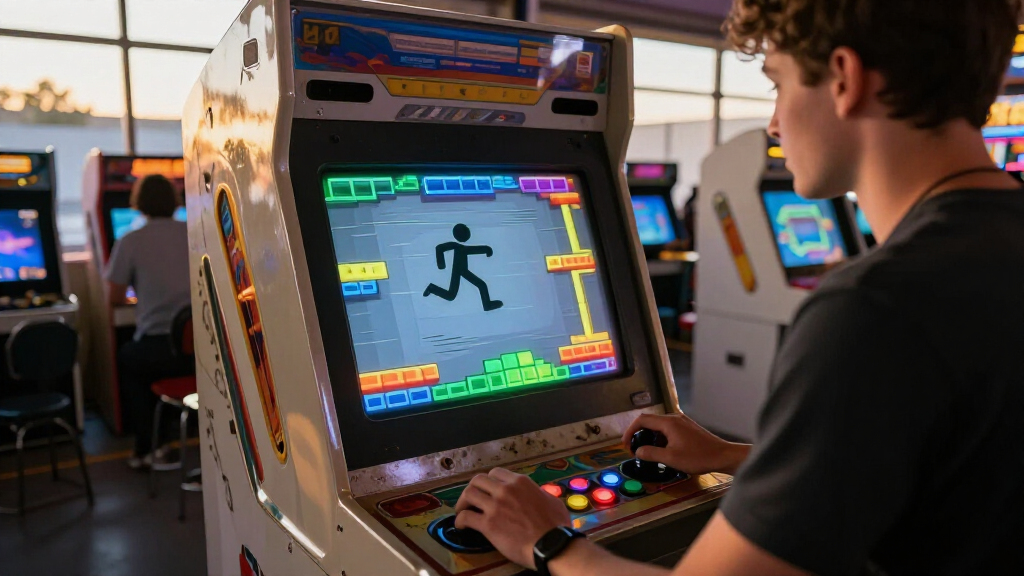
BEATDOWN is a stick-figure fighting game built around timing rather than button-mashing. According to the developer, every button press is judged against a soundtrack generated live in the browser: on-beat hits deal 1.5× damage, landing four on-beat hits in a row triggers a bonus shockwave, and enemies telegraph attacks one beat before they strike so players can counter with a timed guard. The game rewards but does not require rhythm — the developer states players can fight off-beat and still clear waves, with better timing producing louder music and a higher Groove rank that climbs from MUTE to FEVER.
The roster comprises twelve fighters, each modeled on a musical archetype — Drummer, Conductor, DJ, Bassist, Punk, Soprano, MC, Jazz Cat, Shredder, Virtuoso, Beatboxer and Producer. Each has a passive ability, two specials, a cooldown skill and an ultimate called the DROP, for sixty abilities in total. There are seven venues with distinct rules: the Rooftop has no walls, the Subway doors slam on the downbeat, the Strobe Rave goes dark between beats, and the Cruise Ship deck tilts with the song. Modes include a seven-gig TOUR with bosses, BOSS RUSH, a two-minute BLITZ, a shared daily seeded run, a timing-practice SOUNDCHECK and local VERSUS for two players on one keyboard or two gamepads.
The wider arcade adds eight more games on the same engine — Stickman Dismount, Pose-Off, Beat Runner, Noir Heist, Band Defense, Stickman Boxing, Head Soccer and Beat Skate — plus the Stickman Animator, a tool for posing figures, building frame-by-frame animation and exporting looping GIFs or sprite sheets. According to the developer, the entire project contains no image or audio files: every visual and sound is generated by code at runtime, totaling roughly 24,500 lines of plain JavaScript with zero dependencies, including a custom GIF encoder written by the AI. The developer also states the games collect no data, with progress stored in the player’s own browser.
How an AI Stickman Game Project Expanded Into an Arcade
A developer asked Claude (Opus 5.5) to design its own stickman game with an open brief. The result — BEATDOWN, a rhythm-based stick-figure brawler — grew into a full Stickman Arcade: nine free games plus an animator, all browser-based and built from roughly 24,500 lines of dependency-free JavaScript.
BEATDOWN: Fighting to a Live-Generated Soundtrack
Every button press is judged against music generated live in the browser. Rhythm is rewarded but never required — better timing means louder music and a higher rank.
On-Beat Hits Deal 1.5× Damage
Attacks landing in time with the soundtrack hit harder; off-beat play still clears waves.
Four in a Row = Shockwave
Landing four consecutive on-beat hits triggers a bonus shockwave attack.
Telegraphed Attacks
Enemies signal one beat before striking, letting players counter with a timed guard.
Twelve Fighters, Seven Stages, Six Modes
Each fighter is modeled on a musical archetype with a passive ability, two specials, a cooldown skill and an ultimate called the DROP — sixty abilities in total.
Musical Personas
Drummer · Conductor · DJ · Bassist · Punk · Soprano · MC · Jazz Cat · Shredder · Virtuoso · Beatboxer · Producer
Stages That Change Play
The Rooftop has no walls, Subway doors slam on the downbeat, the Strobe Rave goes dark between beats, and the Cruise Ship deck tilts with the song.
Six Ways to Play
A seven-gig TOUR with bosses, BOSS RUSH, a two-minute BLITZ, a shared daily seeded run, timing-practice SOUNDCHECK, and local VERSUS for two players.
Nine Games + One Animator, One Shared Engine
The AI first wrote a shared game kit and engine guide, then built the additional titles on top of it — plus the Stickman Animator for posing figures and exporting looping GIFs or sprite sheets.
| Title | Type | What It Does | Touch |
|---|---|---|---|
| BEATDOWN | Rhythm brawler | Timing-judged stick-figure fighting against a live soundtrack | ✓ |
| Stickman Dismount | Physics toy | Classic dismount carnage on the shared engine | ✓ |
| Pose-Off | Posing duel | Competitive stick-figure posing challenges | ✓ |
| Beat Runner | Rhythm runner | Run in time with generated music | ✓ |
| Noir Heist | Stealth | Silhouette-styled heist gameplay | ✓ |
| Band Defense | Tower defense | Defend the stage with musical units | ✓ |
| Stickman Boxing | Sports fighter | Ring-based stick-figure boxing | ✓ |
| Head Soccer | Sports | Arcade soccer with oversized heads | ✓ |
| Beat Skate | Rhythm action | Skate to the beat of generated tracks | ✓ |
| Stickman Animator | Creation tool | Pose figures, build frame-by-frame animation, export GIFs or sprite sheets | ✓ |
From a Loose Brief to a Whole Arcade
The project began with a deliberately open brief: make your own stickman game — no clone, no tutorial project. The AI’s answer became the anchor for everything that followed.
Open Brief
“Make your own stickman game.” No clone, no tutorial project — the model’s own take on a known genre.
BEATDOWN Ships
Playable in under an hour, live on the site in under two, per the developer’s account.
Shared Foundation
The AI writes a shared game kit and an engine guide before any further games.
Nine-Game Arcade
Eight more games plus the Stickman Animator — all on one code-only, zero-asset engine.
Nine Art Styles — Not Just Color Swaps
Each style completely changes how fighters, venues, effects, lettering and menus are drawn across the entire arcade, including the animator.
Code-Only, Asset-Free, Fully Local
The entire project contains no image or audio files — every visual and sound is generated by code at runtime, including a custom GIF encoder written by the AI.
A code-only codebase with no assets means the arcade loads entirely in a browser with no downloads, runs on phones with touch controls, and keeps all progress stored locally in the player’s own browser.
From the Project Write-Up
I gave an AI model a deliberately loose brief: make your own stickman game. No clone, no tutorial project, just its own take on a genre everyone knows.
Thorsten Meyer AIEverything was built by Claude (Opus 5.5), the AI model, in one day. I wrote no code.
Thorsten Meyer AIRhythm is a bonus, never a requirement: you can play off-beat and still clear waves. It just hits harder and sounds better in time.
Thorsten Meyer AIAt a Glance
What is BEATDOWN?
A free browser-based stick-figure fighting game in which every attack is judged against a live-generated soundtrack. On-beat hits deal more damage, and timed guards trigger counters.
How many games are in the arcade?
Nine games plus a tenth card that is the Stickman Animator, a tool for posing stick figures and exporting GIFs or sprite sheets.
Who wrote the code?
According to the developer, Claude (Opus 5.5) wrote all of it — roughly 24,500 lines of dependency-free JavaScript — in one day, while the developer steered with feedback and screenshots.
Do the games collect data?
The developer states the games run in any browser with touch controls on phones, collect nothing, and store progress locally in the player’s own browser.
All performance claims — the one-day build, the under-two-hour launch, the 24,500-line codebase and the zero-dependency architecture — come from the developer’s own write-up and have not been independently audited. The post also carries an affiliate disclosure. It is not yet clear whether the code will be released publicly or updated beyond launch.
What the One-Day Build Signals
The project is a data point in an ongoing debate about how much of a working game a single person can ship with AI assistance. According to the developer, BEATDOWN was playable in under an hour and live on his site in under two, and the full arcade — a shared game kit, an engine guide and nine games — was completed within a single day of iterative prompting. He describes his role as steering: answering the model’s questions, sending screenshots of games he liked and repeatedly asking for more.
The claimed architecture also matters for players and developers alike. A code-only codebase with no assets means the arcade loads entirely in a browser with no downloads, runs on phones with touch controls, and keeps all data local. If the claims hold up, it demonstrates that AI-generated code can produce not just prototypes but a suite of polished, stylistically varied games — though the developer’s account is self-reported and has not been independently verified.
From a Loose Brief to a Whole Arcade
: “The project began with a deliberately open brief, according to the developer: make your own stickman game, with no clone or tutorial project allowed. The AI’s answer was BEATDOWN, which then became the anchor for successive additions. The developer reports that for the arcade, the AI first wrote a shared game kit and an engine guide before building the additional games on top of it.
A defining feature carried across the whole arcade is its nine art styles, which the developer says are not color swaps but complete changes to how fighters, venues, effects and menus are drawn: CHALK (blackboard), RISO (two-ink gig poster), LASER (neon club), SHEET (pencil on staff paper), ZINE (photocopied punk flyer), PIXEL (8-bit), BRUSH (ink wash), BLUEPRINT (technical drawing) and NOIR (rainy silhouettes). The chosen style applies throughout the arcade, including in the animator.
“I gave an AI model a deliberately loose brief: make your own stickman game. No clone, no tutorial project, just its own take on a genre everyone knows.”
— Thorsten Meyer AI project write-up
Claims Not Yet Independently Verified
All performance claims — the one-day build time, the under-two-hour launch of BEATDOWN, the 24,500-line codebase and the zero-dependency architecture — come from the developer’s own write-up and have not been independently audited. The post also carries an affiliate disclosure, noting the site earns on qualifying purchases. It is not yet clear whether the arcade’s code will be released publicly, how the AI-authored codebase behaves across different browsers and devices, or whether the games will receive updates beyond the initial launch.
Where the Arcade Goes From Here
The developer has not announced a fixed roadmap. Plausible directions, based on the write-up’s framing, include additional games on the shared engine, new fighters or venues for BEATDOWN, and refinements to the animator. Readers who want to evaluate the claims directly can play the arcade in a browser or on a phone, since the games are free and require no installation. Any follow-up announcements would come through the developer’s site.
Key Questions
What is BEATDOWN?
A free browser-based stick-figure fighting game in which every attack is judged against a live-generated soundtrack. On-beat hits deal more damage, and timed guards trigger counters. It is the headline game of the Stickman Arcade.
How many games are in the Stickman Arcade?
Nine games plus a tenth card that is the Stickman Animator, a tool for posing stick figures and exporting GIFs or sprite sheets. The games include BEATDOWN, Stickman Dismount, Beat Runner, Noir Heist, Stickman Boxing and others.
Who wrote the code?
According to the developer, the AI model Claude (Opus 5.5) wrote all of it — roughly 24,500 lines of JavaScript with no external dependencies — in one day, while the developer provided direction, feedback and screenshots.
Do the games work on phones, and do they collect data?
The developer states the games run in any browser with touch controls on phones, collect nothing, and store progress locally in the player’s own browser. These claims come from the project’s write-up.
What do the nine art styles change?
According to the project, switching styles redraws everything — fighters, venues, hit effects, lettering and menus — across the entire arcade, ranging from a blackboard CHALK look to pixel art, ink wash and rainy NOIR silhouettes.
Source: Thorsten Meyer AI