
📊 Full opportunity report: What Can A Responsive Audio Walking App Add To A Stroll? on IdeaNavigator AI — validation score, market gap, and execution plan.

Get everyday essentials delivered free with Prime
- Fast, free delivery on millions of items
- Prime Video, Amazon Music and more included
- Member-only deals all year
TL;DR
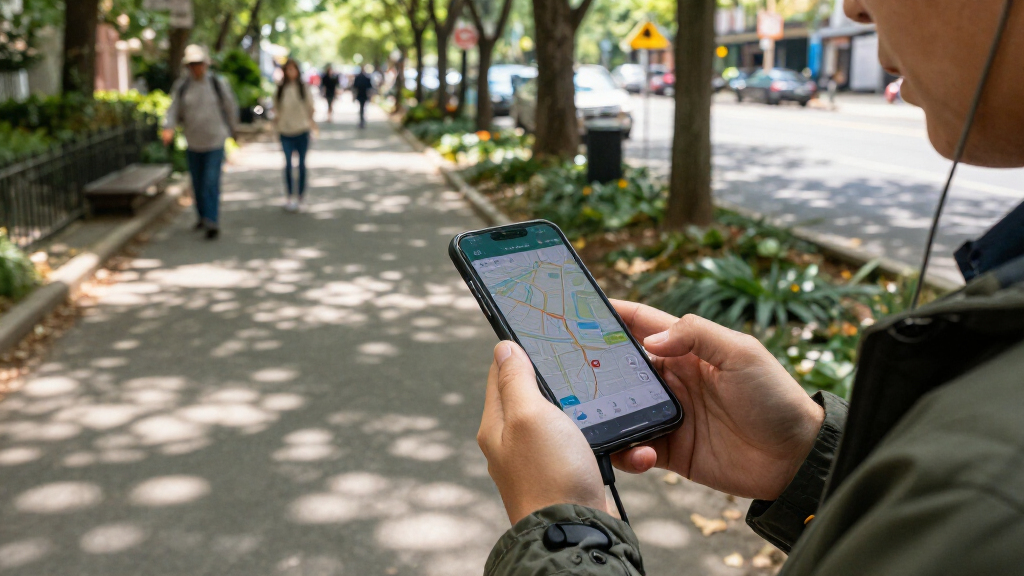
IdeaNavigator AI has proposed testing a responsive audio walking app that generates narration based on a person’s route, starting with a two-city pilot. The proposal sets out a target user and ways to measure repeat use and factual accuracy, but it does not report a launched app, test results or confirmed commercial partners.
IdeaNavigator AI has outlined a proposed test for an audio walking app that would generate narration tied to a walker’s live route, including neighborhood history, architecture and local details. The proposal recommends starting in two cities and tracking repeat walks and narration accuracy; it does not say that a product has launched or that any pilot has taken place.
According to IdeaNavigator AI’s product proposal, the concept targets people who want their neighborhoods and travels narrated, rather than only visitors following established tourist routes. The proposal argues that podcasts generally do not respond to a listener’s location, while many audio tour products focus on landmark districts. It identifies a gap in audio about the streets people walk in everyday life. These are the proposal’s market observations, not findings from a reported user study.
IdeaNavigator AI’s outline describes a suggested minimum product that would let a user start a walk and receive route-based narration, with content reacting at corners and landmarks. Possible material includes local history, buildings and unusual details. The outline also proposes themed modes for history, architecture and nature, along with a way to save favorite routes. It gives no technical specification, launch date or examples of generated narration.
For validation, IdeaNavigator AI recommends releasing the app in two cities, then measuring how often users walk with it and how many continue using it by week four. The proposal also calls for auditing a sample of routes for factual accuracy. The business model under consideration combines a consumer subscription with a possible licensing tier for tourism boards. No subscription price, licensing agreement or pilot outcome is provided.
IdeaNavigator AI · Product proposal
What Can a Responsive Audio Walking App Add to a Stroll?
A proposed app would turn a live walk into a locally narrated experience, with stories about neighborhood history, architecture, and overlooked details. The idea is ready to be tested; its product, audience, and commercial case remain unproven.
01 / The experience
Audio that follows the walk
The outline imagines an experience for residents and travelers who want the places around them narrated—not only a guide to established tourist routes.
01 · Location
Notice the place
A walker starts a route. The proposed app uses nearby streets, corners, and landmarks to shape what comes next.
02 · Narration
Tell local stories
Possible topics include neighborhood history, buildings, nature, and unusual details. No sample narration is provided.
03 · Personal choice
Choose a theme
Suggested modes include history, architecture, and nature, with an option to save favorite routes.
02 / The proposed test
From concept to evidence
A narrow pilot could examine whether walkers return and whether the location-based descriptions are dependable enough to keep testing.
Define the audience
People who want local places narrated in everyday neighborhoods and while traveling.
Build a basic route experience
Deliver narration tied to a walker’s position, with content reacting near corners and landmarks.
Test in two cities
Measure walks per week and how many users continue through week four.
Check factual accuracy
Audit a sample of routes. The proposal does not specify the method or a success threshold.
03 / What is known
Questions the proposal leaves open
The concept outlines what to investigate. It does not report a built product, a completed pilot, or evidence of demand.
Has the app launched?
No launch is reported. The document describes a product concept and recommends testing it.
Where would the pilot happen?
Two cities are proposed, but no locations or start date are named.
How would it select and verify information?
The technical approach, handling of outdated records, and accuracy process are not specified.
Would people use or pay for it?
No user study, retention results, subscription price, or market evidence is provided.
04 / Evidence status
A plan to measure, not results to report
Week-four repeat use could offer an early signal of habit; an accuracy audit could reveal errors in local descriptions. Neither measure alone would establish long-term retention, safety, or commercial viability.
The proposal also mentions a consumer subscription and possible tourism-board licensing. These are potential revenue routes, with no prices, agreements, customers, or revenue figures reported.
A Test Beyond Tourist Routes
In its proposal, IdeaNavigator AI distinguishes audio tied to a place from audio that can be played anywhere. If narration changes with a walker’s position, ordinary streets could become part of the listening experience rather than merely the route between familiar attractions. That could make the format relevant to residents as well as visitors, although the proposal has not shown that people want or would pay for it.
The proposed pilot places two practical questions ahead of a broad rollout: do users return to the app, and is its location-based narration dependable? The proposal identifies week-four repeat use as a potential early indication of whether the experience becomes a habit, and an accuracy audit as a way to identify errors in descriptions of local places. Neither measure, on its own, would establish long-term retention, safety, or commercial viability.
IdeaNavigator AI’s suggested tourism-board licensing option also points to a potential second customer group beyond individual walkers. Local organizations might have an interest in distributing place-based stories, but the outline does not identify prospective partners or confirm that institutions have agreed to pay. For now, the commercial opportunity remains a proposal to test, not a demonstrated market.
Products Worth Considering

Bose QuietComfort Headphones (2nd Gen), Wireless Noise-Cancelling Over-Ear Headphones, Black

Bose SoundLink Flex (2nd Gen) Portable Bluetooth Speaker, Black

Jackery Explorer 2000 v2 Portable Power Station, 2042Wh
As an affiliate, we earn on qualifying purchases.
Why Location-Aware Narration Now
IdeaNavigator AI’s proposal argues that large language models can generate narration on demand using open information such as local history, architecture and place records. It says this could reduce the cost of preparing audio separately for every route, a constraint it associates with tours built around established landmarks. The proposal does not provide a cost comparison or evidence that generated material is already accurate enough for public use.
The proposed product would combine a walker’s route with information about nearby places, delivering content as the person moves. That makes it different from a fixed recording that plays in sequence regardless of location. IdeaNavigator AI frames this as an opportunity in audio content and local discovery, but supplies no market-size estimate, competitor analysis or description of how the app would handle incomplete or conflicting information.
The proposal outlines a narrow sequence: choose a defined audience, build a basic route-responsive experience, and test it in two cities before expanding. That framing matters because the concept depends on several capabilities working together: location awareness, useful narration and reliable local facts. The proposal sets out what to test, rather than confirming that those pieces have been built or evaluated.
Pilot Results Still Unreported
IdeaNavigator AI’s proposal reports no launch or pilot results. It does not name the two cities, say when testing might begin, or provide evidence that users have tried the concept. It also does not specify how many walkers would take part, what would count as success at week four, or how the accuracy audit would be conducted.
Important product details remain open in the proposal: how the app would determine which information is relevant to a particular location, how it would handle inaccurate or outdated records, and whether narration would be generated in real time or prepared in advance. The outline does not describe privacy practices for collecting route data, accessibility features, battery and connectivity requirements, or safeguards against audio distracting people in traffic.
The proposed subscription and tourism-board licensing models are possible revenue routes, not confirmed arrangements, according to the outline. No prices, customer commitments or revenue figures are supplied. The claim that current walking audio leaves everyday streets underserved is also presented as a product rationale, not supported in the proposal by survey results or independent market research.
Two-City Validation Is Proposed
IdeaNavigator AI’s outline proposes a two-city pilot, followed by review of walks per week and user retention at the four-week mark. It also recommends checking a sample of generated route narration for accuracy. Those measures could help determine whether people return and whether the content is dependable enough to continue testing.
The proposal gives no timetable or follow-up announcement, so it is not clear when such a pilot might happen or whether development is underway. A later report would need to identify the locations, explain the testing method and publish results before claims about user demand, factual reliability or commercial potential could be evaluated.
Key Questions
Has the audio walking app launched?
No launch is reported in IdeaNavigator AI’s proposal. It describes a product concept and recommends testing it; it does not say the app is available to the public.
How would the app respond to a walk?
According to the proposal, the app would use a walker’s live route to provide narration about nearby history, buildings and other local details, reacting at corners and landmarks. The technical method is not specified.
Where would the proposed test take place?
IdeaNavigator AI recommends a pilot in two cities, but its proposal does not name them or give a schedule.
How would the concept be evaluated?
The proposal suggests measuring walks per week, retention at week four and an accuracy audit of narration on a sample of routes. It provides no results or thresholds for success.
How might the app make money?
IdeaNavigator AI’s outline suggests a consumer subscription and a licensing tier for tourism boards. These are proposed models; no prices or agreements are reported.
Source: IdeaNavigator AI