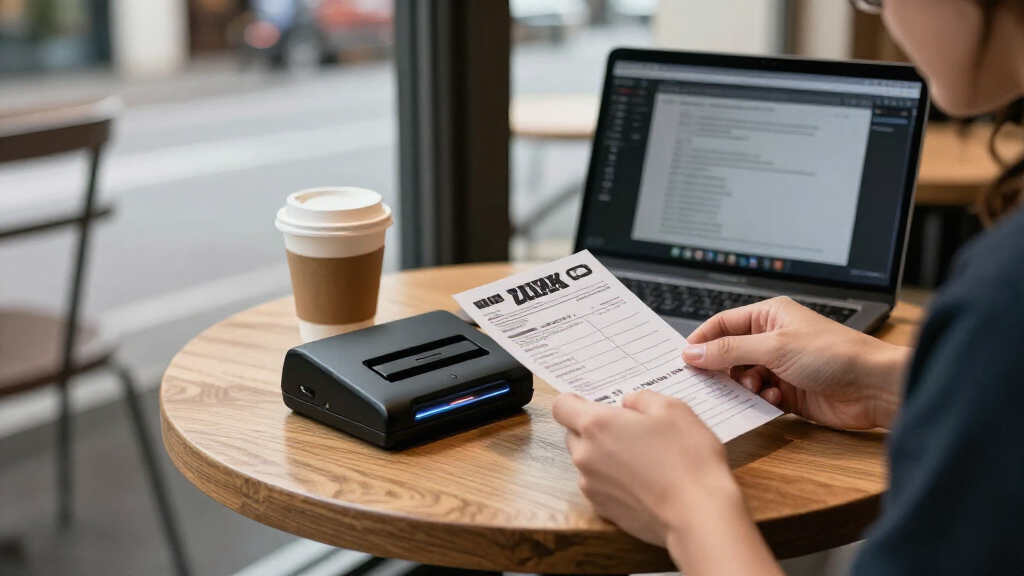
For portable photo scanners for documents, I’d choose the ScanSnap iX1300 as the best overall fit for people who want flexible feeding and double-sided document scanning in a compact setup. The Canon imageFORMULA R10 is a strong alternative for straightforward mobile document work, while the Epson Perfection V19 II suits buyers who prioritize flatbed handling for photos and delicate originals. The main tradeoff is speed and convenience versus careful photo handling: sheet-fed scanners are easier for stacks of pages, while flatbeds better protect prints but take more room and time. Handheld wand scanners add portability but require a steadier hand and more manual effort. Read on for how the 15 options compare and which compromises fit your workflow.

Get everyday essentials delivered free with Prime
- Fast, free delivery on millions of items
- Prime Video, Amazon Music and more included
- Member-only deals all year
Key Takeaways
- The ScanSnap iX1300 leads for mixed document work because it combines a compact footprint with wireless or USB operation and double-sided scanning; it is a more versatile fit than single-sheet travel scanners.
- Flatbeds are the safer choice for fragile or oddly shaped photos. The Epson Perfection V19 II and Canon CanoScan models avoid feeding prints through rollers, though they are less convenient for scanning a stack of documents.
- Dedicated photo feeding and document feeding are different jobs. The Plustek ePhoto Z300 is aimed at quickly handling loose photos, while models such as the Brother DS-640 and Epson ES-50 prioritize portable paper capture.
- Handheld scanners trade consistency for freedom of movement. The Hczrc, MUNBYN, and AOZBZ wand-style options can work away from a computer, but manual passes make them less suitable for repeatable, high-volume records.
- The lineup separates into distinct workflow types: compact single-sheet scanners for occasional paperwork, desktop-friendly feeders for recurring batches, and flatbeds for photo care and varied originals.
| HP HPPS100 Portable USB Document and Photo Scanner |  | Best for Photo-and-Document Flexibility | Scanner type: Sheetfed document scanner | Scanning: Single-sided (simplex) | Speed: Up to 15 pages per minute | VIEW LATEST PRICE | See Our Full Breakdown |
| ScanSnap iX1300 Wireless or USB Double-Sided Color Document Scanner |  | Best Overall for Mixed Document Batches | Scanner type: Document and receipt scanner | Scanning: Double-sided color | Speed: Up to 30 pages per minute | VIEW LATEST PRICE | See Our Full Breakdown |
| Epson WorkForce ES-50 Portable Document Scanner |  | Best for Lightweight, One-Page-at-a-Time Scanning | Scanner type: Single-sheet-fed document scanner | Scanning speed: As fast as 5.5 seconds per page | Resolution: 1200 dpi | VIEW LATEST PRICE | See Our Full Breakdown |
| ScanSnap iX1300 Wireless or USB Double-Sided Color Document Scanner |  | Best for Cloud and Device Flexibility | Scanner type: Document and receipt scanner | Scanning: Double-sided (duplex) | Maximum speed: Up to 30 pages per minute | VIEW LATEST PRICE | See Our Full Breakdown |
| Canon imageFORMULA R10 Portable Document Scanner |  | Best for Portable Duplex Paperwork | Scanner type: Document scanner | Scanning: Duplex | Speed: Up to 12 pages per minute | VIEW LATEST PRICE | See Our Full Breakdown |
| Plustek ePhoto Z300 Photo and Document Scanner |  | Best for Fast Photo Batch Work | Scanner type: Photo and document | Connection: USB | Optical sensor: CCD | VIEW LATEST PRICE | See Our Full Breakdown |
| Brother DS-640 Compact Mobile Document Scanner |  | Best for Mixed Office Paper on the Go | Scanner type: Business card and document | Connection and power: USB; 2.5 watts | Scan speed: Up to 16 ppm | VIEW LATEST PRICE | See Our Full Breakdown |
| Hczrc Portable Handheld Scanner with 16GB MicroSD Card |  | Best Standalone Scanner for Travel | Scanner type: Receipt, photo, and document | Resolution modes: 300, 600, and 900 dpi | File formats: JPEG and PDF | VIEW LATEST PRICE | See Our Full Breakdown |
| Canon CanoScan LiDE 300 Flatbed Scanner |  | Best for High-Detail Photo Scans | Scanner type: Document and photo flatbed | Connection: USB | Optical resolution: 2400 × 2400 dpi | VIEW LATEST PRICE | See Our Full Breakdown |
| Epson DS-70 Portable Single-Sheet Document Scanner |  | Best Lightweight Document Companion | Scanner type: Single-sheet-fed document scanner | Connection and power: USB; 2.5 watts | Optical resolution: 1200 dpi | VIEW LATEST PRICE | See Our Full Breakdown |
| Epson Perfection V19 II Flatbed Photo and Document Scanner, 4800 dpi |  | Best for Books and Delicate Originals | Scanner type: Flatbed document and photo scanner | Optical resolution: 4800 dpi | Maximum scan size: 8.5 × 11.7 inches | VIEW LATEST PRICE | See Our Full Breakdown |
| MUNBYN Portable Handheld Wand Scanner, A4, 900 DPI, 16GB SD Card, Black |  | Best Handheld Pick for Flexible Originals | Scanner type: Handheld wand scanner | Maximum scan size: A4 | Selectable resolutions: 300, 600, or 900 dpi | VIEW LATEST PRICE | See Our Full Breakdown |
| ScanSnap iX2500 Photo Edition Wireless or USB High-Speed Scanner, Black |  | Best for High-Volume Photo and Document Batches | Scanner type: Document and photo scanner with automatic document feeder | Resolution: 600 dpi | Connectivity: Wi-Fi 6 and USB-C | VIEW LATEST PRICE | See Our Full Breakdown |
| Canon CanoScan LiDE 400 Slim Document and Photo Scanner |  | Best Slim Flatbed for Detailed Scans | Scanner type: Document and photo flatbed | Resolution: 4800 × 4800 dpi | Maximum scan speed: As fast as 8 seconds | VIEW LATEST PRICE | See Our Full Breakdown |
| AOZBZ 900 DPI Portable Handheld Document Scanner with 16 GB SD Card |  | Best Simple Handheld for Basic Records | Scanner type: Handheld document scanner | Selectable resolutions: 300, 600, or 900 dpi | Connection: USB 2.0 | VIEW LATEST PRICE | See Our Full Breakdown |
| portable photo scanners for document | Scanner type | Dimensions and weight |
|---|---|---|
| HP HPPS100 Portable USB Docume | Sheetfed document scanner | 2 × 11.6 × 1.4 in; 3 oz |
| ScanSnap iX1300 Wireless or US | Document and receipt scanner | — |
| Epson WorkForce ES-50 Portable | Single-sheet-fed document scanner | — |
| ScanSnap iX1300 Wireless or US | Document and receipt scanner | — |
| Canon imageFORMULA R10 Portabl | Document scanner | 3.74 × 11.22 × 1.57 in; 998 g |
| Plustek ePhoto Z300 Photo and | Photo and document | 19.3 × 4 × 11.4 inches; 1.5 kg |
| Brother DS-640 Compact Mobile | Business card and document | 1.99 × 11.9 × 1.45 inches; about 1.5 lb |
| Hczrc Portable Handheld Scanne | Receipt, photo, and document | — |
| Canon CanoScan LiDE 300 Flatbe | Document and photo flatbed | 14.5 × 9.9 × 1.7 inches; 3.6 pounds |
| Epson DS-70 Portable Single-Sh | Single-sheet-fed document scanner | 13 × 5.5 × 2.7 inches; 9.44 ounces |
| Epson Perfection V19 II Flatbe | Flatbed document and photo scanner | — |
| MUNBYN Portable Handheld Wand | Handheld wand scanner | — |
| ScanSnap iX2500 Photo Edition | Document and photo scanner with automatic document feeder | 6.26 × 11.5 × 6.34 inches; 7.7 pounds |
| Canon CanoScan LiDE 400 Slim D | Document and photo flatbed | — |
| AOZBZ 900 DPI Portable Handhel | Handheld document scanner | 10 × 1 × 1 inches; 170 g |
More Details on Our Top Picks
HP HPPS100 Portable USB Document and Photo Scanner
The HP HPPS100 is a sensible pick when portability matters but the scanning pile includes more than office paperwork. Its small, USB-powered design handles photos, receipts, business cards, and documents, while HP WorkScan offers preview, cropping, and image-editing tools that are useful for tidying files as you go. Compared with the Epson WorkForce ES-50, it has a 10-sheet capacity rather than requiring a page to be fed individually, which can make short batches less fiddly. The tradeoff is that the HP scans one side at a time, so double-sided paperwork takes extra passes; the ScanSnap iX1300 is a better fit for that job. Its 1200 dpi resolution is a useful option for image detail, but this remains a sheetfed scanner rather than a flatbed for delicate or bound originals.
Pros:- USB power keeps the setup simple when working near a computer.
- Supports photos, receipts, business cards, and documents.
- HP WorkScan includes preview, cropping, size detection, and image editing.
- 10-sheet capacity can ease short batches compared with a single-sheet-fed scanner.
Cons:- Simplex scanning means each two-sided page needs another pass.
- The 10-sheet capacity is limited for larger document stacks.
- Requires a USB connection rather than offering wireless scanning.
Best for: Traveling professionals and households who need one compact USB scanner for occasional photos, receipts, cards, and short document batches.
Not ideal for: People digitizing frequent two-sided paperwork or fragile, bound, or oversized photos that need flatbed handling.
- Scanner type:Sheetfed document scanner
- Scanning:Single-sided (simplex)
- Speed:Up to 15 pages per minute
- Resolution:1200 dpi
- Connection and power:USB 2.0; USB-powered
- Supported media:Business cards, paper, photos, and receipts
- Paper size range:2 × 2.9 in minimum; 8.5 × 14 in maximum
- Sheet capacity:10 sheets
- Dimensions and weight:2 × 11.6 × 1.4 in; 3 oz
Our verdict“Choose the HPPS100 for compact, USB-powered scanning across photos and everyday paper, but pick a duplex model for frequent two-sided batches.”
ScanSnap iX1300 Wireless or USB Double-Sided Color Document Scanner
The ScanSnap iX1300 earns the broadest recommendation here for buyers whose portable scanning includes both photos and recurring document stacks. Its duplex scanning at up to 30 ppm captures both sides without turning each page around, and USB or Wi-Fi gives it more placement and device options than the USB-only Canon imageFORMULA R10. It also accepts photos, plastic cards, and thick items, with automatic image adjustments that reduce routine cleanup. The catch is that its 600 dpi optical resolution is lower than the HP HPPS100’s listed 1200 dpi, so the HP may suit buyers prioritizing higher stated resolution for occasional image scans. At 4.4 lb, the iX1300 is compact for a desktop, but it is much heavier than pocketable USB-fed models, and its 20-sheet capacity still calls for reloading during bigger jobs.
Pros:- Duplex scanning speeds up two-sided paperwork.
- USB and Wi-Fi support computers and mobile devices, including scanning without a computer.
- Handles photos, receipts, plastic cards, and thick items.
- Automatic image adjustments help reduce manual correction.
Cons:- At 4.4 lb, it is heavier than the HP HPPS100 and Epson ES-50.
- The 20-sheet capacity requires reloading for larger batches.
- 600 dpi optical resolution is lower than the HPPS100’s listed 1200 dpi.
Best for: Home-office users and mobile professionals who scan mixed document batches, need duplex capture, and want both Wi-Fi and USB options.
Not ideal for: Buyers who need a featherweight scanner for a bag, prioritize higher stated resolution for photo scans, or routinely process large stacks without reloading.
- Scanner type:Document and receipt scanner
- Scanning:Double-sided color
- Speed:Up to 30 pages per minute
- Optical resolution:600 dpi
- Connectivity:USB and Wi-Fi
- Sheet capacity:20 sheets
- Supported media:Paper, photos, receipts, plastic cards, and thick items
- Dimensions:4.5 × 11.7 × 3.3 in (D × W × H)
- Weight:4.4 lb
Our verdict“Pick the iX1300 if your priority is flexible, duplex scanning across mixed media rather than minimum weight or maximum stated resolution.”
Epson WorkForce ES-50 Portable Document Scanner
The Epson WorkForce ES-50 is the clearest fit for someone who values a light travel setup and scans pages individually rather than feeding a stack. It runs on USB power and can scan a page in as little as 5.5 seconds; included OCR tools can turn scans into searchable PDFs or editable Word and Excel files. That makes it more useful for capturing business records than a basic handheld wand, while its single-sheet workflow is slower for batches than the ScanSnap iX1300, which feeds pages and scans both sides. The ES-50 also supports extra-long pages up to 72 inches, a useful distinction for unusual receipts or forms. Its main compromise is the lack of an automatic feeder: every page needs attention. It is document-oriented, so buyers focused on photo handling may prefer the HP HPPS100 or a flatbed option.
Pros:- USB-powered design avoids a separate power supply.
- A page can scan in as little as 5.5 seconds.
- OCR supports searchable PDFs and editable Word and Excel files.
- Accepts documents up to 72 inches long.
Cons:- Single-sheet feeding makes multi-page batches hands-on.
- No duplex scanning, unlike the ScanSnap iX1300 and Canon R10.
- Cloud scanning requires software installation and an internet connection.
Best for: Frequent travelers and field workers who scan occasional receipts, IDs, forms, or long documents and need searchable files.
Not ideal for: People processing thick stacks, regularly scanning both sides, or prioritizing photo-focused scanning over document capture.
- Scanner type:Single-sheet-fed document scanner
- Scanning speed:As fast as 5.5 seconds per page
- Resolution:1200 dpi
- Connection and power:USB 2.0; USB-powered, 2.1 W
- Standard sheet capacity:1 sheet
- Maximum document size:8.5 × 72 in
- Compatibility:Windows and Mac
- Included software:Epson ScanSmart, Nuance OCR, and TWAIN driver
- Weight:9.44 oz
Our verdict“Choose the ES-50 for a light, OCR-capable travel scanner when individual pages matter more than batch speed.”
ScanSnap iX1300 Wireless or USB Double-Sided Color Document Scanner
This ScanSnap iX1300 listing stands out for buyers who want a compact scanner that can send work across computers, mobile devices, and cloud services. Its USB and Wi-Fi connectivity, duplex capture, and automatic image adjustments make it more adaptable than the USB-only Canon imageFORMULA R10, particularly when scanning away from a fixed computer. It handles paper, photos, plastic cards, and thick items, so it can cover a mixed home-office queue. The tradeoffs are practical: the 20-sheet capacity means larger jobs need attention, and the listed operating-system requirements name specific recent versions that buyers should check before choosing it. Like the other iX1300 listing, it weighs 4.4 lb and has 600 dpi resolution, so it is portable in the small-workspace sense rather than the ultralight travel sense.
Pros:- Wi-Fi and USB support different devices and working locations.
- Duplex scanning captures both sides of documents.
- Can send scans to computers, mobile devices, and cloud services.
- Automatic image adjustments reduce routine manual cleanup.
Cons:- The 20-sheet capacity is modest for larger document jobs.
- Specific minimum operating-system versions may exclude older devices.
- At 4.4 lb, it is less convenient to carry than the Epson ES-50.
Best for: People in mixed-device households or small offices who want wireless scanning and cloud destinations alongside duplex document capture.
Not ideal for: Travelers seeking the lightest possible scanner, users with older operating systems, or those who need a larger feeder for heavy workloads.
- Scanner type:Document and receipt scanner
- Scanning:Double-sided (duplex)
- Maximum speed:Up to 30 pages per minute
- Resolution:600 dpi
- Connection:USB and Wi-Fi
- Sheet capacity:20 sheets
- Supported media:Paper, photos, plastic cards, and thick items
- Dimensions:4.5 × 11.7 × 3.3 in (D × W × H)
- Weight:4.4 lb
Our verdict“Choose this iX1300 listing for wireless, cloud-connected duplex scanning, provided your devices meet its listed system requirements.”
Canon imageFORMULA R10 Portable Document Scanner
The Canon imageFORMULA R10 is a practical choice for portable document work when capturing both sides matters more than wireless convenience or photo-paper support. Its 20-sheet automatic feeder and duplex scanning can process routine forms, receipts, and cards with less handling than the single-sheet Epson ES-50. It is also USB-powered and includes built-in software, keeping the setup more self-contained than the ScanSnap iX1300, which adds Wi-Fi and broader device flexibility. The Canon’s speed tops out at 12 ppm, well below the iX1300’s listed 30 ppm, and the 600 dpi resolution is aimed at documents rather than fine photo detail. Most importantly for this roundup, Canon says it is not intended for photographs on photo paper; buyers wanting true photo scanning should choose the HP HPPS100 or a flatbed model instead.
Pros:- Duplex scanning captures both sides in one pass.
- 20-sheet automatic feeder suits short document batches.
- USB-powered operation and built-in software keep setup straightforward.
- Handles business cards and plastic or embossed cards.
Cons:- Not intended for scanning photographs on photo paper.
- USB connection offers less placement flexibility than the Wi-Fi ScanSnap iX1300.
- Up to 12 ppm is slower than the iX1300’s listed 30 ppm.
Best for: Traveling office workers and small teams who need USB-powered, two-sided scanning of forms, receipts, business cards, or plastic cards.
Not ideal for: Photo collectors digitizing prints on photo paper, or users who need Wi-Fi, mobile-device scanning, or faster batch throughput.
- Scanner type:Document scanner
- Scanning:Duplex
- Speed:Up to 12 pages per minute
- Optical resolution:600 dpi
- Connection and power:USB; 2.5 W or less
- Automatic feeder capacity:20 sheets
- Compatibility:Windows and Mac
- Supported media:Documents, receipts, business cards, and plastic or embossed cards
- Dimensions and weight:3.74 × 11.22 × 1.57 in; 998 g
Our verdict“Choose the R10 for portable, USB-connected duplex paperwork, but skip it if scanning photo prints is part of the job.”
Plustek ePhoto Z300 Photo and Document Scanner
The Plustek ePhoto Z300 is the clearest choice here for digitizing a stack of loose prints alongside ordinary documents. Its feed-through design handles photos from 3×5 to 8×10 inches, and the listed times—about 2 seconds for a 4×6 photo at 300 dpi—make it a faster fit for print-heavy jobs than placing each image on the Canon CanoScan LiDE 300’s flatbed. Auto-crop, deskew, and image enhancement can also cut down on cleanup afterward. The tradeoff is that each photo still goes through individually, so it is not an unattended batch scanner. Its 600 dpi ceiling is more modest than the Canon LiDE 300’s 2400 × 2400 dpi, making the Plustek the better speed-and-convenience pick rather than the choice for maximum scan detail.
Pros:- Accepts common print sizes from 3×5 through 8×10 inches as well as letter and A4 documents.
- Fast listed scan times for 4×6 and 8×10 photos at 300 dpi.
- Auto-crop, deskew, and image enhancement can reduce manual editing.
- CCD sensor offers 300 or 600 dpi scanning.
Cons:- Photos must be inserted one at a time, so scanning still needs hands-on attention.
- Its 600 dpi maximum is below the Canon CanoScan LiDE 300’s listed 2400 × 2400 dpi.
- The 19.3-inch length takes more desk space than compact mobile scanners.
Best for: People digitizing many loose family prints in common sizes who also need occasional letter- or A4-document scanning.
Not ideal for: Buyers who need the highest listed optical resolution, automatic multi-page feeding, or a scanner with a small footprint.
- Scanner type:Photo and document
- Connection:USB
- Optical sensor:CCD
- Resolution:300 or 600 dpi
- Supported photo sizes:3×5, 4×6, 5×7, and 8×10 inches
- Supported document sizes:Letter and A4
- Scan speed:About 2 seconds for a 4×6 photo and 5 seconds for an 8×10 photo at 300 dpi
- Dimensions and weight:19.3 × 4 × 11.4 inches; 1.5 kg
Our verdict“Choose the Z300 if you want quick scans of loose prints in several sizes and can accept one-at-a-time feeding and a larger footprint.”
Brother DS-640 Compact Mobile Document Scanner
The Brother DS-640 is a practical mobile pick when “photo scanner” means occasionally capturing an ID or small image, but most of the work is documents, receipts, and cards. It is USB-powered and compact, with scanning up to 16 pages per minute and support for plastic and embossed cards—media the Epson DS-70 also handles, but the Brother’s listed speed gives it an advantage for repeated paper scans. OCR and text-enhancement tools are useful when scans need to become searchable or easier to read. It is less suited to archiving loose prints: it uses a CIS sensor at 300 dpi, and its single-sheet feed is not a flatbed for delicate or varied photo originals. A connected computer is required, so it cannot operate as a standalone travel scanner.
Pros:- Compact, USB-powered design does not need a separate wall outlet.
- Scans color and black-and-white documents at up to 16 pages per minute.
- Supports business cards, receipts, ID cards, laminated cards, and plain paper.
- Includes OCR and image-enhancement features for searchable, more legible files.
Cons:- Requires a connected PC or laptop to operate.
- The 300 dpi resolution is limited for detailed photo archiving.
- Image rotation is available for PC only.
Best for: Commuters, field staff, and small-office users who scan receipts, paperwork, business cards, and ID cards from a laptop.
Not ideal for: Photo archivists seeking high-detail scans of loose prints or travelers who need a scanner that saves files without a connected computer.
- Scanner type:Business card and document
- Connection and power:USB; 2.5 watts
- Scan speed:Up to 16 ppm
- Resolution:300 dpi
- Optical sensor:CIS
- Supported media:Business cards, embossed and laminated cards, ID cards, plain paper, plastic cards, and receipts
- Maximum document length:72 inches
- Dimensions and weight:1.99 × 11.9 × 1.45 inches; about 1.5 lb
- Compatibility:Windows, Mac, and Linux
Our verdict“Pick the DS-640 for laptop-based document and card scanning, not for high-resolution digitizing of a photo collection.”
Hczrc Portable Handheld Scanner with 16GB MicroSD Card
The Hczrc handheld scanner suits buyers who need to capture a document or print away from a desk and want files saved directly to a memory card. It offers 300, 600, and 900 dpi modes, JPEG or PDF output, and an included 16GB MicroSD card, so unlike the Brother DS-640, it does not need a computer connected during scanning. That freedom comes with a less controlled process: you move the scanner by hand across the page, which can produce uneven alignment or motion if your pass is not steady. For repeatable scans of delicate family photos, the Plustek ePhoto Z300’s feed-through approach is easier to manage. This Hczrc makes more sense for portable capture of receipts, pages, and occasional photos than for carefully preserving a large photo archive.
Pros:- Saves JPEG or PDF scans to the included 16GB MicroSD card without software installation.
- Offers selectable 300, 600, and 900 dpi resolution modes.
- Portable handheld format works away from a computer during capture.
- USB connectivity supports transferring scans to a computer or phone.
Cons:- Manual movement across the page makes scan consistency dependent on the user’s technique.
- Requires two AA batteries, which are not included.
- Its stated compatibility lists older Windows and Mac systems rather than current operating-system versions.
Best for: Travelers, students, and field workers who need to save occasional pages, receipts, or photos without carrying a laptop during scanning.
Not ideal for: Anyone scanning many photos or needing consistent, straight results without manually guiding a wand across each page.
- Scanner type:Receipt, photo, and document
- Resolution modes:300, 600, and 900 dpi
- File formats:JPEG and PDF
- Storage:Included 16GB MicroSD card; supports cards up to 32GB
- Connectivity:USB
- Power:Two AA batteries, not included
- Optical sensor and light source:CIS sensor; LED light
- Dimensions:2 × 11 × 1.5 inches
Our verdict“Choose the Hczrc for standalone, travel-friendly capture when portability matters more than the consistent feed of the Plustek Z300.”
Canon CanoScan LiDE 300 Flatbed Scanner
The Canon CanoScan LiDE 300 is the detail-first option in this group. Its listed 2400 × 2400 dpi optical resolution is far above the Plustek ePhoto Z300’s 600 dpi maximum, which gives buyers more room to preserve fine detail in prints or crop into a scan later. The flatbed also avoids drawing fragile or irregular originals through a feeder, while Auto Scan Mode, four EZ buttons, fade correction, and dust reduction make common tasks less fiddly. The tradeoff is pace and handling: scans take about 10 seconds, and the scanner accepts one item at a time. Compared with the Epson DS-70, it is better suited to photos than fast document travel work, but it is larger and must sit on a desk.
Pros:- High listed optical resolution supports detailed photo scans.
- Flatbed accommodates individual originals without a sheet-feeding process.
- Auto Scan Mode detects the item type and selects scan settings.
- EZ buttons, PDF creation, fade correction, and dust reduction simplify common tasks.
Cons:- One item at a time makes it slower for stacks of documents or prints.
- At 3.6 pounds and 14.5 inches wide, it is less portable than the Brother DS-640 or Epson DS-70.
- The listed minimum system requirement is Windows 7.
Best for: Home users digitizing prints, receipts, and occasional documents who prioritize image detail and flatbed handling over portability.
Not ideal for: People who need a battery-powered or highly portable scanner, or who regularly process stacks of pages without handling each item.
- Scanner type:Document and photo flatbed
- Connection:USB
- Optical resolution:2400 × 2400 dpi
- Scan speed:Approximately 10 seconds
- Color depth:48-bit
- Supported media:Photos, receipts, business cards, and paper
- Power consumption:4.5 watts
- Dimensions and weight:14.5 × 9.9 × 1.7 inches; 3.6 pounds
Our verdict“Choose the LiDE 300 when fine photo detail and flatbed handling matter more than mobile use or rapid multi-page scanning.”
Epson DS-70 Portable Single-Sheet Document Scanner
The Epson DS-70 is the lightest, straightforward choice here for scanning documents while away from a full-size office setup. At 9.44 ounces, it is easier to pack than the Canon CanoScan LiDE 300, and its USB connection supplies power without batteries. A page can scan in as little as 5.5 seconds; OCR and document-management software can turn paperwork into editable text or searchable PDFs. It also accepts receipts, business cards, and ID cards. The limit is its focus: this is a single-sheet document scanner, not a flatbed for handling fragile photos, and it requires a computer for power and operation. For loose photo prints, the Plustek ePhoto Z300 is the more fitting choice; the DS-70 is for portable paperwork first.
Pros:- Lightweight at 9.44 ounces and compact enough for mobile document work.
- Scans a page in as little as 5.5 seconds.
- Handles documents, business cards, ID cards, and receipts.
- Includes OCR software and draws power through USB rather than batteries.
Cons:- Single-sheet design requires handling pages individually.
- Needs a USB-connected computer for power and operation.
- Its document-focused format is less suitable for delicate or varied photo originals than the Canon LiDE 300.
Best for: Mobile professionals and students who need a light laptop companion for receipts, forms, cards, and searchable document files.
Not ideal for: Buyers seeking a standalone scanner, automatic multi-page feeding, or a flatbed designed for careful photo scanning.
- Scanner type:Single-sheet-fed document scanner
- Connection and power:USB; 2.5 watts
- Optical resolution:1200 dpi
- Scanning speed:As fast as 5.5 seconds per page
- Maximum document size:8.5 × 72 inches
- Supported media:Documents, business cards, ID cards, and receipts
- Dimensions and weight:13 × 5.5 × 2.7 inches; 9.44 ounces
- Compatibility and warranty:Windows and Mac; 3-year limited warranty
Our verdict“Choose the DS-70 if low weight and quick laptop-based document scans matter more than standalone use or photo-focused handling.”
Epson Perfection V19 II Flatbed Photo and Document Scanner, 4800 dpi
The Epson Perfection V19 II is the strongest fit here when documents include bound pages, albums, or fragile originals that should not pass through a feeder. Its removable high-rise lid gives thicker materials room to sit flat, while 4800 dpi optical resolution and Easy Photo Fix support detailed photo archiving and faded-color correction. Compared with the Canon CanoScan LiDE 400, it offers the same headline resolution and a similar flatbed approach, but this Epson is slightly lighter and specifically highlights its raised lid for bulky items. The tradeoff is that every page must be placed and scanned individually: unlike the ScanSnap iX2500, it has no automatic feeder for batches. Its USB-powered design also ties it to a computer connection, so this is a compact desktop tool rather than a scanner for untethered work.
Pros:- 4800 dpi optical resolution captures fine detail in prints and artwork
- Removable high-rise lid accommodates books and photo albums
- Easy Photo Fix can restore color in faded photos
- USB power avoids a separate power adapter
Cons:- One original at a time makes document batches slow
- Requires a USB connection to a computer for operation
Best for: People digitizing books, photo albums, and delicate letter-size documents at home who value flatbed handling over batch speed
Not ideal for: Anyone scanning large stacks of loose pages or needing wireless, battery-powered scanning
- Scanner type:Flatbed document and photo scanner
- Optical resolution:4800 dpi
- Maximum scan size:8.5 × 11.7 inches
- Connection and power:USB; USB-powered
- Scan speed:Letter-size scans in as fast as 10 seconds
- Dimensions:9.9 × 9.9 × 1.5 inches
- Weight:3.1 pounds
Our verdict“Choose the V19 II for detailed flatbed scans of books and fragile originals, but pick the ScanSnap iX2500 for hands-off stacks of loose pages.”
MUNBYN Portable Handheld Wand Scanner, A4, 900 DPI, 16GB SD Card, Black
The MUNBYN IDS001-BK suits readers who need to capture pages in places where a flatbed is awkward: it can travel across a book page or document without feeding the original through a mechanism. It scans independently to an included 16GB SD card, then transfers files over USB, which makes it more self-contained than the USB-powered Epson Perfection V19 II. Selectable resolution up to 900 dpi gives buyers room to favor speed for routine paperwork or detail for images. The tradeoff is that wand scanning depends on a steady, even pass; crooked movement can make results less consistent than a flatbed scan. It also lacks the V19 II’s 4800 dpi optical resolution and photo-restoration tools. OCR conversion is possible with separate software, but that software is not included in the described package.
Pros:- Scans book pages and documents without requiring a feeder
- Works independently with the included 16GB SD card
- Offers selectable 300, 600, and 900 dpi settings
- USB file transfer requires no driver according to the product description
Cons:- Manual wand movement takes practice and can produce uneven scans
- OCR software must be obtained separately
- Maximum resolution is lower than the 4800 dpi Epson V19 II and Canon LiDE 400
Best for: Students, researchers, and mobile workers who need to digitize book pages or loose A4 documents away from a desk
Not ideal for: Buyers who need reliably aligned batches, high-resolution photo archiving, or included OCR tools
- Scanner type:Handheld wand scanner
- Maximum scan size:A4
- Selectable resolutions:300, 600, or 900 dpi
- Storage:Included 16GB SD card
- Output formats:JPG and PDF
- Connection:Wireless scanning; USB for computer file transfer
- Dimensions:0.84 × 10 × 0.7 inches
- Weight:145 g (as stated in the product description)
Our verdict“Pick the MUNBYN for portable, driver-free capture of book pages and documents, provided you are comfortable guiding the scanner by hand.”
ScanSnap iX2500 Photo Edition Wireless or USB High-Speed Scanner, Black
For buyers scanning a substantial backlog of prints and paperwork, the ScanSnap iX2500 Photo Edition is the most batch-oriented choice in this group. Its automatic document feeder handles up to 100 documents, while photo capacity is listed at up to 36; three carrier sheets help protect delicate prints. Wireless or USB-C connectivity, a 5-inch touchscreen, and image tools such as rotation, cropping, color restoration, and red-eye reduction reduce the steps between scanning and filing. Compared with the Epson Perfection V19 II or Canon CanoScan LiDE 400, it trades flatbed access and their 4800 dpi resolution for throughput and automated handling. That makes it less suitable for bound books or unusually fragile originals, and its 7.7-pound body is much less convenient to carry than either flatbed. Its 600 dpi ceiling also favors practical archives over maximum-detail enlargement.
Pros:- Feeder capacity of up to 100 documents supports batch workflows
- Wireless and USB-C connections offer flexible placement and transfer
- Three photo carrier sheets help handle delicate prints
- Touchscreen and automatic image corrections simplify repeat scans
Cons:- At 7.7 pounds, it is heavier than the flatbed and handheld options here
- Photo feeder capacity is limited to 36 prints
- 600 dpi resolution is below the 4800 dpi Epson V19 II and Canon LiDE 400
Best for: Households, small offices, and photo archivists processing recurring batches of loose documents and prints
Not ideal for: Travelers seeking a lightweight scanner, or buyers who need to scan bound books and single delicate originals without a feeder
- Scanner type:Document and photo scanner with automatic document feeder
- Resolution:600 dpi
- Connectivity:Wi-Fi 6 and USB-C
- Document feeder capacity:Up to 100 documents
- Photo capacity:Up to 36 photos
- Photo scanning speed:Up to 100 photos per minute
- Display:5-inch touchscreen
- Dimensions and weight:6.26 × 11.5 × 6.34 inches; 7.7 pounds
Our verdict“Choose the iX2500 for fast, feature-rich batches of loose photos and documents, not for lightweight travel or book scanning.”
Canon CanoScan LiDE 400 Slim Document and Photo Scanner
The Canon CanoScan LiDE 400 is a good match for buyers who want a slim, high-resolution flatbed for photos and occasional documents. Its 4800 × 4800 dpi resolution, automatic scan mode, and color-restoration and dust-removal tools make it better suited to careful image capture than a handheld wand such as the AOZBZ 900DPI. Five EZ buttons also keep common scan actions close at hand. Compared with the Epson Perfection V19 II, the Canon lists a faster scan time of up to eight seconds and a notably thin body, while the Epson weighs half a pound less and calls out a removable high-rise lid for books and albums. Neither flatbed is designed for document stacks: the LiDE 400 handles one sheet at a time and needs a USB connection for power and data. Its listed minimum operating-system requirement is Windows 7, so buyers should check compatibility before choosing it.
Pros:- 4800 × 4800 dpi resolution supports detailed photo scans
- USB Type-C connection carries both power and data
- Automatic scan mode detects the item being scanned
- Color restoration and dust removal can improve older prints
Cons:- One-sheet-at-a-time flatbed operation is slow for document stacks
- Requires a USB connection rather than wireless or standalone operation
- Listed minimum system requirement is Windows 7, with no newer compatibility details provided
Best for: Home users who want a thin, high-resolution flatbed for photo prints and occasional letter-size paperwork
Not ideal for: People processing document batches, scanning away from a computer, or needing a clearly stated newer operating-system compatibility range
- Scanner type:Document and photo flatbed
- Resolution:4800 × 4800 dpi
- Maximum scan speed:As fast as 8 seconds
- Connection:USB Type-C
- Maximum supported paper size:8.50 × 11.69 inches
- Controls:Five built-in EZ buttons
- Dimensions:7.7 × 14.5 × 0.4 inches
- Weight:3.6 pounds
Our verdict“Choose the LiDE 400 for a slim, detailed flatbed workflow; choose the ScanSnap iX2500 when feeder speed matters more than maximum resolution.”
AOZBZ 900 DPI Portable Handheld Document Scanner with 16 GB SD Card
The AOZBZ 900DPI is a straightforward option for people who want to save occasional receipts, forms, or notes without carrying a flatbed scanner. It stores JPEG or PDF scans to the included 16GB microSD card and offers 300, 600, and 900 dpi settings, so it can work without a computer during capture. Compared with the MUNBYN handheld, the AOZBZ has a similar wand workflow and resolution range, but its listed maximum card capacity is 32GB; the MUNBYN description specifically notes USB transfer without a driver. Both require a steady manual pass, which makes them less dependable for repeated, neatly aligned scans than the Canon LiDE 400 flatbed. The AOZBZ’s plug-and-play setup keeps the process simple, but its stated operating-system support is dated and the small storage ceiling may constrain larger archives.
Pros:- Selectable 300, 600, and 900 dpi resolution
- Saves scans as JPEG or PDF to the included 16GB microSD card
- Compact 170 g handheld body is easy to carry
- Plug-and-play operation avoids preinstalled software
Cons:- Manual wand movement can lead to uneven or misaligned scans
- Maximum supported microSD card capacity is 32GB
- Listed operating-system support is limited to older Windows versions and Mac OS 10.4 or later
Best for: People who need a compact, standalone way to capture occasional paperwork and save files directly to a memory card
Not ideal for: Users building large document archives, scanning frequent batches, or prioritizing consistent alignment and current computer compatibility
- Scanner type:Handheld document scanner
- Selectable resolutions:300, 600, or 900 dpi
- Connection:USB 2.0
- File formats:JPEG and PDF
- Included storage:16GB microSD card
- Maximum supported storage:32GB microSD card
- Dimensions and weight:10 × 1 × 1 inches; 170 g
- Compatible operating systems:Windows XP, Windows 7, Windows Vista, Mac OS 10.4 or later
Our verdict“Pick the AOZBZ for occasional, computer-free document capture in a small package, but choose a flatbed or feeder scanner for consistent batch work.”
How We Picked
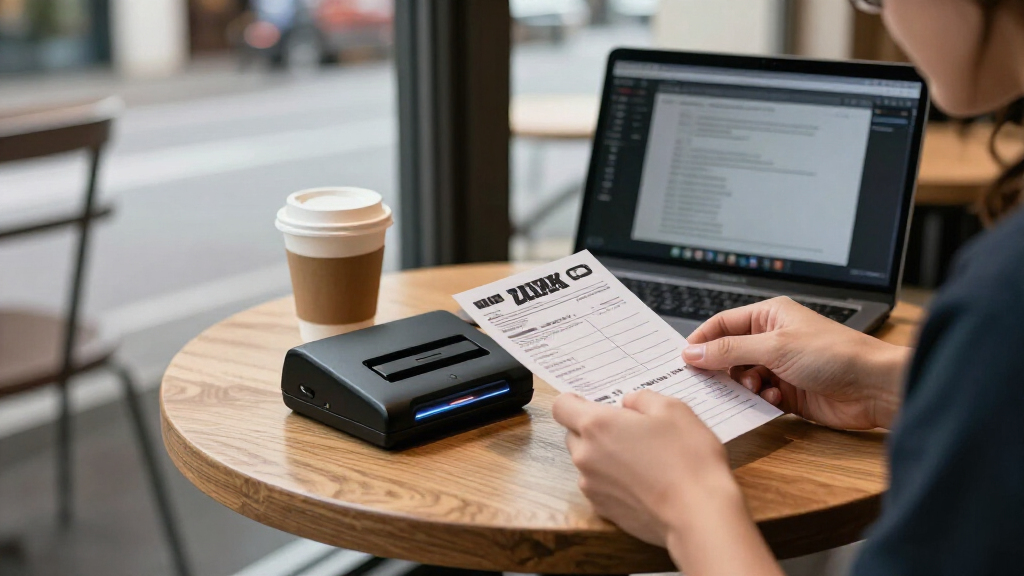
I ranked these scanners by how well they serve the specific combination of portable use, photo handling, and document capture, rather than treating every product as interchangeable. I weighed feeding style, double-sided capability, connection options, footprint, and how much manual work a typical scan requires. Flatbeds received credit for handling fragile, thick, or irregular originals; sheet-fed models ranked higher for repeat document tasks; handheld devices were judged on their mobility but held back by the need to guide each pass carefully.
The order reflects practical fit, not a claim that one scanner is best for every original. Models with duplicate listings, including the ScanSnap iX1300, are treated as one distinct product rather than separate choices. I also considered setup demands and workflow limits: a high-resolution flatbed can be a better photo tool but a slower paperwork choice, while a compact feeder can be efficient without being the right place for delicate prints. Products are ranked higher when their strengths match a broad, clearly defined buyer need and their limitations are easy to understand before purchase.
Factors to Consider When Choosing Portable Photo Scanners For Documents
Before choosing, decide what “portable” means for your actual routine: a scanner you can carry between desks, one that runs without a computer, or a compact device that handles a steady stream of pages. Those needs point to different designs, and the right choice depends as much on the originals you scan as on the scanner itself.
Choose the Feeding Style Around Your Originals
Sheet-fed scanners make sense when most of your work is loose paper, receipts, forms, or photos that can safely pass through a feed path. A flatbed is gentler on curled, fragile, thick, or irreplaceable prints because the original stays still under the lid. Handheld wands can scan pages without feeding them into a machine, but the scan depends on a smooth, steady pass. A common mistake is choosing the smallest device without checking whether it can accept the materials you actually need to preserve. If your archive mixes family prints with paperwork, consider whether one scanner can serve both tasks well or whether each format deserves a different method.
Match Throughput to Your Real Scanning Volume
Think about the largest job you expect to scan in one sitting, not just the occasional page. A single-sheet portable model can be easy to pack but may become tedious when you face a multi-page packet. An automatic feeder or duplex scanning can reduce handling for recurring paperwork, but it adds size and may not be appropriate for fragile photos. Batch size also affects your tolerance for setup: a scanner that needs frequent page alignment may be fine for a few keepsakes and frustrating for office records. Avoid paying for speed you will rarely use, but do not underestimate the time spent feeding pages one at a time.
Treat Resolution as One Part of Photo Quality
A high advertised resolution can help with small prints or later cropping, but it does not guarantee natural color, sharp focus, or clean scans by itself. The lighting, sensor, software processing, and condition of the original all shape the result. For ordinary document archiving, legible text and dependable page capture matter more than chasing the highest number. For photos, think about whether you need faithful color, fine detail, or simply a convenient digital copy. A frequent buying error is choosing on resolution alone while overlooking scanning surface size, color controls, and whether the device can handle the print without bending it.
Check Power, Connectivity, and File Handling
Portable designs differ in how they connect and where they store scans, so map the workflow before buying. USB-powered models can reduce the number of accessories to carry, while wireless options may be more convenient when a laptop is not nearby. Handheld units with removable memory can work independently of a computer, but moving and organizing files becomes a separate task. Confirm compatibility with the computer or mobile device you plan to use, along with the file formats and software features you need. For work records, consider where scans will be saved and backed up; a device that creates files easily is only useful if those files remain organized and accessible.
Balance Portability Against Stability and Care
A slim scanner is easier to store, but a very light device may be less comfortable during repeated use or more vulnerable to movement on an uneven surface. Flatbeds need a stable place to sit and enough room to lift the cover, while wand scanners need space to move across the page without interruption. If you travel with a scanner, account for cables, protective storage, and the surface available at your destination. For photo preservation, dust and scratches can matter as much as the scanner itself, so a clean work area and careful handling are part of the workflow. Choose the form factor that makes careful, repeatable scanning realistic—not merely the one that looks easiest to pack.
Pay More for Capabilities You Will Use Regularly
Extra spending makes the most sense when it removes a repeated source of friction, such as manually turning pages, scanning frequent batches, or working across several devices. A premium feeder may save time in a busy document workflow, while a capable flatbed can be worthwhile for a growing photo archive. For occasional paperwork, a simpler portable scanner may cover the need without adding features that complicate setup. Before upgrading, list the tasks the added capability would improve and how often they occur. If the benefit is limited to a rare job, a more modest scanner—or a separate service for that job—may be the more practical choice.
Frequently Asked Questions
Can one portable scanner handle both family photos and everyday documents well?
It can, but the best compromise depends on which task dominates. A flatbed is gentler on fragile, curled, or unusual prints, while a sheet-fed model is usually easier when you scan paperwork in batches. Some compact devices can cover both ordinary prints and documents, but no single design is equally convenient for delicate originals and frequent page throughput. If preserving photo condition matters most, prioritize a flatbed and accept slower document handling. If paperwork is the routine task, choose a feeder and use extra care with prints you cannot replace.
Is a handheld wand scanner a good choice for digitizing a box of documents?
Usually not if the box contains many pages or the scans need consistent alignment. A wand scanner offers mobility and can be useful when a page cannot be removed or when you need occasional captures away from a desk. Each pass requires controlled movement, so repeated pages can take time and may vary in quality. For a large archive, a sheet-fed scanner or flatbed is generally easier to manage. Choose a wand when portability matters more than speed and repeatability.
Should I choose a flatbed or an automatic document feeder for old photographs?
For old, delicate, curled, or valuable photographs, a flatbed is the safer default because the print stays on a glass surface rather than passing through rollers. An automatic feeder is more convenient for loose, sturdy prints when speed matters, but feeding can pose extra risk to damaged or brittle originals. Consider the photo’s condition, thickness, and whether it can lie flat before choosing. Clean the glass and handle prints by their edges to reduce dust and smudges. If a photo is especially valuable, scanning it carefully with a flatbed—or using a preservation service—may be preferable to prioritizing speed.
Do I need duplex scanning if I mostly scan forms and receipts?
Duplex scanning is useful when forms or records commonly have information on both sides, since it avoids turning every page manually. For single-sided receipts and short forms, it may not change your routine much. Think about the proportion of two-sided pages and how often you scan them, rather than treating duplex as an automatic requirement. A compact single-sided scanner can be a sensible choice for occasional, one-sided work. If double-sided pages are a regular part of your workflow, the time saved can justify choosing a model built for that task.
What should I check before buying a portable scanner for a computer-free workflow?
Look for a clear description of how scans are captured, stored, and transferred without a computer. Some handheld models save to removable memory, while many compact document scanners rely on a computer or a supported mobile app to complete the process. Verify whether the device can run on its own, what storage media it accepts, and how you will move files to a phone or archive. Also check whether the saved format and resolution meet your needs; standalone capture can be convenient but may offer fewer controls. A computer-free workflow is only useful if file transfer and organization remain straightforward.
Conclusion
For most people balancing documents with occasional photo scanning, I recommend the ScanSnap iX1300 as the best overall because its compact format and double-sided workflow cover a broad range of everyday tasks. For best value in a simple portable document setup, compare the Epson ES-50 and Brother DS-640 based on your preferred size and workflow, while recognizing that single-sheet designs are less suited to large batches. The best premium pick is the ScanSnap iX2500 Photo Edition for buyers who want a more capable high-speed setup and expect to use it often. For beginners focused on photos, the Epson Perfection V19 II offers the straightforward flatbed approach; choose the Canon CanoScan models if a slim flatbed matters more. For specific needs, pick the Plustek ePhoto Z300 for loose-photo handling or a Hczrc, MUNBYN, or AOZBZ wand scanner when computer-free portability outweighs consistency. Match the scanner to your originals and volume, and the tradeoffs become much easier to choose between.