Among these mirrorless cameras for beginners, I’d choose the Canon EOS R50 with the RF-S 18–45mm lens as the best overall starting point for its approachable design and room to grow. The Canon EOS R100 is a simpler, more budget-conscious entry, while the Sony a6400 stands out for buyers who want strong autofocus in a camera they can keep using as their skills develop. The main tradeoffs are ease of use versus advanced controls, a basic kit lens versus extra reach, and a compact APS-C setup versus full-frame potential. Bundle contents can also look more useful than they are if the accessories don’t match how you plan to shoot. Read on for my full breakdown of all 12 options and guidance on choosing the right first camera.

Get everyday essentials delivered free with Prime
- Fast, free delivery on millions of items
- Prime Video, Amazon Music and more included
- Member-only deals all year
Key Takeaways
- The Canon EOS R50 is the strongest all-around starting point in this lineup, while the R100 offers a simpler route for buyers who want fewer demands on their budget and learning time.
- Several R100 listings are variations on the same camera; compare the lens and useful kit contents rather than treating a memory card, bag, or accessory bundle as a different camera.
- The R100 double-zoom and two-lens kits prioritize reach, but extra lenses add bulk and create more choices for a new photographer.
- The Sony a6400 and Canon EOS RP serve different growth paths: the Sony is an APS-C option with a strong autofocus reputation, while the RP introduces full-frame image making with larger-system tradeoffs.
- The EOS M10 is the least future-facing system choice here, while the EOS R50 V is aimed more at video-minded beginners than buyers seeking a conventional stills-first camera.
| Canon EOS R100 Mirrorless Camera with RF-S 18-45mm Lens Bundle |  | Best Simple Starter Kit | Sensor: 24.1MP APS-C CMOS | Image processor: DIGIC 8 | Included lens: RF-S 18-45mm f/4.5-6.3 IS STM | VIEW LATEST PRICE | See Our Full Breakdown |
| Sony Alpha a6400 Mirrorless Camera with 16–50mm Lens | 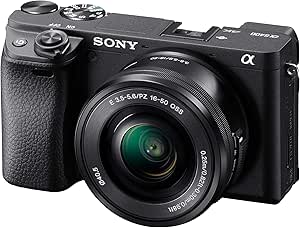 | Best for Action and Learning Autofocus | Sensor: 20.1MP APS-C CMOS | Included lens: 16-50mm | Lens mount: Sony E-mount | VIEW LATEST PRICE | See Our Full Breakdown |
| Canon EOS R100 Mirrorless Camera Bundle with RF-S 18-45mm Lens and Accessories |  | Best Accessory-Loaded Starter Bundle | Sensor: 24.2MP APS-C CMOS | Image processor: DIGIC 8 | Included lens: RF-S 18-45mm f/4.5-6.3 IS STM | VIEW LATEST PRICE | See Our Full Breakdown |
| Canon EOS RP Full-Frame Mirrorless Camera with RF 24-105mm F4-7.1 IS STM Lens |  | Best Full-Frame Step-Up | Camera type: Full-frame mirrorless | Sensor: 26.2MP full-frame CMOS | Included lens: RF 24-105mm F4-7.1 IS STM | VIEW LATEST PRICE | See Our Full Breakdown |
| Canon EOS R100 Mirrorless Camera with 18–45mm Lens, 64GB SD Card and Camera Bag | 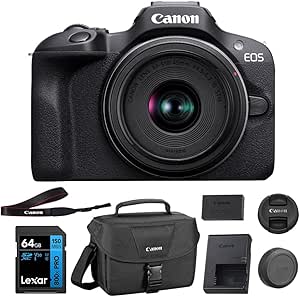 | Best for Mobile Everyday Shooting | Sensor: 24.1MP APS-C CMOS | Image processor: DIGIC 8 | Lens mount: Canon RF | VIEW LATEST PRICE | See Our Full Breakdown |
| Canon EOS R100 Mirrorless Camera with RF-S18-45mm F4.5-6.3 IS STM Lens | 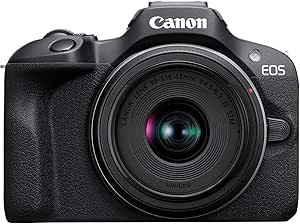 | Best Simple RF-System Starter | Sensor: 24.1 MP APS-C CMOS | Image processor: DIGIC 8 | Lens mount: Canon RF | VIEW LATEST PRICE | See Our Full Breakdown |
| Canon EOS R100 Mirrorless Camera Two-Lens Bundle |  | Best Beginner Bundle for Focal-Length Variety | Sensor: 24.1 MP APS-C CMOS | Image processor: DIGIC 8 | Lens mount: Canon RF | VIEW LATEST PRICE | See Our Full Breakdown |
| Canon EOS R50 Mirrorless Camera with RF-S 18–45mm Lens Bundle |  | Best Overall Beginner Kit | Sensor: 24.2 MP APS-C CMOS | Lens mount: Canon RF | Included lens: Canon RF-S 18–45mm f/4.5–6.3 IS STM | VIEW LATEST PRICE | See Our Full Breakdown |
| Canon EOS R50 V Mirrorless Camera Body |  | Best for Beginner Video Creators | Sensor: 24.2 MP APS-C CMOS | Image processor: DIGIC X | Lens mount: Canon RF | VIEW LATEST PRICE | See Our Full Breakdown |
| Canon EOS M10 Mirrorless Camera Kit with EF-M 15-45mm Image Stabilization STM Lens |  | Best Lightweight, Low-Complexity Pick | Sensor: 18 MP APS-C CMOS | Image processor: DIGIC 6 | Lens mount: Canon EF-M | VIEW LATEST PRICE | See Our Full Breakdown |
| Canon EOS R100 Mirrorless Camera Double Zoom Lens Kit |  | Best Beginner Kit for Exploring Telephoto Photography | Sensor: 24.1MP APS-C | Image processor: DIGIC 8 | Autofocus: Dual Pixel CMOS AF with face and eye detection | VIEW LATEST PRICE | See Our Full Breakdown |
| Canon EOS R50 Mirrorless Camera with RF-S18-45mm F4.5-6.3 IS STM Lens | 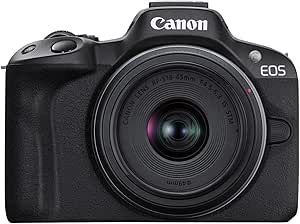 | Best for Beginners Who Want Room to Grow | Sensor: 24.2MP APS-C CMOS | Image processor: DIGIC X | Included lens: RF-S 18-45mm F4.5-6.3 IS STM | VIEW LATEST PRICE | See Our Full Breakdown |
| mirrorless cameras for beginner | Sensor | Autofocus | Image processor | Included lens |
|---|---|---|---|---|
| Canon EOS R100 Mirrorless Came | 24.1MP APS-C CMOS | Dual Pixel CMOS AF, 143 zones | DIGIC 8 | RF-S 18-45mm f/4.5-6.3 IS STM |
| Sony Alpha a6400 Mirrorless Ca | 20.1MP APS-C CMOS | 425 phase-detection and 425 contrast-detection points | — | 16-50mm |
| Canon EOS R100 Mirrorless Came | 24.2MP APS-C CMOS | Dual Pixel CMOS AF with 143 zones | DIGIC 8 | RF-S 18-45mm f/4.5-6.3 IS STM |
| Canon EOS RP Full-Frame Mirror | 26.2MP full-frame CMOS | Dual Pixel CMOS AF, 4,779 AF points | — | RF 24-105mm F4-7.1 IS STM |
| Canon EOS R100 Mirrorless Came | 24.1MP APS-C CMOS | Dual Pixel CMOS AF, up to 143 zones; human face and eye, animal, and vehicle detection | DIGIC 8 | 18-45mm |
| Canon EOS R100 Mirrorless Came | 24.1 MP APS-C CMOS | Dual Pixel CMOS AF with human face and eye detection; animal and vehicle detection | DIGIC 8 | RF-S 18–45mm F4.5–6.3 IS STM |
| Canon EOS R100 Mirrorless Came | 24.1 MP APS-C CMOS | Dual Pixel CMOS AF with human face and eye detection | DIGIC 8 | — |
| Canon EOS R50 Mirrorless Camer | 24.2 MP APS-C CMOS | Dual Pixel AF II, hybrid phase detection | — | Canon RF-S 18–45mm f/4.5–6.3 IS STM |
| Canon EOS R50 V Mirrorless Cam | 24.2 MP APS-C CMOS | Dual Pixel CMOS AF II with 45 phase-detection points | DIGIC X | — |
| Canon EOS M10 Mirrorless Camer | 18 MP APS-C CMOS | Hybrid CMOS AF II | DIGIC 6 | EF-M 15–45mm Image Stabilization STM |
| Canon EOS R100 Mirrorless Came | 24.1MP APS-C | Dual Pixel CMOS AF with face and eye detection | DIGIC 8 | — |
| Canon EOS R50 Mirrorless Camer | 24.2MP APS-C CMOS | Dual Pixel CMOS AF II with 651 AF zones and people, animal, and vehicle tracking | DIGIC X | RF-S 18-45mm F4.5-6.3 IS STM |
More Details on Our Top Picks
Canon EOS R100 Mirrorless Camera with RF-S 18-45mm Lens Bundle
For a first interchangeable-lens camera, I’d put this R100 bundle near the top for its straightforward controls and practical kit lens. The 24.1MP APS-C sensor gives beginners room to crop photos, while Dual Pixel autofocus helps keep people in focus without demanding much setup. Compared with the Sony Alpha a6400, this Canon offers simpler beginner-oriented handling, but the Sony is the stronger choice for fast action thanks to its 11 fps burst rate and broader autofocus-point specification. The included 18-45mm lens is stabilized, a useful aid for handheld shots, though its f/4.5-6.3 variable aperture limits light gathering as you zoom. Cropped 4K is also less flexible than the Sony’s 4K, and there’s no built-in flash. I’d choose it for learning still photography, not for ambitious video work.
Pros:- Beginner-friendly automatic modes and simplified menu navigation
- Included 18-45mm zoom lens has image stabilization
- Dual Pixel autofocus supports subject tracking
- Wi-Fi and Bluetooth enable wireless connectivity
Cons:- 4K video is cropped
- The lens has a slow, variable f/4.5-6.3 maximum aperture
- No built-in flash
Best for: First-time camera buyers who want simple automatic modes, a viewfinder, and a stabilized everyday zoom in one starter kit.
Not ideal for: Beginners focused on action photography or wide-angle 4K video; its 6.5 fps burst rate is modest and 4K uses a crop.
- Sensor:24.1MP APS-C CMOS
- Image processor:DIGIC 8
- Included lens:RF-S 18-45mm f/4.5-6.3 IS STM
- Autofocus:Dual Pixel CMOS AF, 143 zones
- Video:4K at 24p with crop; Full HD at 60p
- Continuous shooting:6.5 fps
- Viewfinder:2.36-million-dot OLED electronic
- Connectivity:Wi-Fi and Bluetooth
Our verdict“Choose this R100 kit to learn photography with a simple, stabilized starter lens, but pick the Sony a6400 for faster action or less-cropped 4K framing.”
Sony Alpha a6400 Mirrorless Camera with 16–50mm Lens
I’d rank the Sony Alpha a6400 for beginners who expect to photograph moving subjects and want room to grow into more deliberate shooting. Its 11 fps burst rate and 425 phase-detection plus 425 contrast-detection points offer a more action-ready setup than the Canon EOS R100, whose burst rate is 6.5 fps. The tilting LCD also helps when framing from low or high angles, while 4K recording gives it more video flexibility than an R100’s cropped 4K. The tradeoff is a less explicitly beginner-focused proposition: the listed features don’t include the R100’s simplified-mode emphasis, so a new owner may need more practice to get the most from the autofocus and controls. Its supplied 16-50mm lens is a modest range, and the 1/4000-second maximum shutter speed may constrain bright-light shooting with a wide aperture. This is the better fit for active subjects, not the easiest first lesson.
Pros:- 11 fps continuous shooting is suited to moving subjects
- 425 phase-detection and 425 contrast-detection autofocus points
- 4K UHD video recording
- Tilting 3-inch LCD supports flexible framing
Cons:- The included 16-50mm lens provides a limited focal-length range
- The 1/4000-second maximum shutter speed can limit exposure options in bright conditions
- Its action-focused controls may take more learning than the Canon EOS R100’s beginner-oriented modes
Best for: New photographers who want to follow children, pets, or sports and are willing to learn autofocus settings as they go.
Not ideal for: Buyers who prioritize the simplest possible automatic experience or want a longer-reach kit lens without adding another lens.
- Sensor:20.1MP APS-C CMOS
- Included lens:16-50mm
- Lens mount:Sony E-mount
- Video:4K UHD (3840 × 2160)
- Continuous shooting:Up to 11 fps
- Autofocus:425 phase-detection and 425 contrast-detection points
- Display:3-inch tilting LCD
- Connectivity:Wi-Fi, USB, Micro-HDMI
Our verdict“Pick the a6400 if tracking action and shooting 4K matter more than having the most guided beginner experience.”
Canon EOS R100 Mirrorless Camera Bundle with RF-S 18-45mm Lens and Accessories
This bundle is aimed at beginners who want a camera plus basic extras for getting started, rather than a bare-bones body-and-lens kit. Alongside the R100’s 24.2MP APS-C sensor and stabilized 18-45mm lens, it includes a memory card, filters, lens attachments, flash, tripods, and cleaning accessories. That makes it more equipped out of the box than the simpler Canon EOS R100 kit with a memory card and bag. The camera itself, however, remains an entry-level R100: 4K is limited to 24p and cropped, and continuous shooting tops out at 6.5 fps. The wide-angle and telephoto attachments add options, but they are not a substitute for dedicated lenses when image quality or predictable framing matters. I’d favor this package for a learner who wants accessories immediately; someone who values a faster shooting experience should look at the Sony Alpha a6400 instead.
Pros:- 24.2MP APS-C sensor and DIGIC 8 processing
- Stabilized RF-S 18-45mm lens is included
- Bundle adds a memory card, filters, flash, tripods, and cleaning accessories
- Electronic viewfinder supports eye-level framing
Cons:- 4K video is cropped and limited to 24p
- The included zoom has a variable f/4.5-6.3 maximum aperture
- 6.5 fps continuous shooting is less suited to fast action than the Sony a6400
Best for: Beginners who want a camera, memory card, bag, basic support gear, and add-on attachments together for home and travel practice.
Not ideal for: Photographers who want dependable reach or high-quality lens upgrades; the included attachments do not replace dedicated lenses, and the R100’s burst rate is modest.
- Sensor:24.2MP APS-C CMOS
- Image processor:DIGIC 8
- Included lens:RF-S 18-45mm f/4.5-6.3 IS STM
- Autofocus:Dual Pixel CMOS AF with 143 zones
- Video:4K at 24p; Full HD at 60p
- Continuous shooting:Up to 6.5 fps
- Viewfinder:2.36-million-dot OLED electronic viewfinder
- Included accessories:64GB SD card, filters, wide-angle and telephoto attachments, flash, tripods, camera bag, card reader, and cleaning accessories
Our verdict“Choose this R100 bundle if you want a broad set of beginner accessories in the box, but choose the a6400 for faster bursts and action-focused shooting.”
Canon EOS RP Full-Frame Mirrorless Camera with RF 24-105mm F4-7.1 IS STM Lens
The EOS RP is the step-up choice for a beginner who already knows they want a full-frame sensor and a broad everyday zoom. Its 26.2MP sensor and RF 24-105mm lens cover a wider range than the 18-45mm kit supplied with the Canon EOS R100, so one lens can handle more framing choices without frequent swaps. Optical stabilization rated up to five stops can help steady handheld shots, and the lens’s Center Focus Macro mode adds close-up flexibility. This reach and sensor size come with a learning and system tradeoff: the RP is less entry-level in intent than the R100, while its single SD card slot offers no in-camera backup. Video tops out at 4K UHD, and the provided specs do not list a higher frame-rate 4K mode. I’d choose it for a deliberate full-frame start, not for someone simply seeking the easiest camera to learn on.
Pros:- 26.2MP full-frame sensor
- 24-105mm zoom covers a broader range than the R100’s 18-45mm kit lens
- Optical stabilization provides up to five stops of shake correction
- Center Focus Macro mode reaches up to 0.5x magnification
Cons:- Single SD/SDHC/SDXC memory card slot
- Video resolution tops out at 4K UHD
- A full-frame system is a more involved starting point than the entry-level Canon EOS R100
Best for: Beginners committed to starting with a full-frame system who want one stabilized zoom for travel, portraits, and close-up subjects.
Not ideal for: First-time buyers who want the simplest, least involved entry into interchangeable-lens photography or need dual-card backup for important work.
- Camera type:Full-frame mirrorless
- Sensor:26.2MP full-frame CMOS
- Included lens:RF 24-105mm F4-7.1 IS STM
- Autofocus:Dual Pixel CMOS AF, 4,779 AF points
- Video:4K UHD 2160p
- Image stabilization:Up to 5 stops of shake correction
- Display:3-inch articulating LCD touchscreen
- Memory card slot:Single SD/SDHC/SDXC slot, UHS-II
Our verdict“Choose the EOS RP if you specifically want full-frame image-making and a versatile stabilized zoom, rather than the simpler entry-level approach of the R100.”
Canon EOS R100 Mirrorless Camera with 18–45mm Lens, 64GB SD Card and Camera Bag
This R100 kit makes the most sense for a beginner who wants a compact everyday camera and the basics needed to carry it out: a lens, 64GB card, and camera bag. Its 24.1MP APS-C sensor and autofocus detection for people, animals, and vehicles give a new photographer useful flexibility across family outings and casual subjects. Compared with the accessory-heavy Canon EOS R100 bundle, this version keeps the extras focused on essentials instead of adding tripods, filters, and attachments. The camera’s 6.5 fps burst rate is less capable for repeated action than the Sony Alpha a6400’s 11 fps, and 4K video is limited to 24 fps. The 18-45mm lens is a familiar general-purpose range, but the supplied specs do not identify stabilization for this particular listing, so I wouldn’t choose it on that basis. It’s a sensible carry-around starter, not a fast-action or video-first kit.
Pros:- 24.1MP APS-C sensor captures detailed still images
- Autofocus detects human faces and eyes, animals, and vehicles
- Bundle includes a 64GB UHS-I SD card and camera bag
- Supports Full HD at 60 fps and HD at 120 fps
Cons:- 4K recording is limited to 24 fps
- 6.5 fps continuous shooting is slower than the Sony a6400
- The 18-45mm lens has a limited zoom range for distant subjects
Best for: Beginners who want a manageable everyday camera kit for family, travel, and casual stills, with a bag and memory card included.
Not ideal for: Sports and wildlife beginners who need a higher burst rate, or video creators seeking higher-frame-rate 4K recording.
- Sensor:24.1MP APS-C CMOS
- Image processor:DIGIC 8
- Lens mount:Canon RF
- Included lens:18-45mm
- Autofocus:Dual Pixel CMOS AF, up to 143 zones; human face and eye, animal, and vehicle detection
- Video:4K up to 24 fps; Full HD up to 60 fps; HD up to 120 fps
- Continuous shooting:Up to 6.5 fps
- Included accessories:Canon 200ES camera bag and Lexar 64GB UHS-I SD memory card
Our verdict“Pick this R100 kit for straightforward everyday photography with essential carry accessories, but choose the Sony a6400 if fast action is a priority.”
Canon EOS R100 Mirrorless Camera with RF-S18-45mm F4.5-6.3 IS STM Lens
The Canon EOS R100 with the RF-S 18–45mm is a straightforward entry point for beginners who want an interchangeable-lens camera without a large, complex setup. Its 24.1 MP APS-C sensor and face-and-eye autofocus give new photographers useful room to learn portraits, family photos, and everyday scenes. Compared with the Canon EOS R50 with RF-S 18–45mm Lens Bundle, the R100 is the more basic choice: its 4K video tops out at 24 fps, and its rear screen is fixed rather than articulated. That makes framing selfies and filming yourself less convenient. The kit lens keeps the camera compact, but its f/4.5–6.3 variable aperture gathers less light as you zoom. I’d choose this kit for uncomplicated still photography, not for ambitious video work.
Pros:- 24.1 MP APS-C sensor gives beginners room to crop and make detailed prints.
- Face and eye detection helps keep portraits in focus.
- Compact RF-S kit lens covers common wide-to-short-telephoto framing.
- RF mount gives access to Canon RF and RF-S interchangeable lenses.
Cons:- Fixed screen makes self-recording and awkward-angle framing harder.
- 4K recording is limited to 24 fps.
- The kit lens has a slow, variable maximum aperture, limiting low-light flexibility.
Best for: First-time camera owners who want a compact Canon RF-mount kit for family, travel, and everyday photography.
Not ideal for: Beginners who plan to vlog or shoot frequent video of themselves, since the screen does not tilt and 4K is limited to 24 fps.
- Sensor:24.1 MP APS-C CMOS
- Image processor:DIGIC 8
- Lens mount:Canon RF
- Included lens:RF-S 18–45mm F4.5–6.3 IS STM
- Autofocus:Dual Pixel CMOS AF with human face and eye detection; animal and vehicle detection
- Video:4K up to 24 fps; Full HD up to 60 fps
- Continuous shooting:Up to 6.5 fps with One-Shot AF
- Display:3-inch fixed LCD
Our verdict“Choose the R100 kit for approachable everyday stills and a compact RF-mount start, but pick the R50 bundle if video and a flexible screen matter more.”
Canon EOS R100 Mirrorless Camera Two-Lens Bundle
This two-lens EOS R100 bundle gives a beginner more room to experiment than the single-lens R100 kit: the 18–45mm handles everyday scenes, while the RF 75–300mm reaches distant subjects such as field sports or wildlife. The included bag and memory card also make it easier to assemble a basic kit in one purchase. The camera itself remains an entry-level body, though, and the long lens adds reach rather than making the system more capable at night or in low light. Compared with the Canon EOS R50 Mirrorless Camera with RF-S 18–45mm Lens Bundle, this package prioritizes lens range over newer video features and a more flexible creator setup. The R100’s fixed screen and cropped 4K at 24 fps are real limits for video-first beginners; the bundle’s listed 2.2 lb weight also means more to carry.
Pros:- Two lenses cover everyday framing and substantially longer reach.
- 24.1 MP APS-C sensor supports detailed beginner photography.
- Face and eye autofocus helps with portraits and family moments.
- Includes a camera bag, 64GB memory card, and digital photography guide.
Cons:- The R100 body has a fixed display that is awkward for self-recording.
- 4K video is cropped and limited to 24 fps.
- The 75–300mm lens adds carrying weight and is less suited to dim conditions.
Best for: New photographers who want to try portraits, everyday scenes, and distant wildlife or sports without buying a second lens separately.
Not ideal for: Travelers who prioritize a light, compact carry kit, or video beginners who want an articulating screen and stronger 4K options.
- Sensor:24.1 MP APS-C CMOS
- Image processor:DIGIC 8
- Lens mount:Canon RF
- Included lenses:RF-S 18–45mm F4.5–6.3 IS STM; RF 75–300mm F4–5.6
- Autofocus:Dual Pixel CMOS AF with human face and eye detection
- Video:Cropped 4K up to 24 fps; Full HD up to 60 fps
- Display:3-inch fixed LCD, 1,040,000 dots
- Included accessories:ES-200 camera bag, 64GB SDHC memory card, and digital photography guide
- Weight:2.2 lb
Our verdict“Pick this bundle if learning different focal lengths matters more than compactness or advanced video features.”
Canon EOS R50 Mirrorless Camera with RF-S 18–45mm Lens Bundle
The Canon EOS R50 bundle is my strongest all-round pick for beginners who want a camera that can grow with both still photography and video. Its Dual Pixel AF II and oversampled 4K make it a more capable step up from the EOS R100 kits, especially when subjects move or video detail matters. The included RF-S 18–45mm lens has optical stabilization, which can help steady handheld shots, and the bundle adds a bag and memory card. Its automatic and manual modes let new owners start simply and take more control later. The tradeoff is that this remains a compact APS-C kit with a slow, variable-aperture zoom; it is not water resistant, and the camera has no built-in flash. For creators focused on video controls, the R50 V is more specialized, but it is body-only and requires a separate lens.
Pros:- Oversampled 4K gives video more detail than the R100’s 24 fps 4K recording.
- Dual Pixel AF II with face and eye detection supports reliable subject tracking.
- Included stabilized zoom lens helps reduce camera shake in handheld use.
- RAW capture and automatic or manual modes support a gradual learning curve.
Cons:- The included lens has a slow f/4.5–6.3 variable aperture.
- Camera is not water resistant.
- No built-in flash for quick fill light in dim scenes.
Best for: Beginners who want one adaptable camera kit for family and travel photos, learning manual controls, and higher-quality 4K video.
Not ideal for: Photographers who need weather protection, built-in flash, or a brighter lens for frequent indoor and low-light shooting.
- Sensor:24.2 MP APS-C CMOS
- Lens mount:Canon RF
- Included lens:Canon RF-S 18–45mm f/4.5–6.3 IS STM
- Autofocus:Dual Pixel AF II, hybrid phase detection
- Video:4K (2160p)
- ISO range:100–25,600
- Image stabilization:Optical stabilization in the included lens
- Image format:RAW
- Bundle extras:64GB memory card and camera bag
Our verdict“Choose the R50 bundle if you want a beginner-friendly kit with stronger video and autofocus than the R100, without buying a lens separately.”
Canon EOS R50 V Mirrorless Camera Body
The EOS R50 V is the video-first choice here, aimed at beginners who expect to vlog, livestream, or make short-form content rather than simply learn photography. Its front record button, vertical-video tripod mount, and subject tracking are geared toward a creator workflow, while full-width 4K at up to 29.97p and high-frame-rate Full HD offer more video flexibility than the R100. Compared with the more general-purpose EOS R50 bundle, this body puts video operation first but does not include a lens, so it is not ready to shoot until a compatible RF lens is added. It also lacks a built-in flash, and its listed JPEG image format makes it a less appealing fit for beginners who want RAW stills for editing. I’d choose it for video-led learning, not as the easiest all-purpose first camera.
Pros:- Full-width 4K up to 29.97p and high-frame-rate Full HD support varied video projects.
- Dual Pixel CMOS AF II detects and tracks people, animals, and vehicles.
- Front record button simplifies starting clips while filming yourself.
- Vertical video tripod mount suits portrait-format content.
Cons:- Body-only package requires a separate compatible lens before shooting.
- No built-in flash for still photography.
- Listed still-image format is JPEG rather than RAW.
Best for: New vloggers and livestreamers who want creator-focused controls, subject tracking, and room to choose an RF lens for their shooting style.
Not ideal for: First-time photographers seeking a ready-to-use kit, RAW still capture, or a built-in flash for casual photography.
- Sensor:24.2 MP APS-C CMOS
- Image processor:DIGIC X
- Lens mount:Canon RF
- Video recording:4K crop up to 59.94p; full-width 4K up to 29.97p; full-width Full HD up to 119.8p
- Autofocus:Dual Pixel CMOS AF II with 45 phase-detection points
- Subject detection:People, animals, and vehicles
- Screen:3-inch LCD
- Memory card compatibility:SD and microSD
- Weight:2.1 lb
Our verdict“Choose the R50 V if video creation is your priority and you are comfortable selecting a lens separately.”
Canon EOS M10 Mirrorless Camera Kit with EF-M 15-45mm Image Stabilization STM Lens
The Canon EOS M10 is the lightest-feeling, least demanding option in this group on paper: its body weighs 9.3 oz, and its tilting touchscreen makes framing selfies or low-angle shots easier than with the fixed-screen EOS R100. Touch focusing and Wi-Fi/NFC transfers also suit a beginner who wants a small camera for casual photos without building a video setup. The compromise is age and capability: the 18 MP sensor is lower resolution than the R100 and R50 models, continuous shooting tops out at 4.6 fps, and video stops at Full HD. Its EF-M mount is also a separate lens system from the RF mount used by the newer Canon options in this roundup. I’d treat it as a compact stills camera, not the best starting point for a long-term lens collection or modern 4K video.
Pros:- 9.3 oz body is easy to carry for casual outings and travel.
- Tilting touchscreen supports selfies, low-angle framing, and touch focus.
- Included stabilized EF-M zoom lens helps steady handheld shots.
- Wi-Fi and NFC support transfers to compatible devices.
Cons:- Video is limited to Full HD rather than 4K.
- 4.6 fps continuous shooting is less suited to fast-moving subjects than the R100.
- EF-M mount is separate from the RF lens system used by the other Canon cameras here.
Best for: Beginners who value a very light camera, a selfie-friendly tilting touchscreen, and simple everyday photography over 4K video.
Not ideal for: Buyers planning to build a Canon RF lens system, photograph fast action, or record 4K video.
- Sensor:18 MP APS-C CMOS
- Image processor:DIGIC 6
- Lens mount:Canon EF-M
- Included lens:EF-M 15–45mm Image Stabilization STM
- Autofocus:Hybrid CMOS AF II
- Continuous shooting:Up to 4.6 fps
- Display:3-inch capacitive LCD touchscreen, tilts up 180°, 1,040,000 dots
- Video:Full HD 1920 × 1080 at 24p or 30p
- Weight:9.3 oz
Our verdict“Pick the EOS M10 for a lightweight, touchscreen-led stills experience, but choose an RF model for a newer video setup and a shared lens system with the other Canon options.”
Canon EOS R100 Mirrorless Camera Double Zoom Lens Kit
This kit gives a new photographer two clear ways to learn: the RF-S 18-45mm handles everyday scenes, while the RF 75-300mm reaches distant subjects such as field sports or wildlife. That range makes it more flexible for still photography than the single-lens Canon EOS R50 kit, though the R50 is the stronger pick for tracking fast-moving subjects and flexible video framing. The R100’s 24.1MP APS-C sensor and face-and-eye detection offer a straightforward starting point for family and travel photos. Its electronic viewfinder helps with composing in bright light, and a shoulder bag is included for carrying the kit. The tradeoff is that two lenses add bulk and require beginners to learn when to swap; the older DIGIC 8 processor and basic 4K video also make it less capable for action and video than the R50.
Pros:- Two zoom lenses cover everyday scenes and distant subjects.
- 24.1MP APS-C sensor provides detailed still images.
- Face and eye detection helps focus on people.
- Included shoulder bag gives the lenses and camera a place to travel.
Cons:- Changing lenses adds bulk and another skill for a beginner to manage.
- DIGIC 8 and the listed 4K video make it less suited to action-focused or video-heavy use than the EOS R50.
- The kit’s stabilization details vary by lens, so buyers should not assume the same stabilization performance across both.
Best for: First-time photographers who want one kit for everyday photos and distant subjects like outdoor events, wildlife, or field sports.
Not ideal for: Beginners who prioritize simple carry, fast subject tracking, or advanced video; the two-lens setup is bulkier, and the R50 offers more capable autofocus and 4K features.
- Sensor:24.1MP APS-C
- Image processor:DIGIC 8
- Autofocus:Dual Pixel CMOS AF with face and eye detection
- Included lenses:RF-S 18-45mm F4.5-6.3 IS STM; RF 75-300mm F4-5.6
- Lens mount:Canon RF
- Video resolution:4K (2160p)
- Viewfinder:Electronic
- Display:3-inch screen
- Included accessory:Shoulder Bag 200 ES
Our verdict“Choose this R100 kit if you want an affordable-feeling learning setup with telephoto reach, but pick the EOS R50 if autofocus speed and video flexibility matter more.”
Canon EOS R50 Mirrorless Camera with RF-S18-45mm F4.5-6.3 IS STM Lens
The EOS R50 is the more capable all-around learning camera here: its DIGIC X processor and Dual Pixel CMOS AF II track people, animals, and vehicles, helping beginners keep moving subjects in focus. Compared with the Canon EOS R100 Double Zoom Lens Kit, it comes with only one standard zoom, so it cannot reach distant subjects without another lens. In return, the R50 offers a vari-angle touchscreen, uncropped 4K video up to 30 fps, and faster continuous shooting—useful for learning video, self-recording, and action photography. The 24.2MP APS-C sensor keeps the package approachable while delivering detailed photos. Its included lens has a relatively slow, variable maximum aperture, which can limit low-light shooting and background blur. This body is also heavier than the R100 listed here, and its APS-C sensor is smaller than the full-frame sensor in the EOS RP.
Pros:- Subject tracking recognizes people, animals, and vehicles.
- Vari-angle touchscreen makes self-recording and high- or low-angle framing easier.
- Uncropped 4K recording up to 30 fps supports flexible beginner video work.
- Burst shooting reaches up to 15 fps with the electronic shutter.
Cons:- The included RF-S 18-45mm lens has a variable f/4.5-6.3 maximum aperture, limiting low-light flexibility.
- No telephoto lens is included, unlike the R100 double-lens kit.
- Its APS-C sensor is smaller than the full-frame sensor in the EOS RP.
Best for: New photographers who want reliable tracking for people, pets, or vehicles and plan to learn both still photography and video.
Not ideal for: Buyers who need a long telephoto lens right away or want a full-frame sensor; this kit includes only a standard zoom and uses APS-C.
- Sensor:24.2MP APS-C CMOS
- Image processor:DIGIC X
- Included lens:RF-S 18-45mm F4.5-6.3 IS STM
- Autofocus:Dual Pixel CMOS AF II with 651 AF zones and people, animal, and vehicle tracking
- Video recording:Uncropped 4K up to 30 fps, oversampled from 6K
- Continuous shooting:Up to 12 fps with electronic first-curtain shutter; up to 15 fps with electronic shutter
- Viewfinder:2.36-million-dot EVF
- Display:3-inch vari-angle touchscreen
- Connectivity:Bluetooth and Wi-Fi
Our verdict“Choose the EOS R50 if you want a beginner-friendly camera with stronger tracking and video tools, and are comfortable adding a telephoto lens later if needed.”
How We Picked
I ranked these cameras around the needs of a first-time interchangeable-lens buyer: simple operation, dependable focus, manageable size, lens flexibility, and room to learn. A camera that makes everyday shooting approachable carries more weight here than one that offers a larger sensor or a long feature list but asks more of its owner. I also looked at what each listed kit adds, since a useful lens can matter more than a pile of generic accessories.
The ranking favors the Canon EOS R50 as the best balance for most new photographers, followed by cameras that make a clear case through simplicity, autofocus, full-frame capability, or added focal-length coverage. R100 listings are judged as kit variations, not as separate camera designs, so their position depends on the included lens and whether extras serve a real need. Older or less flexible system choices rank lower for buyers starting from scratch, even when a low-complexity kit may still appeal to a specific user.
| mirrorless cameras for beginner | Image processor | Lens mount |
|---|---|---|
| Canon EOS R100 Mirrorless Came | DIGIC 8 | — |
| Sony Alpha a6400 Mirrorless Ca | — | Sony E-mount |
| Canon EOS R100 Mirrorless Came | DIGIC 8 | — |
| Canon EOS RP Full-Frame Mirror | — | — |
| Canon EOS R100 Mirrorless Came | DIGIC 8 | Canon RF |
| Canon EOS R100 Mirrorless Came | DIGIC 8 | Canon RF |
| Canon EOS R100 Mirrorless Came | DIGIC 8 | Canon RF |
| Canon EOS R50 Mirrorless Camer | — | Canon RF |
| Canon EOS R50 V Mirrorless Cam | DIGIC X | Canon RF |
| Canon EOS M10 Mirrorless Camer | DIGIC 6 | Canon EF-M |
| Canon EOS R100 Mirrorless Came | DIGIC 8 | Canon RF |
| Canon EOS R50 Mirrorless Camer | DIGIC X | — |
Factors to Consider When Choosing Mirrorless Cameras For Beginners
Before picking a body, I’d match the camera to what you want to photograph and how you expect to learn. A beginner kit can save effort at first, but the lens system, controls, and kit contents shape how useful the camera feels after the first few outings.
Choose a camera you can operate comfortably
Beginner-friendly menus and clear controls can make the difference between practicing often and leaving the camera at home. A smaller body is easier to carry, but tiny controls may feel cramped if you have larger hands or plan to change settings quickly. Try to distinguish helpful automatic modes from a camera that leaves little room to learn exposure and focus. A touchscreen or guided interface can help at first, while a viewfinder becomes useful outdoors or when composing in bright light. Don’t choose by body size alone: check how the grip, buttons, and viewfinder suit your way of shooting. A camera that feels intuitive now is more likely to come along as your interests expand.
Pick the right first lens before adding extras
The kit lens usually matters more than a bundle’s accessory count because it shapes what you can photograph from day one. A standard zoom is a sensible starting point for family events, travel, and everyday scenes, but it may not reach distant wildlife or sports. Two-lens kits can cover more situations, yet they add weight and require lens changes; beginners may prefer learning one lens well before carrying a second. Check that any included lens is compatible with the camera mount and serves a clear purpose. A bag and memory card can be useful, but generic add-ons should not outweigh a better lens choice. Buy extra reach when you can name the subjects that need it.
Think about the system you’ll grow into
A camera body is only the start of an interchangeable-lens system, so check which lenses are available for its mount and how easily you can find the ones you may want later. Starting with a current mount can make future upgrades more straightforward than choosing an older system without checking its lens path. Adapters may broaden choices, but they can add cost, bulk, or compatibility questions. For a beginner, a few affordable lenses that match likely interests can be more useful than a body with advanced specifications. Consider whether you expect to shoot portraits, landscapes, close-ups, or distant subjects. Let that likely path guide the system decision rather than buying for hypothetical needs.
Match autofocus and video features to what you shoot
Autofocus matters most when your subject moves or you need the camera to find a face without constant adjustment. For still subjects, straightforward focus and a comfortable way to select a point may matter more than the most elaborate tracking modes. Video-first features are valuable if you plan to record yourself, make online content, or capture long clips, but they may not help much for a stills-focused hobby. Check whether the camera’s screen and controls support the way you’ll record, especially for solo filming. A feature-rich model can be less beginner-friendly if its menus make routine tasks harder. Prioritize the shooting situations you actually expect rather than chasing a long specification list.
Set a realistic size and weight limit
A camera that is comfortable to carry is more likely to be used, especially on trips and casual outings. Extra lenses increase creative options, but they also make a kit heavier and more cumbersome to pack. Full-frame cameras can appeal to buyers seeking more control over image quality, yet lenses and accessories can add size to the overall system. Compact APS-C kits often make an easier first step when portability matters. Before choosing a bundle, think about whether you’ll carry the camera daily, on planned shoots, or only for special occasions. If you won’t bring the extra lens, paying in weight and complexity for it may not make sense.
Spend on the part of the kit you’ll use
It’s easy to overvalue a bundle because it contains many items, but an extra card or generic accessory may matter less than a lens that fits your subjects. A spare battery can be useful for long days, while a bag is only a benefit if it protects the camera and fits the complete kit. Buyers starting with a basic zoom may get more lasting value from setting aside funds for a future portrait or telephoto lens. At the same time, a beginner who wants a ready-to-shoot package can appreciate a practical card and bag. Check each item’s role before comparing kits. The better choice is the one that reduces a real obstacle, not the one with the longest accessory list.
Frequently Asked Questions
Should I choose the Canon EOS R50 or the EOS R100 as my first camera?
I’d pick the EOS R50 if you want a more capable all-around camera with room to grow, particularly for varied subjects and video. The EOS R100 makes more sense if you want a straightforward, entry-level setup and don’t need the R50’s broader appeal. Both can serve as a first interchangeable-lens camera, so the decision is less about whether one is usable and more about how much flexibility you want. Consider the lens included with each listing, since similar body names can come with different kit contents. If you expect to explore several types of photography, the R50 is the more adaptable starting point.
Are the different Canon EOS R100 bundles actually different cameras?
The listings in this roundup center on the same EOS R100 camera body, but the included lenses and accessories vary. Some packages add a bag or memory card, while others include two lenses or a double-zoom setup with more reach. Those extras can change what you can shoot right away, but they don’t make the camera itself a different model. Compare the exact lens names and make sure the accessories are useful for your plans. If you only need a general-purpose setup, a basic kit may be easier to carry and learn than a larger bundle.
Is a two-lens kit a good choice for someone new to photography?
A two-lens kit can be a good fit if you already know you need both a standard zoom and longer reach, such as for travel plus wildlife or sports. The added range can save you from buying another lens right away. The tradeoff is carrying more gear and deciding which lens to use, which can slow down casual shooting. A single kit lens is often easier for learning composition and camera controls without frequent lens changes. If you’re unsure what you’ll photograph most, start simple and add a lens when you can identify a clear gap.
Should I buy a full-frame camera like the Canon EOS RP as my first mirrorless camera?
The EOS RP can suit a beginner who specifically wants to start with a full-frame system and is comfortable with a larger lens setup. Full-frame can offer useful image-making flexibility, but it does not automatically make photos better or make learning easier. The camera’s lens choices, overall carrying weight, and kit cost should all fit your plans. An APS-C camera such as the R50 or a6400 may be a more manageable first system for everyday use. Choose full-frame for a clear reason, not just because the sensor format sounds like an upgrade.
Is the Canon EOS M10 a sensible first camera in 2027?
The EOS M10 may work for someone seeking a simple, compact kit and who has confirmed that its EF-M lens options meet their needs. For a buyer building a system from scratch, its older mount makes future lens and upgrade planning more important than it is with the newer EOS R options in this roundup. Check the condition, included lens, and support available for the exact kit before choosing it. A newer camera is not automatically necessary if your needs are modest, but a lower-complexity purchase today can become limiting if you later want more lenses. I’d choose it only when portability and the specific kit outweigh long-term system flexibility.
Conclusion
For most first-time buyers, I recommend the Canon EOS R50 with the RF-S 18–45mm lens as the best overall balance of approachable shooting and flexibility. The Canon EOS R100 is my best value-style and simplest beginner pick, especially in a basic kit that avoids accessories you won’t use. Choose the Canon EOS RP as the best premium direction if full-frame is a deliberate priority and you accept a larger system; the Sony a6400 is a strong alternative for buyers focused on autofocus and an APS-C setup. For longer-distance subjects, look at an R100 two-lens or double-zoom kit, while video-minded beginners should compare the EOS R50 V. I’d treat the EOS M10 as a niche compact choice and check its system limitations before buying. Match the lens and system to what you plan to shoot, then choose the body whose controls you’ll feel comfortable using.