
The best portable podcast microphones balance clear voice capture with a setup you can carry and connect wherever you record. My best overall pick is the DJI Mic 3, a two-transmitter wireless system suited to mobile interviews; the DJI Mic Mini systems stand out for lighter, simpler recording, while the MAONO PD200W offers a more podcast-focused USB/XLR option. The main tradeoff is between easy wireless placement and the greater control of a desk-style microphone, with phone compatibility and the number of speakers adding further choices. I’ve compared these 15 options by portability, connection type, recording flexibility, and likely use. Read on for the full breakdown and guidance on which compromises make sense for your setup.

Get everyday essentials delivered free with Prime
- Fast, free delivery on millions of items
- Prime Video, Amazon Music and more included
- Member-only deals all year
Complete the kit

Key Takeaways
- Wireless systems suit mobile interviews better than desk mics: The DJI Mic 3 and Mic Mini kits can follow speakers away from a fixed recording position, while the Blue Yeti and FIFINE AM8 are better matches for a stable desk.
- Two transmitters matter when two people need separate microphones: DJI’s two-transmitter kits and the MAONO PD200W offer a more direct path to recording multiple speakers than single-mic USB setups.
- Phone-first lavaliers are compact but less adaptable: The Mini Mic Pro and the USB-C or Lightning-compatible clip-on sets prioritize quick mobile capture, while device compatibility and included receiver connections need checking before buying.
- USB/XLR models trade pocketability for future flexibility: The FIFINE AM8 and MAONO PD200W can serve both computer-based and more involved setups, but their form factor is less suited to recording while walking.
- Bundle size does not automatically mean better audio: The Movo PodPro and four-pack wireless lavalier offer more pieces for a phone workflow, but microphone count, connection fit, and intended speaker setup matter more than accessory quantity.








| portable podcast microphone | Connectivity | Signal-to-noise ratio |
|---|---|---|
| ZealSound Podcast Microphone f | USB-C; Lightning adapters included | — |
| DJI Mic 3 Wireless Microphone | DJI ecosystem; USB-C mobile phone adapter | — |
| Wireless Mini Microphone for i | Wireless | 70 dB |
| Labstandard Professional Wirel | Bluetooth | — |
| Mini Mic Pro | Wireless | — |
| DJI Mic Mini | Bluetooth, DJI OsmoAudio, USB Type-C | — |
| NPTCL Wireless Lavalier Microp | — | 80 dB |
| FIFINE AmpliGame AM8 USB/XLR D | USB and XLR | 80 dB |
| MAONO PD200W Hybrid Wireless P | USB, wireless, and XLR | 82 dB |
| Movo PodPro Portable Podcast E | XLR | — |
| Logitech Blue Yeti USB Microph | USB | 100 |
| DJI Mic Mini | Bluetooth, Wi-Fi, USB-C | 70 dB |
| USB C Lavalier Microphone Wire | Wireless | 65 dB |
| MAYBESTA Wireless Mini Microph | Wireless | 80 dB |
| 4 Pack Wireless Lavalier Micro | Auxiliary, USB | 80 dB |
More Details on Our Top Picks
The ZealSound K66 is the most control-oriented pick here: its physical gain, mute, echo, and headphone-monitoring controls suit a host recording at a desk who wants to adjust sound without reaching for software. Its included USB-C and Lightning adapters also make it more flexible across computers and phones than a fixed-connector desktop mic. Compared with the Mini Mic Pro, it is a better fit for seated, direct-to-mic recording than for clipping on and moving around. Noise reduction and zero-latency monitoring add useful control, but this is still a USB-only microphone, not an XLR setup for a more expandable audio chain. Its many adjustments may also take more effort to learn than a simple plug-and-play lavalier, and physical controls may feel less exact than software adjustments.
Pros:- Physical gain, mute, and echo controls allow quick adjustments while recording.
- Zero-latency monitoring helps hosts hear their voice as they speak.
- USB-C and Lightning adapters support a range of listed computers and mobile devices.
- Noise reduction mode can help manage unwanted room sound.
Cons:- USB connectivity offers no XLR route for expanding the audio setup.
- The range of controls may be less straightforward for first-time microphone users.
- Physical adjustments may be less precise than making changes in software.
Best for: Podcast hosts who record mainly at a desk but want the option to connect the microphone to a compatible phone or tablet.
Not ideal for: Traveling interviewers who need a wearable, cable-free mic, or buyers who want an XLR connection for a larger recording setup.
- Frequency response:40 Hz–18 kHz
- Sampling rate:46 kHz
- Sensitivity:–45 dB ±3 dB
- Connectivity:USB-C; Lightning adapters included
- Compatibility:Windows, Mac, iPhone, iPad, Android, PS4, PS5
- Audio features:Noise reduction mode, zero-latency monitoring, adjustable gain, echo control, mute button
Our verdict“Choose the ZealSound K66 if you want hands-on controls and mobile-device flexibility in a desk-focused USB podcast mic.”
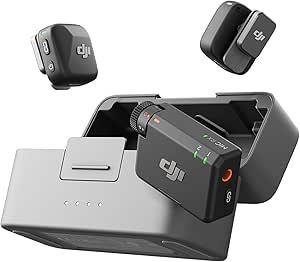
DJI Mic 3 Wireless Microphone (2 Transmitters + 1 Receiver + Charging Case)
The DJI Mic 3 earns its place as the most capable wireless kit in this group for recording two people on location. Two transmitters and one receiver support an interview setup, while dual-file 32-bit float recording gives creators more flexibility when voice levels vary. Adaptive gain control and noise cancellation are aimed at changing recording conditions, and the charging case helps keep the system together between shoots. Compared with the Wireless Mini Microphone two-pack, this system has a more advanced feature set and a stated battery life of up to 28 hours, rather than a roughly six-hour use window. That capability brings a learning curve: setup may be challenging for beginners, and full functionality is tied to compatible DJI devices. Buyers seeking a straightforward phone-only lavalier may find it more system than they need.
Pros:- Two transmitters make it suitable for recording two speakers.
- Dual-file 32-bit float recording provides added flexibility for variable voice levels.
- Charging case and stated battery life of up to 28 hours support longer mobile recording days.
- Adaptive gain, noise cancellation, and dual-band interference protection address changing recording conditions.
Cons:- Setup and feature choices may be challenging for beginners.
- Full functionality depends on compatible DJI ecosystem devices.
- A more advanced wireless system may be unnecessary for simple, single-speaker phone recordings.
Best for: Mobile interviewers and creators who record two speakers, own compatible DJI gear, and want advanced recording options in a portable kit.
Not ideal for: First-time podcasters who want the simplest phone connection, or buyers who do not use compatible DJI devices and need broad, standalone compatibility.
- Transmitters and receivers:2 transmitters; 1 receiver
- Charging case:Included
- Battery life:Up to 28 hours
- Connectivity:DJI ecosystem; USB-C mobile phone adapter
- Audio features:Adaptive gain control, noise cancellation, dual-band anti-interference, dual-file 32-bit float recording
- Listed compatibility:Osmo Mobile 8, Osmo Action 6, Osmo Nano, Osmo 360, Osmo Mobile 7P, Osmo Action 5 Pro, Osmo Action 4, Osmo Pocket 3
Our verdict“Pick the DJI Mic 3 for two-person mobile podcasts and advanced recording tools, especially if your workflow already uses compatible DJI gear.”
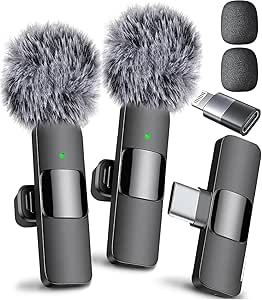
Wireless Mini Microphone for iPhone and Android, 2 Pack Clip-On Lavalier Mic with Noise Reduction and USB-C & Lightning Compatibility
This two-mic wireless set is a practical choice for recording a host and guest on a phone without placing a desktop microphone between them. Plug-and-play pairing, one-touch recording, mute, and noise reduction keep the workflow focused on capturing the conversation; the included windshields also suit outdoor clips better than a bare mic. Compared with the more feature-rich DJI Mic 3, this set offers a simpler mobile-oriented approach, but its stated battery life is around six hours rather than up to 28. That shorter run time matters for full-day interviews, and the listed use of non-rechargeable C batteries is a notable limitation. It connects through Lightning or USB-C, so it is not a universal wireless option for devices without those ports. Choose it for short, paired recordings rather than lengthy or highly controlled productions.
Pros:- Two microphones allow a host and guest to record together.
- Plug-and-play pairing avoids requiring an app or Bluetooth connection.
- Noise reduction and included windshields suit mobile and outdoor recording.
- Mute and one-touch recording controls support quick on-device operation.
Cons:- Battery life is limited to around six hours per charge.
- The listed C batteries are not rechargeable.
- Lightning and USB-C connectors limit use with devices that lack those ports.
Best for: Phone-based interviewers and co-hosts who need two clip-on microphones for short recordings on compatible Lightning or USB-C devices.
Not ideal for: Creators recording long sessions or all-day events who need longer runtime, rechargeable power, or compatibility beyond Lightning and USB-C devices.
- Microphone count:2
- Connectivity:Wireless
- Connectors:Lightning and USB Type-C
- Compatible devices:Android, iOS, laptop, smartphone, tablet
- Features:One-touch recording, mute, noise reduction, plug-and-play, stable transmission
- Signal-to-noise ratio:70 dB
- Power:Battery powered; two C batteries required and included
- Dimensions:0.59 × 0.6 × 2.3 inches
Our verdict“Choose this two-pack for short, two-person phone interviews; opt for the DJI Mic 3 if longer runtime and advanced recording features matter more.”
Labstandard Professional Wireless Lavalier Lapel Microphone for iPhone, iPad, Mini
The Labstandard dual lavalier set is aimed at phone-based interviews where two people need small clip-on mics and a straightforward recording setup. Its omnidirectional pattern picks up voices from around each mic, which can make placement less fussy during a conversation. Auto-sync and low-latency transmission are intended to keep audio aligned with video, while the roughly six-hour battery life suits shorter shoots. Compared with the two-pack from Wireless Mini Microphone, this model also provides two channels, but its Bluetooth-based connectivity calls for more caution in busy wireless environments. The listed device compatibility spans Lightning and Type-C devices, though the connection details are less direct than a clearly described plug-and-play USB adapter system. Battery information is also inconsistent: the description says rechargeable, while the specs list two C batteries. Buyers should verify the power arrangement before relying on it for a session.
Pros:- Dual-channel setup is suited to two-person conversations.
- Omnidirectional lavaliers offer flexibility when positioning the microphones.
- Auto-sync and low-latency transmission are designed to keep audio aligned with video.
- Listed compatibility includes Lightning and Type-C devices.
Cons:- Bluetooth connectivity may be vulnerable to interference in crowded environments.
- Battery details conflict between the rechargeable-battery description and the C-battery specification.
- Setup may take more effort than the plug-and-play approach described for the two-pack wireless mini mic.
Best for: Phone and tablet users recording short interviews or videos who want two clip-on microphones and omnidirectional pickup.
Not ideal for: Creators who need reliable operation in crowded wireless environments or who require clearly documented rechargeable power and connection behavior.
- Connectivity:Bluetooth
- Connectors:Lightning and USB Type-C
- Microphone format:Dual lavalier, mini
- Polar pattern:Omnidirectional
- Channels:2
- Battery life:Approximately 6 hours
- Weight:0.05 kg
- Dimensions:4.5 × 3.3 × 0.7 inches
Our verdict“Consider the Labstandard set for short, two-person phone interviews, but verify its power and connection requirements before choosing it over the clearer plug-and-play two-pack.”
Mini Mic Pro (Latest Model) Wireless Microphone for iPhone & Android, Lavalier, Noise Cancelling, Clear Voice, Compatible with TikTok & YouTube
The Mini Mic Pro prioritizes a small, wearable setup for solo creators recording voice directly to a phone, tablet, or laptop. Its clip-on form, stated 80 g weight, and plug-and-play connection make it easier to carry and position than the desk-focused ZealSound K66. Noise reduction and wind protection are useful for short vlogs, interviews, and podcast segments away from a studio, while the battery indicator provides a quick status check. Its tradeoffs are built into that compact simplicity: this is a single-channel, omnidirectional mic, so it does not offer the two-speaker coverage of the DJI Mic 3 or the Wireless Mini Microphone two-pack. Omnidirectional pickup can also capture surrounding noise, and there is no onboard recording or built-in storage. Battery specifications list two C batteries, so buyers should confirm the power arrangement before planning extended shoots.
Pros:- Compact clip-on design is easier to carry than a desk microphone.
- Plug-and-play connection avoids requiring apps or Bluetooth.
- Noise reduction and wind protection support mobile recording.
- Battery indicator light helps track power status.
Cons:- Single-channel design is not a two-person microphone kit.
- Omnidirectional pickup may capture background sound in noisy environments.
- No built-in storage or onboard recording is available.
- Specifications list two C batteries, despite the description stating rechargeable battery life.
Best for: Solo mobile creators who want a small clip-on mic for short podcast segments, interviews, or social video on a compatible phone or laptop.
Not ideal for: Two-person podcast teams, creators in consistently noisy locations, or anyone who needs onboard recording and storage as a backup.
- Connectivity:Wireless
- Connectors:Lightning and USB Type-C
- Microphone format:Mini lavalier
- Polar pattern:Omnidirectional
- Channels:1
- Listed battery life:Up to 6 hours
- Weight:80 g
- Dimensions:3 × 0.5 × 0.25 inches
- Other features:One-touch recording, battery indicator light, noise reduction
Our verdict“Choose the Mini Mic Pro for compact, solo phone recording, but select a two-transmitter kit for co-hosts or a system with onboard recording for backup capture.”
DJI Mic Mini (2 TX + 1 RX) Wireless Microphone System
For interviews on the move, I’d rank the DJI Mic Mini ahead of phone-only clip-on options when reliable distance and two transmitters matter. Each transmitter weighs just 10 g, so it is less obtrusive on clothing than a desktop mic such as the FIFINE AmpliGame AM8, and its listed 400 m transmission range suits outdoor recordings where speakers may move around. The charging case supports up to 48 hours of battery life, reducing charging interruptions on longer trips. Noise cancellation is another practical advantage in busy settings. The tradeoff is that this is a wireless system, not a complete podcast desk setup: you will need a compatible recording device, and it is not waterproof. I’d choose the MAONO PD200W instead for a more flexible USB/XLR home-and-field microphone, but the DJI is the more discreet kit for mobile interviews.
Pros:- Very light 10 g transmitters are discreet on clothing.
- Up to 400 m listed transmission range supports recordings with speakers moving farther from the receiver.
- Charging case provides up to 48 hours of battery life.
- Noise cancellation can help reduce distracting environmental sound.
Cons:- Not waterproof, so wet-weather recording calls for extra protection.
- Requires a compatible recording device and setup rather than serving as a standalone desk mic.
Best for: Mobile interviewers and two-person creators who want lightweight clip-on transmitters, long battery support, and room to record outdoors.
Not ideal for: Podcasters who need a desk microphone with direct USB/XLR recording, or anyone recording in wet conditions.
- Transmitter weight:10 g
- Transmission range:Up to 400 m
- Sampling rate:48 kHz
- Battery life:Up to 48 hours
- Connectivity:Bluetooth, DJI OsmoAudio, USB Type-C
- Noise control:Noise cancellation
- Compatible devices:Osmo Pocket 3, Osmo Action 4, Osmo Mobile 8, and more
Our verdict“Choose the DJI Mic Mini for discreet, extended two-person field recording; choose a USB/XLR model such as the MAONO PD200W for a more adaptable desk setup.”
NPTCL Wireless Lavalier Microphone for iPhone, iPad, Android, USB-C
The NPTCL is a straightforward choice for creators who want to clip on a mic and record directly to a phone without app-based setup. Its auto-pairing USB-C connection keeps the workflow simpler than a multi-part kit like the Movo PodPro, while the lavalier form factor leaves hands free for interviews, livestreams, or walk-and-talk episodes. The rechargeable case is listed for up to 24 hours of use, and its omnidirectional pickup is suited to capturing a speaker without aiming the mic precisely. The tradeoff is a shorter 70-foot range than the DJI Mic Mini’s listed reach, and the product data flags adapter needs for some iPhone models. I’d keep it in the running for uncomplicated phone recording, but skip it if you need broad device flexibility, predictable long-distance links, or a traditional podcast microphone connection.
Pros:- USB-C auto-pairing supports a simple phone-based recording workflow.
- Clip-on lavalier design keeps the microphone close to the speaker.
- Rechargeable case supports up to 24 hours of use.
- Omnidirectional pickup is less dependent on precise mic aiming.
Cons:- Listed wireless range is limited to 70 feet, below the DJI Mic Mini’s stated range.
- Some iPhone models require a separate adapter.
- Wireless connection can become less dependable at longer distances.
Best for: Phone-first vloggers and interviewers who record nearby, use USB-C devices, and prefer a lavalier that pairs without a dedicated app.
Not ideal for: Creators recording at greater distances, users who need direct XLR or desktop USB connectivity, and iPhone owners whose model requires an adapter.
- Microphone form factor:Lavalier
- Connector:USB Type-C
- Polar pattern:Omnidirectional
- Wireless range:Up to 70 feet
- Battery use:Up to 24 hours with rechargeable case
- Signal-to-noise ratio:80 dB
- Enclosure material:Polycarbonate
Our verdict“Pick the NPTCL for uncomplicated, close-range smartphone recording, but choose the DJI Mic Mini when longer wireless reach is the priority.”
FIFINE AmpliGame AM8 USB/XLR Dynamic Microphone for Gaming Streaming
The FIFINE AmpliGame AM8 makes the most sense for podcasters who carry a compact desktop setup between rooms or locations, rather than creators who need a mic clipped to clothing. Its USB and XLR connections let a beginner start with a computer and later connect to an audio interface, a path the wireless NPTCL does not offer. A mute control, headphone monitoring, and volume controls also put common recording adjustments within reach. Compared with the MAONO PD200W, the AM8 has fewer connection modes and lacks wireless operation, but it is a more direct wired option for a single-speaker desk recording. Its limits matter: it needs corded power, the XLR cable is not included, and RGB and some controls work only over USB. For truly mobile interviews, I’d pick the DJI Mic Mini instead.
Pros:- USB and XLR connections support both computer recording and audio-interface setups.
- Headphone jack and monitoring volume control aid live recording checks.
- Mute function provides quick control during streams and sessions.
- Unidirectional pickup focuses on a single speaker.
Cons:- Corded desktop format is less convenient for walking interviews than the DJI Mic Mini.
- XLR cable must be supplied separately.
- RGB lighting and some function controls are unavailable in XLR mode.
Best for: Solo podcasters and streamers who move a wired desk mic between computer setups and want a future path to XLR recording.
Not ideal for: Travel interviewers who need a clip-on wireless mic, or buyers who want all features to remain available over XLR.
- Connectivity:USB and XLR
- Form factor:Desktop microphone
- Polar pattern:Unidirectional
- Frequency range:50 Hz–16 kHz
- Signal-to-noise ratio:80 dB
- Monitoring:Headphone jack with monitoring volume control
- Power source:Corded electric
Our verdict“Choose the AM8 for a portable wired desk setup that can grow from USB to XLR, not for hands-free field recording.”
MAONO PD200W Hybrid Wireless Podcast Microphone for PC, Dynamic XLR USB Mic
The MAONO PD200W earns its place for podcasters who want one dynamic microphone to cover a home desk, a camera rig, and occasional wireless recording. Its wireless, USB, and XLR connections give it a broader range of setups than the FIFINE AM8, which is limited to USB and XLR. Support for dual microphones also makes it a better fit for a two-person show than a single-mic desk choice, while MaonoLink offers customizable profiles for users willing to manage settings in software. That flexibility brings practical compromises: the listed weight is 1.32 kg, so it is far less discreet than the 10 g DJI Mic Mini transmitters, and it uses a replaceable battery. The app may be needed for some features as well. I’d favor this for a flexible recording station, not for the lightest travel kit.
Pros:- Wireless, USB, and XLR options cover more recording setups than the FIFINE AM8.
- Dual-microphone support suits interviews and co-hosted shows.
- Metal enclosure provides a sturdy build.
- MaonoLink software supports customizable sound profiles.
Cons:- At 1.32 kg, it is considerably less convenient to carry than the DJI Mic Mini.
- Requires a C battery, which may need replacement.
- Some functions may depend on using the MaonoLink app.
Best for: Podcast hosts who alternate between computer, camera, smartphone, and XLR setups, especially those recording with a co-host.
Not ideal for: Creators prioritizing a small clothing-mounted mic for walking interviews, or anyone wanting a minimal, battery-free desk setup.
- Connectivity:USB, wireless, and XLR
- Microphone type:Dynamic
- Polar pattern:Unidirectional
- Item weight:1.32 kg
- Signal-to-noise ratio:82 dB
- Power:One C battery, included
- Compatible devices:Audio interface, camera, laptop, smartphone
Our verdict“Choose the PD200W when one microphone needs to serve several recording setups and a co-host, but opt for the DJI Mic Mini for genuinely lightweight field work.”
Movo PodPro Portable Podcast Equipment Bundle for iPhone/Android Phones
Unlike the other picks here, the Movo PodPro is a complete two-person recording bundle, not a single microphone or wireless clip-on system. It includes two dynamic XLR microphones, two pairs of headphones, and a dual-channel USB audio interface, so a traveling host can bring the core pieces for a co-hosted session instead of assembling them separately. Its support for phones, tablets, and computers gives it more device range than the FIFINE AM8, though the AM8 is the simpler choice when only one desk mic is needed. The PodPro’s 5.76 kg weight makes “portable” a relative term: it is better suited to planned trips with a travel case than spontaneous on-the-go recording. Its listed maximum sample rate is 16 kHz, and setup takes more work than the plug-and-play NPTCL.
Pros:- Includes two dynamic XLR microphones and two pairs of headphones.
- Dual-channel interface supports two-person recording.
- Compatible with smartphones, tablets, and computers.
- Travel case and included accessories reduce the need to assemble a kit from separate purchases.
Cons:- The 5.76 kg total weight is substantial for a portable recording kit.
- Listed maximum sample rate of 16 kHz may limit use for more demanding audio workflows.
- Requires more setup than the auto-pairing NPTCL lavalier.
Best for: Two-person podcast teams who travel with planned recording sessions and need microphones, headphones, and an interface in one kit.
Not ideal for: Solo creators seeking a light grab-and-go mic, or editors who need a higher listed sample rate for production work.
- Number of channels:2
- Included microphones:Two dynamic XLR microphones
- Audio input:XLR
- Connectivity:XLR
- Compatible devices:Laptop, computer, smartphone, tablet
- Frequency response:40 Hz–16 kHz
- Maximum sample rate:16 kHz
- Item weight:5.76 kg
Our verdict“Pick the Movo PodPro when you need a transportable two-person podcast setup in one bundle, but skip it if low weight or fast setup matters most.”
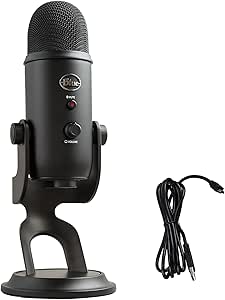
Logitech Blue Yeti USB Microphone for PC, Mac, Gaming, Recording, Streaming, Podcasting, Studio, and Computer Condenser Mic with Blue VO!CE Effects, 4 Pickup Patterns, Plug and Play – Blackout
The Blue Yeti is the strongest fit here for a host who records at a fixed desk and wants one USB mic to handle solo narration, interviews, and other recording setups. Its four pickup patterns give it more flexibility than the clip-on DJI Mic Mini, while onboard gain, mute, and volume controls keep routine adjustments close at hand. Blue VO!CE adds software-based voice effects, though full use depends on Logitech G HUB rather than a phone-first plug-in workflow. That versatility comes with a real portability cost: its stand-mounted, metal body is bulkier to pack than any lavalier in this group, and it needs a computer connection and corded power. I’d choose it for a home podcast station, not for recording while moving between locations.
Pros:- Four pickup patterns accommodate different desk recording arrangements.
- Onboard gain, mute, and volume controls make quick adjustments accessible.
- Blue VO!CE software provides additional voice effects.
- USB connection suits direct recording to a compatible computer.
Cons:- Bulky stand-mounted design is less practical to carry than the wireless lavaliers here.
- Full Blue VO!CE functionality requires Logitech G HUB software.
- Corded electric power and computer-focused connectivity limit recording away from a desk.
Best for: Podcast hosts recording at a PC or Mac desk who want selectable pickup patterns and onboard controls.
Not ideal for: Mobile journalists and creators who need a lightweight mic that clips onto clothing or works untethered from a computer.
- Connectivity:USB
- Microphone array:Tri-capsule array
- Pickup pattern:Multipattern
- Frequency range:20 Hz–20 kHz
- Signal-to-noise ratio:100
- Impedance:16 ohm
- Power:Corded electric
- Enclosure:Metal
Our verdict“Choose the Blue Yeti for a flexible, computer-based podcast setup; skip it if portability means recording away from a desk.”
DJI Mic Mini (2 TX + 1 Mobile RX), Ultralight, Active Noise Cancelling
For interviews recorded away from a desk, the DJI Mic Mini is the most purposeful choice in this set: its two transmitters let two people mic up, and the mobile receiver keeps the setup compact. At just 10 g per transmitter, it is easier to wear discreetly than the stand-based Blue Yeti, while active noise cancelling offers a way to manage distracting surroundings. DJI lists a transmission range of up to 300 meters and operation up to 11.5 hours, useful headroom for longer shoots, though actual results depend on conditions. This is a wireless lavalier system, not a USB desktop mic, so it is less suited to a host who wants desk controls or multi-pattern pickup. It also is not waterproof, and its listed battery requirements may mean more upkeep than a simple USB mic.
Pros:- Two transmitters support recording two speakers with the included system.
- Ultralight 10 g design is comfortable and discreet to wear.
- Active noise cancelling offers basic and strong settings.
- Listed operation time reaches up to 11.5 hours, with transmission range up to 300 meters.
Cons:- Wireless lavalier setup does not offer the Blue Yeti’s desk controls or four pickup patterns.
- Not waterproof, so wet-weather recording calls for extra caution.
- The listed battery requirement can add replacement and charging management.
Best for: Mobile interviewers and podcast teams who need two wearable transmitters, a mobile receiver, and noise-cancelling options.
Not ideal for: Solo desk podcasters who want a stand-mounted USB microphone, or creators recording in wet conditions.
- Microphone type:Lavalier
- Transmitter weight:10 g
- Transmission range:Up to 300 meters
- Maximum operating time:Up to 11.5 hours
- Noise-cancelling levels:Basic, Strong
- Connectivity:Bluetooth, Wi-Fi, USB-C
- Signal-to-noise ratio:70 dB
- Channels:1
Our verdict“Pick the DJI Mic Mini for lightweight two-person mobile interviews, rather than for a computer-based desk recording setup.”
USB C Lavalier Microphone Wireless Mini Mic for Android Phones, Tablets, and PC – Clip-on, Denoise Recording
This USB-C wireless lavalier is a practical middle ground for creators who want to record speech on an Android phone, tablet, or computer without carrying a desktop mic. Its clip-on format frees the speaker from staying close to a stand, and the listed 6–12 hours of battery life can cover longer recording sessions. Compared with the DJI Mic Mini, the product data gives less detail about range and noise-cancelling settings, but its two-channel specification and USB Type-C/Type-A connector options suggest broader connection flexibility across supported devices. That flexibility is not universal plug-and-play: some Android phones may need OTG enabled, and other devices may require adapters. It is a better match for mobile voice capture than the Blue Yeti, but less compelling for buyers who want explicit long-range performance or a multi-pattern desk microphone.
Pros:- Wireless lavalier form factor keeps the microphone close to the speaker while moving.
- Noise-reduction feature is aimed at clearer voice capture.
- USB Type-C and USB Type-A connector types cover multiple device connections.
- Listed battery life is 6–12 hours per charge.
Cons:- Some Android phones may require OTG activation before use.
- Other devices may need adapters, adding setup steps.
- The supplied product data does not specify transmission range or adjustable noise-reduction levels.
Best for: Android-first podcasters and vloggers who want a clip-on wireless mic for USB-C phones, tablets, or PCs.
Not ideal for: Creators who need confirmed adapter-free compatibility across every device or detailed, specified wireless range.
- Microphone form factor:Lavalier
- Connectivity:Wireless
- Connector types:USB Type-C, USB Type-A
- Pickup pattern:Omnidirectional
- Battery life:6–12 hours per charge
- Signal-to-noise ratio:65 dB
- Frequency range:20–20,000 Hz
- Weight:70 g
Our verdict“Choose this lavalier for flexible USB-C mobile recording if you are comfortable checking phone OTG and adapter needs.”
MAYBESTA Wireless Mini Microphone for iPhone and Android – Lavalier Lapel Mic for Content Creators
The MAYBESTA wireless mini mic stands out for creators who switch between Lightning and USB-C phones: its dual-plug design is intended to connect without separate adapters or an app. That makes it a more direct phone-first alternative to the USB-C-only lavalier in this lineup, especially for someone recording quick interviews or short podcast segments on different devices. Noise reduction, a mute function, and stable transmission are listed features, but the omnidirectional pickup can also capture sound from the surrounding space rather than isolating one speaker. Compared with the DJI Mic Mini, the supplied information does not give a specific transmission distance or operating-time figure, so buyers have less concrete guidance for longer shoots. I’d favor it for convenient phone compatibility, not for controlled, multi-person recording or a sound-treated desk setup.
Pros:- Dual Lightning and USB-C connectors are designed for iPhone and Android compatibility without adapters.
- Plug-and-play pairing is suited to quick phone recording.
- Noise reduction and a mute function are listed features.
- Compact mini form factor is easy to carry.
Cons:- Omnidirectional pickup can capture background sound around the speaker.
- The product data does not specify transmission distance or operating time.
- Its listed C-battery requirement may involve battery replacement.
Best for: Phone-based creators who alternate between Lightning iPhones and USB-C devices and want a compact clip-on mic.
Not ideal for: Podcasters who need a stated long wireless range, directional isolation, or predictable performance for extended sessions.
- Connectivity:Wireless
- Connector types:Lightning, USB Type-C
- Pickup pattern:Omnidirectional
- Microphone form factor:Mini
- Signal-to-noise ratio:80 dB
- Impedance:2200 ohm
- Frequency response:2.4 GHz
- Enclosure material:Acrylonitrile Butadiene Styrene
Our verdict“Choose MAYBESTA for straightforward switching between Lightning and USB-C phones, but not when detailed range or battery-life figures are a priority.”
4 Pack Wireless Lavalier Microphone for iPhone and Android
When several people need microphones at once, this four-mic wireless set has a distinct advantage over the single lavalier options from MAYBESTA and the USB-C wireless mic: the listing says it supports simultaneous connection of up to four microphones. That makes it the lineup’s clearest fit for roundtable interviews, group videos, or a small mobile podcast crew. Its omnidirectional pickup can capture voices without precise mic aiming, while noise reduction and a stated range of up to 164 feet support recording away from the phone. The tradeoff is more setup complexity: the set includes multiple components, and Android users may need to enable OTG. Battery life is listed at about six hours per charge, so it may need attention during longer recording days. I would not choose it for a solo host seeking the simplest portable setup.
Pros:- Supports simultaneous connection of up to four microphones for group recordings.
- Listed wireless range reaches up to 164 feet.
- Omnidirectional pickup suits speakers who may move or turn while talking.
- USB-C, Lightning, and PC connector options cover several device types.
Cons:- Multiple components can make setup less straightforward than a single lavalier.
- Android devices may require OTG to be enabled.
- Approximate six-hour battery life may be limiting for longer recording sessions.
Best for: Small podcast teams and interviewers who need to record up to four people on compatible phones or computers.
Not ideal for: Solo creators who prioritize a minimal setup, or Android users unwilling to check OTG compatibility.
- Microphone count:4
- Simultaneous connection:Up to 4 microphones
- Connectivity:Auxiliary, USB
- Connector types:USB Type-C, Lightning, PC
- Pickup pattern:Omnidirectional
- Transmission range:Up to 164 feet
- Signal-to-noise ratio:80 dB
- Battery life:Approximately 6 hours per charge
Our verdict“Pick this set for multi-person mobile podcasts; choose a single-transmitter mic instead if simple solo recording matters more.”
How We Picked
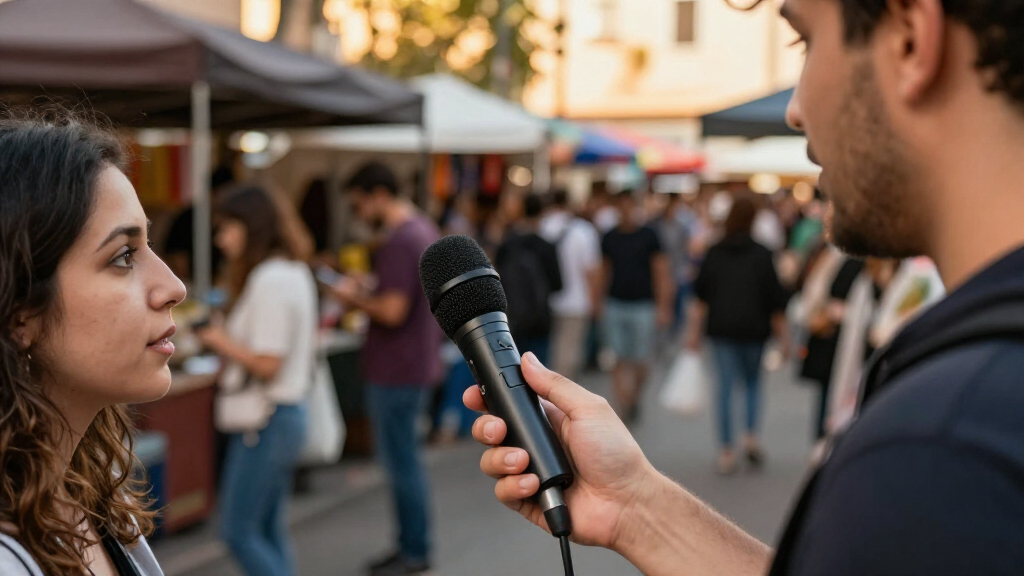
I ranked these portable podcast microphones by how well their design fits recording away from a permanent studio. Key factors included connection type and device compatibility, how easily a solo host or multiple speakers can get set up, portability, controls that help manage a session, and whether the format can support different recording situations. I also weighed the practical tradeoff between a small wireless lavalier and a larger mic that offers USB or XLR connections.
The ranking favors options that pair useful portability with a clear podcasting use case, rather than treating every phone mic or gaming microphone as interchangeable. The DJI Mic 3 leads for its two-transmitter wireless format and broader interview flexibility; lighter DJI Mic Mini kits follow for simpler mobile recording. Phone lavaliers earn their place when compactness and direct device use matter most, while USB/XLR and desk microphones rank lower for travel despite offering more control or room to grow. Models with limited connection details or a narrow use case sit behind more versatile choices.
Factors to Consider When Choosing Portable Podcast Microphones
Portable podcasting can mean recording at a desk in different locations, capturing a walk-and-talk interview, or clipping a mic to a guest and using a phone. Before choosing a model, decide what has to travel with you and what kind of recording you actually make. These points help avoid paying for flexibility you will not use—or buying a tiny mic that cannot support your sessions.
Match the microphone to where you record
A desk-style USB mic can be portable between rooms or locations, but it still needs a stable surface and close speaking position. A wireless lavalier makes more sense when you move around, interview guests, or need your hands free. Small clip-on microphones also reduce the amount of gear you carry, though they place more importance on microphone placement and clothing noise. A compact mic is not automatically a better travel choice if it needs extra adapters, a stand, or a separate recorder. Think through the full setup, including how you will monitor and store the audio. Choose for the movement your recordings require, not the word “portable” on the box.
Count speakers before choosing a wireless kit
For solo shows, one transmitter or a single phone mic may be enough; interviews usually benefit from separate microphones for each person. Two transmitters can simplify placement and help keep voices distinct, but they add pieces to charge, pair, and keep track of. A multi-pack is useful only if its receivers and connections suit your recording device and workflow. Avoid assuming that a bundle with more microphones will capture multiple people cleanly without checking how the system routes audio. If you record guests occasionally, a two-person kit can be more practical than purchasing a larger set. For a fixed panel, you may need a different recording arrangement altogether.
Check the connection against your actual device
Phone compatibility is a frequent source of friction: USB-C, Lightning, and computer USB connections are not interchangeable in every setup. Confirm which device you will record on and whether the receiver or cable matches that port before buying. If you switch between a phone and a computer, a hybrid connection can save carrying separate microphones, but it may bring a less compact kit. Also check whether your preferred recording app accepts the microphone as an external input. A physical fit does not always mean your full recording chain is ready. Keeping a short list of your devices and ports can prevent adapter surprises on the day of an interview.
Choose wireless convenience with a backup plan
Wireless systems free speakers from a cable, but they introduce batteries, pairing, and radio links into the session. For a short social recording, that convenience may outweigh the extra setup; for a long interview, power and recording continuity deserve more attention. Check how the transmitters and receiver are charged and whether the case fits your travel routine. A wired USB or XLR mic avoids a wireless link, though the cable can limit movement and add clutter. If a recording cannot be repeated, consider how you will monitor the signal and what you will do if a connection drops. The right choice depends on how much mobility you need and how much session risk you can accept.
Prioritize microphone placement over extra effects
Noise reduction, echo controls, and software effects can help with certain recording problems, but they cannot replace thoughtful placement. A lavalier should sit securely near the speaker’s voice without rubbing against fabric; a desk mic needs a consistent speaking distance. Automatic processing may alter a voice or reduce unwanted sound unevenly, so do not rely on it to fix a noisy room. For travel recordings, choose locations that limit traffic, ventilation, and crowd noise before adding more settings to manage. A simple setup that captures a clean signal is often easier to edit than a complicated chain of effects. Learn the controls you will use regularly rather than choosing a mic solely for its feature list.
Pay for flexibility only when your workflow needs it
A USB/XLR microphone can serve a quick computer recording today and a more developed audio setup later, but that extra connection path often means a larger mic and more gear to carry. A phone-first lavalier is easier to pack when you publish directly from mobile, yet it may be less useful for a desk-based show. Beginners often benefit from fewer components and a straightforward connection more than from numerous controls. Frequent interviewers may have better reason to pay for two transmitters, charging provisions, or broader device support. Ask which feature would change how you record every week, not which feature sounds impressive on paper. That question usually makes the tradeoff between compactness and versatility clearer.
Frequently Asked Questions
Should I choose a wireless lavalier or a USB microphone for a portable podcast?
Choose a wireless lavalier if you need to move, record interviews away from a desk, or capture audio directly with a phone. A USB mic is a better fit when you record seated and want a stable computer connection with fewer wireless steps. The DJI Mic systems illustrate the mobile interview approach, while the FIFINE AM8 and Blue Yeti are more desk-oriented. Consider not just the microphone but also the receiver, cables, stand, and charging gear you would carry. If your recording locations vary, the right answer may depend on whether you move during an episode or only move your equipment between rooms.
Do I need two transmitters to record a podcast interview?
Two transmitters are useful when the host and guest both need their own microphone, especially if they sit apart or move around. A single mic can work for a close, quiet conversation, but it may capture uneven voice levels and more room sound. Two-person wireless kits such as the DJI Mic 3 or Mic Mini bundles are designed for a more flexible speaker setup. Check how the system handles both voices and whether your recording app can capture the signal as you expect. If most episodes are solo, you may be carrying extra gear for little benefit.
Can I use a phone lavalier with both an iPhone and an Android phone?
Sometimes, but do not assume compatibility from the product title alone. The connector or receiver needs to match each phone, and older and newer phone generations may use different ports. Some listed lavalier sets advertise both USB-C and Lightning support, while others are described for one connection type. Check the specific package contents and your phone’s port before purchase, then confirm that your recording app recognizes an external mic. If you use multiple phones, a kit with the right receiver options may be more useful than an especially small single-purpose model.
Is a wireless microphone a safe choice for an interview I cannot repeat?
A wireless mic can be a practical choice, but it adds battery and connection points that deserve a pre-session check. Charge the transmitters and receiver, confirm pairing, and record a short test in the actual location. Listen for dropouts and background noise rather than relying only on a connection indicator. For a high-stakes interview, consider a backup recording path or a second device if your workflow allows it. A wired microphone avoids radio-link concerns but restricts movement, so the safer setup is the one you can monitor and operate reliably.
When does a USB/XLR microphone make more sense than a compact phone mic?
A USB/XLR mic makes sense when you record mainly at a desk, want a direct computer connection, or expect to add more audio equipment later. Models such as the MAONO PD200W and FIFINE AM8 offer a different path from phone-first lavaliers, which prioritize a small mobile kit. The larger format can be less convenient for interviews on the move and may call for a stand or extra cabling. If you publish from a phone and value quick setup, a compact lavalier may be the more practical purchase. Choose the hybrid mic when its connection flexibility will see regular use, not just as a precaution.
Conclusion
For the best overall balance of mobile interviews and a two-person setup, I’d start with the DJI Mic 3. The best value for a lightweight mobile workflow is a DJI Mic Mini kit, while the best premium-leaning podcast option is the hybrid MAONO PD200W for buyers who want USB and XLR flexibility more than pocket-sized portability. Beginners recording directly to a phone should look at a compatible clip-on lavalier, such as the Mini Mic Pro, after checking the connector for their device. For specific needs, choose the Movo PodPro if you want a phone-oriented bundle, the FIFINE AM8 or Blue Yeti for a stationary desk setup, or a two-transmitter wireless system for interviews. My final choice would come down to one question: do you need a mic that moves with the speaker, or one that stays at the recording desk?
Halloween Picks
halloween
As an affiliate, we earn on qualifying purchases.