
TL;DR

Get everyday essentials delivered free with Prime
- Fast, free delivery on millions of items
- Prime Video, Amazon Music and more included
- Member-only deals all year
Bangladesh formed a six-member garment wage board on Nov. 1, 2026, as workers protested for a 30,000-taka monthly minimum wage. The factory owners’ association reported disruptions at 529 factories and nearly 987,190 workers leaving their workplaces. The board’s recommendations and the timing of any wage change are not yet known.
Bangladesh’s government named a six-member garment wage board on Nov. 1 while workers were protesting for higher pay, after the industry’s owners’ association reported walkouts disrupting 529 factories. Workers are seeking a monthly minimum of 30,000 taka, compared with the current 12,500-taka floor, setting up a new wage review in a sector central to the country’s exports.
The Ministry of Labour and Employment issued notifications establishing the board under the Bangladesh Labour Act, as amended in 2026, according to the source material. Labour and Employment Minister Ariful Haque Choudhury said the decision followed discussions with worker representatives and industry leaders, Reuters reported. The board is tasked with considering garment-sector minimum pay, but its timetable and eventual recommendation have not been announced in the cited reporting.
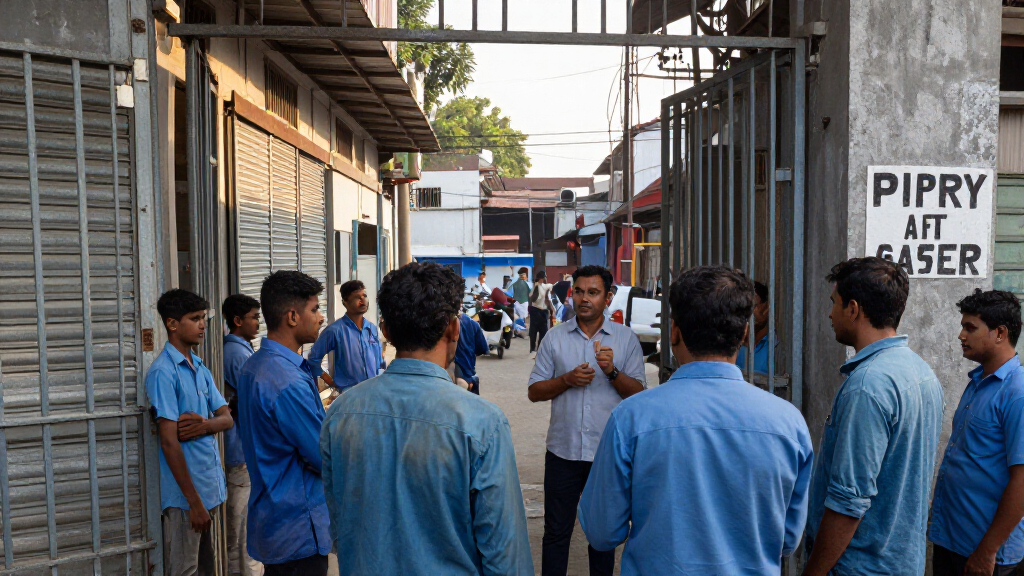
The Bangladesh Garment Manufacturers and Exporters Association (BGMEA) counted disruptions at 529 of 2,134 factories it covered across five industrial regions on Nov. 1. Its situation report said 987,190 workers left their workplaces. The largest reported impact was in Gazipur and Mymensingh, where 276 of 836 factories were affected and 645,360 workers left. The figures describe walkouts and production disruption, not factories shut by their owners.
Reuters and Al Jazeera reported that protests escalated over the weekend. On Oct. 31, around 30 factories near Ashulia declared holidays, according to an industrial police official cited by Reuters. On Nov. 1, police used tear gas and water cannon after bricks were thrown, Reuters reported; a police vehicle and a police box were set alight, and Border Guard Bangladesh personnel were deployed. Reuters said factories reopened on Monday, Nov. 2, while owners remained concerned about further unrest.
Why Bangladesh Formed a Garment Wage Board After Factory Protests
Workers are seeking higher minimum pay as protests disrupt garment production. The new board will review wages, but its recommendation and timeline are still unknown.
Why the board was formed
The government named a six-member board amid protests over pay, following discussions with worker representatives and industry leaders.
The board will consider the sector’s minimum pay under the Bangladesh Labour Act.
The board’s proposal and review timetable have not been announced.
The 30,000-taka demand remains a demand; the effective date of any change is unknown.
What the disruption means
The factory owners’ association reported walkouts across several industrial regions on Nov. 1.
Household income
Workers say current pay falls short of basic expenses, including food, rent and education.
Operations disrupted
The report counted 529 affected factories among 2,134 covered. Factories reopened on Nov. 2.
Delivery and payment risk
The labour minister warned prolonged disruption could delay export shipments and buyer payments.
The wage decision is still open
The board has not said what it will recommend or when any new minimum would take effect.
- Current minimum: 12,500 taka a month
- Workers seek 30,000 taka a month
- Board named on Nov. 1, 2026
- Board recommendation and timing
- Whether the demand will be adopted
- How higher costs may be shared with buyers
Wage Talks Reach Export Supply Chains
The wage board matters because a decision could affect millions of garment workers and the costs and delivery schedules of Bangladesh’s export industry. The minister warned that prolonged disruptions could delay export shipments and payments from foreign buyers, according to Reuters. The Nov. 1 walkout shows how a dispute over household incomes can quickly affect factory output across several manufacturing regions.
Workers say the current wage does not cover basic expenses. Higher pay also raises questions about who absorbs the cost across a supply chain in which international buyers set purchase prices. Reuters quoted an economist and both labor and industry representatives pointing to buyers’ role, though the available material does not establish how individual brands will respond to a new wage decision.
Products Worth Considering

Apple AirPods Pro 3 Wireless Earbuds with Active Noise Cancellation

Bose QuietComfort Headphones (2nd Gen), Wireless Over-Ear Noise-Cancelling Headphones, Hazelnut Taupe

Bose QuietComfort True Wireless Earbuds with Active Noise Cancellation, Black
As an affiliate, we earn on qualifying purchases.
The 12,500-Taka Wage Baseline
The current garment-sector minimum wage of 12,500 taka a month has applied since December 2023. Workers are now demanding 30,000 taka, which Reuters converted to roughly $243 to $245. That is a demand, not a wage set by the newly named board.
Protests had been building for weeks. The Daily Star reported on Oct. 21 that workers had blocked roads since mid-October and quoted protester Sharifa Begum calling for either lower prices for essential goods or higher wages. Reuters and Al Jazeera reported a renewed escalation on Oct. 31 before the wider walkouts the following day.
Past buyer practices offer some context but do not determine the outcome of this wage review. A 2016 International Labour Organization survey cited in the source material found that Bangladeshi suppliers said 17% of their customers were willing to reflect minimum-wage increases in the prices they paid. Separately, research cited by the Centre for Policy Dialogue warned automation could threaten up to 1.22 million garment jobs. Those findings frame industry pressures; they do not establish what will happen to jobs or buyer prices in this round.
“After paying rent, there is very little left for food, our children’s education and other essential expenses.”
— Garment worker Mahin Hossain, speaking to Reuters
The Board’s Recommendation Is Pending
The available reporting does not specify when the board will complete its review, what wage level it may recommend, or when any revised minimum would take effect. It is also not clear whether the 30,000-taka demand will be adopted, modified or rejected.
The BGMEA figures cover 2,134 factories in five regions and are the association’s own count; the source material does not provide an independent factory-by-factory tally. Reuters reported that factories reopened on Nov. 2, but the duration or scale of any further protests is unknown. The cited material also does not establish whether buyers will raise the prices they pay suppliers if wages increase.
Wage Review and Factory Operations
The next milestone is the wage board’s review and any proposal it sends to the government. No recommendation date is stated in the cited reports. Workers, factory owners and officials will also be watching whether operations remain open after the Nov. 2 restart and whether negotiations can proceed without renewed disruptions.
Any wage change will have to be assessed alongside its effective date and how it is funded through factory costs and buyer prices. Until the board sets out its position, 30,000 taka remains the workers’ demand, while 12,500 taka remains the reported current minimum.
Key Questions
Why did Bangladesh form a garment wage board?
The government named the six-member board on Nov. 1 amid protests over garment-sector pay. The labour minister said the move followed talks with worker representatives and industry leaders, according to Reuters.
How much are garment workers demanding?
Workers are seeking a monthly minimum of 30,000 taka. Reuters converted that demand to about $243 to $245. It has not been adopted by the board.
What happened at the factories?
BGMEA reported disruptions at 529 of 2,134 factories it covered on Nov. 1, as 987,190 workers left their workplaces. Reuters reported that factories reopened on Nov. 2.
What is Bangladesh’s current garment minimum wage?
The reported current minimum is 12,500 taka a month, in effect since December 2023.
When will a new minimum wage be announced?
The cited reports do not give a date for the board’s recommendation or for any new wage to take effect. The board’s review remains pending.
Source: Thorsten Meyer AI