
AI supports your personalized recovery plans by analyzing your medical records and real-time health data to tailor treatments specifically for you. It can adjust your plan as your condition improves, ensuring your recovery stays on track. By constantly monitoring your progress, AI helps accelerate your recovery and improve outcomes. It also maintains privacy and security, so your sensitive information stays protected. Keep exploring to discover how ongoing advancements make AI even better at supporting your health journey.

Get everyday essentials delivered free with Prime
- Fast, free delivery on millions of items
- Prime Video, Amazon Music and more included
- Member-only deals all year
Key Takeaways
- AI analyzes individual health data to tailor treatment strategies for personalized recovery plans.
- It provides real-time feedback to adjust recovery approaches based on progress and changing health status.
- AI integrates large datasets, including medical records, to optimize treatment effectiveness.
- It enables continuous monitoring to facilitate timely interventions and improve outcomes.
- AI supports ethical and validated decision-making, ensuring personalized plans are safe and reliable.
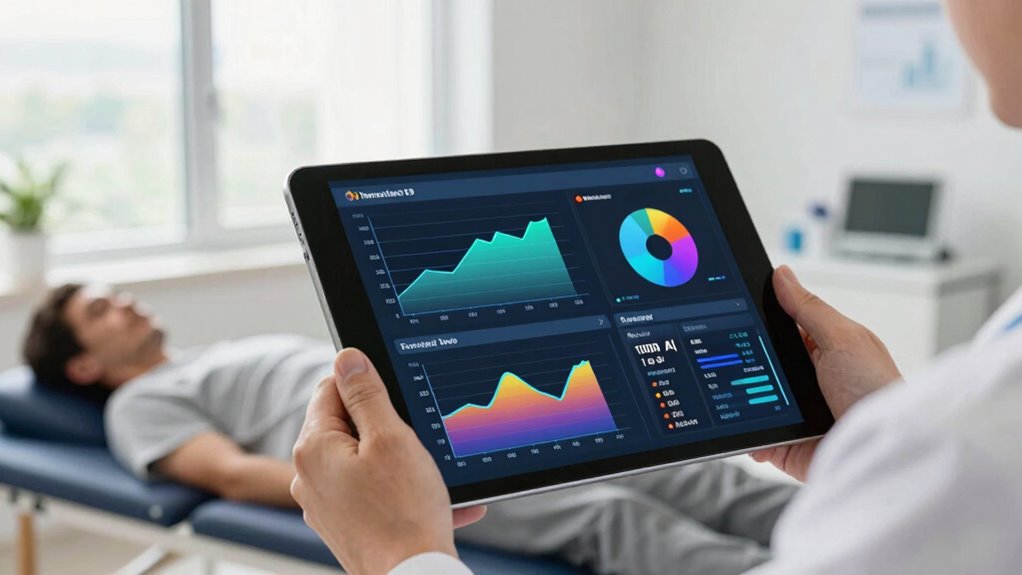
Artificial intelligence is transforming healthcare by enabling personalized recovery plans that cater to each patient’s unique needs. When you work with AI-driven tools, you benefit from tailored treatment strategies that adapt to your specific condition, progress, and lifestyle. AI analyzes vast amounts of data—from medical records to real-time health metrics—to develop recovery plans designed precisely for you. This personalized approach can speed up recovery times, improve outcomes, and make your rehabilitation more effective. However, as AI gathers and processes sensitive health information, data privacy becomes a critical concern. Confirming your personal health data remains secure and confidential is essential, and healthcare providers must implement strict protocols to prevent breaches. Transparency about how your data is collected, used, and stored reassures you that your privacy is respected. Ethical considerations also play a central role in the deployment of AI for personalized recovery. Developers and medical professionals must navigate complex questions around fairness, bias, and accountability. You need to trust that AI systems are designed and trained to serve all patients equitably, without discrimination based on age, gender, ethnicity, or socioeconomic status. Addressing these ethical issues involves continuous oversight and validation of AI algorithms to avoid unintended biases that could impact your treatment quality. Additionally, understanding the importance of cybersecurity measures can help you recognize how healthcare providers protect your sensitive information from cyber threats. You should also be aware of the significance of data privacy protocols to ensure your health data remains confidential. As AI becomes more integrated into your healthcare journey, you might wonder about the accuracy and reliability of the recommendations it provides. Rest assured, most AI tools are rigorously tested and validated against clinical standards before being used in real-world settings. Still, it’s important to stay engaged with your healthcare team, ask questions about the data and methods behind your personalized plan, and advocate for your needs. AI also enables ongoing adjustments to your recovery plan based on real-time feedback, which is a significant advantage. If your condition changes or you encounter new challenges, AI can help adapt your treatment more quickly than traditional methods. This dynamic responsiveness ensures your recovery remains aligned with your evolving health status. Recognizing the importance of data security protocols can further reassure you that your information is protected from potential cyber threats. Furthermore, ongoing research into ethical AI deployment aims to ensure that these advanced systems remain fair and just for all patients. Ultimately, AI’s support in creating personalized recovery plans offers a promising pathway to more effective, efficient, and patient-centered care. By balancing technological innovation with a steadfast commitment to data privacy and ethical integrity, healthcare providers can harness AI’s full potential while safeguarding your rights and well-being. You’re at the heart of this transformation, and with the right safeguards in place, AI can truly enhance your journey toward recovery.
AI-powered health monitoring device
As an affiliate, we earn on qualifying purchases.
As an affiliate, we earn on qualifying purchases.
Frequently Asked Questions
How Does AI Ensure Patient Data Privacy in Recovery Plans?
AI guarantees your patient data privacy by implementing robust data encryption, which protects sensitive information from unauthorized access. It also follows strict privacy protocols, like anonymizing data and limiting access to authorized personnel. These measures work together to keep your recovery plans secure and confidential. By adhering to these practices, AI helps maintain your trust and complies with healthcare privacy regulations, ensuring your personal information stays safe throughout your recovery process.
Can AI Adapt Recovery Plans in Real-Time?
Imagine AI as a skilled navigator adjusting your course in real-time, guided by adaptive algorithms. It constantly monitors your progress, responding instantly to changes in your condition. This dynamic approach keeps you engaged, ensuring your recovery plan evolves with your needs. As you progress, AI makes timely updates, optimizing your journey and maximizing your chances of success. With AI’s adaptability, your recovery becomes a personalized, responsive adventure.
What Are Ai’s Limitations in Personalized Recovery?
AI faces personalization challenges because it depends heavily on data accuracy, which can be inconsistent or incomplete. If the input data isn’t precise, the recovery plan might not be tailored effectively, potentially impacting your progress. Additionally, AI may struggle to understand nuanced personal factors like emotional well-being or unique health responses, limiting its ability to fully customize recovery strategies. As a result, human oversight remains essential to address these limitations.
How Accessible Is Ai-Driven Recovery Planning for Underserved Populations?
AI-driven recovery planning faces challenges in underserved populations due to cultural barriers and technology gaps. You might find that limited access to devices or internet, along with language differences, hampers effective use of AI tools. These factors create disparities, making it harder for you to benefit equally from personalized recovery plans. Addressing these issues requires tailored solutions that consider local contexts and improve technology access for everyone.
What Training Is Needed for Healthcare Providers to Use AI Tools Effectively?
Think of training protocols as your map through AI mastery. To use AI tools effectively, you need skill development in data interpretation, ethical considerations, and software navigation. You’ll benefit from hands-on workshops, ongoing education, and real-world practice. This training guarantees you don’t just use AI but harness its power confidently, transforming recovery plans into truly personalized, impactful journeys for your patients.
personalized recovery plan software
As an affiliate, we earn on qualifying purchases.
As an affiliate, we earn on qualifying purchases.
Conclusion
You now see how AI transforms recovery by tailoring plans to your unique needs, making progress more achievable. Did you know that personalized AI-driven programs can improve recovery success rates by up to 60%? This means you’re not alone in your journey—technology is actively helping you regain control and thrive. Embrace these innovations, knowing they’re designed to support your path to healing with greater precision and hope.
As an affiliate, we earn on qualifying purchases.
medical data privacy protection tools
As an affiliate, we earn on qualifying purchases.
As an affiliate, we earn on qualifying purchases.
Fall Picks
fall essentials
As an affiliate, we earn on qualifying purchases.