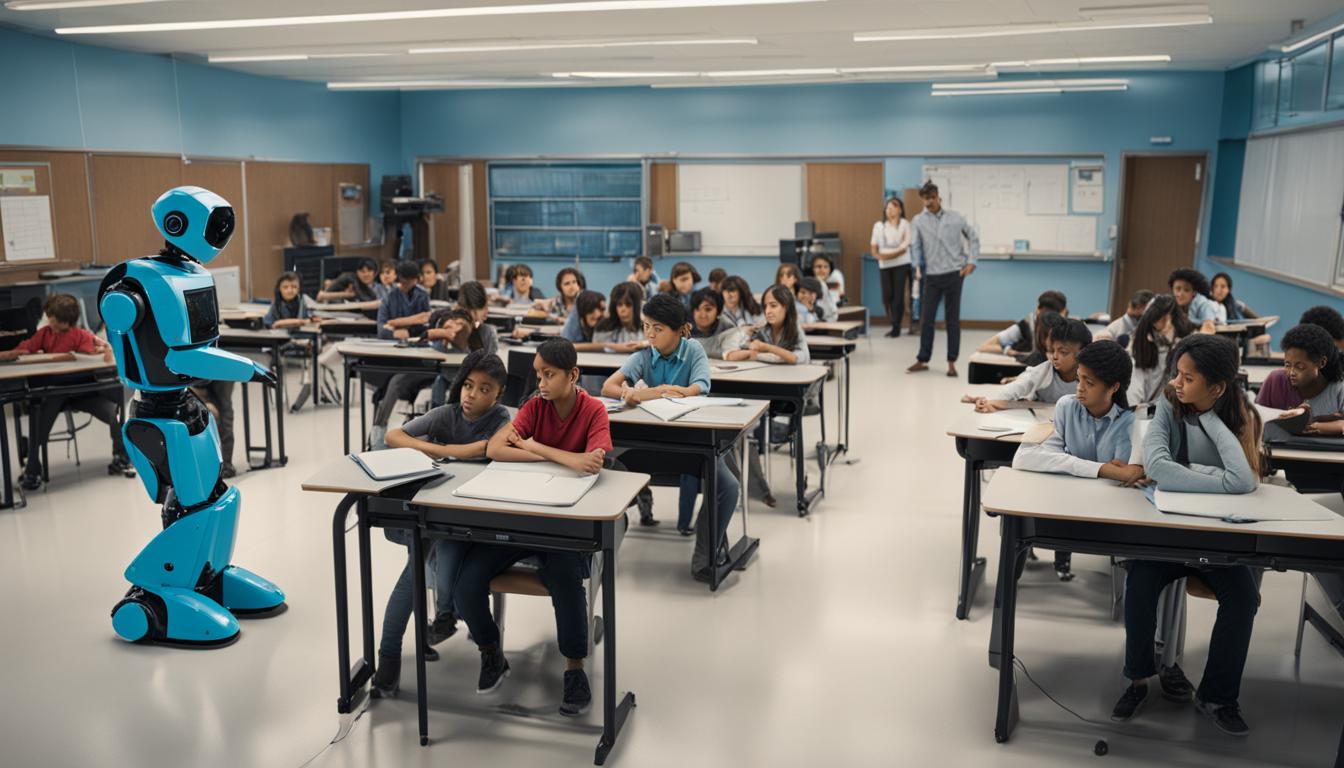
You can use AI to personalize lessons and assessments, tailoring them to each student’s needs and strengths. It creates a dynamic learning environment that adapts content based on how students perform, giving extra practice or advancing them as needed. AI also provides valuable data insights, helping you adjust your teaching strategies in real-time. This reduces workload and makes your instruction more responsive. Keep exploring how AI can transform your approach to meet every learner’s needs.

Get everyday essentials delivered free with Prime
- Fast, free delivery on millions of items
- Prime Video, Amazon Music and more included
- Member-only deals all year
Key Takeaways
- AI personalizes lessons and assessments to meet each student’s unique learning needs and pace.
- It analyzes real-time data to adjust content difficulty and provide targeted practice.
- AI identifies student strengths and weaknesses, informing tailored instructional strategies.
- It supports diverse learning styles by integrating visual and interactive tools for responsive teaching.
- Automation of routine tasks reduces workload, enabling educators to focus on personalized student engagement.
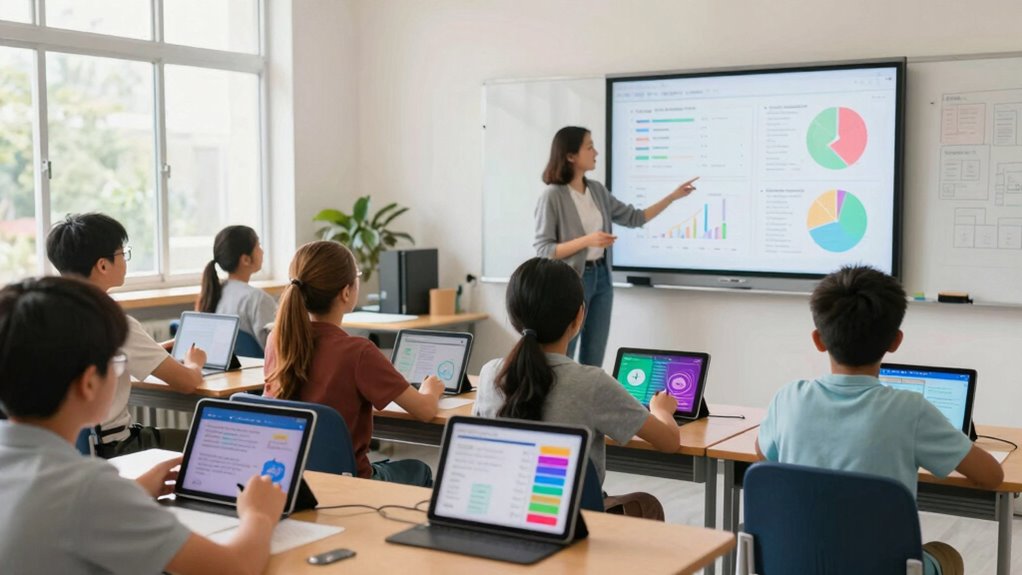
Artificial Intelligence is transforming education by enabling teachers to deliver more personalized instruction. With AI, you can tailor lessons and assessments to meet the unique needs of each student, making learning more engaging and effective. One of the key ways AI supports this is through personalized assessments, which allow you to gauge each student’s understanding in real-time. Instead of relying solely on traditional tests, AI-driven assessments adapt to how students perform, offering immediate feedback and customized tasks that address individual strengths and weaknesses. This means you can identify where a student might be struggling and adjust your teaching strategies accordingly, ensuring that no learner gets left behind.
AI enables real-time, personalized assessments to identify student needs and tailor teaching strategies effectively.
Adaptive learning is another powerful tool AI provides to facilitate differentiated instruction. It creates a dynamic learning environment where content and activities evolve based on the student’s progress. As a teacher, you can set up adaptive learning platforms that analyze student responses continuously. When a student demonstrates mastery of a concept, the system advances them to more challenging material. Conversely, if they show difficulty, it offers additional practice or alternative explanations. This personalized approach keeps students engaged and motivated because they’re always working at a level that’s just right for them. It also frees you from the one-size-fits-all model, allowing you to focus more on guiding and mentoring rather than managing uniform lessons. Additionally, AI can support projector technology in creating engaging visual lessons that cater to diverse learning styles, further enriching differentiated instruction.
AI also streamlines the process of differentiating instruction by providing insights and data that you might not easily gather on your own. You can track student progress across multiple domains, identify patterns, and make informed decisions about how to modify your teaching strategies. For example, if an AI system detects that a group of students is struggling with a particular concept, you can adjust your lessons on the fly or assign targeted interventions. This means your instruction becomes more responsive and tailored, creating a classroom environment where every learner’s needs are addressed effectively. Understanding student data analysis can help teachers make more precise and effective instructional decisions, as AI can process and interpret complex data sets quickly and accurately. This capability enhances overall learning outcomes by enabling more data-driven teaching approaches.
In addition, AI tools help you save time and reduce workload by automating routine tasks like grading and data analysis. When you spend less time on administrative tasks, you can devote more energy to designing meaningful, individualized learning experiences. Overall, AI acts as a supportive partner that enhances your ability to differentiate instruction—making learning more personalized, engaging, and successful for every student.
AI-powered personalized learning platform
As an affiliate, we earn on qualifying purchases.
As an affiliate, we earn on qualifying purchases.
Frequently Asked Questions
How Does AI Personalize Learning for Individual Students?
You can see how AI personalizes learning by providing personalized assessments that identify each student’s strengths and weaknesses. It then adapts content to match their individual needs, offering targeted exercises and resources. This adaptive content keeps students engaged and challenged at the right level. By continuously analyzing progress, AI guarantees that instruction remains tailored, helping every student learn more effectively and confidently.
Can AI Adapt in Real-Time During Lessons?
Yes, AI can adapt in real-time during lessons. It offers real-time adaptability by monitoring student responses and engagement, allowing it to adjust the difficulty or focus instantly. With dynamic feedback, AI provides immediate insights that help you tailor instruction on the fly, ensuring students stay challenged but not overwhelmed. This responsiveness creates a personalized learning experience, keeping students motivated and improving their understanding through continuous, adaptive support.
What Are the Limitations of AI in Education?
AI faces limitations in education due to algorithm biases that can reinforce stereotypes or inaccuracies, impacting fairness and objectivity. Accessibility challenges also hinder its effectiveness, as not all students have equal access to technology or support. You might find that AI tools sometimes lack the nuanced understanding teachers provide, making it harder to address individual needs fully. These constraints remind you to use AI as a supplement, not a replacement, in educational settings.
How Secure Is Student Data Used by AI Tools?
You should know that student data used by AI tools is generally secure, but concerns about data privacy and ethical considerations remain. Developers implement encryption and strict access controls to protect sensitive information. However, you must stay vigilant, advocate for transparent data policies, and guarantee that institutions prioritize ethical use of data. This way, student privacy stays protected while leveraging AI’s benefits for personalized learning.
How Do Teachers Balance AI Support With Human Interaction?
You should prioritize maintaining strong teacher-student relationships while integrating AI support. Research shows emotional connection boosts learning outcomes, so use AI as a tool rather than a substitute. Balance tech with human interaction by engaging in personal conversations and observing students’ emotional cues. This approach guarantees AI enhances, not replaces, your role, fostering trust and understanding that strengthens the emotional connection essential for effective teaching.
adaptive learning assessment tools
As an affiliate, we earn on qualifying purchases.
As an affiliate, we earn on qualifying purchases.
Conclusion
Imagine AI as your tireless classroom sidekick, tirelessly tailoring lessons like a culinary master customizing dishes for every taste bud. With its help, you can finally stop playing the part of the juggler, desperately trying to keep all balls in the air. Instead, let AI be the superhero cape that transforms your teaching from chaotic circus act to a sleek, personalized experience. Who knew that tech could turn your classroom into a well-oiled, bespoke learning machine?
interactive visual teaching aids
As an affiliate, we earn on qualifying purchases.
As an affiliate, we earn on qualifying purchases.
educational data analytics software
As an affiliate, we earn on qualifying purchases.
As an affiliate, we earn on qualifying purchases.
Fall Picks
fall essentials
As an affiliate, we earn on qualifying purchases.