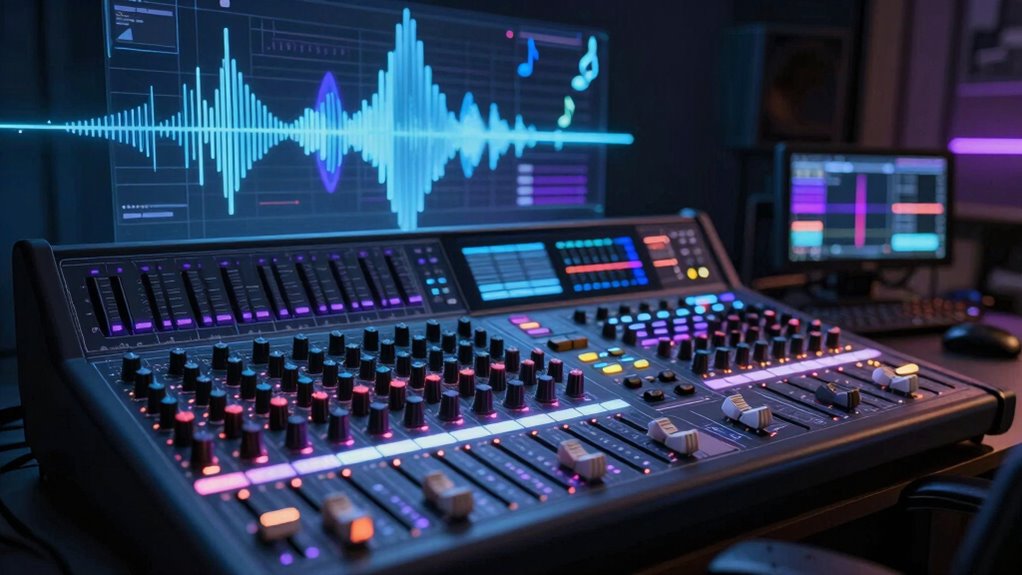

AI sound design opens up exciting creative possibilities by letting you experiment with textures and soundscapes that are hard to create manually. It helps you generate innovative combinations and pushes boundaries with genre-blending techniques. You can quickly test ideas, get instant feedback, and develop a unique signature sound. By using AI tools, you’ll expand your creative horizon and discover new ways to craft more expressive and impactful music. Keep exploring to reveal even more potential.

Get everyday essentials delivered free with Prime
- Fast, free delivery on millions of items
- Prime Video, Amazon Music and more included
- Member-only deals all year
Key Takeaways
- AI enables rapid experimentation with unique sounds and textures, fostering innovative sound design beyond manual capabilities.
- It suggests novel sound combinations by analyzing large datasets, inspiring creative and genre-blending compositions.
- AI accelerates workflow, allowing quick prototyping, testing, and refinement of sonic ideas with immediate feedback.
- It facilitates personalized sound development, helping creators craft distinctive, recognizable audio signatures.
- AI-driven tools expand creative horizons, enabling new forms of expression and pushing boundaries in sound design.
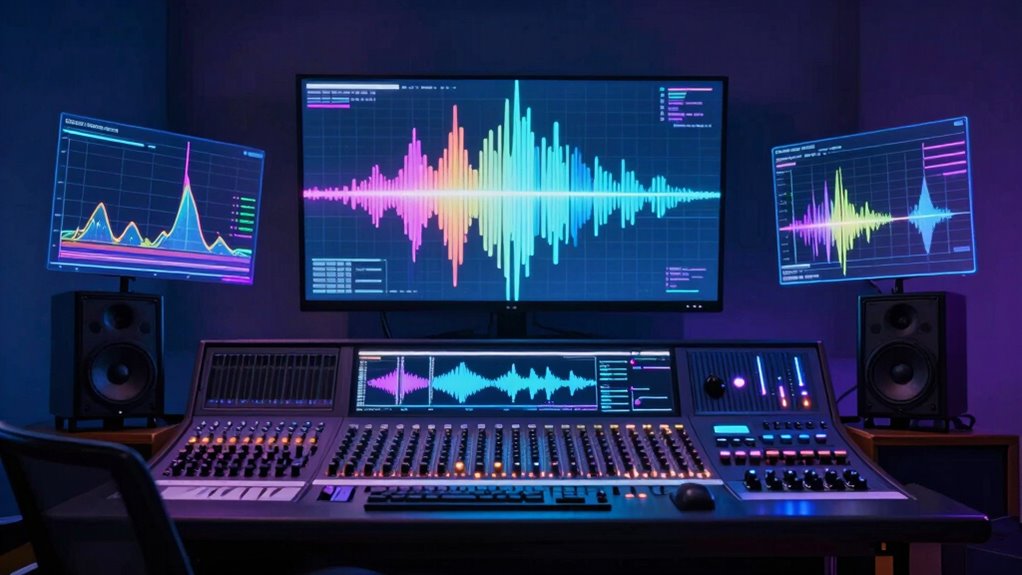
Artificial intelligence is revolutionizing sound design, opening up new creative frontiers for artists and producers. You now have access to tools that can transform your approach to music production and film scoring, pushing the boundaries of what’s possible. With AI, you can experiment with sounds and textures that were once difficult or time-consuming to create manually. AI algorithms analyze vast datasets to suggest innovative sound combinations, helping you craft fresh, genre-blending tracks that stand out. Whether you’re remixing existing material or building new compositions from scratch, AI-powered software can serve as a collaborative partner, inspiring ideas you might not have considered on your own.
In film scoring, AI can dramatically streamline the process of matching music to visuals. Instead of spending hours tweaking and adjusting compositions to fit a scene, you can leverage AI to generate score options that align with the mood, tempo, and emotional tone you want to convey. These tools analyze the pacing and dynamics of your footage, suggesting music that enhances storytelling without the need for extensive manual editing. You can even use AI to create adaptive soundtracks that respond in real-time to changes in the scene, making your scoring more dynamic and immersive. This capability not only saves you time but also broadens your creative palette, allowing you to explore unconventional soundscapes and experimental textures that elevate your projects.
Moreover, AI-driven sound design encourages a more iterative and exploratory workflow. You’re empowered to quickly prototype ideas, test different sonic elements, and refine your work with immediate feedback. This accelerates the creative process, giving you more freedom to push boundaries without fear of losing control or getting bogged down in technical details. As AI tools become increasingly sophisticated, they offer personalized suggestions tailored to your style, helping you develop a signature sound that’s uniquely yours. Digital concepts and innovations in AI-driven tools are expanding what’s achievable in sound design, offering new avenues for experimentation and originality. Whether you’re working on a solo project or collaborating with others, AI amplifies your ability to produce high-quality, innovative soundscapes efficiently. Ultimately, it expands your creative possibilities, enabling you to craft more expressive, impactful music and film scores than ever before.
As an affiliate, we earn on qualifying purchases.
Frequently Asked Questions
Can AI Sound Design Replace Human Sound Engineers Entirely?
AI sound design can’t fully replace human sound engineers, as automated mixing and algorithmic composition lack the nuanced creativity and emotional understanding that humans bring. You’ll find AI helpful for tasks like initial edits or generating ideas quickly, but the human touch remains essential for fine-tuning, ensuring the emotional depth, and making artistic decisions that resonate. AI acts as a tool, enhancing your capabilities rather than replacing your expertise entirely.
How Does AI Handle Cultural Nuances in Sound Creation?
Sure, AI handles cultural nuances with surprising finesse—until it doesn’t. It analyzes vast data, learning regional influences and aiming for cultural sensitivity, but it can miss subtle traditions or context. Ironically, while AI endeavors to honor diverse cultures, it sometimes oversimplifies or misrepresents them. So, your job remains essential in guiding AI to authentically capture the richness of regional influences, ensuring respectful and accurate sound creation.
What Are the Ethical Considerations of Ai-Generated Sounds?
You should consider that AI-generated sounds raise ethical concerns like copyright issues, since it’s unclear who owns the rights to the creations. Authenticity issues also come into play, as AI can produce sounds that seem real but lack genuine human emotion or cultural context. As you explore AI sound design, make certain transparency and respect for original creators to navigate these ethical challenges responsibly.
Is AI Sound Design Accessible for Independent Artists?
AI sound design is like opening a new door to creativity, and yes, it’s accessible for independent artists. While there are some accessibility barriers and a learning curve, many tools are designed to be user-friendly. You can experiment and learn at your own pace, transforming complex technology into a creative playground. With dedication, you’ll find AI can be a powerful partner in your artistic journey.
How Does AI Adapt to Evolving Sound Trends Over Time?
AI adapts to evolving sound trends through dynamic adaptation and trend forecasting. As you use AI tools, they analyze recent data and emerging patterns to keep your sound design current. This continuous learning process allows the AI to suggest updates, new techniques, or styles aligned with the latest trends. With this, you stay ahead creatively, ensuring your work remains fresh and relevant in a rapidly changing musical landscape.
As an affiliate, we earn on qualifying purchases.
Conclusion
As you explore AI sound design, you’ll find it open countless creative doors. With over 60% of audio professionals now integrating AI tools, the potential for innovation is staggering. You can craft unique soundscapes faster and more efficiently than ever before, pushing your creative boundaries. Embrace these technologies to transform your projects, and see how AI’s expanding capabilities inspire fresh, exciting ideas you might never have imagined. The future of sound design is truly limitless.
As an affiliate, we earn on qualifying purchases.
As an affiliate, we earn on qualifying purchases.
Fall Picks
fall essentials
As an affiliate, we earn on qualifying purchases.