
TL;DR
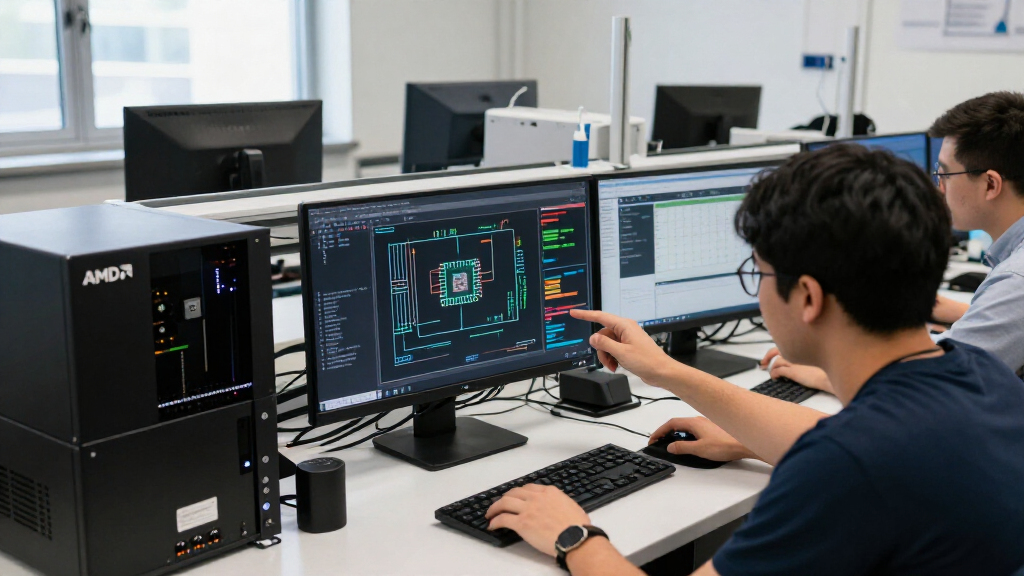
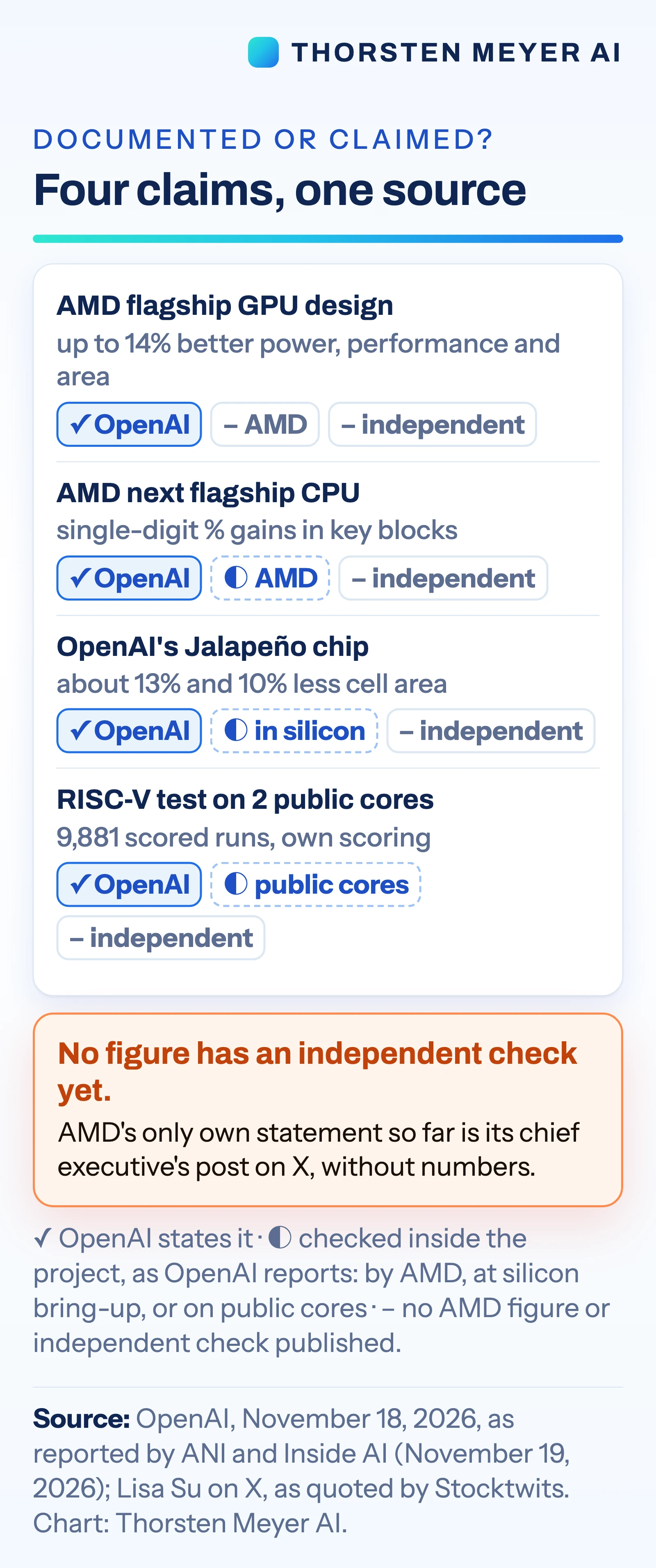
OpenAI said on November 18 that its models rewrote parts of AMD chip designs, producing up to 14% gains in power, performance and area against heavily optimized baselines. The figure is OpenAI’s best-case result; AMD has not published its own measurements, and no independent audit is available.
OpenAI described the results in a post titled “Advancing chip design with OpenAI models.” According to the company’s account, reported by ANI, The Decoder and Inside AI, its models rewrote SystemVerilog register-transfer-level (RTL) code—a representation of how chip circuits behave. Synopsys design tools were then used to check whether each rewrite preserved the original behavior and to measure its design trade-offs.

Get everyday essentials delivered free with Prime
- Fast, free delivery on millions of items
- Prime Video, Amazon Music and more included
- Member-only deals all year
The 14% figure is an upper bound against what OpenAI called “heavily optimised baselines.” OpenAI did not identify the specific GPU blocks behind that best-case result or give an average across the design. It said some changes were included in a recent design AMD sent for manufacturing, while others entered AMD’s design files for future versions. The announcement does not specify which changes went into which design.
OpenAI also said AMD had verified single-digit PPA gains in key blocks of its next flagship CPU. That figure, too, comes through OpenAI’s description; AMD has not released its own numerical breakdown. On OpenAI’s Jalapeño inference chip, the company reported that model-proposed changes reduced standard-cell area by about 13% in one unit and 10% in another, with the changes validated after the first chips were returned. Reports differ on the name of the first unit, calling it either a warp engine or a vector unit.
AI Reaches the Chip Design Flow
The announcement points to AI being used not only to develop software or support research, but also to propose changes to the hardware that runs AI systems. If the reported improvements hold up across production designs, smaller or more efficient circuit blocks could affect chip performance, power use and manufacturing costs. The reported gains are limited to particular designs and blocks, however, and the public information does not establish a broad improvement across AMD products.
The manufacturing detail gives the announcement a concrete milestone: OpenAI says some proposed changes made it into a design sent for manufacturing. That is different from demonstrating results in widely deployed chips. The source material does not identify the design’s product, when it will enter production or what effect the changes would have on finished hardware.
The companies also have a financial relationship relevant to how readers weigh the claims. Since October 2025, OpenAI has held a warrant for up to 160 million AMD shares, which vests as AMD chips are deployed, according to the supplied source material. That arrangement does not establish that the measurements are inaccurate, but it is material context for evaluating results announced by OpenAI about AMD hardware.
Products Worth Considering

Logitech MX Keys S Combo Wireless Keyboard and Mouse, Graphite

Apple AirPods Pro 3 Wireless Earbuds with Active Noise Cancellation

Bose QuietComfort Wireless Bluetooth Noise-Cancelling Headphones, Cypress Green
As an affiliate, we earn on qualifying purchases.
From RTL Rewrites to Silicon
RTL is an early description of a chip’s logic. Engineers write it in languages such as SystemVerilog; synthesis tools then translate the design into logic gates, followed by later steps that place and connect those gates on silicon. The reported work targets this coding stage. Models propose alternate implementations of a circuit, and design tools check behavior and estimate measures such as area, power and timing.
OpenAI’s account also covered tests on two open-source RISC-V processor cores, PicoRV32 and Ibex. It said five models completed 9,881 scored runs, with GPT-6.2 Astra receiving the highest score. The supplied material does not provide the scoring method or detailed results, so the benchmark is separate from the AMD PPA figures and cannot by itself establish gains in a commercial AMD design.
OpenAI president Greg Brockman characterized the AMD work as “roughly an additional year of progress” achieved in less than five months. That is his summary of the pace of work, not a published, independently assessed measure of engineering time saved.
The Missing Measurement Detail
The headline GPU result is not accompanied by a list of blocks, their starting values, an average, or details showing how the baseline was selected. The supplied reporting says the comparison was against “heavily optimised baselines,” but does not explain how those baselines were established. Without that information, readers cannot judge how representative the 14% maximum is or compare it directly with other chip-design results.
No independent audit of the results has been published, and the underlying OpenAI announcement could not be accessed by the article’s source. Details are therefore based on reporting by ANI, The Decoder, Inside AI and Stocktwits, which agree on key claims but do not resolve all measurement questions. The supplied material also does not explain what AMD independently verified, beyond OpenAI’s statement about single-digit gains in CPU blocks.
It remains unclear which GPU changes are in the design sent for manufacturing, when that design may become a product, and whether the reported PPA gains will carry through later implementation stages. The source material also gives differing names for one Jalapeño unit.
From Submitted Design to Product
The next evidence point is whether the AMD design sent for manufacturing proceeds to production and whether the changes deliver measurable benefits in finished chips. AMD could provide more detail on the CPU and GPU results, including the blocks tested, the comparison baselines and the gains observed after implementation. OpenAI has not announced a date for further results.
For now, the announcement establishes what OpenAI says its models achieved at the RTL design stage and that some changes reached a manufacturing submission. Product-level performance, power use, commercial availability and independent confirmation remain unreported in the supplied material.
Key Questions
What did OpenAI say its models improved?
OpenAI reported up to 14% improvement in power, performance and area on an AMD flagship GPU design, plus single-digit gains in key blocks of a next flagship CPU, according to the company.
Is the 14% result an average across the GPU?
No average was provided. OpenAI described the figure as “up to” 14% against heavily optimized baselines and did not name the blocks measured.
Did the changes reach manufacturing?
OpenAI said some model-generated changes were included in an AMD design sent for manufacturing. The supplied reporting does not identify the design or say when a product using it may be available.
Has AMD independently published the results?
The supplied material says AMD has not published its own figures. OpenAI said AMD verified single-digit gains in key CPU blocks, but no independent audit of the results has been released.
What does PPA mean?
PPA stands for power, performance and area. Chip designers balance these measures when changing a circuit; an improvement in one can affect the others.
Source: Thorsten Meyer AI