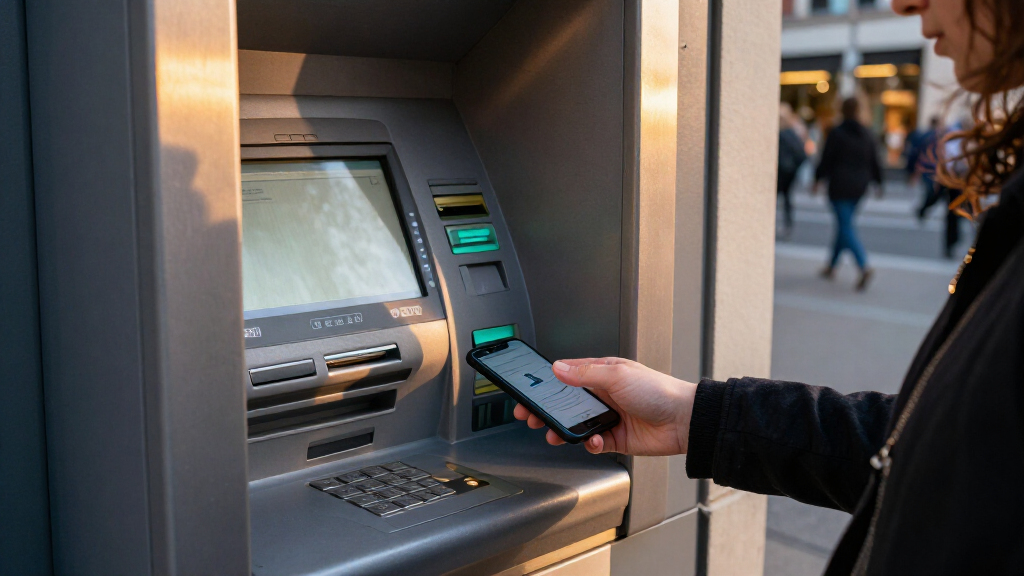

🔍 Read the full analysis: What ATMs Can Teach Us About AI And Jobs on ThorstenMeyerAI.com

Get everyday essentials delivered free with Prime
- Fast, free delivery on millions of items
- Prime Video, Amazon Music and more included
- Member-only deals all year
TL;DR
ATMs took over cash-handling tasks but did not immediately eliminate teller jobs: U.S. teller employment rose modestly between 1980 and 2010 as banks opened more branches. Later, mobile banking and branch closures accompanied a steep drop in teller employment, illustrating how automation can reshape jobs before other technologies reduce demand for them.
A November 20 analysis of ATMs and bank teller jobs argues that the machines first changed what tellers did rather than making the occupation disappear. U.S. teller employment rose modestly from about 500,000 in 1980 to 550,000 in 2010, even as the number of ATMs roughly quadrupled from 1995 to 2010, according to figures cited in the article.
The article, published by ThorstenMeyerAI.com as part of its “Work After Work” series, traces the first Barclays cash machine to June 27, 1967, outside a branch in Enfield, north London. Actor Reg Varney demonstrated it by withdrawing up to ten pounds in one-pound notes. The machine could operate after the branch had closed, and it performed a central teller task: dispensing cash.
The early machines did not use modern bank cards. Barclays’ first model accepted a specially marked paper cheque and required a personal code. Cash machines spread to Germany in 1968 and the United States in 1969, according to the historical accounts cited by the article. Their arrival raised an apparent question: if a machine could hand out cash, how many human tellers would banks still need?
The U.S. figures show an unexpected first phase. ATM numbers rose from about 100,000 in 1995 to 400,000 in 2010, while teller employment did not fall over the longer 1980–2010 comparison. Economist James Bessen’s explanation, as summarized in the article, is that each branch needed fewer tellers, but lower operating costs helped banks open more branches. The article reports that urban U.S. branch numbers grew 43% from 1988 to 2004, while tellers per typical branch fell from about 20 to 13.
The longer-term pattern was different. The article says that in 2023, 48.3% of U.S. households with a bank account mainly used mobile banking, compared with 15.1% who mainly used a teller. U.S. teller employment fell from about 600,500 in 2008 to 339,200 in 2025, based on Bureau of Labor Statistics figures cited in the source. It also reports that German bank branches declined from 45,467 at the end of 2004 to 16,799 at the end of 2025.
Infographic 01 · The paradox
Four times the machines, more tellers
ATMs took over the teller's core task. For three decades, banks answered with more branches, not fewer tellers.
US commercial bank offices (head offices + branches) · year-end · FDIC
Teller and ATM figures: Bessen’s analysis of Census and American Community Survey microdata, as summarised by Autor (2015); ATM counts from the Bank for International Settlements. Branch growth in cities: Bessen (2015), urban markets. FDIC series: FDIC-insured commercial banks in the US states and DC; savings institutions are not included.
Sources: D. Autor, Journal of Economic Perspectives 29(3), 2015; J. Bessen, Toil and Technology, IMF Finance & Development (March 2015); FDIC, Historical Bank Data (commercial banks, year-end).
Powered by Thorsten Meyer AI
Why Teller Jobs Fell Later
The history matters because it separates automating a task from eliminating a whole occupation. An ATM could dispense cash and accept some transactions, but a teller’s job also involved answering questions and serving customers. The article’s account of the first phase is that machines reduced the number of tellers needed at each branch, while cheaper branches and expanding networks helped keep total employment from falling immediately.
That distinction is relevant to current debate about AI and work. A technology may take over parts of a job, change the skills employers value, or make a service cheaper enough that demand grows. None of those effects alone proves what will happen to total employment. The ATM example offers a historical case, not a guarantee that AI will follow the same path: later changes in banking habits and branch use coincided with substantial teller job losses.
The source attributes the later shift chiefly to mobile banking and reduced reliance on branches, rather than to the original ATM rollout. That chronology cautions against crediting one technology with employment changes that may also reflect customer preferences, business decisions and changes in the number of service locations.
Products Worth Considering

Samsung Galaxy Tab A11+ Kids Edition, 128GB, Royal Blue

Kindle Paperwhite Signature Edition 32GB (2024 Model) – Metallic Black

Sonos Era 300 Wireless Smart Speaker with Dolby Atmos, Black
As an affiliate, we earn on qualifying purchases.
From Cash Machines to Mobile Banking
When cash machines arrived, bank customers generally had to visit a branch during office hours to withdraw money. The ATM extended access beyond those hours and moved routine cash handling out of the teller line. The source describes the first Barclays machine as a cash dispenser using a special paper cheque, not a plastic card.
In the employment analysis cited by the article, Bessen compared the falling number of tellers required per branch with the growth in branches. The source also notes that deregulation made it easier for banks to open branches. The FDIC’s nationwide office count, as presented in the article, rose from 58,937 at the end of 1988 to 77,302 at the end of 2004, then peaked at 88,522 in 2012. Those counts include head offices as well as branches, so they are not identical to the separate urban-branch comparison.
The article then distinguishes the ATM era from the shift to banking by phone. Mobile services let customers carry out many transactions without visiting either a teller or a cash machine. In Germany, the source says, branch numbers fell sharply through 2025; it also notes that cash machines are retreating in Germany, China and Japan, without providing comparable figures for all three countries.
What the ATM Comparison Cannot Show
The figures presented in the source do not isolate how many teller jobs were created or lost specifically because of ATMs. Branch growth, banking deregulation, customer demand and changes in how banks organized work all form part of the explanation offered. The data show employment and branch trends over defined periods, but do not establish that one factor alone caused them.
The source also does not provide a detailed breakdown of the 2008–2025 teller decline by cause, or comparable employment data across the countries it mentions. Its mobile-banking figures describe the main banking method reported by U.S. households with bank accounts in 2023; they do not measure every customer’s use of branches, ATMs or phones. Whether AI will produce a similar sequence of task changes, business expansion and later job reductions remains unknown.
Watch Banking and AI Employment Data
The next useful test is whether employment data for AI-exposed occupations show a sustained change in total jobs, alongside shifts in job duties, hiring and demand for the services those workers provide. In banking, the figures cited here show that teller employment reached 339,200 in 2025, while German branch counts continued to fall through that year. Further years of consistent data will help clarify whether those trends continue.
For comparisons with AI, readers should distinguish the number of tasks a system can perform from the number of jobs employers retain. They should also track timing and other changes in the industry, rather than treating a rise in automation as proof that employment has already fallen because of it.
Key Questions
Did ATMs immediately eliminate bank teller jobs?
No. The article cites U.S. teller employment of about 500,000 in 1980 and 550,000 in 2010, despite a large rise in ATM numbers between 1995 and 2010. The figures do not prove ATMs had no employment effect; they show that total teller employment did not fall across that longer comparison.
Why did teller employment initially hold up?
The explanation attributed to economist James Bessen is that ATMs reduced the number of tellers needed per branch, while lower branch operating costs and easier branch expansion helped banks open more locations. The source reports a 43% increase in urban U.S. branches from 1988 to 2004.
What later drove the decline in teller jobs?
The source points to mobile banking and reduced branch use as a later phase in the change. It reports U.S. teller employment fell from about 600,500 in 2008 to 339,200 in 2025, but does not assign that entire decline to one cause.
Does the ATM story predict what AI will do to jobs?
No. It offers a historical example of technology changing tasks and business operations before employment patterns shifted. The source does not establish that AI will have the same effects, and future outcomes will depend on how employers and customers use the technology.
Source: ThorstenMeyerAI.com