
TL;DR

Get everyday essentials delivered free with Prime
- Fast, free delivery on millions of items
- Prime Video, Amazon Music and more included
- Member-only deals all year
South Korea’s SK hynix identifies memory as the main bottleneck in AI progress, with demand expected to grow 50-60% in 2027. No new capacity is expected next year, raising supply concerns amid geopolitical tensions.
South Korea’s SK hynix has publicly warned that memory shortages are the critical bottleneck for AI technology development, with demand projected to increase by 50-60% in 2027 and no significant new capacity expected in 2026. This underscores a looming supply crunch that could hinder AI progress and heighten geopolitical tensions over access to high-bandwidth memory.
During a recent press briefing at the Korea Chamber of Commerce and Industry’s Jeju Forum, Chey Tae-won, chairman of SK Group, highlighted that customers are requesting 60 to 100 percent more AI memory in 2027 than this year. With AI now accounting for over half of total semiconductor consumption, demand growth is expected to be at least 50-60 percent. Meanwhile, no meaningful new capacity is scheduled to come online in 2026, creating a significant supply-demand imbalance.
This shortage is most acute in high-bandwidth memory (HBM), used in AI accelerators, where SK hynix holds approximately 58 percent of the global revenue share as of Q1 2026. The company’s capacity expansion plans include moving forward with a new clean room in Yongin by February 2027 and converting a plant in Cheongju into a dedicated HBM facility, but these developments will not address the capacity gap until 2027 at the earliest.
Chey warned that the current pricing abnormality—driven by high memory prices—could lead to chipflation, attracting new entrants into the market and provoking geopolitical retaliation. He also expressed concern that governments are beginning to treat memory access as an issue of economic security, which could further complicate supply chains and industry stability.
Implications of Memory Shortage for AI and Geopolitics
The warning from SK hynix’s chairman signals a potential industry crisis as demand for high-performance memory outpaces supply, risking slowed AI advancement and increased geopolitical tensions. The concentration of HBM capacity among three companies, primarily SK hynix, raises concerns about monopoly power and supply security. For AI developers and device manufacturers, this shortage could drive up costs, hinder innovation, and intensify geopolitical competition over critical chip resources, especially as governments begin to view memory access as a matter of economic security.
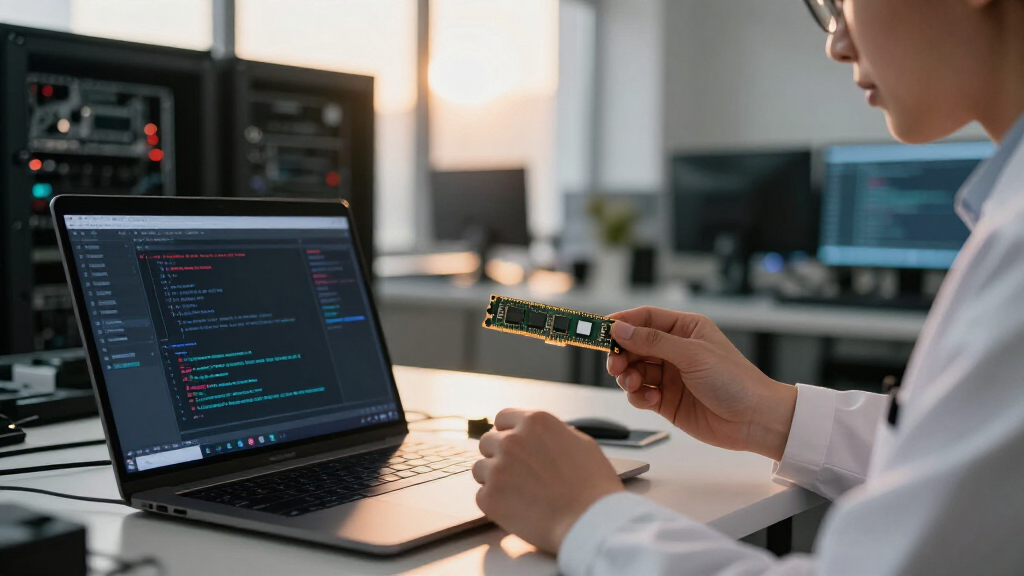
High Bandwidth Memory (HBM) modules
As an affiliate, we earn on qualifying purchases.
As an affiliate, we earn on qualifying purchases.
Memory Supply Constraints and Industry Concentration
SK hynix’s remarks come amid a backdrop of increasing AI adoption, which now consumes more than 50% of semiconductor resources. The company holds a dominant 58% share of the global HBM market, with Samsung and Micron sharing the remainder. Despite recent capacity expansion plans, the industry faces a capacity shortfall that will not be alleviated until at least 2027, creating a prolonged supply crunch.
Historically, memory capacity expansion has lagged behind demand, but the current situation is compounded by industry concentration and geopolitical considerations. The focus on high-bandwidth memory used in AI accelerators makes this bottleneck more critical than general-purpose memory, with potential repercussions for AI training and inference capabilities.
“No company has meaningful new capacity coming online next year.”
— Chey Tae-won, SK Group Chairman
As an affiliate, we earn on qualifying purchases.
Uncertainties About Future Capacity and Geopolitical Impact
It remains unclear how quickly capacity expansions will be completed and whether they will fully meet the surging demand. Additionally, the extent to which governments will intervene or impose restrictions on memory exports and access remains uncertain, potentially altering supply dynamics and geopolitical tensions further.
As an affiliate, we earn on qualifying purchases.
Next Steps for Industry Capacity and Policy Responses
Industry players are expected to accelerate capacity expansion plans, with SK hynix and others reviewing additional fab site options. Meanwhile, governments may increase scrutiny of memory supply chains, possibly introducing export controls or strategic stockpiling measures. Monitoring these developments will be crucial as the industry navigates the capacity crunch and geopolitical pressures.
As an affiliate, we earn on qualifying purchases.
Key Questions
Why is memory considered the bottleneck in AI development?
Memory, especially high-bandwidth memory (HBM), is critical for AI training and inference. Demand is outpacing supply, and current capacity expansions will not meet the surge in needs projected for 2027, creating a bottleneck that limits AI progress.
How concentrated is the global HBM market?
As of Q1 2026, SK hynix holds approximately 58% of the global HBM revenue share, with Samsung and Micron each holding about 21%. This high concentration raises concerns about supply security and monopoly power.
What are the geopolitical implications of memory shortages?
As memory access becomes viewed as a matter of economic security, governments may intervene to restrict exports or secure supply chains, potentially leading to increased tensions and competition over critical semiconductor resources.
When will new capacity come online to address the shortage?
SK hynix’s major capacity expansions, including a new clean room in Yongin, are scheduled for completion by February 2027. Until then, the industry faces a significant supply shortfall.
How might this shortage affect AI costs and innovation?
The supply-demand imbalance could increase memory prices, raising costs for AI hardware and potentially slowing innovation due to resource constraints, especially for training large models.
Source: ThorstenMeyerAI.com
Halloween Picks
halloween
As an affiliate, we earn on qualifying purchases.