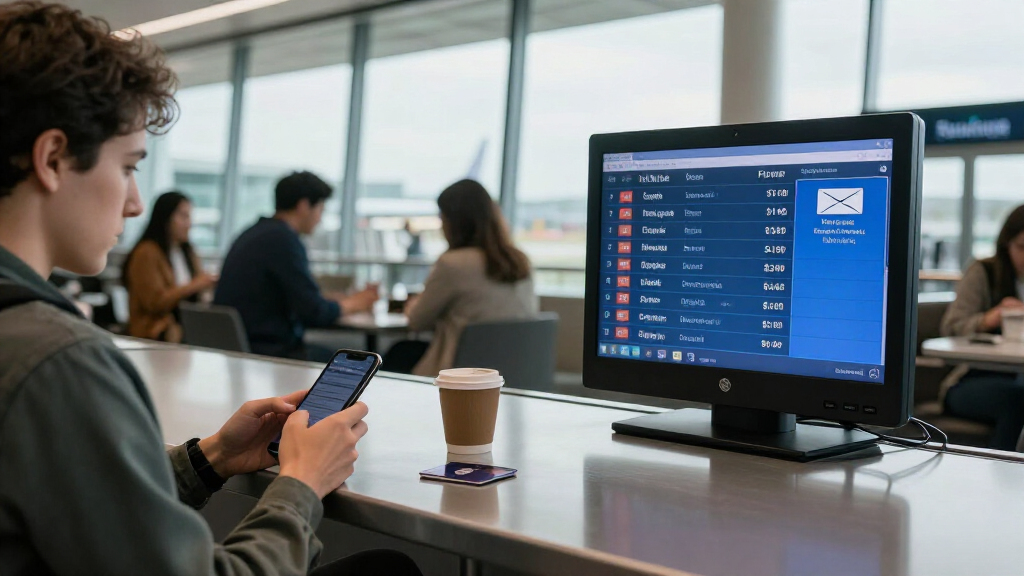

🔍 Read the full analysis: US Tech Outages And A Week Of Disruption: Banks, Flights, Email, And The NSA on ThorstenMeyerAI.com

Get everyday essentials delivered free with Prime
- Fast, free delivery on millions of items
- Prime Video, Amazon Music and more included
- Member-only deals all year
TL;DR
Six outages from November 12 to 17 disrupted Microsoft 365 email, U.S. air travel, JPMorgan Chase transactions, United Airlines operations, Apple services and the NSA’s internal network. The organizations have cited separate technical issues, maintenance or system changes, and officials say they have no evidence the incidents were linked or caused by an attack.
Six technology outages disrupted email, flights, banking and government systems across the United States from November 12 to 17, but the organizations involved have reported separate technical causes and officials say they have no evidence of a coordinated attack. The incidents affected Microsoft 365, the Federal Aviation Administration, JPMorgan Chase, United Airlines, Apple and the National Security Agency; some investigations remain incomplete.
The outages began Thursday, November 12, when many Microsoft 365 users could not access Exchange Online email. Microsoft’s status information puts the disruption at 23 hours and 50 minutes, ending November 13. The company’s preliminary post-incident report described a latent software defect, a shift in network traffic to a gateway also supporting Exchange Online, and roughly 14% of gateway capacity unavailable because of an unrelated issue. Microsoft said the resulting load contributed to a cascading failure; at the worst point, more than 80% of the affected servers were unresponsive.
On Friday, the FAA issued a ground stop affecting U.S. airports. Its written account says legacy equipment became unstable as data flooded the FAA telecommunications network, with 1,000 connection attempts every four to five seconds. The FAA’s initial investigation pointed to work at a radar site in Amarillo, Texas, and a radio site in El Dorado, Arkansas. The source report identifies contractor L3Harris as carrying out router work at the sites, but details of the investigation are still developing. The FAA reported approximately 12,462 flights affected Friday, including 9,082 cancellations by major airlines; that count does not mean every cancellation resulted directly from the ground stop.
On Monday, JPMorgan Chase customers experienced stalled transactions, while United Airlines could not send pilots final aircraft weight information needed before takeoff. The bank attributed its disruption to “a software bug in on-premise hardware systems”; United described its problem as “a technology issue.” On Tuesday, Apple said an internal update was behind problems affecting iCloud and the App Store. The NSA said its classified internal network went down during scheduled routine maintenance. Director of National Intelligence Jay Clayton linked that incident to security patching.
The outages show how a fault in a technical system can interrupt services well beyond the equipment where a problem starts. Microsoft 365 email supports calendars, collaboration tools and other workplace services. Airline operations rely on timely data for flight preparation, while disruptions to FAA systems can affect departures across many airports. A payment-system problem can also reach customers and businesses that rely on transactions to proceed.
The incidents do not establish a single shared failure or common attacker. Their practical lesson, based on the reported causes, is narrower: software deployments, network changes and security patches can create operational risk, especially when services depend on older equipment or limited routes. For organizations, planning for a supplier or system outage can help preserve essential communication and payment functions. For consumers, a backup payment method and offline access to time-sensitive information may be useful when services fail.
Products Worth Considering

Logitech MX Creative Console with 9 Customizable Keys, Graphite

Kindle Paperwhite Signature Edition 32GB (2024 Model) – Metallic Black

Bose QuietComfort True Wireless Earbuds with Active Noise Cancellation, Bluetooth 5.3, USB-C Charging, and IPX4 Water Resistance
As an affiliate, we earn on qualifying purchases.
A Week of Separate Incidents
The incidents happened within six days and affected organizations with major roles in business, travel and government. That proximity helped fuel online speculation that they were connected or caused by artificial intelligence systems. But timing alone does not show a relationship, and the available accounts name different causes: a software defect and network conditions at Microsoft, data flooding an FAA network during site work, a hardware-related software bug at JPMorgan Chase, a technology issue at United, an internal update at Apple, and maintenance at the NSA.
As of the source report’s cutoff, November 18 at 13:30 UTC, Microsoft was the only organization described as having published a technical post-incident report, and it was preliminary. National Intelligence Director Jay Clayton said institutions were patching systems after newly discovered vulnerabilities and that systems do not always return as expected. He tied that explanation to the NSA outage; it was not presented as a finding about the other incidents.
The disruptions also varied in scale and duration. Microsoft’s published window covers nearly a full day. The FAA ground stop lasted several hours before it was lifted, but the flight effects extended into the following day. The source material gives less detail on the duration and scale of the banking, airline, Apple and NSA disruptions, so those incidents cannot be compared precisely on the information available.
““We have zero evidence whatsoever, we have no indication, no evidence, and no reason to believe at all that any of these incidents are related to each other.””
— U.S. Secretary of State Marco Rubio, speaking in Manila
Investigations Still Have Gaps
No evidence of a coordinated attack had been reported by the organizations or officials cited in the source material, but that is not the same as a completed investigation ruling out every possible connection. Rubio’s remarks describe the evidence available at the time. Microsoft’s technical report was preliminary, and its final report was due November 20.
Important details remain unavailable for several incidents, including full technical explanations and precise outage timelines for JPMorgan Chase, United, Apple and the NSA. The source report also says the FAA’s investigation was initial; it does not provide a final account of the router work or the precise chain of events at the two sites. Clayton’s broader comments about patching should not be treated as a finding that patching caused every outage.
The reported incident dates also span Thursday through Tuesday, while the full technical records are incomplete. No evidence supplied here establishes that all six organizations experienced the same type of failure, shared infrastructure, or a common trigger.
Final Reports and Recovery Plans
The next stated milestone is Microsoft’s final post-incident report, due November 20. Further information from the FAA and the other affected organizations could clarify the technical sequence, the duration of each disruption and any steps taken to prevent a recurrence. Until those accounts are available, the causes should be described separately rather than treated as a single event.
For organizations reviewing the incidents, the reported failures point to practical questions: how changes are tested before deployment, whether older equipment can handle unexpected traffic, and what alternatives are available if a central system or vendor becomes unavailable. The source material recommends planning backup communication and payment options. It does not report that any specific company has adopted a new policy in response.
For users, the immediate status of individual services may change as providers restore systems and publish updates. The source information does not specify whether every affected service had fully recovered by November 18, or whether additional disruptions were expected.
Key Questions
Were the six outages caused by one cyberattack?
No link or attack had been established in the information available as of November 18. Officials and affected organizations said they had no evidence of a cyberattack or that the incidents were related, while investigations remained incomplete.
What caused the Microsoft 365 outage?
Microsoft’s preliminary report cited a latent software defect, a shift from an alternative network gateway to a primary gateway, and about 14% of gateway capacity being unavailable because of an unrelated issue. The company said these factors contributed to a cascading server failure.
Why were U.S. flights disrupted?
The FAA said data flooded its network and made legacy equipment unstable. Its initial investigation pointed to work at two sites in Texas and Arkansas. The FAA reported approximately 12,462 flights affected on Friday, including cancellations by major airlines, but said not all were directly caused by the ground stop.
Did patching cause all the outages?
No. Jay Clayton connected security patching to the NSA network outage and discussed patching more generally, but the source material does not identify it as the cause of all six incidents. The other organizations cited different issues or gave less specific explanations.
What happens next?
Microsoft’s final post-incident report was due November 20. Further updates from the FAA, banks, airlines, technology companies and intelligence officials may clarify the causes and recovery measures. No final, shared explanation for the week’s outages had been reported as of November 18.
Source: ThorstenMeyerAI.com