
📊 Full opportunity report: Disk Is the Contract: Inside Threlmark’s Local-First Architecture on ThorstenMeyerAI.com — validation score, market gap, and execution plan.
TL;DR
Threlmark’s architecture centers on using local disk storage as the primary data source, avoiding traditional databases. This approach improves offline usability, simplifies synchronization, and enhances data portability, making systems more resilient and transparent.
Threlmark has announced a new approach to data management that treats local disk storage as the definitive source of truth, eliminating the need for traditional databases. This approach is detailed in the original analysis. This design simplifies synchronization, improves offline capabilities, and makes data more portable across tools, marking a shift in how project data is stored and managed.
Threlmark’s architecture relies on storing each data item in individual files within a structured directory layout, with atomic write operations to ensure data integrity. This method avoids race conditions and simplifies concurrency management compared to centralized databases. The directory structure itself acts as a formal contract, enabling external tools to read and write data directly without proprietary interfaces.
To safeguard data, Threlmark employs atomic file operations—writing to temporary files before renaming them into place—and tolerant merging techniques that handle missing or inconsistent data gracefully. These safety measures help prevent corruption and facilitate conflict resolution during concurrent edits.
By assigning one file per item, such as a project card, the system reduces collision risks and simplifies recovery. If a file becomes corrupted or is missing, the system can reconstruct state from other files, enabling self-healing. This approach also makes manual inspection and editing straightforward, enhancing transparency and interoperability.
Disk is the contract: inside a local-first roadmap hub
A Next.js app on top of plain JSON files — no database, no cloud, no accounts. The key decision: the on-disk layout IS the API. Everything else cascades from taking that seriously.
There is no server-of-record — the files are the record
The UI and any external tool reach the same files through the same discipline. The data root defaults to ~/.threlmark — home-based, because it’s a shared hub every one of your apps points at.
Inspectable
Every artifact is a file you can cat, diff, grep, commit.
Portable · no lock-in
Back up with cp, sync with Dropbox / git, migrate trivially.
Interoperable
Any tool in any language joins by reading / writing files.
Restartable
No in-memory state to lose — stateless over the files.
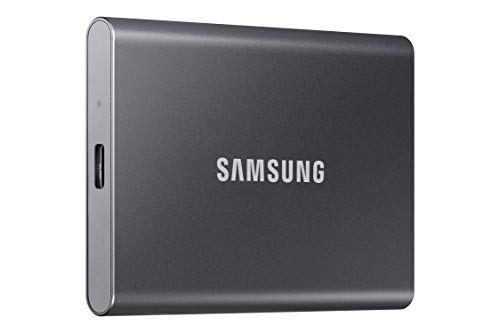
Samsung T7 Portable SSD, 1TB External Solid State Drive, Speeds Up to 1,050MB/s, USB 3.2 Gen 2, Reliable Storage for Gaming, Students, Professionals, MU-PC1T0T/AM, Gray
MADE FOR THE MAKERS: Create; Explore; Store; The T7 Portable SSD delivers fast speeds and durable features to…
As an affiliate, we earn on qualifying purchases.
As an affiliate, we earn on qualifying purchases.
Two disciplined patterns instead of a database
“Just use files” is easy to get wrong. These two patterns — ported from a battle-tested sibling app — are what make file-based state sound rather than reckless.
Atomic writes
Write to a temp file in the same dir, then rename() over the target. Rename is atomic on one filesystem — a crash mid-write leaves the complete old file or the complete new one, never a half.
The board heals itself
A single roadmap.json array races when two tools write at once. One file per card makes writes collision-free. Lane order lives in board.json and reconciles on read.
board.json. It writes an item file — the board fixes itself on Threlmark’s next read. Unknown keys are preserved, so the contract is forward-compatible.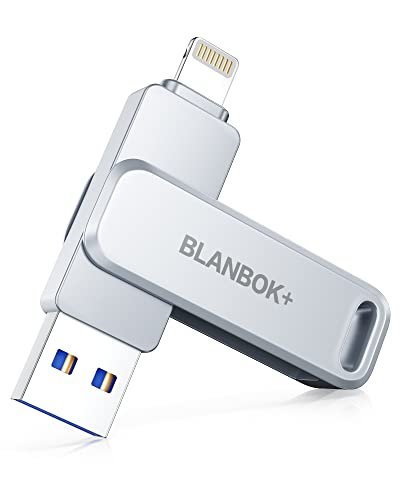
MFi Certified 256GB Flash Drive for iPhone Photo Stick, USB Memory Stick High Speed iPhone Flash Drive, External Memory Storage USB Stick Thumb Drive for iPhone/iPad/Android/PC (Metallic Silver)
MFi Certified High-quality iPhone Flash Drive:The MFi-certified usb flash drive for iphone can ensure high quality, and also…
As an affiliate, we earn on qualifying purchases.
As an affiliate, we earn on qualifying purchases.
The numbers can’t drift from the files
Anything computable from item state is computed — so the displayed numbers can never disagree with the underlying JSON. Priority is the clearest example: it’s calculated on read, never persisted.
priority — computed on read
Impact weighted heaviest; effort the only axis that subtracts. Reused verbatim from the original tool, so imported cards rank identically.

Advanced File Recovery – #1 Data Recovery Software | Recover Deleted Files, Photos, Documents, Audio, Videos & More | 1 PC 1 Year | (License Key Via Postal Service – No CD)
Recover deleted files, photos, documents, audio, videos & more
As an affiliate, we earn on qualifying purchases.
As an affiliate, we earn on qualifying purchases.
A handoff is a first-class flow event
The genuinely 2026-shaped part: most building is done by AI agents, so Threlmark closes the loop. Watch a card go from ranked to Done without anyone dragging it.
Handoff → report → self-move
The brief carries a reporting protocol. The agent reports through REST or the filesystem — and a done report moves the card itself.
POST /api/projects/:id/
items/:itemId/report
Direct call. Applied immediately.
drop reports/.json
→ ingested on read
Robust even if the server’s down at finish time.
![Free Fling File Transfer Software for Windows [PC Download]](https://m.media-amazon.com/images/I/41Vq6ZqHfjL._SL500_.jpg)
Free Fling File Transfer Software for Windows [PC Download]
Intuitive interface of a conventional FTP client
As an affiliate, we earn on qualifying purchases.
As an affiliate, we earn on qualifying purchases.
A small formula, and an honest hosting caveat
Because items are globally addressable (
Portfolio ranking — status-weighted
In-flight work floats to the top; bottlenecks cost the most, so blockers get nudged up.
Static read-only demo
Seeded data, writes to localStorage. Try-before-you-clone.
Personal Node instance
Password-gated, persistent backed-up THRELMARK_DATA_DIR.
Multi-tenant SaaS
Add accounts + per-tenant isolation. A separate build.
src/lib/*/store.ts is the natural seam — the same boundary that keeps the local tool simple is the one you’d extend for multi-tenancy. The architecture doesn’t fight that future; it just doesn’t pay for it until you need it.
Why Disk as the Single Source of Truth Matters
This approach fundamentally changes data management by removing dependency on centralized databases, reducing vendor lock-in, and enhancing system resilience. It allows users and external tools to access and modify data directly, facilitating offline work and data portability. While it shifts complexity to ensuring file safety and conflict management, it results in a more transparent, flexible, and robust system that can better adapt to varied workflows and environments.
The Evolution of Data Storage in Project Tools
Traditional project management tools rely on centralized databases or cloud servers, which can introduce lock-in, complicate offline access, and obscure data structure. Recent developments in local-first architectures, like Threlmark’s, aim to address these issues. Recent developments in local-first architectures, championed by projects like Threlmark, aim to shift data storage to local files, emphasizing transparency and resilience. This movement aligns with broader trends toward user-controlled data and offline-first design, but Threlmark’s specific implementation treats disk as the primary contract for data integrity and synchronization.
“Treating the disk as the contract transforms how we think about data synchronization and system resilience.”
— Thorsten Meyer, Threlmark developer
Unresolved Challenges in File-Based Data Management
It remains unclear how well this system scales with very large datasets or highly concurrent environments. For more insights, see Disk Is the Contract: Inside Threlmark’s Local-First Architecture. Managing many small files can introduce filesystem overhead, and conflict resolution in complex scenarios may require further refinement. Additionally, the long-term robustness of manual directory and file management, especially with manual edits, is still being evaluated.
Future Developments in Threlmark’s Architecture
Threlmark plans to continue refining conflict resolution and synchronization mechanisms, potentially incorporating more sophisticated merging algorithms. They also aim to develop tooling to assist manual file management and to better support large-scale projects. Community feedback and real-world testing will likely shape future enhancements.
Key Questions
How does Threlmark handle concurrent edits from multiple tools?
It uses atomic writes and tolerant merging techniques to minimize conflicts, allowing multiple tools to edit different files simultaneously without data corruption.
Can I manually edit data files in Threlmark?
Yes, the directory structure and individual files are transparent, enabling manual inspection and editing, which can be useful for troubleshooting or customization.
What are the main advantages of this disk-centric approach?
It improves offline usability, data portability, transparency, and resilience by removing reliance on proprietary databases or cloud servers.
Are there any downsides to treating disk as the main contract?
Potential challenges include managing many small files efficiently and handling complex conflict resolution in highly concurrent environments.
Is this approach suitable for large-scale or enterprise projects?
While promising, further testing is needed to confirm scalability and conflict management effectiveness in very large or complex projects.
Source: ThorstenMeyerAI.com