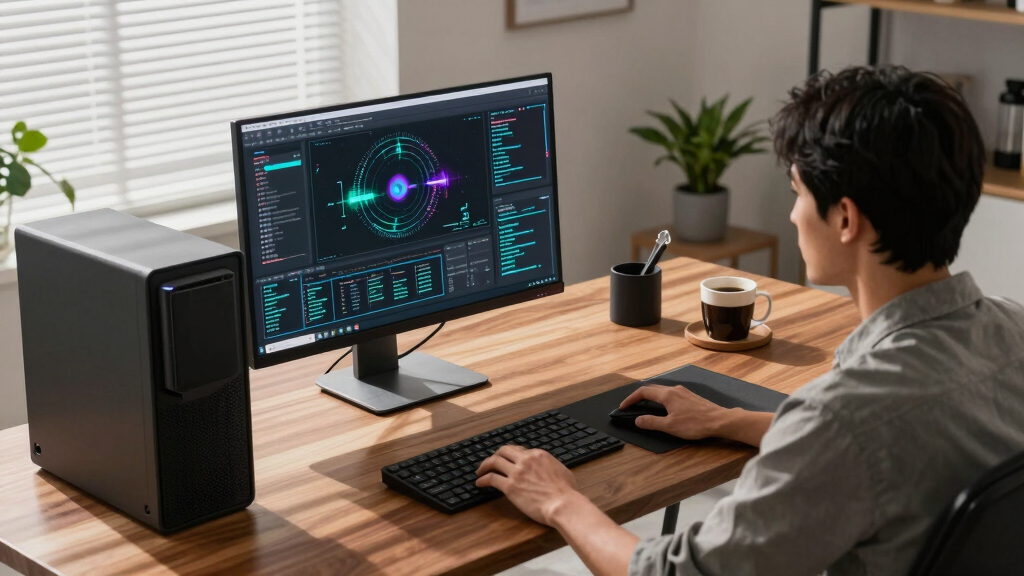

📊 Full opportunity report: Build vs Buy a Prebuilt AI Workstation on ThorstenMeyerAI.com — validation score, market gap, and execution plan.

Get everyday essentials delivered free with Prime
- Fast, free delivery on millions of items
- Prime Video, Amazon Music and more included
- Member-only deals all year
TL;DR
In 2026, prebuilt AI workstations often match or surpass DIY costs due to shortages and bulk buying. They offer faster deployment and validated performance, but building provides maximum control. A hybrid approach may be optimal.
In 2026, purchasing prebuilt AI workstations has become more cost-effective and faster than building from scratch, driven by component shortages and price fluctuations. This shift affects businesses and researchers deciding how to deploy high-performance AI hardware efficiently.
Recent data from vendors like Lambda and Puget indicate that prebuilt AI workstations now often cost similar to or less than DIY setups, thanks to bulk purchasing and supply chain stabilization. These systems arrive ready to use, with validated thermals, pre-installed software, and warranties, reducing setup time and operational risks.
Conversely, building an AI workstation offers maximum customization, control over hardware and security, and potential long-term savings but requires significant time, expertise, and ongoing management. The choice depends on priorities such as deployment speed, control, and total ownership costs.
Component shortages and price spikes have increased the cost of DIY parts, making prebuilt solutions more attractive in many cases. Deployment timelines for prebuilt systems are typically 1-2 weeks, compared to several months for custom builds, which is critical for time-sensitive projects.
Build vs buy
an AI workstation.
The real question behind this whole series: do you pull the five heat-and-noise levers yourself, or buy a prebuilt where the vendor pulled them for you? And in 2026, the old “building is cheaper” rule has broken. Match your situation in Part 3.
Impacts of the Build vs Buy Shift in 2026
This trend influences how organizations allocate resources for AI development, impacting project timelines, operational risks, and long-term costs. Faster deployment with prebuilt systems can give companies a competitive edge, while control through building remains vital for security-sensitive applications.
Understanding these tradeoffs helps decision-makers optimize their hardware investments, balancing initial costs, operational risks, and strategic flexibility in a rapidly evolving supply environment.
Products Worth Considering

Logitech MX Keys S Wireless Keyboard, Graphite

Sony WH-1000XM4C Wireless Noise-Cancelling Headphones, Black

Samsung 32-Inch Odyssey OLED G8 (G80SH) 4K Gaming Monitor
As an affiliate, we earn on qualifying purchases.
2026 Supply Chain and Cost Dynamics for AI Hardware
Global chip shortages and price fluctuations have persisted into 2026, raising the costs of building custom AI workstations. Historically, DIY setups were cheaper, but recent data shows that bulk purchasing and supply chain improvements have made prebuilt systems equally or more affordable. Vendors now validate hardware configurations thoroughly, reducing the risk of failures and thermal issues.
This environment has shifted the traditional build vs buy calculus, emphasizing deployment speed and operational reliability over initial hardware costs. The rise of managed support and warranties further influences the decision-making process.
"While building offers unmatched control, the time and expertise required can outweigh the benefits, especially when quick deployment is critical."
— Jane Doe, CTO of TechSolutions
Unresolved Questions About Long-term Costs
It remains unclear how ongoing supply chain disruptions and component price fluctuations will evolve beyond 2026, potentially affecting the cost advantage of prebuilt systems. Additionally, the long-term reliability and upgradeability of prebuilt solutions versus custom builds are still being evaluated, with some experts questioning how well prebuilt systems will adapt to future hardware advancements.
Future Trends in AI Hardware Procurement Strategies
As supply chains stabilize further and new hardware standards emerge, organizations will likely reassess their build vs buy strategies. Manufacturers may introduce more customizable prebuilt options, and DIY enthusiasts might find more streamlined sourcing options. Monitoring these developments will be crucial for making informed hardware investments in the coming months.
Key Questions
Is it cheaper to build or buy an AI workstation in 2026?
Currently, prebuilt systems often match or are cheaper than DIY builds due to bulk purchasing and supply chain improvements, but costs can vary based on specific configurations and ongoing market conditions.
How long does it take to deploy a prebuilt AI workstation?
Most prebuilt AI workstations can be delivered and set up within 1 to 2 weeks, whereas custom builds may take several months due to sourcing and assembly.
What are the main advantages of buying a prebuilt AI workstation?
Prebuilt systems offer ready-to-use hardware, validated performance, reduced setup time, warranties, and support, minimizing operational risks.
When should I consider building my own AI workstation?
If you require maximum customization, control over hardware and security, or plan to upgrade frequently, building may be the better choice despite longer setup times.
Will supply chain issues affect future costs and availability?
It is still uncertain how supply chain disruptions will evolve; ongoing shortages and price fluctuations could impact both DIY and prebuilt options in the near future.
Source: ThorstenMeyerAI.com