
TL;DR

Get everyday essentials delivered free with Prime
- Fast, free delivery on millions of items
- Prime Video, Amazon Music and more included
- Member-only deals all year
Researchers found DNA from Yersinia pestis in the teeth of 18 people buried at four sites near Lake Baikal about 5,500 years ago. The burial patterns and deaths among relatives support the researchers’ conclusion that the infections were part of an outbreak, though DNA evidence alone cannot prove plague caused every death.
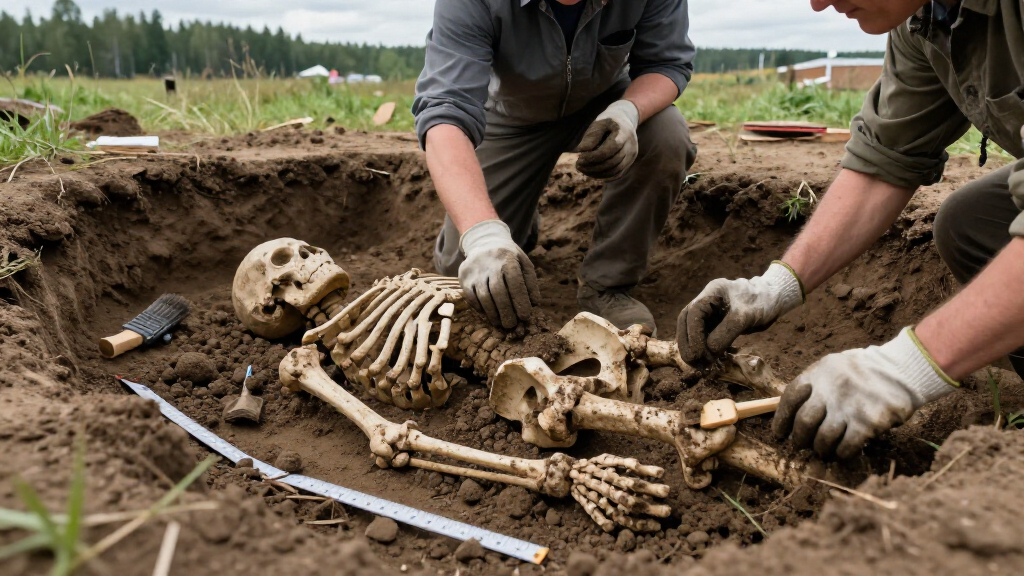
Researchers have identified DNA from the plague-causing bacterium Yersinia pestis in the teeth of 18 people buried near Lake Baikal about 5,500 years ago, evidence they say points to an outbreak among hunter-gatherer communities in what is now Russia. The findings, from remains at four burial sites, offer evidence of an early episode of mass mortality linked to plague, although the DNA alone cannot establish the cause of death for each person.
The international research team, led by Eske Willerslev and including Russian researchers, examined ancient remains from 46 people at four burial grounds: Ust-Ida-1, Shumilikha, Bratsky Kamen and Serovo. The sites are in the Lake Baikal region, along the Angara River. The study was published in the journal Nature, according to Meduza’s report on the research.
Researchers detected plague DNA in 18 of the 46 people. At Ust-Ida-1, the largest site in the study, 11 of 31 people tested positive. The team also recovered a well-preserved plague genome from Shumilikha and less complete genetic material from the other two sites. Ancient pathogen DNA can survive in teeth, particularly when an infection entered the bloodstream before death.
The researchers combined the genetic evidence with burial dates and archaeological observations. Many people appear to have died within a relatively short period; graves included relatives, and children and adolescents made up an unusually large share of the dead at some sites. The remains showed no signs of injuries that could account for the deaths. Taken together, the authors concluded that the infections were part of an outbreak in small communities, rather than unrelated cases.
Evidence of an Early Plague Outbreak
The study adds evidence that plague affected human communities thousands of years before the better-known historical pandemics. It also gives researchers a glimpse of how infectious disease may have moved among small, connected groups of hunter-gatherers, rather than only through later, densely settled populations.
The finding matters because it shifts the documented timeline for plague-related mass mortality. The burial grounds lie far apart—some are separated by as much as 340 kilometers—but genetic evidence indicates that the people buried there shared recent ancestors. The researchers suggest movement along the river or its banks may have helped maintain contact. That does not establish precisely how the bacterium spread between communities, but it places the evidence across more than one burial site.
The evidence also illustrates how archaeological and genetic records can be read together. A positive test identifies the bacterium’s genetic traces; burial patterns, the timing of deaths and the absence of evident traumatic injuries help support the interpretation of an outbreak. Neither strand alone answers every question about the deaths.
Products Worth Considering

LG UltraGear 27-Inch QHD OLED Gaming Monitor, 240Hz, 0.03ms, G-SYNC Compatible, FreeSync Premium Pro, HDMI 2.1

Amazon Kindle Scribe Colorsoft 64GB (1st Generation)

Apple iPad Air (4th Generation, 10.9-inch, Wi-Fi, 256GB) – Space Gray
As an affiliate, we earn on qualifying purchases.
Hunter-Gatherers Along the Angara
The people lived in small hunter-gatherer groups in the Lake Baikal region. They relied on local wildlife and fish, used bows and arrows, and made pottery, according to the account of the study. They did not farm or keep domestic animals other than dogs. Their remains and burial practices provide archaeologists with evidence about family ties, diet and community life.
Researchers studied teeth because traces of pathogens can remain in dental tissue when infection reaches the bloodstream. The four burial grounds differed in their customs, including how bodies were positioned in relation to the river. At Ust-Ida-1, a number of graves contained multiple people and showed no evidence that they had been reopened later to add bodies, a detail the authors say is consistent with deaths occurring close together.
At Bratsky Kamen, one grave held three girls estimated to have been between about four and nine years old; all three had plague DNA, and two were likely related. At Ust-Ida-1, a buried aunt and nephew also tested positive. These examples support the possibility of infections within families, but they do not by themselves reveal the route of transmission.
““We have found the earliest evidence of mass mortality caused by plague,””
— Eske Willerslev, the study’s lead researcher
Limits of the Ancient DNA Evidence
Finding Yersinia pestis DNA does not, on its own, prove that plague killed the person. Someone could have carried the infection and died from another cause. The researchers argue that the clustered burial dates, positive results among people buried together, high mortality among children at some sites and lack of visible injuries collectively support an outbreak interpretation.
The exact timing and scale remain uncertain. The authors suggest the first phase may have lasted a few decades or less, based on the similarity of the recovered bacterial genomes, but the evidence does not establish a precise duration. Ancient DNA can also be incomplete: a negative test does not necessarily mean a person was never infected. The available evidence does not establish how plague spread, how many people in the wider communities died, or whether every death in the studied graves was caused by the infection.
Further Work on Ancient Plague
The report describes conclusions from a published study; it does not identify a scheduled next research milestone. Further analysis of ancient remains and pathogen genomes could help test how widely the outbreak extended, refine its timing and clarify relationships among the bacterial samples. For now, the researchers’ account rests on the 46 people examined at four burial sites and on the combined genetic and archaeological evidence.
Any new findings will need to distinguish direct evidence of infection from evidence that plague caused a particular death. The study’s results provide a starting point for investigating the history of disease in prehistoric Siberia, while leaving the precise course and reach of the outbreak unresolved.
Key Questions
Where was the ancient plague evidence found?
Researchers examined remains from four burial sites in the Lake Baikal region of what is now Russia, including sites along the Angara River.
How old are the remains?
The people lived about 5,500 years ago, according to the study as described by Meduza.
How many people tested positive for plague DNA?
The researchers found Yersinia pestis DNA in 18 of 46 people examined. At Ust-Ida-1, 11 of 31 people tested positive.
Does the DNA prove plague killed all 18 people?
No. DNA evidence indicates infection, but it does not by itself establish that plague caused a person’s death. The researchers used other evidence, including burial timing and the lack of visible injuries, to argue that the findings reflect an outbreak.
What remains unknown about the outbreak?
The exact duration, geographic reach and transmission route are not established. Researchers also cannot determine from the available evidence that every person buried at the sites died from plague.
Source: rss