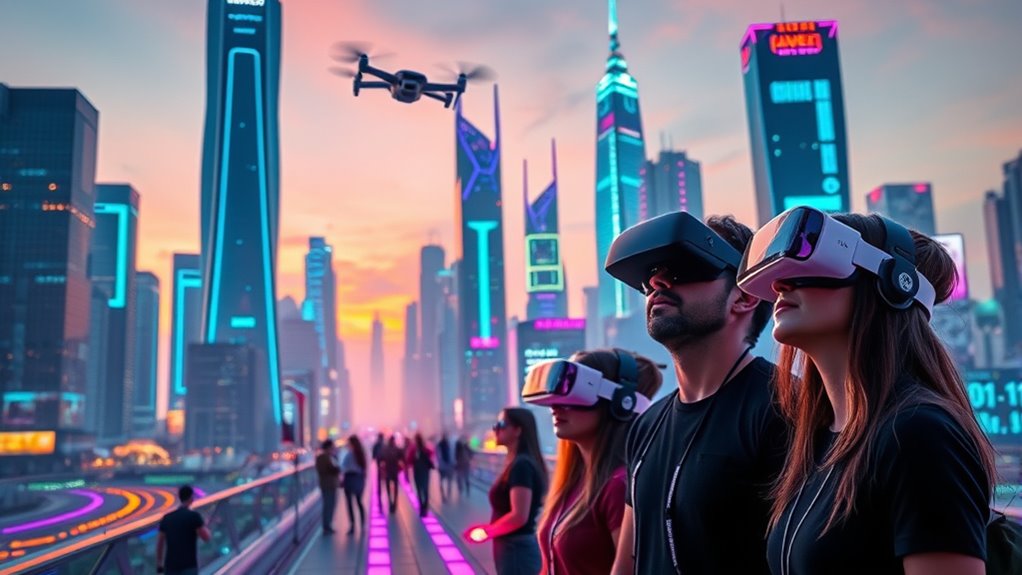

By 2025, the metaverse will become a mainstream part of your daily life, blending digital and physical worlds through advanced augmented reality glasses. You’ll experience seamless virtual activities like concerts and social meetups from home, with interactions feeling real and intuitive. Blockchain will secure ownership of digital assets and support a thriving economy, while decentralized communities let you participate actively and move your digital identity across platforms. As these innovations unfold, you’ll see how virtual worlds are evolving into an all-encompassing digital landscape—there’s more to explore ahead.
Key Takeaways
- By 2025, the metaverse will become mainstream, transforming work, socializing, and entertainment with seamless AR integration.
- Advances in AR will enable natural, immersive interactions that blend physical and digital environments.
- Blockchain will secure digital assets and transactions, fostering a trusted, vibrant virtual economy.
- Decentralized governance and token-based communities will promote user ownership and collective decision-making.
- Interoperability across platforms will allow seamless movement of assets, identities, and experiences within a unified metaverse ecosystem.
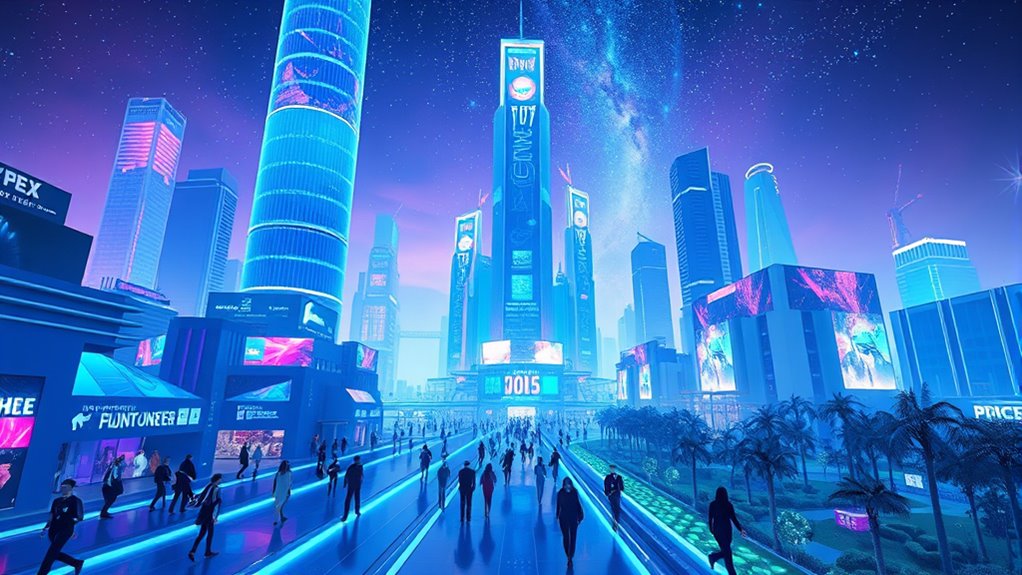
By 2025, the metaverse will have transformed from a niche concept into a mainstream digital landscape, reshaping how you work, socialize, and entertain yourself. This evolution hinges on advancements in augmented reality that seamlessly blend digital and physical worlds. Imagine putting on lightweight AR glasses that project immersive environments onto your surroundings, making virtual meetings feel just as real as face-to-face interactions. You could attend a concert, browse a virtual marketplace, or collaborate on a project without leaving your living room, all through augmented reality overlays that enhance your physical space. These AR experiences will become more intuitive and integrated, allowing you to interact naturally with digital objects and environments, blurring the lines between real and virtual. As these technologies develop, dynamic communication exercises will be essential for users to build meaningful connections within virtual spaces. Blockchain integration will be a vital driver behind this transformation. It will underpin the metaverse’s economy, ensuring secure, transparent transactions and ownership of digital assets. When you buy virtual clothing, real estate, or art, blockchain technology guarantees that your ownership is authentic and verifiable. This trustworthiness will encourage creators and users to invest more confidently in digital assets, fueling a vibrant economy within virtual worlds. Smart contracts will automate complex transactions, making buying, selling, and trading seamless and tamper-proof. As a result, you’ll have access to a decentralized marketplace where digital assets are protected from fraud, and creators are fairly compensated for their work. This integration will also empower you to participate in decentralized communities, where governance and decision-making are distributed across users rather than centralized entities. You might hold tokens that give you voting rights on platform updates or community projects, fostering a sense of ownership and collective control. Plus, blockchain will facilitate interoperability across different metaverse platforms, allowing your digital assets and identities to move freely from one virtual environment to another. This means you won’t be locked into a single platform but can carry your virtual possessions, credentials, and social connections wherever you go.
Top picks for "metaverse development virtual"
Open Amazon search results for this keyword.
As an affiliate, we earn on qualifying purchases.
Frequently Asked Questions
How Will Privacy Be Maintained in Interconnected Virtual Worlds?
You’ll see privacy maintained through strict privacy protocols that control data sharing and access. These protocols guarantee your personal information stays secure while interacting in virtual worlds. Additionally, data sovereignty policies empower you to own and manage your data, giving you control over how it’s used and stored. As interconnected virtual worlds evolve, these measures will strengthen, helping you feel safer and more in control of your digital identity.
What New Hardware Innovations Are Expected for Metaverse Experiences?
You’ll see new hardware innovations like advanced haptic feedback devices and immersive spatial audio that elevate your metaverse experiences. Haptic feedback will let you feel textures and interactions, making virtual worlds more tangible. Spatial audio will deliver realistic soundscapes, enhancing immersion and social connections. These innovations will make your virtual interactions feel more natural, engaging, and seamless, pushing the boundaries of what you can experience in digital environments.
How Will Digital Economies Evolve Within Metaverse Platforms?
A rising tide lifts all boats, and in the metaverse, digital economies will flourish. You’ll see virtual marketplaces expand with digital currency becoming more mainstream, enabling seamless transactions. You’ll have more opportunities to buy, sell, and trade virtual goods, making economies more dynamic and interconnected. As you navigate these virtual worlds, remember that your participation fuels growth, turning digital currencies into essential tools for wealth and community building.
What Are the Legal Challenges Facing Metaverse Development?
You’ll face legal challenges like protecting intellectual property rights in the metaverse, where digital assets can be easily copied or stolen. Jurisdictional conflicts arise because virtual worlds span multiple regions, making it hard to enforce laws consistently. You need to navigate evolving laws and establish clear regulations to safeguard creators’ rights while ensuring a safe environment for users. Addressing these issues early helps build trust and sustainable growth in virtual worlds.
How Will Accessibility Be Improved for Users With Disabilities?
You’ll see accessibility improve as developers adopt assistive technologies and prioritize inclusive design. By integrating tools like screen readers, haptic feedback, and voice controls, you’ll experience a more seamless virtual environment. Inclusive design guarantees that virtual spaces cater to diverse needs, making participation easier for users with disabilities. As these advancements become standard, you’ll find the metaverse more welcoming, equitable, and accessible to everyone.
Conclusion
As you step into the metaverse of 2025, think of it as a blooming garden—each virtual world a vibrant flower, flourishing with endless possibilities. Your presence is the gentle breeze, shaping its growth and direction. Just as a gardener tends to each bloom, you have the power to nurture innovation and connection. Embrace this evolving landscape, and you’ll find yourself at the heart of a digital tapestry where imagination and reality intertwine, creating a future full of promise.