TL;DR

Get everyday essentials delivered free with Prime
- Fast, free delivery on millions of items
- Prime Video, Amazon Music and more included
- Member-only deals all year
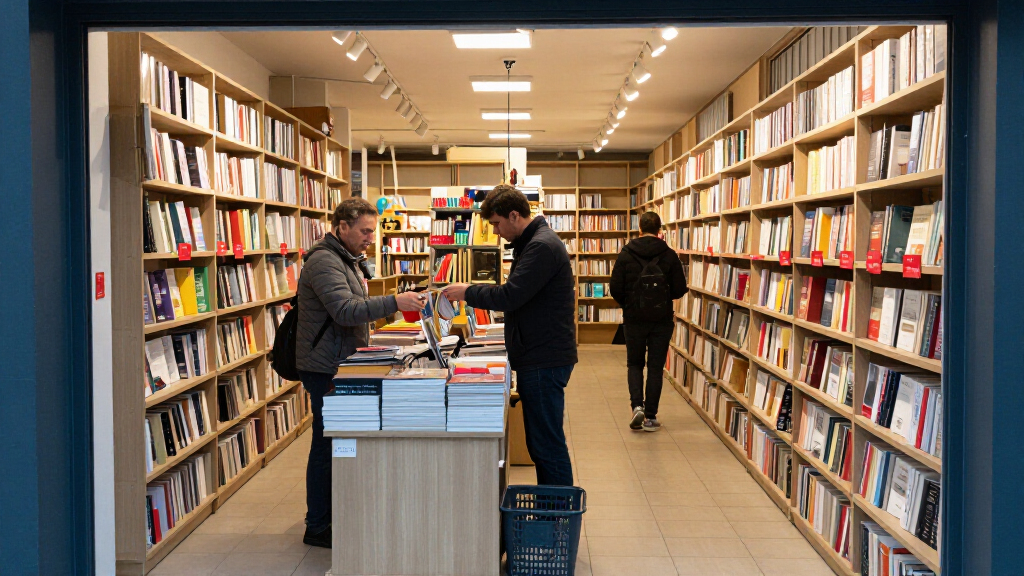
Russia’s largest bookstore chain, Chitai-Gorod–Bukvoed, says it has spent about 100 million rubles in recent years removing books that may violate Russian law and destroying some of them. CEO Alexander Brychkin said books can be shredded by a service provider on camera, while some titles remain in restricted warehouse storage.
Russia’s largest bookstore chain, Chitai-Gorod–Bukvoed, has spent about 100 million rubles in recent years removing books it believes may violate Russian law and disposing of some titles, the chain’s head, Alexander Brychkin, told business outlet RBC. The account highlights the financial and logistical costs for retailers as books are withdrawn following notices about possible legal concerns.
Brychkin said the expenses include books that cannot be returned to suppliers, as well as the work of taking them off shelves, moving them to a warehouse and arranging their processing. He told RBC that the chain writes some stock off as a loss and covers disposal costs itself. He did not give a breakdown of the reported total or specify precisely which years it covers.
Describing the destruction process, Brychkin said a service provider uses an industrial shredder and records the disposal on camera. He said the chain pulls a book from sale after receiving notice from the Russian Book Union that there are suspicions about it, and stops selling it until the matter is clarified.
Brychkin said there is no guarantee that a book will be cleared of concern even if the Russian Book Union finds nothing, because another organization could be conducting a separate assessment. He also said some Boris Akunin books remain in the chain’s warehouse because they cannot be returned and have not been destroyed. He described this stock as being held in restricted storage. The source report said Brychkin described no noticeable reader interest in the withdrawn books by Akunin and Lyudmila Ulitskaya.
The Cost of Removing Books
The reported spending shows that book restrictions can create costs beyond lost sales for a retailer. According to Brychkin, the chain may have to pay for withdrawal, transport, storage and disposal, while being unable to recover the purchase price by returning affected books to suppliers. His account does not establish how much of the 100 million rubles was spent on each category, but it points to a substantial operational burden.
The process described also leaves retailers responding to warnings while the status of a title remains unsettled. A book may be removed before there is a definitive finding, and stock that cannot be returned may remain in a warehouse or be destroyed. That uncertainty matters to publishers and readers as well as sellers, because it can limit a title’s availability even when the chain says a review has not resolved the concern.
Products Worth Considering

DJI Osmo Pocket 4 Gimbal Camera Pro Kit, 18-Piece Bundle

DJI Osmo Pocket 3 Creator Combo Vlogging Camera with Mic 2, 1 CMOS, 4K/120fps, 3-Axis Stabilization, 128GB Card

DJI Osmo Pocket 3 Filter Bundle – Vlogging Camera with 1 CMOS Sensor and 4K/120fps
As an affiliate, we earn on qualifying purchases.
How Books Are Flagged
According to Brychkin, the chain’s process begins when it receives a notice from the Russian Book Union raising suspicions about a particular book. The retailer then pauses sales pending further clarity. His remarks describe the chain’s response to those notices; they do not establish that every book removed has been formally banned by a government agency.
The report cited a separate example from October 2026: Russia’s media regulator, Roskomnadzor, banned Olga Ptitseva’s novels The 203rd Day of Winter and The Spring of Water. Media reports suggested the action may have been related to signs of “promotion of non-traditional sexual relations.” That explanation was reported as a possible basis for the ban, not confirmed in the source material as the regulator’s stated reason.
““Mostly it’s the inability to return the goods to the supplier, so we have to write them off as a loss.””
— Alexander Brychkin, head of Chitai-Gorod–Bukvoed, speaking to RBC
What the Spending Covers
The reported figure of about 100 million rubles comes from Brychkin, but the source does not provide invoices, an independent estimate or a detailed accounting. It is unclear which titles and specific disposal actions are included, how many books have been withdrawn or destroyed, and how the spending is distributed across the years covered.
The source also does not identify the books involved in each notice from the Russian Book Union or explain what standard determines when a title can return to sale. It is unclear whether the books held in restricted storage will later be returned, destroyed or kept there indefinitely. The account does not say whether the chain has appealed any decisions or sought reimbursement from suppliers or authorities.
Further Reviews and Inventory
Brychkin said the chain stops selling a flagged title while it awaits clarification, but he did not describe a fixed timetable or a single authority whose decision ends the process. The next developments may include further assessments of flagged books and decisions about stock that remains in warehouses. No schedule was given for the Akunin books still being held.
More detail from the retailer, suppliers or relevant organizations would be needed to establish the full scale of the withdrawals and how the reported costs are calculated. The source report did not identify a forthcoming policy change, new review deadline or planned reimbursement process.
Key Questions
How much has Chitai-Gorod–Bukvoed spent on withdrawing books?
Chain head Alexander Brychkin told RBC the retailer has spent about 100 million rubles in recent years. The report did not include a year-by-year breakdown or an independent verification of the figure.
Why does the chain remove books from sale?
Brychkin said the chain acts after receiving a notice from the Russian Book Union that there are suspicions about a book. The chain pauses sales while it waits for clarification; the account does not say that every flagged title has been formally banned.
How are books destroyed?
Brychkin said a service provider destroys some withdrawn books with an industrial shredder while recording the process on camera.
Are all withdrawn books destroyed?
No. Brychkin said some Boris Akunin books remain in a warehouse because the chain cannot return them to the supplier and has not disposed of them. He described the storage as restricted.
What is not known about the reported 100 million rubles?
The source does not provide a detailed cost breakdown, the number of books involved, or the precise period covered. It also does not say whether any of the reported expenses will be reimbursed.
Source: meduza.io