
TL;DR
Walloon regional authorities ordered Google to suspend construction at its Farciennes data centre, saying a three-hectare building was built without proper planning permission. Google says it has paused work pending further guidance and is challenging the refusal of a proposed change to the site’s cooling plan. A court hearing is scheduled for January; the amount of water the project would use and whether the building can be regularised are not clear.
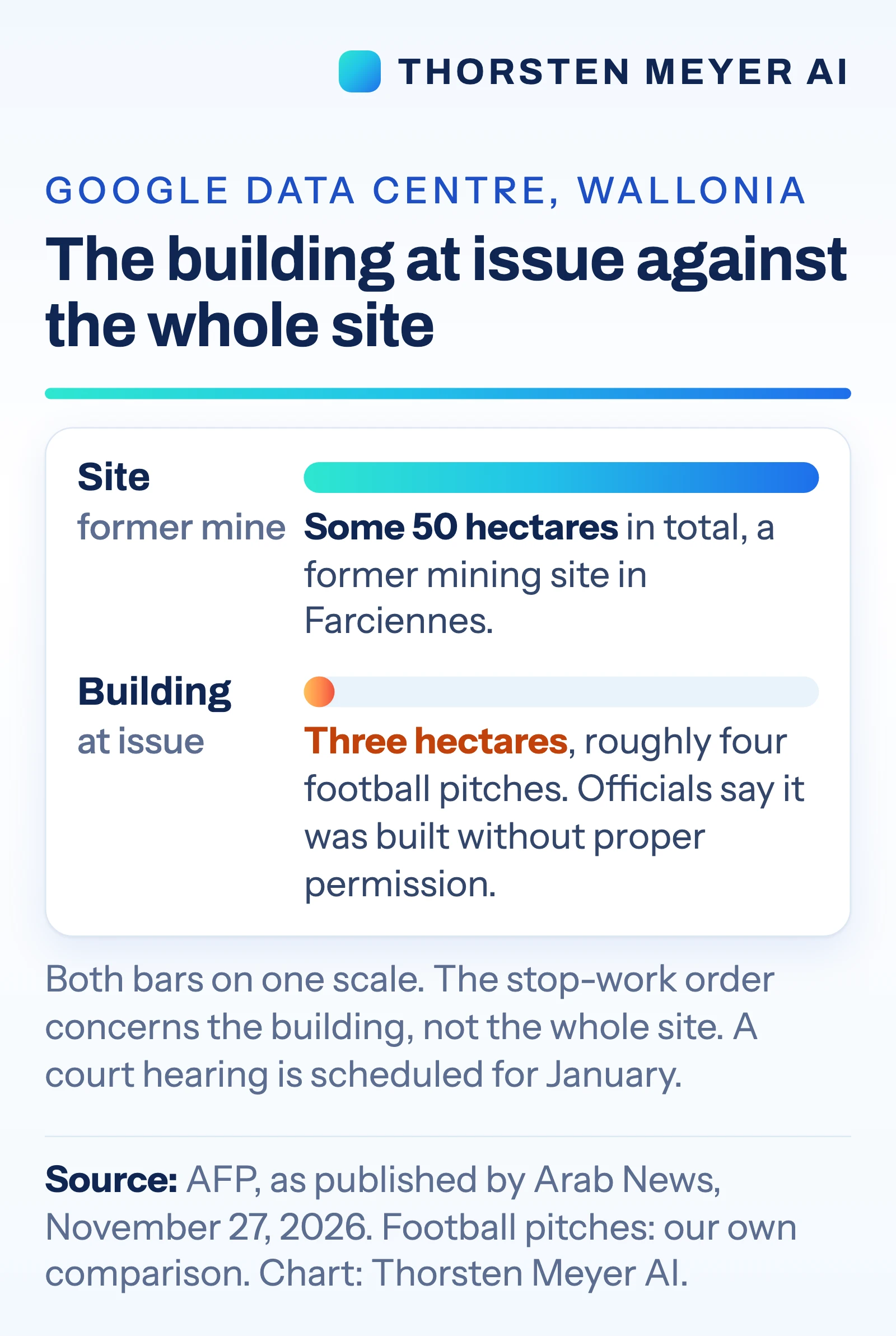
Authorities in Belgium’s Wallonia region have ordered Google to stop construction at its planned data centre in Farciennes, saying a three-hectare building was built without proper planning permission. Google says it has paused work while awaiting further guidance, as a dispute over the site’s proposed water-based cooling system moves toward a court hearing scheduled for January.

Get everyday essentials delivered free with Prime
- Fast, free delivery on millions of items
- Prime Video, Amazon Music and more included
- Member-only deals all year
A regional official told AFP that inspectors visited the site on Thursday and instructed Google representatives to halt construction. Nicolas Yernaux, a spokesperson for the Walloon authorities, described the alleged breach as a “major offense” involving the construction of a building covering three hectares. The reports cited here describe the authorities’ account; the order itself was not found online.
Google had sought to change the site’s planned cooling system from air cooling to water drawn from the nearby River Sambre. Regional officials refused the change over the summer, after a dry spring raised concerns about taking water from the river, AFP reported. Google challenged that refusal in court. The reports do not say how much water the proposed system would use.
Google told the BBC that work was paused “pending additional guidance” and said it remained committed to complying with local laws. Greenpeace Belgium said drone footage showed construction continuing and said the latest version of the planning permission had been revoked in August. Those statements are the group’s account of activity and the permit status; the authorities’ reported stop-work order followed the site’s inspection.
Water Rules Shape Data Centre Plans
The dispute shows how local planning decisions and access to water can affect where computing capacity is built. Data centres house servers used for websites, cloud services and AI workloads, and their equipment produces heat that must be removed. A change in cooling method can bring new permitting questions, particularly when a project proposes drawing water from a nearby river.
For Google, the immediate consequence is a halt to construction at the Farciennes site while the permit dispute proceeds. For companies and public bodies that rely on cloud or AI services, the broader relevance is that local infrastructure approvals can influence when and where providers add capacity. The reports do not establish that this order will affect service availability or prices.
Products Worth Considering

Sonos Play Portable Wi-Fi and Bluetooth Speaker, Black

DJI Osmo Mobile 8 Tracking and Fill Light Combo

Logitech MX Master 4 for Mac
As an affiliate, we earn on qualifying purchases.
From Air Cooling to River Water
According to Belgian media cited by AFP, the original Farciennes plan called for air cooling. Google later applied to use water from the Sambre instead. Regional officials rejected that request over the summer; Google then challenged the decision in court. Reports say the region’s concerns followed a dry spring, but do not provide water-use estimates or technical details comparing the two cooling plans.
The project is planned for a former mining site. AFP reported that Finnish authorities halted work at two Google data centre sites in October. That is a separate development and does not establish that the Belgian order reflects a common policy across Europe. The Farciennes dispute turns on the local permit and the authorities’ stated finding about the building.
““Pending additional guidance.””
— Google, in a statement reported by the BBC
Permit Status and Water Use
The reports do not include the stop-work order itself, so its full terms and any conditions for resuming work are not available here. It is also unclear whether the building can be approved or regularised later, how much water Google’s proposed cooling system would draw, and whether the company has altered its plans since the refusal.
Google’s statement that work is paused and Greenpeace’s claim that work was continuing describe different points in the timeline. The reports do not provide independent detail resolving exactly when construction stopped. The authorities’ allegation of construction without proper permission is reported, but the available material does not include a court ruling on the dispute.
January Hearing to Test Refusal
A court hearing on Google’s challenge to the regional refusal is scheduled for January. The hearing may clarify the status of the proposed cooling change, but the available reports do not specify its date or say whether it will resolve the separate allegation about the three-hectare building.
Until the dispute advances, the confirmed immediate position is that Walloon authorities ordered construction to stop and Google says work is paused. Any resumption, revised cooling plan or decision about the building’s permit status remains unreported.
Key Questions
Why did Walloon authorities order construction to stop?
A regional official told AFP that inspectors found a three-hectare building constructed without proper planning permission. The order itself was not available in the cited reports.
What was the dispute about cooling?
The original plan reportedly used air cooling. Google later sought permission to cool the site using water from the River Sambre, but regional officials refused the change over the summer amid concerns following a dry spring.
Has Google stopped work?
Google told the BBC that work was paused pending further guidance. Greenpeace Belgium had said drone footage showed construction continuing before the authorities’ order. The reports do not establish the exact time work stopped.
What happens next in the permit dispute?
Google has challenged the refusal of the cooling-plan change in court, with a hearing scheduled for January. It is not clear whether that hearing will also address the building the authorities say lacked permission.
Source: Thorsten Meyer AI