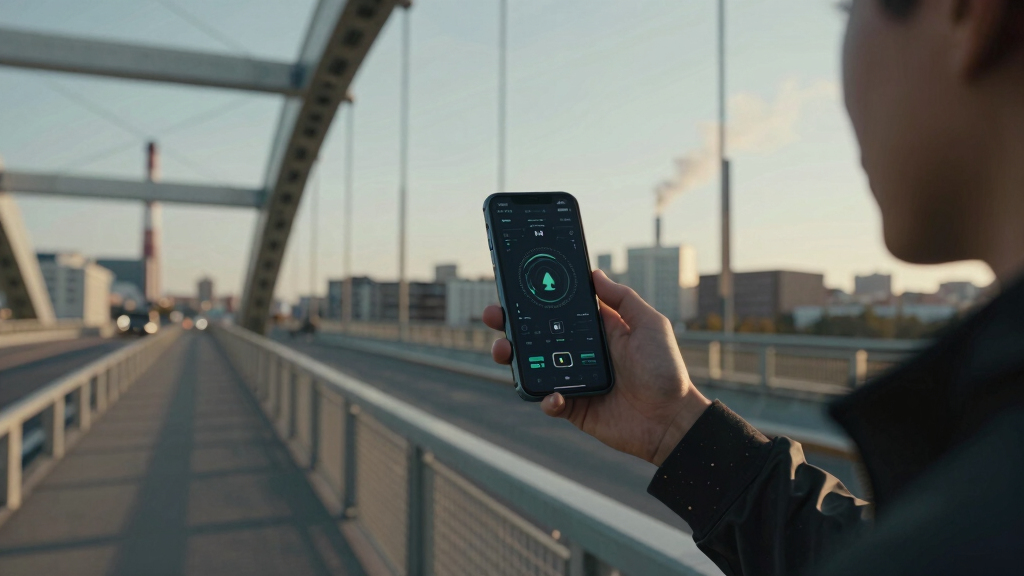

The bridge. Why the AI buildout runs on a nuclear story and a gas reality.

📊 Full opportunity report: The bridge. Why the AI buildout runs on a nuclear story and a gas reality. on ThorstenMeyerAI.com — validation score, market gap, and execution plan.

TL;DR

The AI industry is investing heavily in nuclear power for long-term, clean energy, but current needs are being met with behind-the-meter natural gas. The nuclear buildout is delayed, creating a gas-powered bridge that impacts emissions and infrastructure planning.

Major hyperscalers like Meta, Microsoft, Google, and Amazon are making large nuclear procurement deals, but the power these nuclear projects will generate is not expected until the late 2020s or early 2030s, while data centers require power immediately. Currently, the energy gap is being filled by behind-the-meter natural gas generation.

Despite signing nuclear deals for up to 6.6 gigawatts, most of this capacity will not be operational until the end of the decade or beyond. For example, Microsoft’s restart of Three Mile Island is projected to deliver 835 megawatts in 2027, and Google’s small modular reactors (SMRs) are expected online between 2030 and 2035. In contrast, data centers need reliable power within 18 to 24 months, which current grid interconnection delays make difficult to achieve with new nuclear capacity.

As a result, the immediate energy supply is predominantly supplied by natural gas turbines, reciprocating engines, and fuel cells, with over 40 gigawatts of announced behind-the-meter gas generation projects. This gas infrastructure is being built on-site or off-grid to move quickly and avoid grid constraints, effectively acting as a bridge until nuclear capacity becomes available.

This divergence creates a complex picture: the industry publicly emphasizes its nuclear investments as a pathway to clean energy, but practically relies on fossil fuels to meet current demands. The debate centers on whether this gas buildout is temporary or will become the permanent energy source, given nuclear’s persistent delays.

The Bridge — Thorsten Meyer AI
BRIDGE
● DISPATCH / JUNE 2026
THORSTEN MEYER AI · AI ENERGY · § 03
AI ENERGY · 03
POWER / BRIDGE
Essay · AI-Energy Timeline Forensic · 2026-06-05

The bridge.
Why the AI buildout runs
on a nuclear story and
a gas reality.

Read the headlines and AI runs on nuclear. Read the construction schedules and it runs on gas. The gap between them is the whole story.
The nuclear rush is real — Meta 6.6 GW, Microsoft restarting Three Mile Island, the SMR offtake pipeline up from 25 GW to 45 GW in a year. But read the schedules: TMI delivers in 2027, Meta’s Oklo ~2030, Google’s Kairos 2030-2035. The data centers need power in 18-24 months; the grid takes 3-7 years. The math doesn’t work if you wait for the reactor or the grid — so something fills the gap, and that something is gas: 40+ GW of behind-the-meter generation, near-term dominated by gas turbines and engines. The structural argument: the nuclear procurement rush is real but long-dated — a bet on certainty and a clean-energy narrative, not a near-term supply solution — so the actual bridge being built today is behind-the-meter gas, and the gap between the nuclear story and the gas reality is where the buildout’s true energy and emissions cost lives.
25→45 GW
SMR offtake pipeline · end-2024
to early 2026 · the real rush
18-24 mo
To build a data center · vs nuclear
2027-2035, grid 3-7 years
40+ GW
Announced behind-the-meter
generation · near-term mostly gas
44 Mt
CO₂ the buildout could add by 2030
(~10M cars) · Cornell analysis
THE BRIDGE· A NUCLEAR STORY AND A GAS REALITY· SMR OFFTAKE PIPELINE 25 GW → 45 GW IN A YEAR· BUT NUCLEAR ARRIVES 2027-2035 · NO COMMERCIAL US SMR YET· DATA CENTERS BUILD IN 18-24 MONTHS· GRID INTERCONNECTION 3-7 YEARS · UP TO 13 IN EUROPE· THE MATH DOESN’T WORK IF YOU WAIT· 40+ GW BEHIND-THE-METER · BRING YOUR OWN GENERATION· GAS IS THE ONLY FIRM POWER ON THE 18-24-MONTH CLOCK· OFF-GRID ROUTES AROUND CLIMATE SCRUTINY · THE TELL· TURBINES BOOKED INTO THE NEXT DECADE · 3 MAKERS· CORNELL · UP TO 44 MILLION TONNES CO₂ BY 2030· VOGTLE · 7 YEARS LATE · $18B OVER · SMR SKEPTICISM· BRIDGE OR DESTINATION · THE UNRESOLVED QUESTION· THE BRIDGE· A NUCLEAR STORY AND A GAS REALITY· SMR OFFTAKE PIPELINE 25 GW → 45 GW IN A YEAR· BUT NUCLEAR ARRIVES 2027-2035 · NO COMMERCIAL US SMR YET· DATA CENTERS BUILD IN 18-24 MONTHS· GRID INTERCONNECTION 3-7 YEARS · UP TO 13 IN EUROPE· THE MATH DOESN’T WORK IF YOU WAIT· 40+ GW BEHIND-THE-METER · BRING YOUR OWN GENERATION· GAS IS THE ONLY FIRM POWER ON THE 18-24-MONTH CLOCK· OFF-GRID ROUTES AROUND CLIMATE SCRUTINY · THE TELL· TURBINES BOOKED INTO THE NEXT DECADE · 3 MAKERS· CORNELL · UP TO 44 MILLION TONNES CO₂ BY 2030· VOGTLE · 7 YEARS LATE · $18B OVER · SMR SKEPTICISM· BRIDGE OR DESTINATION · THE UNRESOLVED QUESTION·
FIG. 01 — THE NUCLEAR RUSH · THE STORY THE INDUSTRY TELLS
Real, unprecedented, accelerating — the argument isn’t that the nuclear is fake. It’s that the nuclear is late.
The hyperscalers have moved on every available form of nuclear, and they’ll pay a premium for it
SMR offtake pipelineend-2024 → early 2026
25→45 GW
US nuclear PPAsby end-2024, mostly data-center
16+ GW
Meta nuclear PPAs+ Oklo 1.2 GW campus
6.6 GW
Power certainty is now the primary site-selection differentiator — nuclear-backed sites command a 15-25% lease premium. The data center demand is doing for advanced nuclear what no policy has. The nuclear rush is a genuine demand signal, not a marketing exercise — which is exactly why it’s worth asking when the power actually arrives.
FIG. 02 — THE TIMELINE MISMATCH · TWO CLOCKS
The center of the whole piece: when the power arrives vs when it’s needed
The mismatch is measured in years, and the years are the bridge
Need-it-now clock
18-24 mo
  • A data center is built in under two years
  • Data center electricity use +17% in 2025, doubling by 2030
  • Gartner: 40% of AI data centers electricity-constrained by 2027
Arrives-later clock
2027-2035
  • Three Mile Island ~2027 · Oklo ~2030 · Kairos 2030-2035
  • No commercial SMR yet operates in the US
  • Grid interconnection 3-7 years (up to 13 in Europe)
The mismatch creates a multi-year window — roughly 2026 to the early 2030s — where demand exists, the facility is built, and neither the nuclear nor the grid connection has arrived. That window is the bridge, and it must be powered by something buildable in months, not years. The nuclear rush addresses the end of the decade; the bridge addresses now. They are different problems with different solutions — which is why the headline and the construction diverge.
FIG. 03 — THE GAS BRIDGE · WHAT ACTUALLY FILLS THE GAP
The thing being built right now, behind the meter, is natural gas
The only firm-power option buildable on the data center’s clock
The present
Gas · now
40+ GW behind-the-meter; ~half of Texas plants under construction serve data centers off-grid
the bridge
2026 →
early 2030s
· mostly gas
The future
Nuclear · later
Restarts, uprates, SMRs — the clean baseload, arriving end-of-decade
Gas — combined-cycle and simple-cycle turbines, reciprocating engines, fuel cells — is the only firm-power option that fits inside the 18-24-month build clock, which is why it, not nuclear, gets built for near-term need. Some operators frame it explicitly as a temporary bridge to nuclear and the grid — the optimistic case. The pessimistic case is that the bridge becomes permanent, decided not by intention but by whether nuclear arrives on time.
FIG. 04 — THE BEHIND-THE-METER SHIFT · WHY THE GAS GOES OFF-GRID
The most revealing detail: the gas is built on-site, off-grid
Partly about speed — and partly about avoiding scrutiny
The legitimate driver
Speed
BTM generation compresses the multi-year interconnection wait into months. Bring Your Own Generation — Meta, Amazon, Microsoft, Google, Oracle, xAI, Crusoe. The rational response to the time-to-power mismatch.
The tell
Scrutiny-avoidance
Off-grid siting routes around climate regulation. Project Jupiter (NM) avoids climate-law review by staying behind the meter — even though its emissions could outweigh the state’s recent climate gains.
The speed motive is legitimate; the scrutiny-avoidance motive is the tell. A buildout confident its gas was a clean temporary bridge would not need to site it where the climate regulators cannot see it. The behind-the-meter shift is the industry hedging toward speed over sequencing — and quietly toward fossil over the scrutiny that fossil would otherwise attract.
FIG. 05 — THE EMISSIONS RECKONING · BRIDGE OR DESTINATION
The carbon cost depends entirely on whether the bridge ever ends
Up to 44 Mt CO₂ by 2030 — a bounded transition cost, or a structural fossil increase?
If gas is a genuine bridge
If the bridge becomes the destination
SMRs commercialize on schedule. The gas is a 5-7-year transition cost — real but bounded. The nuclear narrative comes true, late.
Nuclear slips — as it reliably does. The emissions compound indefinitely. The AI buildout is a structural increase in fossil generation.
Reconciled with climate pledges as a temporary transition.
A gas buildout wearing a nuclear story.
Every structural tell — the behind-the-meter siting, the turbine lock-in (3 makers booked into the next decade), nuclear’s reliable slippage (Vogtle: 7 years late, $18B over) — tilts toward the bridge lasting longer than “temporary” implies, which means the emissions are likelier to compound than to bound. The carbon cost of the AI buildout is not yet determined; it depends entirely on whether the bridge ends.
The industry leads with the nuclear it has bought for the end of the decade and builds the gas it needs for now — and sites that gas behind the meter where it moves fastest and shows least. The behind-the-meter siting is the tell that the bridge will be here longer than the word implies.
Thorsten Meyer · The Bridge · AI Energy 03

Impacts of the Timeline Mismatch on AI Data Center Power

This timeline mismatch influences both the carbon footprint of AI infrastructure and the strategic energy planning of hyperscalers. Relying on gas turbines now results in higher emissions, potentially undermining the industry’s clean energy commitments. The reliance on fossil fuels also raises questions about the true environmental cost of AI’s rapid expansion and whether the nuclear promises will materialize on time to replace fossil fuels.

Furthermore, the gap highlights a broader challenge in energy infrastructure development: the difficulty of aligning long-term nuclear projects with immediate data center needs, especially given regulatory, construction, and grid interconnection delays. The outcome will shape future policies and investments in clean energy for digital infrastructure.

Westinghouse 5000 Peak Watt Super Quiet Dual Fuel Portable Inverter Generator, Remote Electric Start, Gas & Propane Powered, RV Ready 30A Outlet, Parallel Capable, Blue/Black

Westinghouse 5000 Peak Watt Super Quiet Dual Fuel Portable Inverter Generator, Remote Electric Start, Gas & Propane Powered, RV Ready 30A Outlet, Parallel Capable, Blue/Black

5000 Peak Watts and 3900 Rated Watts at Less Than 3% THD – Telescoping Handle – Gas or…

As an affiliate, we earn on qualifying purchases.

As an affiliate, we earn on qualifying purchases.
Nuclear Deals and Gas Infrastructure: The Buildout Timeline

Hyperscalers have signed nuclear procurement agreements, with Meta, Microsoft, and Google leading the charge, aiming for new nuclear capacity in the late 2020s and early 2030s. However, actual nuclear projects, including SMRs, face significant delays; no commercial SMRs are yet operational in the US, and traditional nuclear projects like Vogtle have experienced years of overruns and delays.

Meanwhile, the immediate energy needs of data centers are being met with a surge in behind-the-meter gas generation. Over 40 gigawatts of such projects are announced, primarily involving gas turbines, reciprocating engines, and fuel cells, which can be deployed rapidly to bridge the gap. This infrastructure is partly built to bypass grid constraints and regulation hurdles associated with front-of-the-meter power.

The result is a dual narrative: the industry’s public commitment to nuclear as a clean, long-term solution, contrasted with the reality of fossil fuel reliance in the short term. This divergence is driven by the urgent need for power and the slow pace of nuclear development.

“The nuclear deals are the story the industry tells; the gas turbines are the infrastructure it builds. Whether the bridge is temporary or permanent depends on nuclear’s schedule, but currently, gas is filling the gap.”

— Thorsten Meyer

Handbook of Small Modular Nuclear Reactors: Second Edition (Woodhead Publishing Series in Energy)

Handbook of Small Modular Nuclear Reactors: Second Edition (Woodhead Publishing Series in Energy)

As an affiliate, we earn on qualifying purchases.

As an affiliate, we earn on qualifying purchases.

Unresolved Questions About the Future of Energy Supply

It remains unclear whether nuclear projects will accelerate to meet the data centers’ immediate needs or continue to lag, causing the gas reliance to become a permanent fixture. The timeline for SMRs’ commercialization is uncertain, and grid interconnection delays may persist, complicating the transition to nuclear power.

Additionally, the environmental impact of continued gas use and whether industry commitments to decarbonization will be maintained amid these infrastructure constraints are still open questions.

WEN Quiet and Lightweight 4800-Watt Dual Fuel RV-Ready Electric Start Portable Inverter Generator with Fuel Shut Off and CO Watchdog (DF480iX)

WEN Quiet and Lightweight 4800-Watt Dual Fuel RV-Ready Electric Start Portable Inverter Generator with Fuel Shut Off and CO Watchdog (DF480iX)

224cc dual-fuel engine runs on both gasoline (4800 surge watts, 4000 rated watts) and propane (4320 surge watts,…

As an affiliate, we earn on qualifying purchases.
As an affiliate, we earn on qualifying purchases.

Next Steps in Nuclear Deployment and Gas Infrastructure Expansion

Monitoring the progress of nuclear projects like SMRs and traditional reactors will be critical in assessing whether the long-term clean energy goals are achievable. Meanwhile, the expansion of behind-the-meter gas generation is expected to continue, possibly increasing emissions unless countered by policy changes or technological breakthroughs.

Regulatory, supply chain, and grid interconnection improvements could influence the pace of nuclear capacity coming online. Industry stakeholders and policymakers will need to address these challenges to align infrastructure development with climate commitments.

Power Backup Systems for Data Centers: UPS, Generators, and Redundancy

Power Backup Systems for Data Centers: UPS, Generators, and Redundancy

As an affiliate, we earn on qualifying purchases.

As an affiliate, we earn on qualifying purchases.

Key Questions

Why are hyperscalers investing in nuclear power?

They seek long-term, reliable, and carbon-free baseload power to support their data center operations and meet sustainability goals.

Why is gas being used instead of nuclear now?

Because nuclear projects face significant delays, and gas turbines can be deployed rapidly to meet immediate power demands.

Will nuclear capacity be enough to replace gas in the future?

This depends on whether SMRs and other nuclear projects can accelerate and reach commercial operation on schedule. Currently, delays suggest that gas reliance may persist longer than planned.

What are the emissions implications of this gas reliance?

Using natural gas increases greenhouse gas emissions compared to nuclear or renewable sources, potentially undermining climate goals unless offset by future nuclear or renewable capacity.

Is the nuclear rush a greenwashing effort?

Not necessarily; it is a genuine long-term investment driven by industry commitments to clean energy, but the current reliance on gas reveals a timeline mismatch that complicates the environmental narrative.

Source: ThorstenMeyerAI.com

You May Also Like

How Will AI Create More Jobs: A Guide

Hovering at the intersection of artificial intelligence and job creation, this guide delves into the intriguing potential of AI to transform the workforce.

Several Louisville roads closed due to flooding

Multiple roads in Louisville are closed after heavy rain caused flooding. Authorities advise motorists to avoid affected areas as cleanup continues.

The First Signs Of AI Change: Insights From Thinking Machines’ Inkling

Thinking Machines releases Inkling, a 975B parameter open-weight AI with multimodal capabilities, marking a shift in transparency and openness in AI development.

Test Post Created at 14:21:14

I am in need of a test post. American Gospel: Christ Crucified…