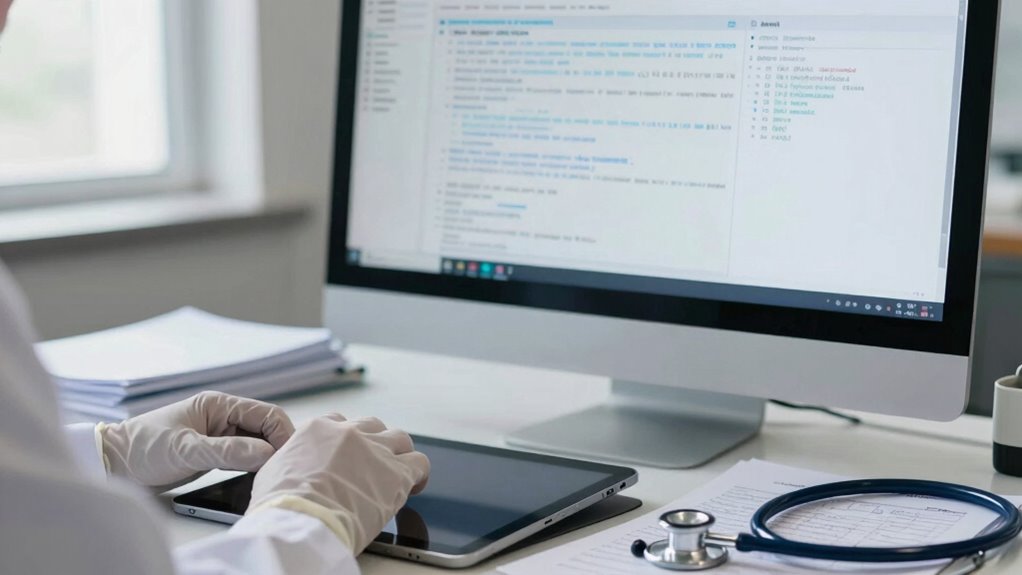

Ambient clinical notes need your review to guarantee they are accurate, complete, and reflect the true patient condition. AI can help generate notes quickly, but it often misses the nuances and subtle cues that only a clinician understands. Mistakes in interpreting language or medical details could affect patient safety. By carefully reviewing these notes, you help maintain documentation quality and reliability. If you want to understand how human oversight improves clinical accuracy, keep exploring this important topic.

Get everyday essentials delivered free with Prime
- Fast, free delivery on millions of items
- Prime Video, Amazon Music and more included
- Member-only deals all year
Key Takeaways
- AI may misinterpret nuanced clinical details, requiring human review to ensure accuracy and context.
- Human oversight is essential to catch errors in AI-generated notes, such as mislabeling symptoms or allergies.
- Clinicians provide critical judgment and insights that AI cannot replicate, safeguarding patient safety.
- Automated notes can overlook subtle cues or ambiguous language, making human validation necessary.
- Ongoing quality control through human review maintains the reliability and integrity of clinical documentation.
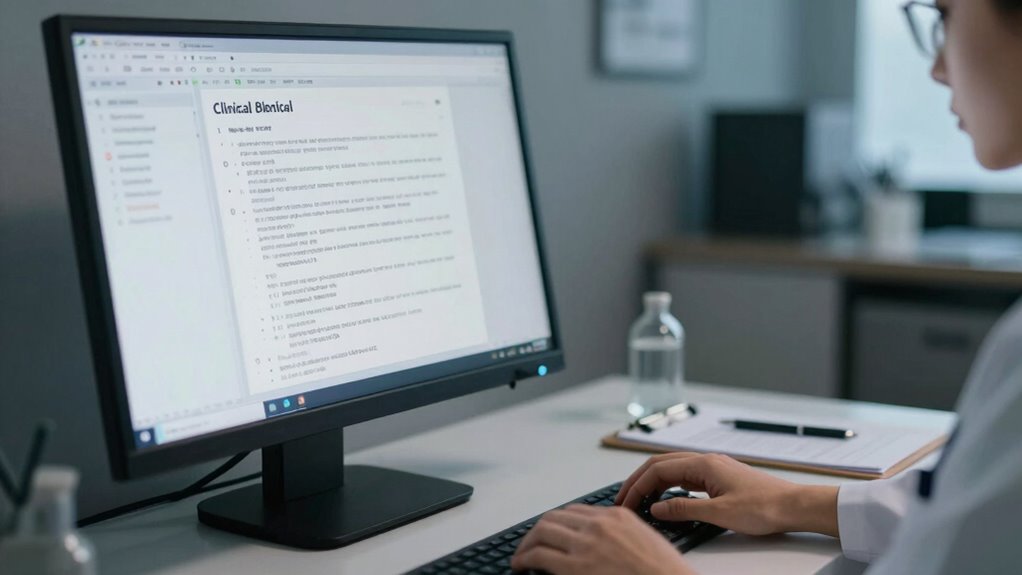
Ambient clinical notes, generated automatically by AI systems, can substantially streamline documentation but aren’t foolproof. While these notes promise to save time and reduce administrative burdens, you need to understand their limitations. Automated accuracy is a key concern because AI tools, despite advances, still struggle with nuances that are second nature to human clinicians. For instance, context-specific details, subtle patient cues, or complex medical jargon can trip up AI algorithms, leading to incomplete or inaccurate notes. This highlights the importance of human review, as it ensures the documentation genuinely reflects the patient’s condition and the clinician’s intent.
AI-generated clinical notes need human review to ensure accuracy and capture nuanced patient details.
AI limitations play a significant role in why these notes require human oversight. While AI can process vast amounts of data quickly, it lacks the critical thinking and clinical judgment that health professionals bring to the table. Automated systems might misinterpret ambiguous language or overlook important context, resulting in errors that could compromise patient safety or care quality. For example, an AI might mislabel a symptom or incorrectly document a medication allergy, which could have serious implications if left uncorrected. Human review becomes essential in catching these inaccuracies, verifying the AI’s output, and adding the contextual insights only a trained clinician can provide. Additionally, understanding the limitations of AI helps clinicians develop strategies to effectively collaborate with these tools, maximizing their benefits while minimizing risks.
You might find that AI-generated notes are efficient—they can draft summaries, transcribe conversations, and organize data rapidly. However, reliance solely on automation can lead to overlooked errors or gaps in documentation. This is because AI, despite its sophistication, isn’t yet capable of understanding the full scope of medical nuances. Its automated accuracy is limited by the quality of the input data and the sophistication of its algorithms. When you review these notes, you can correct misinterpretations, clarify ambiguous language, and ensure the documentation aligns with clinical standards. Furthermore, regular human review is crucial to maintain the integrity and reliability of medical documentation, especially as AI systems continue to evolve. Recognizing how medical documentation differs from general data processing underscores the importance of human oversight in ensuring accuracy.
In addition, incorporating clinical expertise during review helps identify subtle errors that AI might overlook, further safeguarding patient safety. In the end, AI’s role isn’t to replace human clinicians but to support them. The best approach combines the efficiency of ambient clinical notes with the precision and judgment of a healthcare professional. Human review acts as a safeguard, catching AI errors, adding contextual detail, and ensuring the notes serve their purpose in delivering safe, effective patient care. As AI technology advances, ongoing quality control becomes even more essential to uphold the standards of accurate medical recording. By remaining vigilant and engaged, you can leverage AI’s strengths while mitigating its weaknesses, ultimately enhancing the accuracy and reliability of clinical documentation.
As an affiliate, we earn on qualifying purchases.
Frequently Asked Questions
How Often Should Clinical Notes Be Reviewed for Accuracy?
You should review clinical notes regularly, ideally daily or after each patient visit, to guarantee note clarity and data privacy. Frequent reviews catch errors early, improve note accuracy, and maintain high data integrity. By staying vigilant, you prevent potential misunderstandings or privacy breaches, keeping patient information secure. Consistent review helps you provide quality care and uphold compliance standards, making sure your clinical notes are accurate, clear, and protected at all times.
What Specific Errors Are Most Common in Automated Notes?
Machine errors and context gaps are the most common issues in automated notes. You’ll often see inaccuracies in medication names, dosages, or procedure details due to misinterpretations. Context gaps occur when the system misses nuances, like patient history or subtle symptoms, leading to incomplete or misleading notes. These errors highlight why human review is essential to catch mistakes, fill in missing details, and verify accurate, reliable clinical documentation.
How Does Human Review Improve Patient Safety?
You understand that AI oversight, complemented by human review, plays a crucial role in enhancing patient safety by catching subtle errors and ensuring accuracy. This process fosters ethical considerations, ensuring notes reflect genuine clinical judgment rather than automated assumptions. By integrating human insight, you reduce the risk of misunderstandings or overlooked details, ultimately safeguarding patient well-being and maintaining trust in healthcare delivery.
Are There Legal Implications for Incorrect Clinical Documentation?
Incorrect clinical documentation can lead to significant legal liability if it results in misdiagnoses, improper treatment, or patient harm. You’re responsible for maintaining documentation standards that guarantee accuracy and clarity, as courts scrutinize medical records in legal cases. Human review helps catch errors, ensuring your notes meet legal and professional standards, reducing the risk of litigation, and safeguarding both your practice and your patients’ rights.
What Training Is Needed for Effective Review of Ambient Notes?
You need targeted reviewer training to guarantee automated note accuracy. Start by understanding how ambient notes are generated and what common errors to spot. Develop skills in critical analysis and contextual judgment, so you can identify discrepancies or omissions. Familiarize yourself with clinical terminology and documentation standards. This training sharpens your ability to catch mistakes, ensuring that the notes truly reflect patient encounters, and keeps your review process effective and reliable.
medical documentation validation tools
As an affiliate, we earn on qualifying purchases.
As an affiliate, we earn on qualifying purchases.
Conclusion
While ambient clinical notes speed up documentation, don’t forget that they’re not a crystal ball. You’re still the captain steering through a sea of data, ensuring accuracy and context. Imagine a medieval scribe’s quill—no matter how swift the ink flows, it’s your judgment that keeps the story true. So, keep your human eyes on those notes, or risk sending your patient’s story adrift in a fog more impenetrable than the Tower of London.
AI medical note correction tools
As an affiliate, we earn on qualifying purchases.
As an affiliate, we earn on qualifying purchases.
As an affiliate, we earn on qualifying purchases.
Fall Picks
fall essentials
As an affiliate, we earn on qualifying purchases.