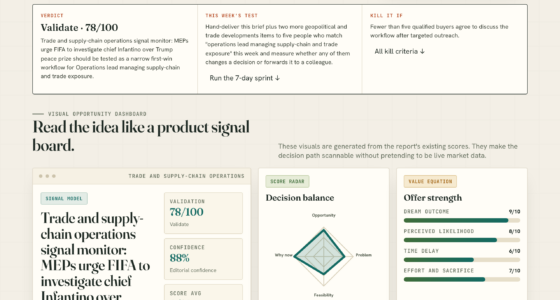

📊 Full opportunity report: When One Agent Isn’t Enough: Claude Now Builds Its Own Team Of Agents On The Fly on ThorstenMeyerAI.com — validation score, market gap, and execution plan.
Open a free Amazon Business account
Business pricing, bulk buying and tax-exempt orders.
Create a free accountAs an affiliate, we earn on qualifying purchases.
TL;DR
Anthropic’s Claude has introduced a new feature called dynamic workflows, allowing it to assemble and orchestrate multiple sub-agents automatically for complex tasks. This capability aims to address limitations of single-agent approaches, improving accuracy and efficiency in high-stakes projects. The development is part of ongoing advancements in AI orchestration, with broader implications for enterprise AI applications.
Anthropic’s Claude now autonomously constructs its own team of agents during complex workflows, enabling it to better handle high-value, multi-faceted tasks. This development aims to mitigate common limitations of single-agent AI, such as partial work, bias, and goal drift, by orchestrating specialized sub-agents on demand.
According to Anthropic, the new feature, called dynamic workflows, allows Claude to write and execute small JavaScript programs that spawn multiple sub-agents, each with focused goals and isolated contexts. These sub-agents can be assigned different model sizes and run in parallel or sequentially, depending on the task’s needs. The process is designed to improve performance on complex projects like code refactoring, research synthesis, and large-scale verification.
Anthropic emphasizes that this approach is especially useful for tasks where a single agent might underperform due to laziness, bias, or goal drift. By dividing work and introducing independent verification steps, Claude can produce more accurate, reliable outputs. The system can also resume interrupted workflows and tailor its orchestration dynamically, making it adaptable to various high-stakes scenarios.
Under the hood, the feature leverages a small JavaScript program that manages sub-agent creation, coordination, and data handling. It can decide which model to use for each sub-task and whether agents should operate in isolated worktrees to prevent interference. The company notes that this capability was shipped alongside Claude Opus 4.8, and it is targeted at enterprise users requiring complex, high-value automation.
When one agent isn’t enough: Claude now builds its own team on the fly
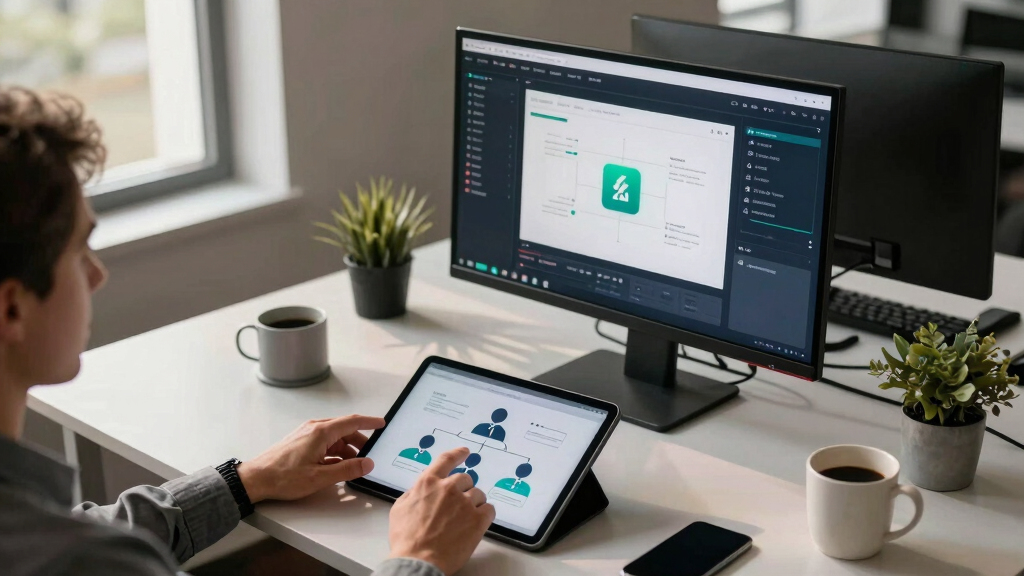
Skills package what you know; loops decide how far you delegate over time. Dynamic workflows are the third axis — within a single task, Claude writes its own harness and assembles a temporary team of subagents. Think of it as Claude drawing an org chart for one job.
The shift is from prompting a worker to commissioning a team — more output, more cost, and a manager’s judgment required. Reach for a workflow when a task is big, parallel, adversarial, or judgment-heavy — and when you can feel a single agent getting lazy, grading its own homework, or losing the plot. Bound it (token budgets, pilot first) — workflows can spawn hundreds of agents and burn far more tokens. For everything else, don’t hire five people to change a lightbulb.
Enhanced AI Collaboration for Complex Tasks
This development signifies a major step forward in AI orchestration, enabling Claude to perform multi-agent collaboration autonomously. For organizations, this means more reliable, efficient handling of complex workflows that previously required manual oversight or multiple AI systems. It could lead to broader adoption of AI in areas demanding high accuracy and multi-step reasoning, such as legal review, scientific research, and large-scale coding projects.
By automating team assembly within AI workflows, Claude reduces the need for human intervention in managing multiple AI components, potentially lowering costs and increasing throughput. However, it also raises questions about the transparency and control of such autonomous orchestration, which are still being explored.
AI multi-agent orchestration software
As an affiliate, we earn on qualifying purchases.
As an affiliate, we earn on qualifying purchases.
Evolution of AI Workflow Automation
Anthropic’s recent innovations build on prior work with Claude’s skills package, looping, and orchestration capabilities. Previously, AI models operated within fixed contexts, limiting their ability to handle extended or complex tasks without human oversight. The introduction of dynamic workflows marks a shift toward AI systems that can self-organize and adapt their internal structure based on task requirements.
This approach echoes broader trends in AI development, where modular, multi-agent systems are increasingly used to tackle problems too large or complex for a single model. The concept of AI writing its own orchestration code is a significant milestone, demonstrating progress toward autonomous AI teams capable of managing intricate projects without constant human guidance.
While similar multi-agent frameworks have existed in research, Anthropic’s integration into Claude represents a move toward practical deployment in enterprise environments, emphasizing versatility and scalability.
“Claude’s ability to autonomously generate and coordinate sub-agents is a game-changer for high-value workflows.”
— Thorsten Meyer, AI researcher at Anthropic
As an affiliate, we earn on qualifying purchases.
Scope and Limitations of Autonomous Agent Teams
It is not yet clear how widely this feature will be adopted outside of experimental or enterprise settings. Details about the robustness of the orchestration in unpredictable or highly adversarial environments remain under development. Additionally, the extent to which users can customize or control the internal decision-making of these autonomous teams is still being explored.
Questions also remain about how the system handles failures or unexpected interruptions during complex workflows, and how transparent the process is to end-users.
As an affiliate, we earn on qualifying purchases.
Next Steps for Deployment and User Feedback
Anthropic plans to roll out the dynamic workflows feature to select enterprise clients for further testing and refinement. The company will monitor performance, reliability, and user feedback to improve the orchestration algorithms. Future updates may include enhanced control options, better failure handling, and expanded use cases.
Meanwhile, industry observers will watch for how this capability influences AI development trends and whether other providers adopt similar multi-agent orchestration techniques.
AI sub-agent coordination software
As an affiliate, we earn on qualifying purchases.
As an affiliate, we earn on qualifying purchases.
Key Questions
How does Claude decide when to build a team of agents?
Claude assesses the complexity and requirements of a task and determines if a multi-agent approach will improve performance, such as when handling long, multi-step projects or verification-heavy tasks.
Can users customize the agents or workflows?
Currently, the system autonomously generates workflows based on task prompts, but future updates may allow more user customization and control over the orchestration process.
What types of tasks benefit most from this feature?
Complex research, code refactoring, fact-checking, and large-scale verification are examples where dynamic workflows can significantly enhance accuracy and efficiency.
Are there limitations or risks associated with autonomous agent teams?
Potential concerns include reduced transparency, difficulty in debugging, and handling failures in multi-agent coordination, which Anthropic aims to address in ongoing development.
Source: ThorstenMeyerAI.com
NFL season / tailgating Picks
team gear
As an affiliate, we earn on qualifying purchases.