
📊 Full opportunity report: Software-Defined Warfare: How Ukraine’s Delta Turned the Battlefield Into a Shared, Real-Time Map on ThorstenMeyerAI.com — validation score, market gap, and execution plan.

Get everyday essentials delivered free with Prime
- Fast, free delivery on millions of items
- Prime Video, Amazon Music and more included
- Member-only deals all year
TL;DR
Ukraine’s military has implemented Delta, a cloud-native, browser-based battlefield management system that fuses real-time intelligence from diverse sources. This innovation exemplifies ‘software-defined warfare,’ shifting advantage from hardware to data and software. Its deployment enhances Ukraine’s operational speed and resilience, with broader implications for modern military strategy.
Ukraine’s military has officially deployed Delta, a cloud-native, browser-based battlefield management system, significantly enhancing real-time situational awareness and operational coordination on the front lines. This development marks a major shift toward software-defined warfare, where data and software take precedence over traditional hardware platforms, offering greater flexibility, resilience, and reach.
Delta is a collaborative project involving Ukraine’s NGO Aerorozvidka, the Defense Ministry’s innovation center, and the Ministry of Digital Transformation. It integrates inputs from drones, satellites, sensors, and intelligence sources into a unified, geolocated map accessible on any device with a browser, including phones and tablets. The system shortens the decision cycle by enabling rapid identification and response to enemy targets, with Ukraine claiming it helped identify approximately 1,500 targets daily during recent counteroffensives. The backend is hosted outside Ukraine to protect against missile and cyber threats, a decision that underscores the system’s emphasis on resilience and sovereignty. The approach reflects a broader shift in military strategy, emphasizing agility, interoperability, and data-driven operations over traditional hardware-centric models.Software-defined warfare: how Ukraine’s Delta turned the battlefield into a shared, real-time map
A soldier opens a browser and sees the fused war — drones, satellites, sensors and vetted reports on one live map. The backend is a cloud deliberately hosted abroad so a missile can’t take it down. The clearest case yet of treating warfare as software.
Optical sensors go blind in cloud & dark; an all-weather SAR radar layer — the kind VigilSAR produces — slots into a picture like this as one resilient, sovereign input. vigilsar.com · And note the paradox: to survive missiles & cyberattack, Ukraine hosted its crown-jewel cloud outside its own borders — trading physical sovereignty for operational survivability. Resilience through distribution.
Delta’s lasting lesson isn’t a piece of software — it’s a model of how to build: commodity clients, cloud backend, open standards, relentless iteration, fusion over hardware, and resilience through distribution. It’s why a wartime NGO out-shipped procurement bureaucracies on a fraction of the budget. The platform mattered less than the picture — and the picture is software. Own the fusion layer, own the sovereign feeds into it, and get it to the edge.
Implications of Cloud-Based, Browser-Accessible Warfare
The deployment of Delta demonstrates a fundamental change in military operations, emphasizing software and data as primary assets. Its cloud-based design allows for rapid updates, widespread access, and increased resilience against cyber and physical attacks. This model reduces costs and procurement times, enabling smaller or less-funded forces to achieve operational parity with larger militaries. The emphasis on interoperability and real-time data fusion enhances Ukraine’s ability to coordinate complex operations swiftly, potentially setting a new standard for modern warfare. The move also raises questions about sovereignty and security, as critical command systems are hosted outside national borders, requiring careful balancing of accessibility and protection.browser-based battlefield management system
As an affiliate, we earn on qualifying purchases.
As an affiliate, we earn on qualifying purchases.
Evolution Toward Software-Defined Military Operations
Since 2017, NATO initiatives have encouraged sharing intelligence horizontally across forces, breaking traditional siloed structures inherited from Soviet-era practices. Ukraine’s Delta system is a practical realization of this shift, developed rapidly through a startup-like collaboration among NGOs, government agencies, and defense contractors. The concept of fusion—integrating diverse intelligence feeds into a single, actionable picture—has long been recognized as a force multiplier. Ukraine’s experience with Delta exemplifies how this approach can be operationalized in a conflict zone, providing a template for future military modernization efforts worldwide. The system’s ability to fuse multiple sensor types, including synthetic aperture radar and optical imagery, enhances operational resilience, especially in adverse weather or darkness.“Delta represents a new era of warfare—where speed, interoperability, and data sovereignty define success.”
— Mykhailo Fedorov, Ukraine’s Minister of Digital Transformation
cloud-native military data sharing software
As an affiliate, we earn on qualifying purchases.
As an affiliate, we earn on qualifying purchases.
Uncertainties About System Security and Deployment
It is not yet clear how Ukraine will further secure Delta’s cloud infrastructure, especially given the hosting outside the country. Details about the system’s resistance to sophisticated cyberattacks and potential vulnerabilities remain undisclosed. Additionally, the full scope of its integration with other military assets and its long-term operational stability are still under evaluation.real-time situational awareness tools
As an affiliate, we earn on qualifying purchases.
As an affiliate, we earn on qualifying purchases.
Next Steps for Delta’s Expansion and Evaluation
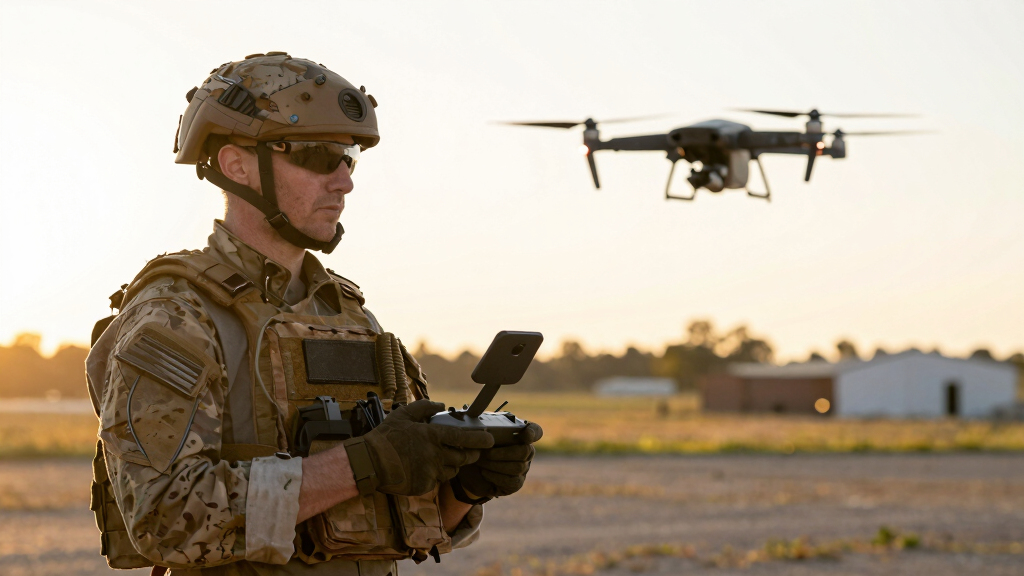
Ukraine plans to expand Delta’s capabilities, including integrating more sensor types and enhancing AI-driven analysis. The government will likely monitor its operational performance and security, possibly sharing lessons learned with allied nations. Further updates are expected as the system is tested in various combat scenarios, and as Ukraine assesses its resilience against evolving threats.military drone surveillance equipment
As an affiliate, we earn on qualifying purchases.
As an affiliate, we earn on qualifying purchases.
Key Questions
How does Delta improve Ukraine’s battlefield operations?
Delta provides a unified, real-time picture of the battlefield, enabling faster decision-making, better coordination, and more accurate targeting, all accessible via common devices.
What makes Delta different from traditional military systems?
It is cloud-based, browser-accessible, and built on a flexible, software-centric model that allows rapid updates and widespread deployment without specialized hardware.
Why did Ukraine host Delta’s cloud outside its borders?
To protect sensitive command data from missile strikes and cyberattacks, Ukraine approved hosting the system outside the country, balancing security and operational resilience.
Could other countries adopt similar systems?
Yes, the Delta model demonstrates how commodity hardware and cloud-based software can transform military operations, and other nations are studying this approach for modernization.
What are the risks associated with hosting military data abroad?
Hosting critical command systems outside national borders raises concerns about sovereignty, access control, and vulnerability to external cyber threats, which Ukraine continues to evaluate.
Source: ThorstenMeyerAI.com
Halloween Picks
halloween
As an affiliate, we earn on qualifying purchases.