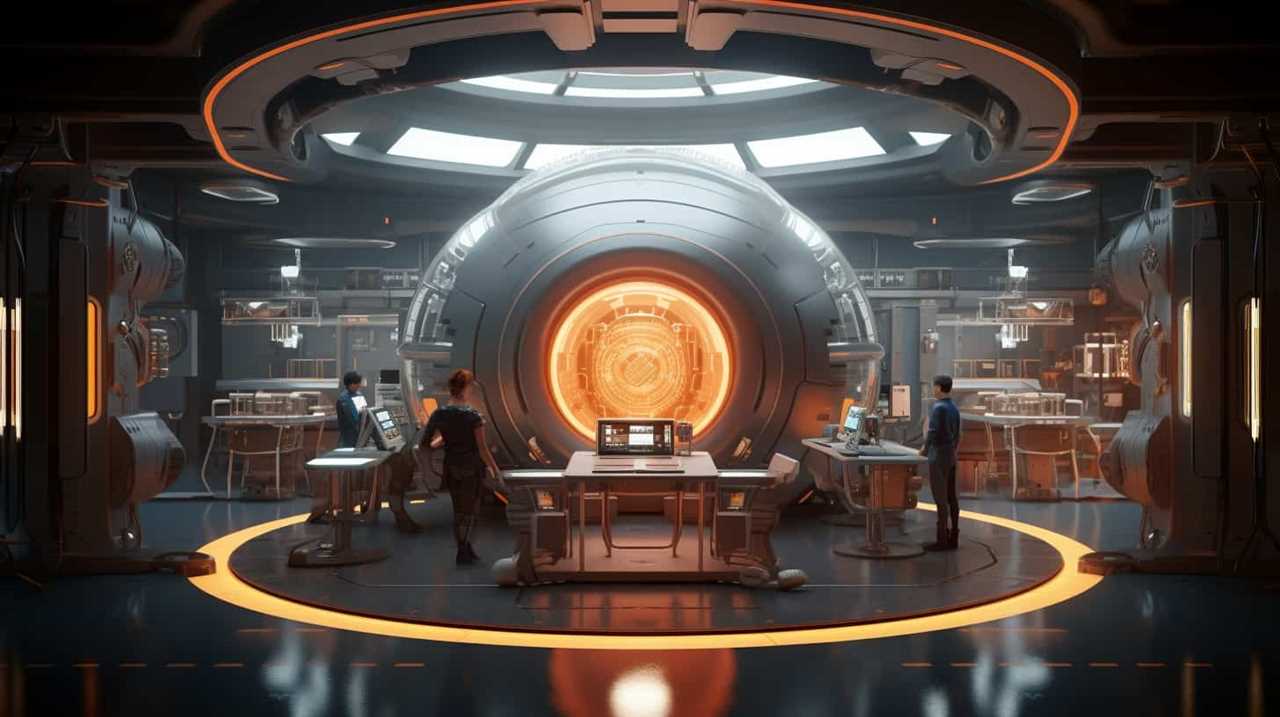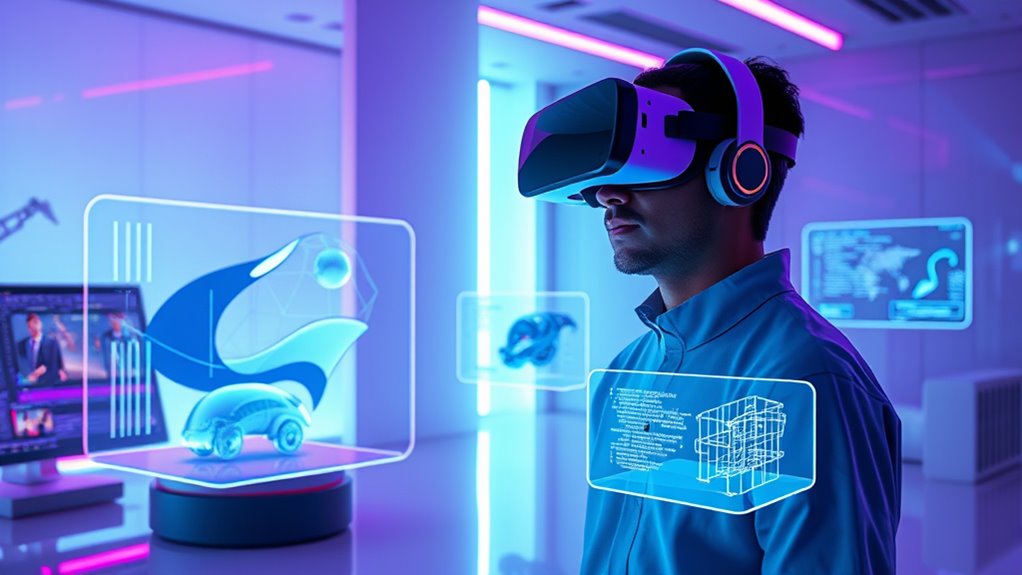

AI is transforming virtual-reality filmmaking by making stories more immersive and interactive. It enables real-time rendering, so you can instantly see changes and experiment freely. AI also automates tasks like environment creation and character animation, giving you more time to focus on storytelling. Personalized experiences adapt to viewer preferences, deepening engagement. If you want to discover how AI is shaping the future of VR filmmaking, keep exploring the latest innovations.
Key Takeaways
- AI enhances immersive storytelling by enabling interactive, adaptive VR experiences where viewers actively participate.
- Real-time rendering powered by AI accelerates scene creation, allowing instant visual feedback and creative flexibility.
- AI automates tasks like motion capture cleanup and environment generation, streamlining VR production workflows.
- Personalized AI-driven experiences tailor storylines and interactions to individual viewer preferences for deeper engagement.
- AI supports the development of visually compelling, highly interactive VR narratives, pushing the boundaries of virtual filmmaking.

Artificial intelligence is transforming virtual-reality filmmaking by enabling creators to craft more immersive and interactive experiences. With AI-powered tools, you can develop stories that draw viewers deeper into the narrative, making them feel like active participants rather than passive spectators. This shift toward immersive storytelling means your audience isn’t just watching a story unfold; they’re living it, exploring environments, and engaging with characters in real time. AI facilitates this by streamlining the creation process and providing dynamic, adaptive content that responds to user interactions, making each experience unique.
One of the key ways AI enhances virtual-reality filmmaking is through real-time rendering. Traditionally, rendering high-quality visuals requires significant time and computational power, which can slow down production and limit creative flexibility. Now, with AI-driven real-time rendering, you can see instant visual feedback as you design scenes, adjust lighting, and modify environments. This immediate response saves you time and allows for rapid iteration, ensuring your virtual worlds are both visually stunning and technically precise. The ability to render complex scenes on the fly also means you can experiment more freely, creating richer, more detailed virtual spaces that captivate your audience.
AI also aids in automating tedious tasks such as motion capture cleanup, environment generation, and character animation. Instead of spending hours refining every detail manually, you can rely on AI algorithms to handle these processes efficiently. This automation not only speeds up production but also frees you up to focus on storytelling, creative direction, and innovation. As a result, your virtual environments become more believable and engaging, with realistic movements and seamless interactions that heighten the sense of presence.
Furthermore, AI enables personalized experiences within VR films. By analyzing user behavior and preferences, AI can adapt storylines and interactions in real time, tailoring each virtual journey to individual viewers. This personalization deepens engagement, making viewers feel more connected to the narrative and characters. It also opens up new opportunities for branching stories and interactive elements that respond authentically to user choices, creating a truly unique experience for each person.
In essence, AI acts as a powerful partner in virtual-reality filmmaking, enhancing both the technical and creative aspects. It empowers you to craft immersive stories that are visually compelling, highly interactive, and personalized. As AI continues to evolve, expect virtual-reality films to become even more dynamic and engaging, blurring the lines between fiction and reality. You’re at the forefront of this revolution, shaping experiences that captivate and inspire audiences in ways never before possible. Additionally, understanding battery technologies and power solutions can ensure your VR setups are portable and sustainable, allowing you to create immersive experiences anywhere.
Top picks for "virtual reality filmmak"
Open Amazon search results for this keyword.
As an affiliate, we earn on qualifying purchases.
Frequently Asked Questions
How Does AI Improve User Immersion in VR Films?
AI improves your immersion in VR films by enabling interactive storytelling, where your choices influence the narrative, making you feel more connected. It also enhances your sensory experience through real-time adjustments, creating a more realistic environment. AI analyzes your reactions and adapts visuals, sounds, and interactions, pulling you deeper into the story. This seamless integration makes the experience more engaging, personal, and convincing, boosting your overall sense of presence and immersion.
What Ethical Challenges Arise From Ai-Generated VR Content?
You face ethical challenges like data privacy and consent issues with AI-generated VR content. Did you know that 85% of users worry about how their data is used? AI can personalize experiences, but it may collect sensitive data without clear consent. This raises concerns about privacy breaches and manipulation. You must guarantee transparent data practices and obtain informed consent to respect users’ rights and maintain trust in immersive environments.
Can AI Customize VR Experiences for Individual Viewers?
Yes, AI can customize VR experiences for you by creating personalized narratives and adaptive environments. It analyzes your preferences, behaviors, and reactions to tailor the content specifically to you. This means your virtual world can evolve dynamically, offering a more immersive and engaging experience. As a result, you get a unique journey every time, making VR more meaningful and relevant to your interests and emotional responses.
How Is Real-Time AI Editing Used During VR Filmmaking?
You’re witnessing a filmmaking revolution where real-time AI editing transforms your VR experience instantly. It’s like having a superpower that shapes AI storytelling and Virtual environment generation on the fly, adapting scenes and narratives in seconds. This technology allows you to immerse yourself in dynamic worlds that evolve as you explore, creating a truly personalized adventure. With AI’s quick edits, your VR journey becomes more immersive, engaging, and impossible to predict—an exhilarating leap forward in filmmaking.
What Are the Costs Associated With Integrating AI in VR Production?
You’ll face costs like hardware expenses for powerful servers and VR equipment, plus licensing fees for AI software. These investments can add up quickly, especially if you need advanced processing power or specialized tools. Budget for ongoing maintenance and updates too, as AI technology evolves. While initial costs can be high, the efficiency and creative potential AI offers in VR production can make it a worthwhile investment over time.
Conclusion
Imagine stepping into a vast, boundless forest where every path you take reveals a new story. Just like a skilled guide, AI and virtual reality open up endless worlds for you to explore and create. They’re your compass and map, transforming filmmaking into an immersive adventure. Embrace this journey, for with these tools, you’re not just a viewer—you become the explorer, shaping realities with each decision. The future of storytelling is yours to forge.