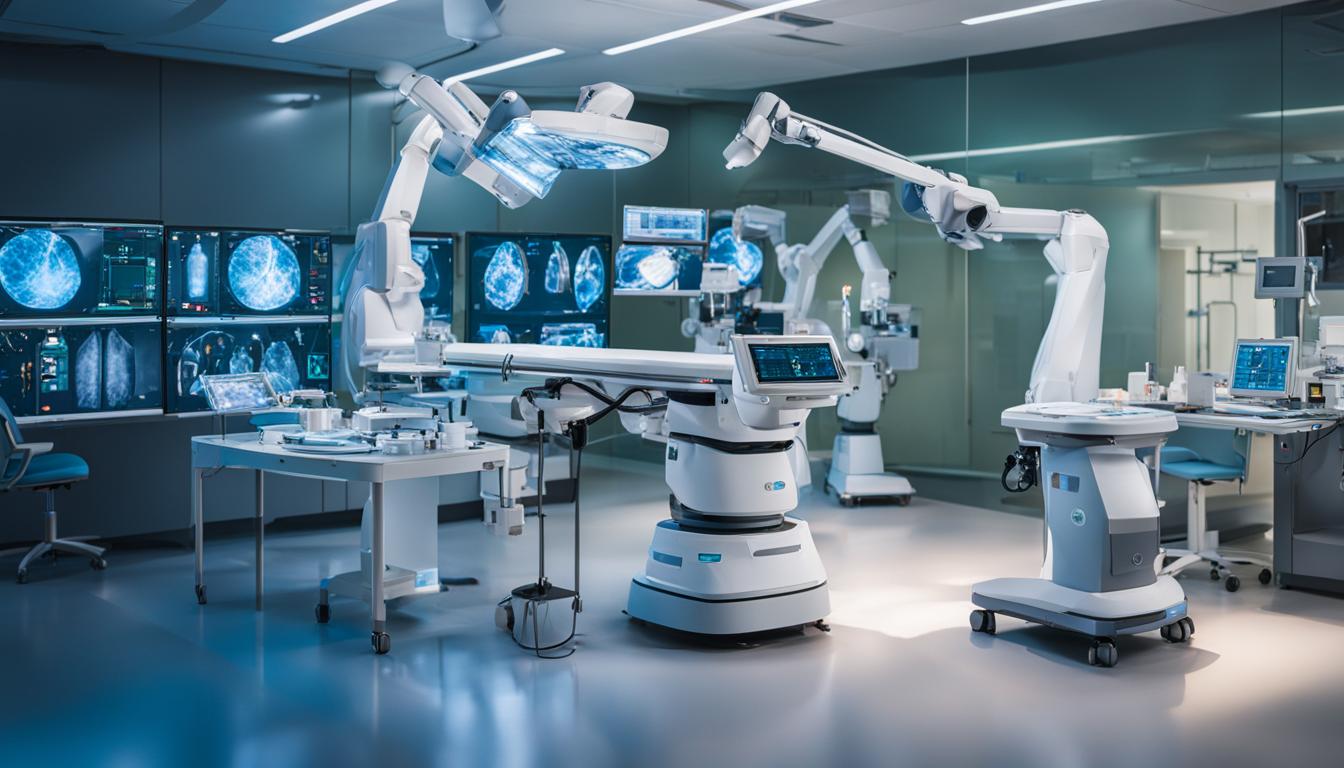
AI plays a vital role in hospital capacity planning by analyzing real-time data to make accurate, proactive predictions about patient flow. It helps you allocate resources like staff, beds, and equipment more efficiently, reducing waste and preventing overcrowding. This approach moves you away from reactive decisions, allowing for better coordination across departments and quicker responses to emergencies. If you want to discover how AI can transform your hospital’s operations, keep exploring its powerful benefits.

Get everyday essentials delivered free with Prime
- Fast, free delivery on millions of items
- Prime Video, Amazon Music and more included
- Member-only deals all year
Key Takeaways
- AI analyzes real-time data to enable proactive, accurate hospital capacity predictions and resource allocation.
- It incorporates diverse data sources, including patient flow patterns and local events, for precise forecasting.
- AI-driven planning optimizes staffing, beds, and equipment, reducing waste and improving patient safety.
- It enhances coordination across departments, minimizing wait times and preventing overcrowding.
- AI supports flexible, data-backed decisions, leading to better outcomes and efficient resource utilization.

Have you ever wondered how hospitals determine the right number of beds and staff to handle patient influxes? It’s a complex process that relies heavily on understanding patient flow and making smart resource allocation decisions. Traditionally, hospitals have used historical data and basic forecasting methods to plan capacity, but these approaches often fall short during unexpected surges or seasonal peaks. That’s where AI steps in, transforming how healthcare facilities manage their resources with greater accuracy and agility.
AI models analyze vast amounts of real-time data—such as admission rates, outpatient visits, emergency cases, and even local events that could influence patient numbers. By doing so, AI can predict patient flow with remarkable precision, enabling hospitals to anticipate busy periods well in advance. This proactive approach means you can prepare for patient surges rather than react to them after the fact. For instance, if AI forecasts a spike in emergency visits over the coming weeks, hospitals can temporarily increase staffing, open extra beds, or allocate resources to critical areas to ensure patient care isn’t compromised.
AI predicts patient flow with precision, enabling proactive staffing and resource adjustments to manage surges effectively.
Resource allocation becomes more efficient when guided by AI insights. Instead of relying solely on fixed schedules or rough estimates, hospitals can dynamically adjust staffing levels, equipment availability, and bed capacity based on predicted demand. This not only minimizes waste—such as underutilized beds or overstaffed shifts—but also maximizes patient safety and satisfaction. AI can identify patterns and trends, highlighting bottlenecks or areas where capacity might fall short, so administrators can make informed decisions about expanding or shifting resources. Incorporating predictive analytics into planning processes further enhances this process by enabling more precise forecasts.
Moreover, AI-driven capacity planning fosters better coordination across departments. When everyone works with a shared, data-backed forecast, it’s easier to streamline patient flow from admission to discharge. This reduces wait times, prevents overcrowding, and enhances overall hospital efficiency. It also helps in responding swiftly to emergencies or sudden outbreaks, ensuring that resources are allocated where they’re needed most without delay. Incorporating patient flow insights from multiple sources can help hospitals respond more swiftly to changing circumstances. Additionally, understanding the accuracy of data and ensuring proper calibration can significantly improve the reliability of AI predictions.
In essence, AI empowers hospitals to move beyond guesswork and reactive planning. With its ability to analyze complex data and generate actionable insights, AI makes capacity planning more precise, flexible, and responsive. As a result, you benefit from improved patient outcomes, optimized use of resources, and a healthcare environment better equipped to handle the unpredictable nature of patient flow.
As an affiliate, we earn on qualifying purchases.
Frequently Asked Questions
How Does AI Handle Data Privacy in Hospital Capacity Planning?
AI handles data privacy in hospital capacity planning by using data encryption to protect sensitive information and ensuring privacy compliance with regulations like HIPAA. You can trust that AI systems securely encrypt patient data, preventing unauthorized access. These systems also follow strict privacy standards, so your hospital remains compliant while leveraging AI’s power to optimize capacity. This balance helps deliver efficient care without compromising patient confidentiality.
Can AI Predict Future Healthcare Trends Accurately?
Yes, AI can predict future healthcare trends accurately through predictive analytics and data integration. You can rely on AI algorithms to analyze vast amounts of historical data, identify patterns, and forecast upcoming trends. This helps you make informed decisions, allocate resources efficiently, and prepare for shifts in patient needs. While predictions are not perfect, continuous learning and data updates improve AI’s accuracy over time, making it a valuable tool for forecasting healthcare developments.
What Are the Limitations of AI in Hospital Resource Management?
You should be aware that AI in hospital resource management faces limitations like ethical considerations and technology integration challenges. AI algorithms might lack transparency, making it hard to trust decisions, and integrating new technology can disrupt existing workflows. Additionally, ethical concerns about data privacy and bias can hinder adoption. These issues highlight that AI isn’t a perfect solution yet, requiring careful oversight and ongoing refinement to guarantee effective and responsible resource management.
How Do Staff Adapt to Ai-Driven Planning Systems?
Staff smoothly adapt to AI-driven planning systems through thorough training and seamless workflow integration. You’ll find that consistent coaching helps you grasp new tools quickly, while integrating AI into daily routines reduces resistance. Embrace change by proactively participating in training sessions, asking questions, and collaborating with tech teams. This active approach boosts confidence, clarifies processes, and ultimately transforms your workflow, making hospital operations more efficient and responsive.
Is AI Cost-Effective for Small Hospitals?
Yes, AI can be cost-effective for small hospitals when you conduct a thorough cost analysis beforehand. While initial technology integration might seem expensive, it often leads to long-term savings through optimized staffing and resource allocation. You should consider the potential for improved patient outcomes and operational efficiency, which can justify the investment. Ultimately, careful planning guarantees AI adoption benefits your hospital without overwhelming your budget.
As an affiliate, we earn on qualifying purchases.
Conclusion
By now, you’ve seen how AI transforms hospital capacity planning, making it more accurate and efficient. Did you know that AI-driven models can reduce patient wait times by up to 30%? This innovative technology not only improves resource allocation but also enhances patient care. Embracing AI means you’re stepping into a future where hospitals can better anticipate needs, saving lives and optimizing operations. It’s time to harness AI’s potential for a healthier tomorrow.
hospital staffing optimization software
As an affiliate, we earn on qualifying purchases.
As an affiliate, we earn on qualifying purchases.
emergency department capacity planning tools
As an affiliate, we earn on qualifying purchases.
As an affiliate, we earn on qualifying purchases.
Evergreen bestsellers Picks
bestsellers
As an affiliate, we earn on qualifying purchases.