
When considering AI-created actors, you should think about ownership rights, ethical use of likenesses, and societal impacts. It’s vital to respect copyright laws and obtain proper consent, especially when reproducing real individuals. Transparency about virtual actors helps maintain audience trust and avoids deception. Balancing innovation with respect for personal identity and industry standards is essential. To explore how to navigate these challenges responsibly, keep exploring these important ethical considerations.
Key Takeaways
- Ensuring proper consent and respecting identity rights prevent exploitation of real individuals’ likenesses in AI-generated actors.
- Clarifying ownership and licensing rights over AI-created performances avoids legal disputes and infringement issues.
- Maintaining transparency about virtual actors upholds audience trust and prevents deception.
- Responsible data sourcing and ethical AI training practices reduce misuse and uphold societal standards.
- Addressing industry impacts balances technological innovation with fair opportunities for human performers.
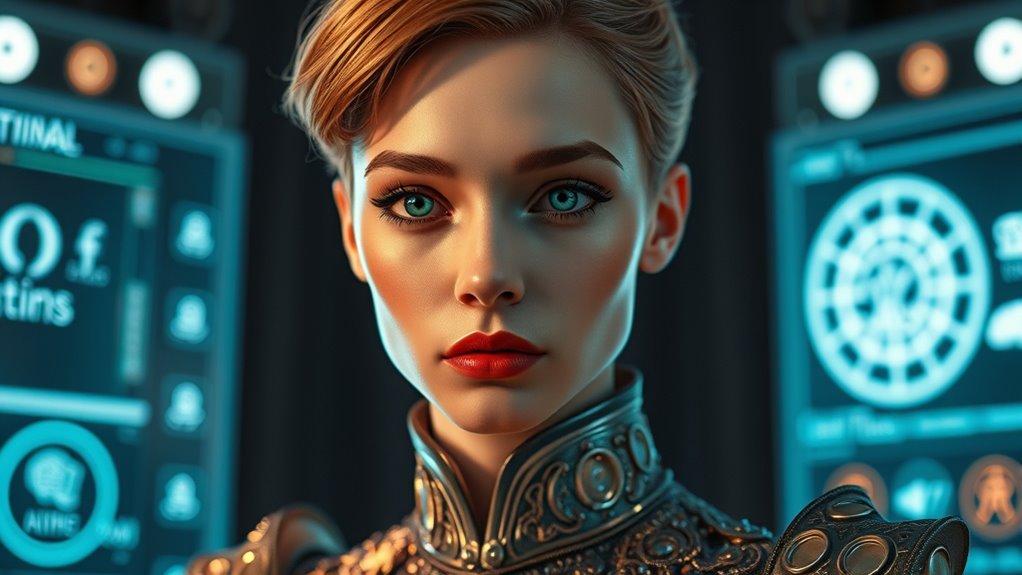
Artificial intelligence is revolutionizing the entertainment industry by creating virtual actors that can perform seamlessly on screen. These AI-generated performers open up exciting possibilities for filmmakers and studios, allowing for more flexible storytelling and cost-effective productions. However, as you explore this new frontier, you need to consider the complex ethical landscape surrounding these digital entities. One of the most pressing issues is copyright rights. When an AI creates a virtual actor, questions arise about who owns the likeness, performances, and underlying data used to generate that character. Is it the developer, the studio, or the person whose image was used as a reference? These are critical legal concerns because, without clear ownership rights, disputes could emerge over royalties, licensing, and control of the virtual actor’s image. You must navigate these copyright issues carefully to avoid infringing existing rights or creating legal vulnerabilities for your projects.
Alongside copyright concerns, identity rights form a core part of the ethical debate. When you employ AI to recreate a famous actor’s likeness, you tread into sensitive territory regarding personal identity and consent. The individual’s right to control how their image is used extends even after their death, and digital recreations can blur these boundaries. If a virtual actor resembles a real person, especially someone who hasn’t consented, it raises questions about exploitation and misrepresentation. Are you respecting the person’s identity rights? Are you ensuring that the portrayal aligns with their wishes or legacy? These considerations become even more critical when you realize that AI can generate images and performances that are indistinguishable from real actors, potentially manipulating audience perceptions or misusing the individual’s identity for commercial gain. Additionally, the ethical implications of using vetted data to train AI actors emphasize the importance of source integrity and responsible AI development.
Furthermore, ethical considerations extend beyond legal concerns to the broader societal implications. Using AI-created actors may diminish opportunities for human performers, impacting their careers and livelihoods. You should think about the message it sends—are you devaluing human talent or merely expanding creative horizons? Striking a balance between innovation and respect for individual rights is key. Transparency becomes crucial here: informing audiences when they’re watching a virtual actor helps maintain trust and avoids deception. As you incorporate AI-generated performances into your projects, always be mindful of these ethical implications, respecting copyright and identity rights, and ensuring that your creative advancements don’t come at the expense of personal dignity or legal integrity.
![WavePad Audio Editing Software - Professional Audio and Music Editor for Anyone [Download]](https://m.media-amazon.com/images/I/B1fcLEGCs6S._SL500_.png)
WavePad Audio Editing Software – Professional Audio and Music Editor for Anyone [Download]
Full-featured professional audio and music editor that lets you record and edit music, voice and other audio recordings
As an affiliate, we earn on qualifying purchases.
As an affiliate, we earn on qualifying purchases.
Frequently Asked Questions
Can Ai-Created Actors Replace Human Actors Entirely?
AI-created actors could eventually replace human actors in some roles, especially with advances in digital impersonation, but they won’t fully capture the essence of human emotion. Your audience still craves authentic storytelling and creative authenticity, which AI struggles to replicate completely. While AI can enhance performances or fill specific needs, it’s unlikely to replace human actors entirely, as genuine human expression remains irreplaceable in meaningful storytelling.
How Do AI Actors Impact Actors’ Employment Opportunities?
AI actors can reduce some employment opportunities for human actors through digital impersonation, making it easier for productions to cut costs. While they offer innovative possibilities, they also challenge creative authenticity by potentially replacing genuine performances. You might find more roles in projects that value human emotion and originality, but widespread use of AI actors could limit opportunities for actors who rely on traditional acting gigs, impacting the industry’s diversity and talent pool.
Who Owns the Rights to Ai-Generated Performances?
You own the rights to AI-generated performances if you created or commissioned them, but it depends on intellectual property laws and your agreement. Typically, creative ownership stays with the creator or the entity that holds the rights, unless explicitly transferred. Be clear about intellectual property rights in contracts to avoid disputes. Ultimately, ownership hinges on legal frameworks and how rights are assigned or licensed, ensuring your creative contributions are protected.
Are AI Actors Capable of Emotional Expression?
AI actors can mimic emotional expression through advanced algorithms, but their emotional authenticity remains limited. While their expressive capabilities allow them to portray feelings convincingly, they don’t genuinely experience emotions like humans do. You might notice subtle nuances that make their performances seem authentic, yet true emotional depth is still a challenge. So, while AI actors can simulate emotional expression effectively, their expressive capabilities lack the genuine emotional authenticity that human actors bring to performances.
How Is Consent Managed for AI Replication of Real Actors?
You should know that consent for AI replication of real actors is managed through strict consent protocols, ensuring digital authenticity. When creating AI versions, studios typically obtain explicit permission from actors beforehand, respecting their rights and privacy. These protocols help maintain transparency and ethical standards, so you can trust that actors’ digital likenesses aren’t used without their informed consent, safeguarding their image and reputation in the digital domain.

Patent Intermediaries: 'New' Actors in the Intellectual Property Market
As an affiliate, we earn on qualifying purchases.
As an affiliate, we earn on qualifying purchases.
Conclusion
As you navigate this new frontier, remember that AI-created actors are like double-edged swords—offering exciting possibilities but also cutting deep into ethics. You hold the power to shape a future where technology and morality dance in harmony, ensuring that these digital performers serve humanity’s best interests. Stay vigilant, because in this evolving landscape, your choices are the compass guiding us through the stormy seas of innovation and ethics alike.

No to AI Generated Images Stop Sign, Anti AI-Generated Art T-Shirt
Anti AI Art design. Protest symbol against AI-generated artwork
As an affiliate, we earn on qualifying purchases.
As an affiliate, we earn on qualifying purchases.

Teaching in the Age of AI: The Vibe Teaching System for Human-Centered, Ethical, and Future-Ready Education
As an affiliate, we earn on qualifying purchases.
As an affiliate, we earn on qualifying purchases.