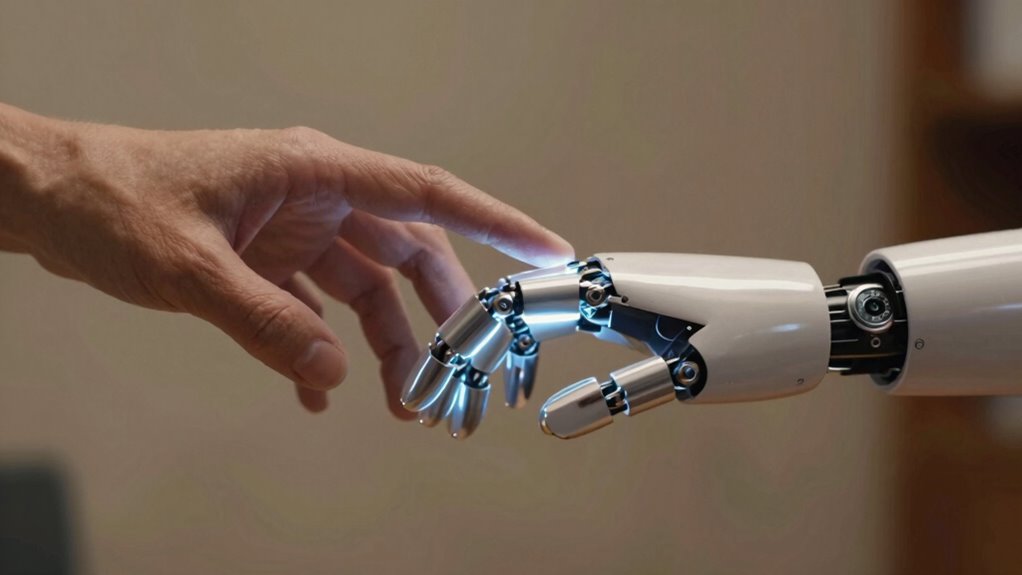

AI changes the meaning of emotional availability by mimicking empathy through programmed responses, creating a false sense of connection. While it can provide comfort and personalized interaction, it lacks genuine understanding and deep emotional insight that human relationships offer. Relying on AI for emotional support might make you feel supported temporarily but can reduce your openness to authentic human connections. If you want to understand how this influences your relationships further, you’ll find valuable insights ahead.

Get everyday essentials delivered free with Prime
- Fast, free delivery on millions of items
- Prime Video, Amazon Music and more included
- Member-only deals all year
Key Takeaways
- AI simulates emotional availability but lacks genuine human empathy and understanding.
- Personalization in AI interactions creates a false sense of closeness, affecting perceptions of authentic emotional connection.
- Increased reliance on AI for emotional support may reduce motivation to seek real human relationships.
- AI’s ability to mimic emotional availability can temporarily fulfill emotional needs without true reciprocation.
- Recognizing AI’s limitations helps maintain realistic expectations of emotional support and availability.
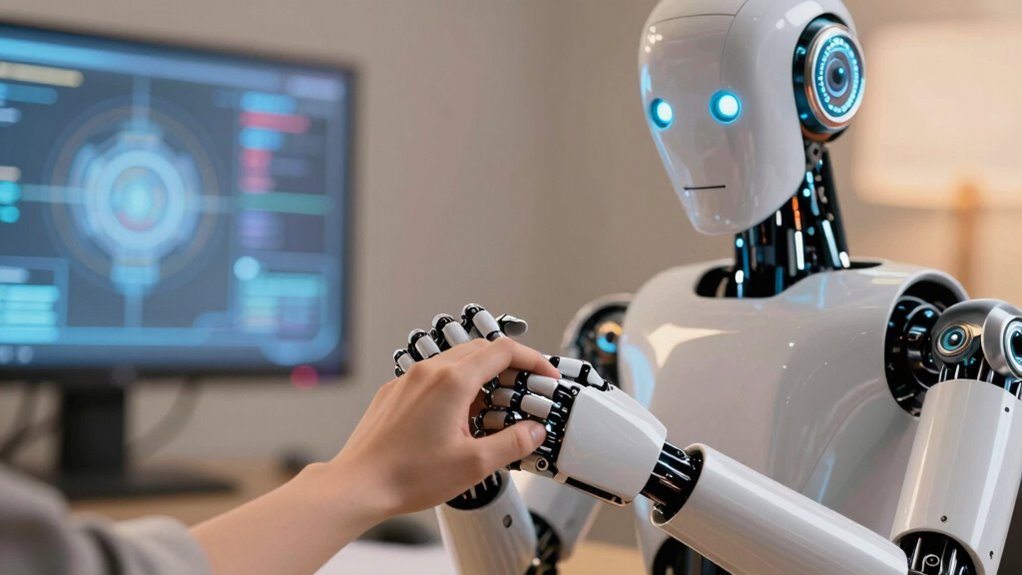
As artificial intelligence continues to advance, its impact on emotional availability becomes increasingly significant. You might find yourself engaging more with AI-driven platforms that promise to understand and respond to your feelings, but it’s essential to consider what this means for genuine human connection. Virtual empathy, a term often used to describe AI’s ability to simulate understanding, is reshaping how you experience emotional interactions. While AI can recognize patterns in your speech, tone, and expressions to mimic empathy, it’s important to recognize that this virtual empathy isn’t rooted in actual human emotion. It’s programmed to respond in ways that feel emotionally resonant, but it lacks the true depth of human understanding. As a result, your interactions with AI can feel comforting or supportive, yet they may also create a false sense of connection that doesn’t fully satisfy your emotional needs.
Algorithmic intimacy is another critical aspect of how AI is changing your perception of emotional availability. This term refers to the way algorithms personalize interactions, making your conversations with AI more tailored and seemingly intimate. You might notice that AI apps remember your preferences, recall past conversations, and even predict what you might want to discuss next. This creates a sense of closeness, as if the machine truly “knows” you. However, this intimacy is entirely algorithmic—based on data patterns rather than genuine understanding or emotional reciprocation. It can foster a comforting feeling of being understood, but it also blurs the line between authentic human connection and machine simulation. You may find yourself relying on these interactions more often, perhaps feeling less inclined to seek out human companionship, which raises questions about emotional vulnerability and authenticity. Recognizing the technological foundations of these systems can help you better understand their capabilities and limitations. Additionally, awareness of data-driven algorithms can deepen your understanding of how these systems operate behind the scenes. It’s helpful to remember that the programmed responses are created through complex processes that do not involve emotional awareness.
Furthermore, understanding the limitations of AI can help you maintain realistic expectations about what these systems can truly offer in terms of emotional support. Ultimately, AI’s growing role in emotional interactions challenges your traditional notions of availability and connection. You might appreciate the convenience and immediate support AI offers, especially during moments of loneliness or stress. Yet, it’s vital to remember that AI, regardless of how sophisticated its virtual empathy or algorithmic intimacy appears, doesn’t replace the nuanced, unpredictable nature of human relationships. It can serve as a supplement, a tool to bridge gaps temporarily, but it’s unlikely to fulfill the deeper emotional needs that only human presence can provide. Additionally, understanding that some AI systems rely on electric power generation to operate highlights the technological foundation behind these interactions. As you navigate this evolving landscape, awareness of AI’s limitations helps you maintain a balanced perspective, ensuring that technology enhances rather than replaces genuine human emotional availability.
As an affiliate, we earn on qualifying purchases.
Frequently Asked Questions
Can AI Truly Understand Human Emotions Accurately?
AI can’t truly understand human emotions accurately because it lacks emotional intelligence and empathy development. While it can recognize patterns and respond based on data, it doesn’t experience feelings or genuine empathy. You might find AI helpful for detecting emotions or providing support, but it can’t replace the deep understanding that comes from human connection. So, AI’s grasp of emotions remains limited, and true emotional understanding still relies on human insight.
How Does AI Influence Attachment Styles in Relationships?
AI influences your attachment styles in relationships by shaping digital empathy, which affects how you connect emotionally. When you interact with AI-driven platforms, you may develop attachment dynamics that prioritize virtual understanding over real-life intimacy. This can lead to clinginess or emotional detachment, depending on your reliance. While AI can simulate empathy, it might also alter your expectations and behavior, impacting how you form and maintain meaningful bonds.
Are AI Companions Capable of Providing Genuine Emotional Support?
AI companions can offer emotional support, but their emotional authenticity is limited. For example, imagine a user feeling lonely during a rough patch and turning to an AI chatbot for comfort. While it provides companionship, the dynamics lack genuine empathy and emotional depth. AI can simulate understanding, but true emotional support requires human connection, making AI’s role more about supplementing rather than replacing authentic emotional availability.
What Ethical Concerns Arise From Ai’s Role in Emotional Connections?
You might worry that AI’s role in emotional connections raises ethical concerns like privacy concerns and consent issues. As you engage with AI companions, you could be sharing personal details that might not be fully protected or used without your explicit consent. This prompts questions about whether AI should be trusted with sensitive emotional information, and if users genuinely understand how their data is collected and used.
Will AI Replace Human Emotional Availability in the Future?
You might think AI will replace human emotional availability, but it’s like expecting a mirror to replace a real person’s warmth. AI can mimic responses, but it lacks emotional authenticity and human empathy. Data shows people still crave genuine connection. So, while AI can supplement, it won’t truly replace the depth of human understanding and emotional nuance that only real relationships can provide.
As an affiliate, we earn on qualifying purchases.
Conclusion
As you navigate this new landscape, AI becomes both mirror and window—reflecting your emotions and offering glimpses into uncharted depths. It’s a dance of shadows and light, where connections are forged in the digital glow. Embrace the change, knowing that even in this maze of code, the human heart still beats loud and clear, whispering that true emotional availability isn’t lost but evolving—like a melody that adapts, yet never fades.
personalized AI companion device
As an affiliate, we earn on qualifying purchases.
As an affiliate, we earn on qualifying purchases.
AI emotional intelligence software
As an affiliate, we earn on qualifying purchases.
As an affiliate, we earn on qualifying purchases.
Fall Picks
fall essentials
As an affiliate, we earn on qualifying purchases.