
🔍 Read the full analysis: Constructing The Past: AI Digital Archive Of La Citadelle's 1693 Siege on ThorstenMeyerAI.com

Get everyday essentials delivered free with Prime
- Fast, free delivery on millions of items
- Prime Video, Amazon Music and more included
- Member-only deals all year
TL;DR
A new AI-generated digital archive visualizes the 1693 siege of La Citadelle through an interactive, cinematic experience. The project uses layered SVGs, CSS, and canvas elements to create a detailed, scalable reconstruction. This development advances digital history and AI-driven storytelling.
An AI-generated interactive digital archive of the 1693 siege of La Citadelle has been launched, offering a detailed, cinematic reconstruction of the historic event. This project, developed without static images, uses layered SVGs, CSS, and canvas elements to create an immersive experience that balances historical fidelity with artistic storytelling. For more details on the digital reconstruction, see the original analysis. It aims to transform how history is visualized and understood through digital means.
The digital archive, titled La Citadelle — An Anatomy of Siege, 1693, is hosted on a dedicated site where users can explore a scroll-driven, animated diagram of the siege. This interactive reconstruction is detailed in the original analysis. The project follows a three-stage AI-guided workflow: initial construction with layered SVGs, iterative critique based on AI analysis of visual coherence and historical plausibility, and final approval by an art director. The site employs a restrained color palette rooted in parchment, fortress ink, smoke grey, and vivid red accents, creating an atmosphere of archival gravitas.
Key features include a multi-layered SVG siege map with animated earthworks, artillery trajectories with smoke puffs, and a cinematic fortress at dusk. The site’s design emphasizes scalability and responsiveness, ensuring visual fidelity across devices. The entire project is built using only HTML, CSS, and JavaScript, with no external images or frameworks, relying solely on code to produce its layered, animated visual effects.
According to Thorsten Meyer, the project exemplifies how AI can streamline complex digital history reconstructions, making them both visually compelling and historically accurate. Learn more from the original analysis. The site’s process involves meticulous critique and refinement, guided by a detailed manual authored by an AI assistant, to ensure the final product balances educational intent with aesthetic restraint.
Transforming Digital History with AI-Generated Visualizations
This project demonstrates the potential for AI to revolutionize digital history and educational storytelling. By creating a fully coded, scalable, and immersive reconstruction of a significant historical event, it offers a new way for audiences to engage with the past. The approach reduces reliance on static images and external assets, emphasizing dynamic, layered visuals that can adapt across devices, thus broadening access and understanding of complex historical narratives.
For historians, educators, and technologists, this development signals a shift toward AI-driven, code-based digital exhibits that prioritize both accuracy and artistic storytelling. It also raises questions about the future of digital preservation and the role of AI in curating and reconstructing history, making this a notable milestone in digital humanities.
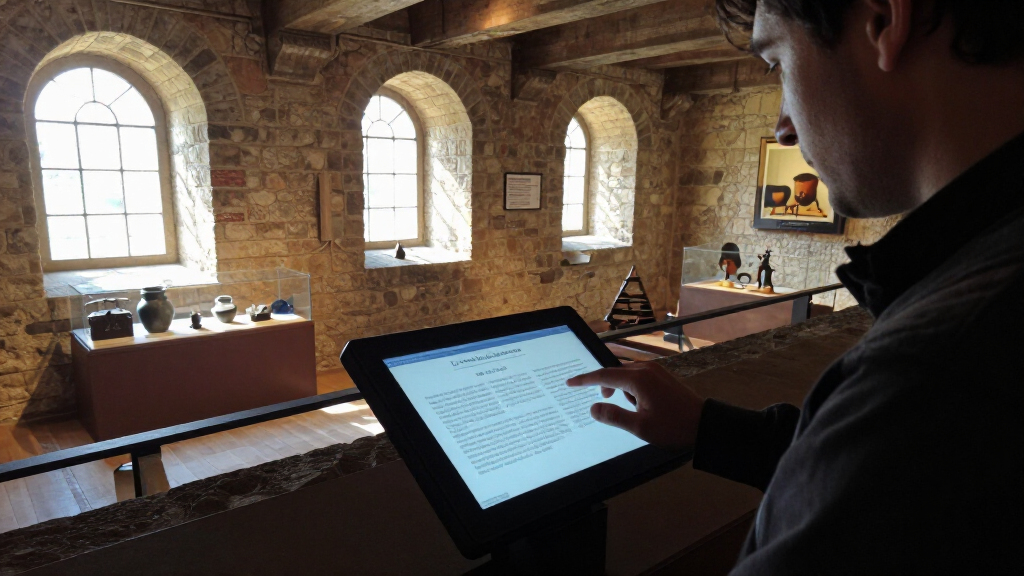
interactive digital history museum
As an affiliate, we earn on qualifying purchases.
As an affiliate, we earn on qualifying purchases.
Historical and Technological Foundations of the Project
The siege of La Citadelle in 1693 was a pivotal event in military history, characterized by Vauban’s innovative fortification strategies and trench warfare. Traditional reconstructions relied heavily on static images, engravings, and textual descriptions, limiting immersive engagement. Recent advances in AI and web technologies have enabled the creation of dynamic, interactive representations of such events.
This project builds on prior efforts to digitize historical military sites, but distinguishes itself through its fully code-based, image-free design. It follows a structured workflow guided by AI critique and refinement, ensuring both visual coherence and historical plausibility. The site is part of a broader initiative to explore AI’s role in digital history, exemplified by the development of 175 unique AI-crafted websites that reimagine historical scenes without static assets.
“This project exemplifies how AI can streamline complex digital history reconstructions, making them both visually compelling and historically accurate.”
— Thorsten Meyer
As an affiliate, we earn on qualifying purchases.
Uncertainties in AI-Generated Historical Reconstructions
While the project claims to balance historical accuracy with artistic storytelling, it is not yet clear how closely the reconstruction aligns with primary historical sources. The critique and approval process involves AI analysis and human oversight, but the extent of AI’s interpretative role remains undisclosed. Additionally, the long-term preservation and scholarly validation of such code-based reconstructions are still evolving issues.
It is also uncertain how this approach might be adapted to other historical events or whether it can incorporate new archaeological findings as they emerge.
historical event visualization tools
As an affiliate, we earn on qualifying purchases.
As an affiliate, we earn on qualifying purchases.
Future Developments and Broader Applications of AI Digital Archives
The creators plan to expand this project by integrating more detailed annotations, interactive features, and possibly user-generated content. They aim to apply similar AI-driven, code-based reconstruction techniques to other historical events, potentially transforming digital humanities and education.
Further collaboration with historians and technologists is expected to refine the methodology, improve historical accuracy, and explore broader accessibility. As AI tools mature, these digital archives could become standard components of digital museums and educational platforms.
digital reconstruction of historical sieges
As an affiliate, we earn on qualifying purchases.
As an affiliate, we earn on qualifying purchases.
Key Questions
How accurate is the AI reconstruction of the 1693 siege?
The reconstruction is guided by AI critique and human oversight to balance visual fidelity with historical plausibility. However, it is not yet confirmed how closely it matches primary sources, and further validation is ongoing.
Can I explore the digital siege on my mobile device?
Yes, the project is designed to be fully scalable and responsive, ensuring visual fidelity across various devices, including mobile phones and tablets.
Will this project include more detailed historical annotations?
Future updates aim to incorporate additional annotations, interactive elements, and possibly user contributions to deepen engagement and understanding.
Is this AI-driven approach applicable to other historical events?
Yes, the creators plan to extend this methodology to other key events, leveraging AI and code-based visuals to create immersive digital histories across a broad range of topics.
Source: ThorstenMeyerAI.com
Halloween Picks
halloween
As an affiliate, we earn on qualifying purchases.