📊 Full opportunity report: Consumer Safety In Focus As Novo Nordisk Coverage Picks Up Worldwide on IdeaNavigator AI — validation score, market gap, and execution plan.

Get everyday essentials delivered free with Prime
- Fast, free delivery on millions of items
- Prime Video, Amazon Music and more included
- Member-only deals all year
TL;DR

IdeaNavigator AI has identified increased global coverage of Novo Nordisk as a potential test case for a targeted consumer-health and safety news monitor. The proposal is an early-stage product idea, not confirmation of a safety incident or a completed study; its value would be tested with five safety or compliance professionals.
IdeaNavigator AI has proposed testing a health and safety news-monitoring service with increased coverage of Novo Nordisk as its initial signal. The proposal targets safety and compliance leads at consumer-health and food companies, but the material does not identify a specific safety event involving Novo Nordisk or provide data showing how much its coverage rose.
According to the IdeaNavigator AI proposal, the service would monitor GDELT and similar feeds for developments related to health, safety and contaminants, then filter results for issues relevant to a particular professional role. Each selected item would be turned into a short brief explaining what changed, why it matters and what action may be appropriate. The proposal says the aim is to give a specialist a timely, work-focused account rather than require them to scan scattered news reports, online forums and filings.
IdeaNavigator AI describes the Novo Nordisk coverage signal as scoring 88 out of 100 in GDELT. The proposal provides no methodology, underlying article count, measurement period or comparison baseline for that score. The number therefore describes the monitor’s signal rating as presented by IdeaNavigator AI; it cannot be read as an 88% increase in coverage or as evidence of a health risk.
As its suggested first validation, IdeaNavigator AI proposes hand-delivering the brief alongside two other health, safety or contaminant items to five people matching the intended customer profile during the same week. The proposed test would track whether recipients change a decision or forward the information to a colleague. IdeaNavigator AI identifies a subscription for safety or compliance professionals as a possible business model, but reports no customer commitments, test results or product launch.
Novo Nordisk coverage as a product test
IdeaNavigator AI proposes using a reported coverage signal to test role-focused health and safety briefs. No specific safety incident is confirmed.
What the proposed monitor does
It would turn scattered reporting into briefings tailored to a professional’s responsibilities.
Monitor GDELT and similar sources for health, safety and contaminant developments.
Select information relevant to a safety or compliance professional.
Explain what changed, why it matters and what action may be appropriate.
Why it could matter at work
For consumer-health and food businesses, useful monitoring should connect reporting to practical decisions.
Less scattered reading
A role-focused brief could help teams assess relevant developments more efficiently.
Look for a response
The proposed trial tracks whether recipients change a decision or forward a brief.
What the signal cannot show
The proposal gives no underlying article count, measurement period or comparison baseline.
- IdeaNavigator AI describes a GDELT score of 88 out of 100.
- The signal is proposed as an initial test case.
- It is not an 88% increase in coverage.
- No specific Novo Nordisk safety issue is confirmed.
Proposed first validation
The small trial is intended to check practical response, not establish market-wide demand.
- Prepare the Novo Nordisk brief and two other health, safety or contaminant items.
- Deliver them to five professionals matching the intended customer profile.
- Record whether recipients change a decision or forward an item.
Testing Faster Safety Briefings
For a safety or compliance team, the practical question is not simply whether a company is receiving more attention. It is whether a development changes a risk assessment, internal guidance, supplier review or communication decision. A service that reliably connects reporting to a defined role could help professionals identify relevant developments without treating every widely covered story as an operational alert.
The distinction matters for consumer-health and food businesses, where teams may monitor a broad range of public information but have limited time to assess it. A same-day, filtered brief could be useful if it separates verified findings from commentary and explains why an item applies to the recipient’s responsibilities. The proposal, however, does not demonstrate that the suggested workflow is faster, more accurate or more useful than existing monitoring practices.
The five-person test is designed to look for a practical response rather than rely only on general expressions of interest. A changed decision or a colleague referral could suggest the brief has workplace value, though a small trial would not establish demand across the market. No results are available yet.
Products Worth Considering

Apple MacBook Air 15-inch Laptop with M5 Chip, 16GB Memory, 512GB SSD, and Liquid Retina Display (Midnight)

Logitech MX Creative Console with 9 Customizable Keys, Graphite
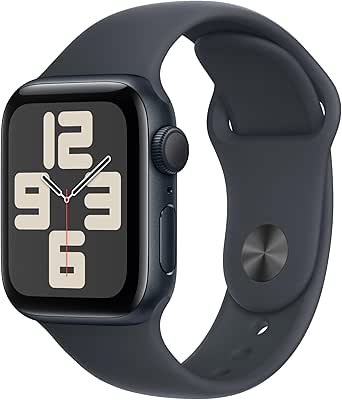
Apple Watch SE (2nd Generation) GPS 40mm Smartwatch with Midnight Aluminum Case and Midnight Sport Band (S/M)
As an affiliate, we earn on qualifying purchases.
From Coverage Signal to Product Test
In its proposal, IdeaNavigator AI identifies a problem: safety and compliance staff may find relevant health, safety and contaminant information dispersed across news, forums and filings, without a filter tailored to their work. It treats the reported Novo Nordisk coverage surge as one possible item to test in a monitoring workflow, rather than presenting it as a confirmed product-safety development.
IdeaNavigator AI names GDELT as one feed the proposed monitor could watch, alongside similar sources. The material does not state when the coverage signal was recorded, which publications or regions contributed to it, or whether the increase concerns a particular event. It also does not provide the underlying reports. Those omissions limit what can be concluded from the phrase “surges in global coverage.”
The concept is framed by IdeaNavigator AI as a narrow first test for a safety or compliance lead at a consumer-health or food brand, not as a general news service. The suggested approach is to manually deliver three briefs to five matching professionals and observe whether any brief affects a decision or is passed along. Automation, product readiness and a paid subscription remain proposed elements rather than confirmed developments.
Coverage Rise Lacks Detail
The IdeaNavigator AI description does not say what prompted the coverage, when it increased, how many stories were counted or how the 88/100 score was calculated. It supplies no specific safety finding, regulatory filing, company statement or health advisory connected to Novo Nordisk. The coverage signal alone does not establish that the company’s products pose a risk or that a safety issue has been confirmed.
It is also unclear whether the five-person validation has begun, who the participants are, what would count as a decision change, or how the proposed monitor would check the accuracy and relevance of its briefs. The proposal provides no pricing, launch schedule or evidence of customer demand. Those questions would need answers before the concept could be assessed as a functioning service.
Five-Reader Trial Is Proposed
IdeaNavigator AI’s proposed next step is to prepare the Novo Nordisk brief and two additional health, safety or contaminant items, then deliver them to five professionals who fit the intended role. The proposal says the test should record whether a recipient changes a decision or forwards an item to a colleague. No completion date beyond “this week” is specified, and no findings have been reported.
Any later assessment would need to establish what the coverage signal measured, verify the underlying information and report the trial results, including how recipients responded. Until then, the development is best understood as a product hypothesis and proposed validation exercise, not a confirmed consumer-safety alert or a launched monitoring product.
Source: IdeaNavigator AI
Key Questions
Is there a confirmed safety issue involving Novo Nordisk?
The IdeaNavigator AI proposal does not report a specific safety issue involving Novo Nordisk. It refers to increased global coverage as a potential monitoring signal but gives no incident details or evidence of a confirmed risk.
What does the 88/100 score mean?
IdeaNavigator AI describes it as a GDELT signal score. The methodology, measurement period and comparison baseline are not given, so it should not be interpreted as a percentage increase in coverage.
What would the proposed monitor do?
According to IdeaNavigator AI, it would scan GDELT and similar feeds for health, safety and contaminant developments, filter them for a professional role, and produce short briefs on what changed, why it matters and what action may be relevant.
Has the service been tested with customers?
IdeaNavigator AI reports no test results. Its proposal recommends delivering three briefs to five safety or compliance professionals and tracking whether they change a decision or forward an item.
Source: IdeaNavigator AI