📊 Full opportunity report: Was The Speedway Activity A Threat? UT Austin Says It Was Medical Response on IdeaNavigator AI — validation score, market gap, and execution plan.

Get everyday essentials delivered free with Prime
- Fast, free delivery on millions of items
- Prime Video, Amazon Music and more included
- Member-only deals all year
TL;DR
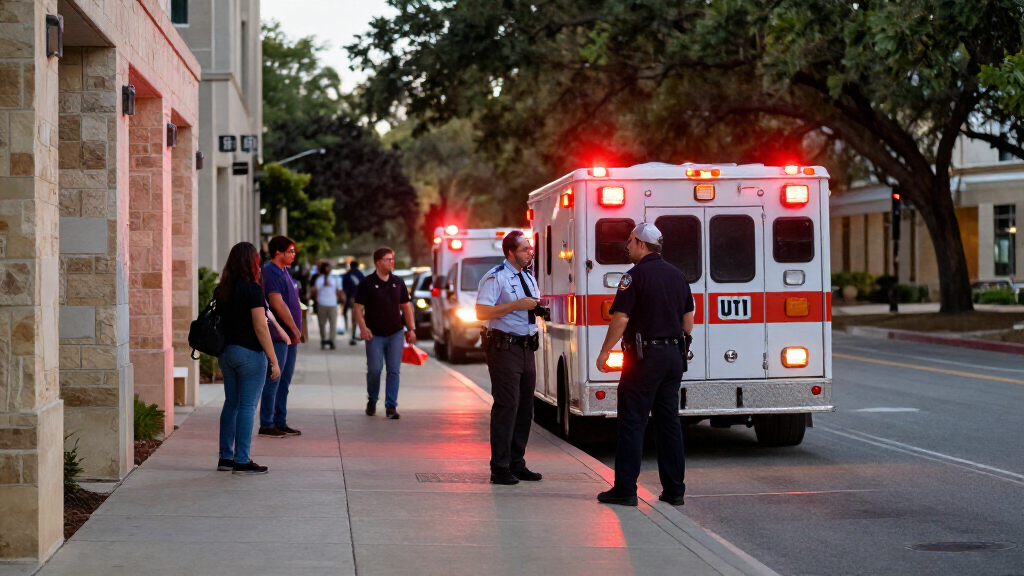
A report titled by IdeaNavigator AI says UT Austin police confirmed that activity on the university’s Speedway was a medical emergency response, not a reported threat. The supplied material gives no date, incident details, police statement, or information about anyone involved, so those details could not be independently established here.
UT Austin police said activity on Speedway was a medical emergency response, according to a KEYE report identified in material from IdeaNavigator AI. The description indicates the activity was a response to a medical emergency rather than a reported threat, but the available information does not establish when it happened or provide details about the incident.
The development concerns activity on Speedway at the University of Texas at Austin. IdeaNavigator AI’s report title says police confirmed that it was a medical emergency response. The supplied material does not include the police department’s direct statement, the wording of KEYE’s report, or a link to that report, so the confirmation can only be attributed to the report as described.
No information is provided about what prompted the medical response, whether anyone was injured or transported for care, how many responders attended, or how long the response lasted. The account also does not say whether university operations, classes, or access to Speedway were affected. Those details should not be inferred from the characterization of the incident as medical.
The reported characterization identifies the Speedway activity as a medical emergency response. The available account does not provide information about the patient’s condition, the cause of the emergency, or whether any safety risk existed.
Speedway activity was described as medical
A report says UT Austin police characterized activity on Speedway as a medical emergency response, not a reported threat. The supplied account leaves the incident’s timing and details unconfirmed.
What the report says
The account identifies a KEYE report about UT Austin police and activity on Speedway.
- Medical emergency response
- Attributed to UT Austin police by the report description
- Whether officials assessed other risks
- Any direct police statement in the supplied material
Incident details remain unclear
The available account does not establish when or how the response unfolded.
No date or time
The incident’s timing and sequence are not provided.
No patient details
Injuries, treatment, transport, and outcome are not stated.
Effects unknown
No closure, evacuation, or access restriction is described.
What readers can rely on
The supplied account is a brief description, not the full report or a direct university notice.
It reports a medical response characterization; it does not provide further incident details.
For current campus instructions, rely on UT Austin or police updates.
Clarifying the Campus Response
A police characterization can help students, staff, visitors, and families distinguish an emergency response from an incident involving an alleged threat. Here, the reported description identifies a medical emergency, rather than a reported threat. The supplied account does not include the underlying wording or circumstances.
The information does not establish the incident’s practical effects. There is no confirmed account of an evacuation, a closure, a continuing hazard, or any change to campus activity. The material does not provide the underlying police or university notice, so the precise scope of the response cannot be confirmed.
The available report description does not specify the location, timing, access restrictions, or whether the response has ended. Those details are not included in the material provided here.
Products Worth Considering

Bose QuietComfort True Wireless Earbuds with Active Noise Cancellation, Bluetooth 5.3, USB-C Charging, and IPX4 Water Resistance

Bose SoundTouch 30 Wireless Speaker, Black

Amazon Kindle Scribe Colorsoft 64GB with Premium Pen
As an affiliate, we earn on qualifying purchases.
What the Report Identifies
The available material presents the item as a KEYE report about UT Austin police and activity on Speedway. It gives a concise description of the reported police conclusion but does not reproduce the news story or cite a date for the incident. As a result, the article’s timing and the sequence between the initial activity and police clarification are unknown.
The surrounding IdeaNavigator AI text is primarily a proposal for a business tool that would monitor local news and other feeds for health and safety developments. It describes a potential service for safety or compliance staff at consumer-health and food companies, rather than adding reporting about the UT Austin incident. Its references to signal scores and product validation are not facts about campus events and do not establish additional details about the medical response.
For this account, the relevant reported fact is narrow: police were said to have characterized the Speedway activity as medical. No separate confirmation from UT Austin, KEYE, or a police spokesperson is included in the material. The distinction between that reported characterization and independently available incident details is important when describing what is known.
Incident Details Still Missing
The material does not give the date or time of the incident, identify the precise location on Speedway, or explain what led to the response. It also does not state whether the person needing care was a student, employee, visitor, or someone else. No patient information, injury description, or outcome is supplied.
It remains unclear whether the police response has ended and whether there were any temporary effects on campus access or activities. The account does not say that a threat was investigated or ruled out; it says the activity was characterized as a medical emergency response. Without a direct statement or the full report, further detail should not be treated as confirmed.
Awaiting a Full Incident Account
Further clarity depends on publication of the full KEYE report or a direct update from UT Austin police or university officials. Such an update could establish when the response occurred, what area was involved, whether campus operations were affected, and whether officials have any additional information they can share.
Until then, the confirmed account available here remains limited to the reported police characterization of the activity as a medical response. Readers seeking current campus instructions should rely on direct university or police notices rather than assume that the brief description includes information about access, ongoing risk, or the person who received care.
Source: IdeaNavigator AI
Key Questions
What happened on Speedway at UT Austin?
The account says UT Austin police identified the activity as a medical emergency response. It does not provide more detail about what happened or what prompted the response.
Was the incident a threat?
The supplied report description characterizes the activity as a medical emergency response, not a reported threat. The material does not include a full police statement explaining whether officials assessed other possible risks.
When did the response take place?
The date and time are not specified in the information provided.
Was anyone injured or taken to a hospital?
The available account does not say whether anyone was injured, received treatment, or was transported. No patient outcome is confirmed in the material.
Did the response affect campus access?
No closure, evacuation, or access restriction is described. The account does not establish whether campus operations or travel on Speedway were affected.
Source: IdeaNavigator AI