
🔍 Read the full analysis: 10 AI Tools For Tackling Varied Tasks In 2027 on ThorstenMeyerAI.com

Get everyday essentials delivered free with Prime
- Fast, free delivery on millions of items
- Prime Video, Amazon Music and more included
- Member-only deals all year
TL;DR
ThorstenMeyerAI.com’s guide compares 10 camera lenses for varied photography needs, from everyday zooms to portrait primes and superzooms. It favors the Tamron 28-75mm F/2.8 Di III VXD G2 as a versatile value pick, while identifying the Sony FE 24-70mm F2.8 GM II as a higher-cost option for photographers prioritizing optical performance.
ThorstenMeyerAI.com has published a guide to 10 camera lenses for different photography needs, recommending the Tamron 28-75mm F/2.8 Di III VXD G2 as its overall pick and the Sony FE 24-70mm F2.8 GM II for buyers prioritizing optical performance. The comparison matters to photographers weighing image quality, portability and price, though the supplied material does not identify test dates, prices or a full set of product-by-product results.
According to ThorstenMeyerAI.com’s guide, the ranking weighs optical performance, autofocus reliability and value. The guide says its optical considerations include center and edge sharpness, chromatic aberration and bokeh; it considers autofocus speed and accuracy, particularly in low light or with moving subjects. Its stated value criteria include price and lens weight relative to performance and focal range.
The guide names the Tamron 28-75mm F/2.8 Di III VXD G2 as its best overall choice, citing its fast constant aperture, lighter build and competitive pricing. It describes the Sony FE 24-70mm F2.8 GM II as the stronger option for buyers seeking maximum optical performance, with greater weight and cost as tradeoffs. These are the guide’s editorial assessments; the supplied material does not include independently verified test findings.
Among the other models the supplied guide text discusses are the Canon RF 24-70mm, Tamron 17-70mm, Nikon 28-400mm, Canon RF 85mm and Canon RF 24-105mm f/4L. The guide describes the first as a professional f/2.8 zoom, the Tamron as a value-conscious APS-C option, the Nikon as a convenience-focused superzoom, the RF 85mm as a portrait prime and the RF 24-105mm as a lighter f/4 alternative. The supplied text does not name the remaining models.
The 10 picks
- 1
 Canon RF 24-70mm F2.8 L IS USM LensView on Amazon →
- 2
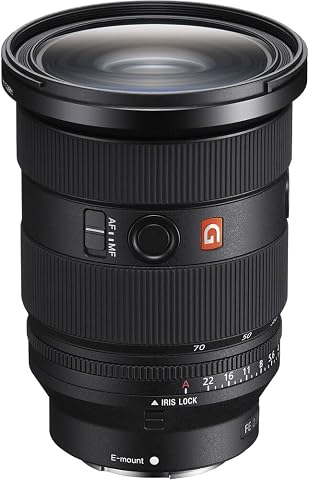 Sony FE 24-70mm F2.8 GM II Full-Frame Zoom LensView on Amazon →
- 3
 Canon RF200-800mm F6.3-9 IS USM LensView on Amazon →
- 4
 Canon RF 24-105mm f/4L IS USM LensView on Amazon →
- 5
 Canon RF 28-70mm f/2.8 IS STM Zoom LensView on Amazon →
- 6
 Nikon NIKKOR Z 28-400mm f/4-8 VR Mirrorless LensView on Amazon →
- 7
 Tamron 28-75mm F/2.8 Di III VXD G2 Zoom Lens for Sony E-MountView on Amazon →
- 8
 Tamron 17-70mm f/2.8 Di III-A VC RXD Zoom Lens for Sony E APS-C CamerasView on Amazon →
- 9
 Canon RF85mm F2 Macro IS STM LensView on Amazon →
- 10
 Canon EF 50mm f/1.8 STM Lens for Canon EOS DSLR CamerasView on Amazon →
Choosing Between Reach and Image Quality
In its guide, ThorstenMeyerAI.com highlights a familiar purchasing decision: one versatile lens can reduce lens changes and travel weight, while specialized or premium optics can better suit particular subjects and shooting conditions. The guide suggests that a standard zoom may cover a broad range of framing for event and travel photographers, while portrait photographers may value a prime’s wider aperture and background blur.
The guide also draws attention to mount compatibility and total system weight. A lens needs to suit the camera body and the photographer’s actual use, not just rank highly on a general list. Because the supplied guide gives no prices, measured test data or complete specifications for all ten picks, readers should treat its rankings as a starting point rather than a substitute for checking current compatibility and independent reviews.
Products Worth Considering

Amazon Kindle Scribe (16GB) with Premium Pen, Tungsten

Samsung Galaxy Tab A11+ Kids Edition, 128GB, Royal Blue

Logitech MX Creative Console with 9 Customizable Keys, Graphite
As an affiliate, we earn on qualifying purchases.
How the Guide Ranks Lens Tradeoffs
ThorstenMeyerAI.com’s guide frames lens choice around zoom flexibility versus prime-lens speed. It says zooms let photographers change framing without changing position, which can help at events or while traveling. Primes have a fixed focal length but often offer wider apertures and smaller or simpler designs. The guide presents f/2.8 as a practical balance for many professional zoom users and says an f/4 lens can be preferable for photographers who prioritize reduced weight and often shoot stopped down.
The guide also advises checking camera-mount compatibility before buying. It discusses native mirrorless RF and FE lenses and notes that adapters can let older DSLR lenses work on newer bodies, while potentially affecting autofocus or stabilization. It flags lens stabilization as another factor, particularly for handheld shooting at longer focal lengths, but the supplied material ends before detailing specific stabilization systems or ranking them.
Missing Models and Test Details
The supplied text from ThorstenMeyerAI.com’s guide does not list all 10 lenses, despite the guide’s title, and its section about image stabilization is incomplete. It also gives no publication date, current prices, individual test scores, testing conditions or detailed specifications for each model. Readers therefore cannot use this material alone to reproduce the ranking or compare every pick on equal terms.
The claims that the Tamron offers strong sharpness for its price and that the Sony is optically superior are the guide’s conclusions; the supplied material provides no measurements or named independent reviewers to substantiate them. It also includes no current retailer or manufacturer information, so availability, firmware support and prices are not established.
Check the Full List Before Buying
Photographers considering a purchase should consult ThorstenMeyerAI.com’s complete guide for the names and details of all 10 picks, then verify mount compatibility, current pricing and availability with manufacturers or retailers. The supplied source provides no announced update schedule or next testing milestone, so whether the list will be revised with newer models or prices is unknown.
Key Questions
What lens does the guide recommend overall?
ThorstenMeyerAI.com’s guide names the Tamron 28-75mm F/2.8 Di III VXD G2 as its overall pick, citing its aperture, weight and price positioning. The supplied source does not include a full test record or current price.
Which lens does it favor for optical performance?
The guide identifies the Sony FE 24-70mm F2.8 GM II as the stronger choice for buyers prioritizing optical performance, while describing it as heavier and more expensive than the Tamron.
Does the supplied material name all 10 lenses?
No. The supplied text names several models, including the Tamron 28-75mm, Sony 24-70mm GM II, Nikon 28-400mm and Canon RF 85mm, but does not provide the complete list.
What should buyers check before choosing a lens?
The guide advises checking that the lens fits your camera mount, then comparing aperture, focal range, weight, stabilization and current price against the subjects and conditions you shoot. It says these factors can matter as much as brand or ranking.
Source: ThorstenMeyerAI.com