TL;DR

Get everyday essentials delivered free with Prime
- Fast, free delivery on millions of items
- Prime Video, Amazon Music and more included
- Member-only deals all year
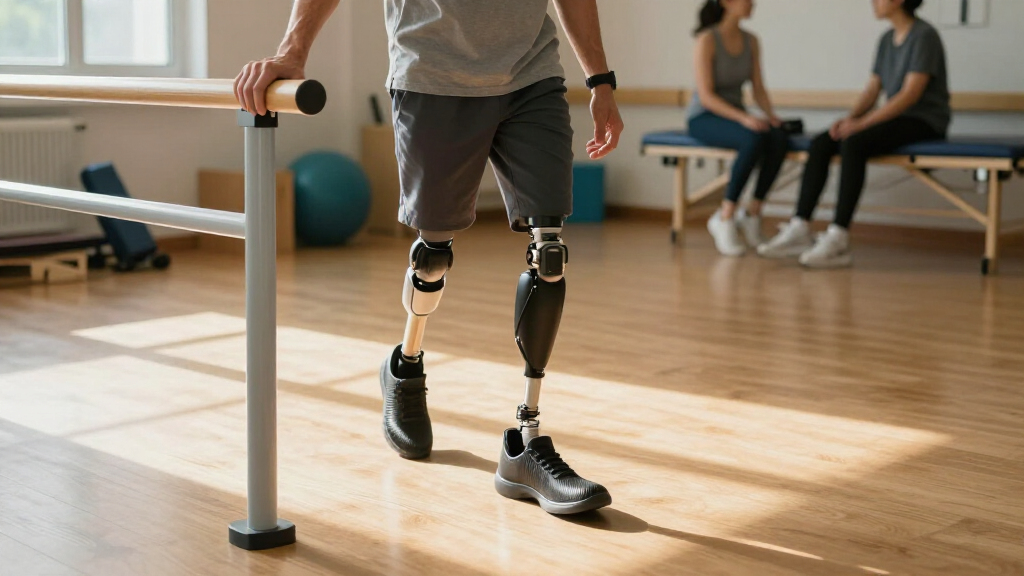
Russia imported €41.2 million worth of prosthetic arms, legs and related components from Germany in the first half of 2026, 5.4 times the value recorded in the same period of 2021. The increase comes as Russia’s prosthetics market expands and domestic production remains limited in the higher-priced, high-tech segment.
Russia imported €41.2 million in prosthetic arms, legs and related components from Germany in the first half of 2026, 5.4 times the value for the same period in 2021, according to Eurostat data reviewed by Forbes Russia. The rise points to a growing reliance on foreign supplies for a higher-value part of a prosthetics market expanding as demand increases.
Germany supplied Russia with €79 million in prosthetic devices and artificial joints in the first six months of 2026, nearly one-third more than in the first half of 2025, Forbes Russia reported. The total included €41.2 million in prosthetic limbs and related components, and €37.8 million in endoprostheses, or artificial hip, knee and other joint replacements.
Compared with the first half of 2021, shipments of German prosthetic limbs and components rose 5.4 times, while endoprosthesis shipments rose 6.1 times. The figures refer to the value of imports, not the number of devices supplied. The report does not provide unit counts or explain how much of the value increase reflects prices, product mix or changes in volume.
Across the European Union, Russia imported €144.9 million in prostheses and endoprostheses in the first half of 2026, up from €66.5 million in the comparable period of 2021, according to the Eurostat data cited by Forbes Russia. Germany’s shipments therefore represent a substantial part of the reported EU total, although the figures do not establish how the goods were used or who received them.
Imports Fill High-Tech Supply Gaps
The import increase matters because Russia’s domestic prosthetics industry appears better able to supply devices by unit than by value. Forbes Russia reports that Russian-made products make up about 80% of the market by number of units, but only around 30% by value. Imports account for as much as 70% of the market for expensive, high-tech components, according to the report.
That split suggests foreign-made products remain particularly important for costly or technically advanced equipment, even while domestic manufacturers supply most devices overall. The data do not show whether the German products could be replaced by domestic or other foreign suppliers, or how a change in imports would affect patients’ access to particular devices.
The market’s changing demand is also relevant to patients and public services. Russian authorities issued 152,661 prosthetic arms and legs through the state in 2024, more than in any of the previous 10 years, according to figures from the Labor Ministry cited by Forbes Russia. That number measures devices issued, not necessarily the number of individual recipients.
Products Worth Considering

Amazon Kindle Paperwhite (12th Generation, 2024), 16 GB, 7-inch Display, Jade

Samsung 32-Inch Odyssey OLED G8 (G80SH) 4K Gaming Monitor

Apple iPad Air 11-inch (M2), 512GB, Wi-Fi, Space Gray
As an affiliate, we earn on qualifying purchases.
A Market Shaped by Rising Demand
The import comparison uses the first half of 2021 as its pre-war baseline. It shows a sharp increase in the reported value of German supplies over five years, but it does not by itself explain the causes. The report places the rise alongside an expanding Russian market and a domestic production base that has not kept pace with demand for advanced devices.
Forbes Russia cites Rostec, Russia’s state defense conglomerate, as saying that young people accounted for about 8% of those needing prosthetics before 2022, compared with 15–20% by 2025. Rostec said most of the younger patients were people wounded while fighting in the war with Ukraine. The article also reports that market participants have observed faster issuance of prosthetics and younger recipients.
Experts quoted in the report say younger patients often need more complex, technologically advanced devices, while production of such prostheses in Russia has historically developed more slowly. These assessments offer context for the import figures, but the published trade data do not identify the users of the imported products or link particular shipments to war injuries.
“Young people made up about 8% of those needing prosthetics before 2022, rising to 15–20% by 2025.”
— Rostec, as cited by Forbes Russia
What the Trade Data Cannot Show
The Eurostat figures report import values, not the number of prostheses, their technical specifications or their eventual destinations. The available information does not say whether the rise reflects more units, higher prices, a shift toward more expensive products, or some combination of those factors. It also does not detail how the German goods reached Russia or identify the importers.
The report does not establish why German shipments increased, whether the trend continued after June 2026, or how much of the equipment was purchased through public programs rather than private channels. The age and injury figures cited by Forbes Russia come from Rostec and market participants; they should not be treated as a breakdown of the people who received the German imports.
Further Data Needed on Supply
The import figures cover only the first half of 2026. A fuller picture will depend on subsequent trade data showing whether German and wider EU shipments continued at a similar pace through the second half of the year. Future figures on quantities as well as values would help distinguish changes in the number of devices from changes in prices or product mix.
More detail on domestic production, procurement routes and public issuance could also clarify how imports fit into Russia’s prosthetics system. For now, the reported data establish a marked increase in the value of German supplies compared with the first half of 2021, while leaving the causes and patient-level effects unresolved.
Key Questions
What does “five times more” refer to?
It refers to the value of German exports of prosthetic arms, legs and related components to Russia: €41.2 million in the first half of 2026, 5.4 times the value in the first half of 2021. The report does not provide a comparison of device counts.
How much did Germany supply in total?
Germany supplied €79 million in prosthetic devices and artificial joints in the first half of 2026. That total includes €41.2 million in prosthetic limbs and related components and €37.8 million in endoprostheses.
Did all Russian prosthetic demand depend on imports?
No. Forbes Russia reports that Russian-made products account for about 80% of the market by unit. Imports have a much larger role in the expensive, high-tech component segment, where they account for up to 70% of the market.
Do the figures show that the imports went to wounded soldiers?
No. The reported trade figures do not identify recipients. Forbes Russia separately cites Rostec’s estimate that most younger people needing prosthetics by 2025 were wounded while fighting in the war with Ukraine, but that does not establish who received the imported German devices.
Source: meduza.io