The best overall pick is the DJI Mic Mini, a flexible two-transmitter kit suited to interviews with one or two people. For a handheld reporting style, the COMICA Revo S is a more natural fit, while the Hollyland LARK A2 stands out for a compact two-person setup with a charging case. The main tradeoffs are handheld versus clip-on design, single-person simplicity versus two-speaker coverage, and phone convenience versus broader recording flexibility. Device connectors and backup recording options can matter as much as microphone size. Read on for the full comparison and advice on choosing a kit that fits your interview workflow.

Get everyday essentials delivered free with Prime
- Fast, free delivery on millions of items
- Prime Video, Amazon Music and more included
- Member-only deals all year
Complete the kit


Key Takeaways
- Interview format drives the shortlist: the COMICA Revo S favors a handheld reporter-style approach, while the DJI Mic Mini and Hollyland LARK A2 suit two-person conversations with clip-on transmitters.
- Two transmitters are useful only when you need them: dual-mic kits can simplify host-and-guest recording, but add setup and charging needs if you usually interview one person.
- Phone compatibility is not interchangeable: the roundup includes USB-C and Lightning-oriented options, so check your recording device and any required receiver before choosing.
- Charging cases favor mobile workflows: the Hollyland LARK A2 and RØDE Wireless Micro bundle include cases, while simpler kits may suit buyers who want fewer components.
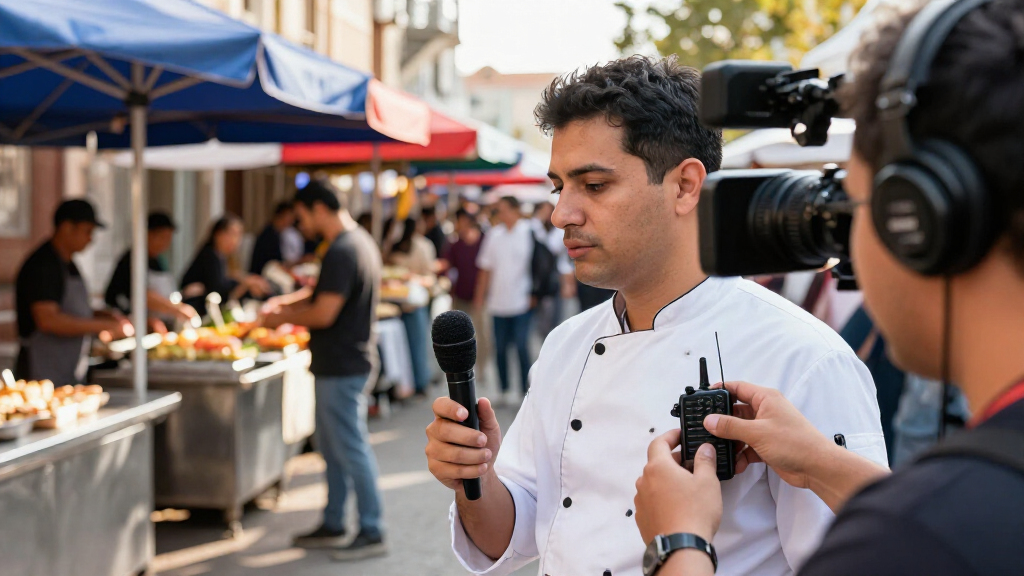
- Handheld and lavalier mics solve different problems: handheld models suit visible street interviews and passing a mic between speakers; lavaliers keep hands free and look less prominent.
| COMICA Revo S Wireless Handheld Microphone for iPhone, USB-C Interview Mic |  | Best Handheld for Street Interviews | Form factor: Handheld | Connector: USB Type-C | Polar pattern: Unidirectional (cardioid) | VIEW LATEST PRICE | See Our Full Breakdown |
| Rode Wireless GO Compact Lavalier Microphone System |  | Best Compact Clip-On System | Form factor: Clip-on / beltpack | Weight: 31 g | Polar pattern: Omnidirectional | VIEW LATEST PRICE | See Our Full Breakdown |
| FIFINE M9W Wireless Lavalier Dual Lapel Microphone Kit |  | Best Value for Two-Person Interviews | Form factor: Lavalier | Channels: 2 | Polar pattern: Omnidirectional | VIEW LATEST PRICE | See Our Full Breakdown |
| wedaniya Wireless Mini Lavalier Microphones, 2-Pack with USB-C and Lightning Receivers |  | Best for Phone-First Two-Person Interviews | Model: WM189 | Microphones: 2 transmitters | Connectors: USB-C and Lightning | VIEW LATEST PRICE | See Our Full Breakdown |
| DJI Mic Mini Wireless Microphone (2 Transmitters, 1 Receiver) |  | Best Lightweight Long-Range Kit | Microphones: 2 transmitters, 1 receiver | Transmitter weight: 10 g | Form factor: Lavalier | VIEW LATEST PRICE | See Our Full Breakdown |
| Mini Mic Pro Wireless Lavalier Microphone for iPhone and Android | 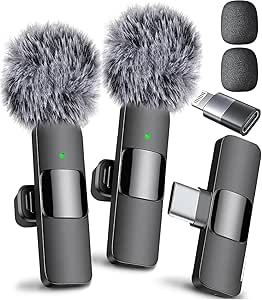 | Best for Simple Phone Interviews | Connectivity: Wireless | Connectors: Lightning and USB Type-C | Microphone type: Lavalier | VIEW LATEST PRICE | See Our Full Breakdown |
| COMICA Revo S Wireless Handheld Microphone |  | Best Handheld Pick for Street Interviews | Connectivity: Wireless | Connector: USB Type-C | Microphone capsule: 14 mm condenser | VIEW LATEST PRICE | See Our Full Breakdown |
| Movo WMX-7-TH+RX Handheld Wireless Microphone System |  | Best for Camera-Rig Interviews | Microphone type: Handheld wireless | Polar pattern: Omnidirectional | Transmission: VHF | VIEW LATEST PRICE | See Our Full Breakdown |
| Hollyland LARK A2 Wireless Microphone System with 2 Transmitters, Receiver, and Charging Case |  | Best Dual-Mic System for Two-Person Interviews | Connectivity: 2.4 GHz wireless | Microphone type: Lavalier | Included system: 2 transmitters, 1 receiver, and charging case | VIEW LATEST PRICE | See Our Full Breakdown |
| Occiam Mini Lavalier Microphone for iPhone & Android |  | Best for Long Mobile Recording Days | Connectivity: Wireless | Connectors: Lightning and USB-C | Form factor: Lavalier | VIEW LATEST PRICE | See Our Full Breakdown |
| Labstandard Dual Wireless Lavalier Microphone for iPhone, iPad, and USB-C Devices |  | Best for Cross-Device Two-Person Interviews | Microphone type: Lavalier, mini | Microphones: 2 | Connectors: Lightning, USB Type-C | VIEW LATEST PRICE | See Our Full Breakdown |
| RØDE Wireless GO (Gen 3) Compact Wireless Microphone System, White |  | Best for Recoverable Interview Audio | Recording: 32-bit float onboard recording | Internal memory: 32 GB; over 40 hours of recording | Wireless transmission: 2.4 GHz digital with 128-bit encryption | VIEW LATEST PRICE | See Our Full Breakdown |
| BOYA mini 2 Wireless Lavalier Microphone for iPhone and Android |  | Best Compact Single-Mic Pick | Microphone type: Lavalier | Weight: 5 g | Connector: USB Type-C | VIEW LATEST PRICE | See Our Full Breakdown |
| RØDE Wireless GO II Single-Channel Wireless Microphone System, Black |  | Best for One-Person Camera Interviews | Included system: 1 receiver, 1 transmitter | Channels: 2 | Connections: 3.5 mm TRS, USB-C, iOS digital output | VIEW LATEST PRICE | See Our Full Breakdown |
| RØDE Wireless Micro USB-C Microphone System with Two Mics and Charging Case |  | Best for Easy Two-Person Phone Interviews | Microphones: 2 clip-on transmitters | Channels: 2 | Connection: USB Type-C | VIEW LATEST PRICE | See Our Full Breakdown |
| portable wireless microphones for interview | Polar pattern | Battery life |
|---|---|---|
| COMICA Revo S Wireless Handhel | Unidirectional (cardioid) | Up to 15 hours |
| Rode Wireless GO Compact Laval | Omnidirectional | Up to 7 hours |
| FIFINE M9W Wireless Lavalier D | Omnidirectional | Up to 30 hours total with case |
| wedaniya Wireless Mini Lavalie | — | — |
| DJI Mic Mini Wireless Micropho | Omnidirectional | — |
| Mini Mic Pro Wireless Lavalier | Omnidirectional | Up to 6 hours per charge |
| COMICA Revo S Wireless Handhel | Unidirectional cardioid | Up to 15 hours |
| Movo WMX-7-TH+RX Handheld Wire | Omnidirectional | — |
| Hollyland LARK A2 Wireless Mic | Omnidirectional | Up to 7 hours per transmitter; up to 42 hours with charging case |
| Occiam Mini Lavalier Microphon | Omnidirectional | Up to 10 hours per charge; up to 54 hours with case |
| Labstandard Dual Wireless Lava | Omnidirectional | — |
| RØDE Wireless GO | Omnidirectional | — |
| BOYA mini 2 Wireless Lavalier | Omnidirectional | Up to 30 hours with charging case |
| RØDE Wireless GO II Single-Cha | — | — |
| RØDE Wireless Micro USB-C Micr | Omnidirectional | Up to 21 hours with charging case |
More Details on Our Top Picks
COMICA Revo S Wireless Handheld Microphone for iPhone, USB-C Interview Mic
For interviews where the microphone should be visible and easy to pass between speakers, the COMICA Revo S is a more natural fit than clip-on options such as the Rode Wireless GO. Its handheld form and cardioid pickup focus sound toward the person speaking, while the USB-C receiver keeps setup simple with compatible phones, tablets, and laptops. The stated 48 kHz/24-bit capture, three gain settings, and one-touch noise reduction give an interviewer useful ways to manage voice levels and surrounding noise. A metal body and up to 15 hours of runtime also suit longer reporting days. The tradeoff is flexibility: it requires USB-C, has a non-removable battery, and does not provide a second transmitter for recording two people separately.
Pros:- Handheld design is easy to aim and pass between interview participants.
- Cardioid pickup helps prioritize the speaker in front of the microphone.
- Up to 15 hours of stated battery life supports long recording days.
- Metal enclosure and three gain levels suit regular field use.
Cons:- USB-C connection excludes devices without a compatible port or adapter.
- The built-in battery cannot be swapped during a shoot.
- A single handheld mic is less discreet than the Rode Wireless GO’s clip-on setup.
Best for: Mobile reporters and creators who want a handheld mic they can point toward different interview subjects and record directly to a USB-C device.
Not ideal for: Interviewers who need two separate wireless microphones, a Lightning connection, or replaceable batteries for extended shoots.
- Form factor:Handheld
- Connector:USB Type-C
- Polar pattern:Unidirectional (cardioid)
- Audio resolution:48 kHz/24-bit
- Operating range:Up to 65 ft
- Battery life:Up to 15 hours
- Signal-to-noise ratio:60 dB
- Enclosure:Metal
Our verdict“Choose the Revo S for direct-to-phone street interviews where a durable handheld mic matters more than dual-person recording.”
Rode Wireless GO Compact Lavalier Microphone System
The Rode Wireless GO suits interviews where the microphone should stay on the subject rather than be held or passed around. Its 31 g transmitter can clip onto clothing or work as a beltpack for an external lavalier, giving it more placement flexibility than the handheld COMICA Revo S. The receiver’s 3.5 mm TRS output is also useful for camera-based reporting, while the stated range of up to 70 m gives a crew room to move. Its omnidirectional capsule captures voice without needing precise aiming, though that can also admit more surrounding sound than a directional handheld mic. The main limitation is that this is a single-channel system: it is not the right choice for recording two interviewees on separate transmitters, and its up-to-seven-hour runtime calls for charging breaks on longer shoots.
Pros:- Lightweight 31 g transmitter clips onto clothing or can pair with an external lavalier.
- 3.5 mm TRS receiver output fits many camera-based interview setups.
- Omnidirectional capsule records voice without careful mic aiming.
- Stated range reaches up to 70 m.
Cons:- Single-channel design does not support two separately miked speakers.
- Up to seven hours of battery life may require a recharge during long shoots.
- Omnidirectional pickup can capture unwanted ambient sound compared with the COMICA Revo S’s cardioid pattern.
Best for: Solo camera operators and interviewers who need a lightweight mic that clips to one speaker and connects to a camera through 3.5 mm TRS.
Not ideal for: Two-person interview crews needing separate wireless channels, or field teams recording longer than the stated runtime without a charging plan.
- Form factor:Clip-on / beltpack
- Weight:31 g
- Polar pattern:Omnidirectional
- Channels:1
- Receiver output:3.5 mm TRS
- Range:Up to 70 m
- Battery life:Up to 7 hours
- Frequency response:50 Hz–20 kHz
Our verdict“Pick the Wireless GO for a discreet, lightweight single-person camera interview setup, not for dual-speaker recording.”
FIFINE M9W Wireless Lavalier Dual Lapel Microphone Kit
For a host and guest who both need their own microphone, the FIFINE M9W offers a more interview-ready arrangement than the single-transmitter Rode Wireless GO. Its dual-channel design supports two speakers, with mono and stereo modes for choosing how their voices are recorded. Compatibility spans phones, cameras, and computers, making this a flexible pick for crews that move between devices. The charging case brings total stated runtime to up to 30 hours, and the 164 ft range gives subjects room to move around a set or location. Noise-cancellation controls and a display add practical monitoring options. The compromise is a plastic enclosure and a 0.4 kg listed weight, making it less appealing for minimal, featherweight kits than the Rode or DJI systems.
Pros:- Two transmitters let an interviewer and guest record simultaneously.
- Mono and stereo modes provide options for handling two voices.
- Up to 30 hours of stated total runtime with the charging case.
- Works with iPhone, Android, DSLR, laptop, and tablet devices.
Cons:- Listed 0.4 kg weight is less convenient for a minimal portable kit.
- Plastic construction may feel less robust than the metal-bodied COMICA Revo S.
- Some devices may require an adapter or the specific USB-C receiver.
Best for: Two-person interview teams recording on a mix of phones, cameras, and laptops who want long combined runtime from a charging case.
Not ideal for: Solo reporters seeking a pocket-sized setup, or crews that prioritize a metal build and the lightest possible kit.
- Form factor:Lavalier
- Channels:2
- Polar pattern:Omnidirectional
- Connectors:USB-C and 3.5 mm jack
- Transmission range:Up to 164 ft (50 m)
- Battery life:Up to 30 hours total with case
- Frequency response:20 Hz–20 kHz
- Weight:0.4 kg
Our verdict“Choose the M9W when two speakers, broad device compatibility, and case-supported runtime matter more than a lightweight build.”
wedaniya Wireless Mini Lavalier Microphones, 2-Pack with USB-C and Lightning Receivers
The wedaniya WM189 stands out for phone-first interviews where a crew may switch between USB-C and Lightning devices. Its two transmitters cover a host and guest, while the included receivers avoid the single-connector limitation of the COMICA Revo S. Setup is plug-and-play, with no app or Bluetooth pairing, and real-time headphone monitoring can help catch connection or audio issues during a take. DSP noise reduction, wind covers, and selectable mute and reverb modes add flexibility for quick social or field recordings. The tradeoff is endurance: its stated six-hour recording time is shorter than the FIFINE M9W’s case-supported total, so it suits shorter assignments better than full-day reporting. The listing also gives 4.8 GHz as its frequency, without clarifying a frequency-response range.
Pros:- Includes two transmitters plus both USB-C and Lightning receivers.
- Plug-and-play operation avoids app installation and Bluetooth pairing.
- Headphone monitoring helps check audio while recording.
- Wind covers and DSP noise reduction support outdoor phone interviews.
Cons:- Up to six hours of recording is shorter than the FIFINE M9W’s stated total runtime.
- The listed 4.8 GHz specification does not clarify frequency response.
- Phone-focused receivers may be less convenient for camera rigs than the Rode Wireless GO’s 3.5 mm TRS output.
Best for: Mobile interviewers who alternate between Lightning and USB-C phones and need two compact transmitters with headphone monitoring.
Not ideal for: All-day field crews who cannot recharge between sessions, or buyers who need clearly specified frequency-response data.
- Model:WM189
- Microphones:2 transmitters
- Connectors:USB-C and Lightning
- Connectivity:Wireless, plug-and-play
- Noise reduction:DSP
- Signal-to-noise ratio:70 dB
- Recording time:Up to 6 hours
- Weight:Under 1 oz
Our verdict“Pick the WM189 for short, two-person mobile interviews when both USB-C and Lightning compatibility are useful.”
DJI Mic Mini Wireless Microphone (2 Transmitters, 1 Receiver)
The DJI Mic Mini is the strongest fit here for interviews that involve movement, distance, or a two-person setup where low-profile transmitters matter. Each transmitter weighs just 10 g, a clear portability advantage over the bulkier listed FIFINE M9W kit. Two transmitters and one receiver support host-and-guest recording, while two noise-cancellation levels and automatic limiting are designed to help manage changing background sound and sudden loud peaks. Its stated 400 m maximum range is far beyond the COMICA Revo S’s 65 ft, though real-world usable distance depends on conditions. Battery life is listed at up to 10 hours per transmitter and receiver. The limitation is device-specific audio quality: 48 kHz/24-bit recording is stated for supported OsmoAudio devices, and the system is not waterproof.
Pros:- Two 10 g transmitters are discreet and easy to wear during interviews.
- Two transmitters and one receiver accommodate a host and guest.
- Up to 400 m stated maximum range suits interviews with substantial separation.
- Two noise-cancellation levels and automatic limiting provide useful audio controls.
Cons:- Not waterproof, limiting use in rain or wet field conditions.
- 48 kHz/24-bit direct recording is specified only for supported OsmoAudio devices.
- Its maximum range is much greater than the COMICA Revo S’s, but actual usable distance can vary by setting.
Best for: Mobile crews recording two people outdoors or across a large space who value very light transmitters and long stated range.
Not ideal for: Buyers who need waterproof equipment or want the stated 48 kHz/24-bit recording quality with devices outside the supported OsmoAudio line.
- Microphones:2 transmitters, 1 receiver
- Transmitter weight:10 g
- Form factor:Lavalier
- Polar pattern:Omnidirectional
- Maximum transmission range:Up to 400 m
- Operating time:Up to 10 hours per transmitter and receiver
- Noise cancellation:Basic and Strong levels
- Audio quality:48 kHz/24-bit with supported OsmoAudio devices
Our verdict“Choose the DJI Mic Mini for a lightweight two-person kit with long-range flexibility, provided your recording device supports the audio path you need.”
Mini Mic Pro Wireless Lavalier Microphone for iPhone and Android
For quick interviews recorded on a phone, the Mini Mic Pro keeps setup simple: the included USB-C and Lightning adapters connect it to a broad range of mobile devices without a separate receiver system to configure. Its small lavalier format also keeps the microphone close to the speaker, while the included foam and deadcat covers give you options for indoor rooms and breezier outdoor locations. Compared with the COMICA Revo S, this is less of a handheld, reporter-style microphone and more convenient for discreet, hands-free conversations. The tradeoff is a shorter up-to-6-hour battery life, so it is a less comfortable choice for long interview days. I’d choose it for lightweight phone recording, but buyers who need longer runtimes or stronger supplied battery details should compare alternatives.
Pros:- Includes USB-C and Lightning adapters for broad phone and tablet compatibility
- Compact lavalier design suits hands-free interviews
- Foam and deadcat wind covers are included for different recording environments
- Supports charging the connected device while recording
Cons:- Up-to-6-hour battery life can be restrictive on extended recording days
- Warranty information is incomplete in the supplied product details
Best for: Mobile journalists and solo creators who want a compact lavalier kit that can connect to either Lightning or USB-C phones.
Not ideal for: Interviewers recording long sessions or full-day event coverage, because its stated battery life is up to six hours per charge.
- Connectivity:Wireless
- Connectors:Lightning and USB Type-C
- Microphone type:Lavalier
- Polar pattern:Omnidirectional
- Battery life:Up to 6 hours per charge
- Compatibility:Android, laptop, smartphone, tablet, iPad, and iPhone
- Included items:2 lavalier microphones, receiver, USB charging cable, 2 clips, 2 foam tips, and 2 deadcat tips
- Dimensions:3 × 0.5 × 0.25 inches
Our verdict“Choose the Mini Mic Pro for straightforward, lightweight interviews on Lightning or USB-C phones, but look to a longer-running system for all-day reporting.”
COMICA Revo S Wireless Handheld Microphone
The COMICA Revo S suits interviewers who prefer holding a microphone toward each speaker rather than clipping a lavalier onto clothing. Its cardioid pickup focuses more on sound in front of the mic than the Mini Mic Pro’s omnidirectional lavalier, a useful distinction when recording in busy public places. The 48 kHz/24-bit recording, three gain levels, and one-key noise reduction offer practical controls for adapting to different voices and surroundings. It also runs for up to 15 hours, outlasting the Mini Mic Pro on a single charge. The format is less discreet and occupies a hand, though, and Lightning users need a separate OTG-compatible adapter. I’d favor it for presenter-led street interviews; for a two-person setup with separate clipped transmitters, the Hollyland LARK A2 is a better fit.
Pros:- Cardioid pickup suits a handheld interview style
- Records at 48 kHz/24-bit
- Three gain levels and one-key noise reduction offer useful recording controls
- Up to 15 hours of battery life
Cons:- Lightning devices require a separate OTG-compatible USB-C to Lightning adapter
- Handheld format is less discreet and leaves the interviewer holding the microphone
- Single-channel setup is less suited to recording two speakers on separate microphones
Best for: Reporters and interview hosts who want a handheld mic for one-at-a-time questions with a USB-C phone, tablet, or computer.
Not ideal for: Lightning-device users who need a ready-to-connect kit, or interviewers who want hands-free lavalier microphones for both speakers.
- Connectivity:Wireless
- Connector:USB Type-C
- Microphone capsule:14 mm condenser
- Polar pattern:Unidirectional cardioid
- Recording quality:48 kHz/24-bit
- Gain adjustment:3 levels
- Battery life:Up to 15 hours
- Channels:1
Our verdict“Pick the COMICA Revo S for long-running, handheld USB-C interviews, but choose a dual-lavalier system when both speakers need hands-free mics.”
Movo WMX-7-TH+RX Handheld Wireless Microphone System
The Movo WMX-7-TH+RX is the lineup’s more traditional, camera-oriented option: a handheld microphone sends audio to a separate bodypack receiver that can clip on or attach to a rig with its detachable cold-shoe mount. That arrangement is more adaptable to a camera setup than the phone-first Mini Mic Pro, and its 12 VHF channels give users options when they need to select a channel. The omnidirectional pickup can suit conversational interviews where the mic moves between speakers, but it may capture more surrounding sound than the COMICA Revo S’s cardioid pattern. This system also relies on four AA batteries, so it is less convenient for mobile reporting than rechargeable lavalier kits such as the Hollyland LARK A2. I’d shortlist it for camera rigs, not for the lightest phone-based workflow.
Pros:- Receiver can be worn with its belt clip or mounted to a camera or rig
- 12 VHF channels provide channel options
- Handheld format works for interviews and live speaking
- One-year warranty is specified
Cons:- Requires four AA batteries rather than a built-in rechargeable battery
- Omnidirectional pickup can capture more ambient sound than a directional handheld mic
- The listed frequency response is unusually brief and may leave buyers uncertain about the full audio range
Best for: Camera operators and field interviewers who want a handheld wireless mic with a receiver that can mount on a camera rig.
Not ideal for: Phone-first creators seeking a small rechargeable lavalier kit, since this system uses a bodypack receiver and four AA batteries.
- Microphone type:Handheld wireless
- Polar pattern:Omnidirectional
- Transmission:VHF
- Number of channels:12
- Connector:3.5 mm jack
- Frequency range:50 Hz–15 kHz
- Power:4 AA batteries required
- Warranty:1 year
Our verdict“Choose the Movo for a camera-mounted receiver and handheld interview format, but skip it if rechargeable, compact phone recording is your priority.”
Hollyland LARK A2 Wireless Microphone System with 2 Transmitters, Receiver, and Charging Case
For a host and guest who both need hands-free microphones, the Hollyland LARK A2’s two transmitters and receiver make it a more direct fit than the single-channel COMICA Revo S. Its 48 kHz/24-bit audio, adjustable noise cancellation, clipping protection, and -6 dB safety track address common interview risks: background noise and sudden loud speech can be managed without relying on one fixed recording setting. The charging case raises stated total battery life to up to 42 hours, while each transmitter runs for up to seven hours on its own. That per-transmitter limit still matters for long sessions away from the case, and the claimed 200 m range depends on recording conditions. Compared with the Occiam Mini Lavalier, the LARK A2 offers a more explicitly two-transmitter package; I’d choose it for paired interviews where backup-oriented audio controls matter.
Pros:- Two transmitters support a host-and-guest interview setup
- 48 kHz/24-bit recording with adjustable noise cancellation
- Clipping protection and a -6 dB safety track help protect against sudden loud audio
- Charging case provides up to 42 hours of total battery life
Cons:- Each transmitter is rated for up to seven hours without AI Power Saving
- Wireless range can vary with surroundings despite the stated maximum
- USB Type-C connector may require an adapter for devices with other ports
Best for: Interviewers recording a host and guest on separate lavalier transmitters who want a charging case and built-in safeguards against clipping.
Not ideal for: Solo phone users who want the simplest single-mic kit, or crews who cannot recharge between sessions longer than the transmitter’s stated runtime.
- Connectivity:2.4 GHz wireless
- Microphone type:Lavalier
- Included system:2 transmitters, 1 receiver, and charging case
- Audio resolution:48 kHz/24-bit
- Polar pattern:Omnidirectional
- Wireless range:Up to 200 m (650 ft)
- Battery life:Up to 7 hours per transmitter; up to 42 hours with charging case
- Transmitter weight:8.5 g
Our verdict“Choose the LARK A2 for two-person lavalier interviews with strong recording safeguards, but plan around the transmitters’ standalone runtime.”
Occiam Mini Lavalier Microphone for iPhone & Android
The Occiam Mini Lavalier is the endurance-focused choice here: its stated 10-hour recording time per charge and up to 54 hours with the case exceed the Mini Mic Pro’s six-hour limit and the LARK A2’s seven-hour transmitter runtime without power saving. Its 7 g transmitter is also designed to stay unobtrusive on clothing, a practical advantage for interview subjects who may find a handheld mic distracting. The listing specifies 48 kHz/24-bit audio, AI noise cancellation, and a 328 ft obstacle-free transmission range, though that range should not be treated as a guarantee in crowded locations. Dual LED battery displays make remaining power easier to check than on a kit without a stated display. The limitation is compatibility: it does not support Insta360, GoPro, Akaso, or OnePlus cameras. I’d pick it for extended phone interviews, not for those camera ecosystems.
Pros:- Up to 10 hours of recording per charge and 54 hours total with the case
- Lightweight 7 g transmitter is discreet on clothing
- AI noise cancellation and 48 kHz/24-bit audio are specified
- Dual LED displays show transmitter and case power levels
Cons:- Does not support Insta360, GoPro, Akaso, or OnePlus cameras
- The stated 328 ft range is specified for obstacle-free conditions and may not reflect crowded interview locations
- The product description does not specify the number of transmitters included
Best for: Mobile interviewers and educators who record long sessions on compatible Lightning or USB-C devices and value a discreet transmitter.
Not ideal for: Creators using Insta360, GoPro, Akaso, or OnePlus cameras, which the product data lists as unsupported.
- Connectivity:Wireless
- Connectors:Lightning and USB-C
- Form factor:Lavalier
- Polar pattern:Omnidirectional
- Audio resolution:48 kHz/24-bit
- Battery life:Up to 10 hours per charge; up to 54 hours with case
- Transmission range:Up to 328 ft (100 m), obstacle-free
- Transmitter weight:7 g
Our verdict“Choose the Occiam for discreet, extended interviews on compatible phones, but check device compatibility and the supplied transmitter count before buying.”
Labstandard Dual Wireless Lavalier Microphone for iPhone, iPad, and USB-C Devices
For an interviewer recording a guest on either a Lightning or USB-C device, the two-mic set offers a straightforward way to capture both people without passing one microphone back and forth. Its omnidirectional pickup and stated noise reduction suit conversational formats, while real-time audio syncing is useful when matching sound to video. Compared with the RØDE Wireless Micro USB-C, Labstandard claims wider connector coverage, but its battery information is less clear: the description suggests rechargeable use while the specifications list two C batteries. That ambiguity makes it harder to plan a full day of interviews. The stated six-hour battery life is also shorter than the BOYA mini 2’s case-supported runtime. I would choose it for flexible phone compatibility, not for the clearest power details or a proven multi-device workflow.
Pros:- Includes two wireless microphones for host-and-guest recording
- Lists both Lightning and USB-C connectors
- Omnidirectional pickup and noise reduction are suited to spoken interviews
- States about six hours of battery life
Cons:- Battery details conflict between the rechargeable-use description and the two C batteries listed in specifications
- Compatibility claims, including references to 3.5 mm devices, are unclear
- Stated battery life is shorter than the BOYA mini 2’s case-supported runtime
Best for: Mobile interviewers who alternate between Lightning and USB-C phones and need two microphones for host-and-guest conversations
Not ideal for: Creators who need dependable, clearly documented battery management or confirmed compatibility with 3.5 mm devices
- Microphone type:Lavalier, mini
- Microphones:2
- Connectors:Lightning, USB Type-C
- Polar pattern:Omnidirectional
- Stated battery life:About 6 hours
- Wireless connectivity:Bluetooth
- Weight:0.05 kg
- Dimensions:4.5 × 3.3 × 0.7 inches
Our verdict“Choose Labstandard if you need two interview mics and both Lightning and USB-C connections, but skip it if battery and device compatibility need to be unambiguous.”
RØDE Wireless GO (Gen 3) Compact Wireless Microphone System, White
The 32-bit float onboard recording and 32 GB of internal memory give this system a clear advantage when an interview cannot be repeated: recorded audio can offer more room to recover levels that are too quiet or clipped. Its stated capacity of over 40 hours also provides a substantial backup beyond the live wireless link. Compared with the RØDE Wireless GO II Single, this model adds 32-bit float recording and lists a 2.4 GHz encrypted connection, making it the stronger fit for creators who prioritize recording safeguards. It connects to cameras, smartphones, and computers through 3.5 mm TRS and USB-C options. The tradeoff is a more involved kit than a direct-to-phone pair such as the RØDE Wireless Micro; buyers should check that their recording setup matches those connections. The listed weight is also higher than the Wireless GO II Single’s.
Pros:- 32-bit float onboard recording offers flexibility for recovering quiet or clipped audio
- 32 GB of internal memory is stated to hold over 40 hours of recording
- Compatibility includes cameras, smartphones, and computers
- 2.4 GHz digital transmission uses 128-bit encryption
Cons:- Connection options listed are 3.5 mm TRS and USB-C, so buyers must match their device and recording workflow
- More involved than the direct-to-phone RØDE Wireless Micro for a simple mobile interview setup
- At 106 g, it is heavier than the RØDE Wireless GO II Single listed at 62 g
Best for: Documentary and field interviewers who want substantial onboard backup recording and headroom to correct level problems after a take
Not ideal for: Phone-first beginners seeking the simplest direct USB-C setup or anyone whose device needs a connection beyond 3.5 mm TRS and USB-C
- Recording:32-bit float onboard recording
- Internal memory:32 GB; over 40 hours of recording
- Wireless transmission:2.4 GHz digital with 128-bit encryption
- Connections:3.5 mm TRS, USB-C
- Compatibility:Cameras, smartphones, and computers
- Polar pattern:Omnidirectional
- Weight:106 g
- Color:White
Our verdict“Pick the Wireless GO Gen 3 when recoverable onboard interview recordings matter more than the simplicity of a direct-connect phone mic.”
BOYA mini 2 Wireless Lavalier Microphone for iPhone and Android
At just 5 g, the BOYA mini 2 is the easiest option here to keep unobtrusive on a speaker’s clothing. Its 48 kHz/24-bit audio, limiter, and -12 dB safety track give interviewers practical tools for clean, more consistent speech, while two noise-cancellation levels let them adjust for different surroundings. The charging case supports up to 30 hours, well beyond the Labstandard set’s stated six hours, though the BOYA is a USB-C system rather than a cross-connector kit. Its stated wireless range reaches 328 ft, but that figure does not remove the need to confirm whether the recording device is supported. This model does not support Bluetooth, and compatibility with cameras and some devices is limited. Compared with the two-mic RØDE Wireless Micro, it is a lighter, more feature-rich choice for one speaker, not a host-and-guest pair.
Pros:- 5 g microphone is unobtrusive to wear
- 48 kHz/24-bit audio, limiter, and -12 dB safety track support controlled speech recording
- Two noise-cancellation levels provide a choice of stronger or lighter processing
- Charging case provides up to 30 hours of stated battery life
Cons:- Bluetooth is not supported
- Compatibility with cameras and some devices is limited
- USB-C connection does not offer the Lightning flexibility listed for the Labstandard set
Best for: USB-C phone reporters who want one very light lavalier, adjustable noise cancellation, and a safety track for speech
Not ideal for: Interviewers recording two people on separate microphones, Lightning-device owners, or crews needing reliable camera compatibility
- Microphone type:Lavalier
- Weight:5 g
- Connector:USB Type-C
- Audio resolution:48 kHz / 24-bit
- Polar pattern:Omnidirectional
- Noise cancellation:Two levels: -40 dB and -15 dB
- Battery life:Up to 30 hours with charging case
- Wireless range:Up to 328 ft
- Bluetooth:Not supported
Our verdict“Choose the BOYA mini 2 for a lightweight, single-speaker USB-C interview setup with useful recording safeguards, not for two-person or broad camera workflows.”
RØDE Wireless GO II Single-Channel Wireless Microphone System, Black
With one transmitter and a dual-channel receiver, the Wireless GO II Single is built for a one-mic interview setup that may later grow into a larger system. The transmitter has a built-in microphone and can also accept an external lavalier, so the interviewer can choose between quick placement and a more discreet mic. Its onboard recording holds over 40 hours, providing a separate audio record, while the listed 3.5 mm TRS, USB-C, and iOS digital output options suit varied recording gear. Compared with the RØDE Wireless GO Gen 3, it has less detailed recording-format information in the supplied specs, but its lower listed weight of 62 g and broad output options make it appealing for a compact field kit. The main limitation is fundamental: this package includes only one transmitter, so it cannot mic both interviewer and guest without additional equipment. Its 200 m range is specified for line of sight.
Pros:- Built-in transmitter microphone can be replaced by an external lavalier
- Over 40 hours of internal recording provides an onboard audio backup
- 3.5 mm TRS, USB-C, and iOS digital output cover varied recording setups
- Listed wireless range reaches 200 m under line-of-sight conditions
Cons:- Only one transmitter is included, unlike the two-mic RØDE Wireless Micro
- The stated 200 m range depends on line-of-sight conditions
- The supplied specifications do not identify a 32-bit float recording format as the Wireless GO Gen 3 does
Best for: Solo reporters recording one interview subject who need a compact transmitter, onboard backup, and several output choices
Not ideal for: Interviewers who need separate microphones for both host and guest, or who record where line-of-sight transmission is obstructed
- Included system:1 receiver, 1 transmitter
- Channels:2
- Connections:3.5 mm TRS, USB-C, iOS digital output
- Wireless transmission:2.4 GHz digital with 128-bit encryption
- Wireless range:Up to 200 m line of sight
- Onboard recording:Over 40 hours of internal memory
- Weight:62 g
- Frequency range:50 Hz–20 kHz
Our verdict“Choose the Wireless GO II Single for a flexible one-speaker field kit; choose a two-transmitter system if both sides of the interview need individual mics.”
RØDE Wireless Micro USB-C Microphone System with Two Mics and Charging Case
The two pre-paired transmitters and direct USB-C receiver make this one of the simplest choices for recording an interviewer and guest on a compatible phone. There is no app setup listed, and GainAssist automatically balances levels, which can reduce fiddling when the conversation starts quickly. The charging case provides up to 21 hours of combined use, a useful middle ground between Labstandard’s stated six hours and the BOYA mini 2’s longer case-supported runtime. Unlike the BOYA, this kit gives you two clip-on mics; unlike the RØDE Wireless GO II Single, it is designed around a direct phone connection rather than multiple output types. That simplicity comes with a firm boundary: it requires a USB-C phone and does not support Lightning iPhones. Buyers seeking camera connections or onboard backup should compare it with the Wireless GO systems instead.
Pros:- Two clip-on transmitters can capture interviewer and guest separately
- Pre-paired setup requires no app
- GainAssist automatically balances audio levels
- Charging case provides up to 21 hours of combined use
Cons:- Requires a USB-C phone and is not compatible with Lightning iPhones
- Direct phone connection is less adaptable than the Wireless GO II Single’s listed output options
- The supplied product data does not list onboard recording
Best for: Journalists and creators recording host-and-guest interviews on compatible USB-C iPhones or Android phones who value fast setup
Not ideal for: Lightning iPhone users or interview crews who need camera outputs, broad connection options, or onboard recording
- Microphones:2 clip-on transmitters
- Channels:2
- Connection:USB Type-C
- Compatible devices:iPhone 15 and later; Android USB-C devices
- Polar pattern:Omnidirectional
- Battery life:Up to 21 hours with charging case
- Frequency response:20 Hz–20 kHz
- Included accessories:Charging case, USB-C receiver and cable, windshields, magnetic attachments
Our verdict“Choose the RØDE Wireless Micro for quick two-person interviews on a USB-C phone, but pick a Wireless GO system if you need camera connections or onboard backup.”

How We Picked
I ranked these portable wireless microphones for interview use by how well their design fits common reporting situations: solo on-camera interviews, host-and-guest conversations, and quick street recordings. I weighed microphone format, number of transmitters, stated device compatibility, portability, included charging or receiver components, and how much setup a buyer may need. A feature matters here only when it changes the recording workflow—for example, a second transmitter can cover another speaker, while a handheld mic can be easier to pass around than a clipped-on unit.
The order favors versatility for typical interviews, followed by fit for a clear buyer or workflow. Dual-transmitter systems rank well when they offer a practical advantage for conversations, while compact phone-focused lavaliers are better matches for lightweight, direct-to-device use. Handheld systems earn a distinct place for field reporting rather than being treated as substitutes for clip-on mics. Because the supplied product information does not establish measured audio performance or every device requirement, I avoid claims about sound quality and recommend checking the exact connector and recording setup before purchase.
| portable wireless microphones for interview | Polar pattern |
|---|---|
| COMICA Revo S Wireless Handhel | Unidirectional (cardioid) |
| Rode Wireless GO Compact Laval | Omnidirectional |
| FIFINE M9W Wireless Lavalier D | Omnidirectional |
| wedaniya Wireless Mini Lavalie | — |
| DJI Mic Mini Wireless Micropho | Omnidirectional |
| Mini Mic Pro Wireless Lavalier | Omnidirectional |
| COMICA Revo S Wireless Handhel | Unidirectional cardioid |
| Movo WMX-7-TH+RX Handheld Wire | Omnidirectional |
| Hollyland LARK A2 Wireless Mic | Omnidirectional |
| Occiam Mini Lavalier Microphon | Omnidirectional |
| Labstandard Dual Wireless Lava | Omnidirectional |
| RØDE Wireless GO | Omnidirectional |
| BOYA mini 2 Wireless Lavalier | Omnidirectional |
| RØDE Wireless GO II Single-Cha | — |
| RØDE Wireless Micro USB-C Micr | Omnidirectional |
Factors to Consider When Choosing Portable Wireless Microphones For Interviews
Choosing a wireless mic is less about collecting features than matching the kit to the way you conduct interviews. Before buying, decide how many people need microphones, how the audio will reach your recording device, and whether you need a handheld mic or hands-free clips.
Choose the microphone format around the interview
A handheld mic makes sense when an interviewer will hold the microphone and direct it toward different speakers, especially in quick street conversations. Clip-on lavaliers keep hands free and work well when the interviewer and guest stay in place, but each person needs a suitable mic and a clean place to attach it. A visible handheld can feel more natural in a reported interview, while a small clip-on may be less distracting on camera. Think through clothing, wind, and how much the subject will move before settling on a format. Buying a tiny kit by default can be a mistake if the real need is a mic that can be passed from person to person.
Match transmitter count to the number of speakers
For a solo interview subject, a single transmitter can keep setup and charging straightforward. A two-transmitter kit is more useful when both the interviewer and guest need separate microphones, or when two guests may speak at once. Do not assume that buying two transmitters automatically improves a one-person recording; it may add pieces to charge and manage without changing the result. Also check whether the receiver can handle the number of transmitters you plan to use in your chosen recording setup. If your interview format changes often, a dual-mic kit can offer flexibility, but simplicity may be the better everyday choice.
Check the whole device connection, not just the mic
Confirm that the receiver matches your recording device and its port before ordering. A product described for USB-C or Lightning may not suit every phone, tablet, camera, or adapter arrangement, and a connector alone does not confirm every app will accept the input. Map the full path from transmitter to receiver to recording device, including any adapter you expect to use. If you plan to switch between a phone and a camera, check whether the system includes the connections your workflow requires or whether extra accessories are needed. Testing the connection and recording a short sample before an interview can prevent a quiet or missing audio track.
Treat backup recording as a separate requirement
A wireless link sends audio to a receiver, but that does not automatically mean the system stores a backup recording on the transmitter. For a one-off conversation that cannot be repeated, verify whether your chosen kit offers onboard recording and how files are retrieved. A phone recording can be convenient, yet it leaves the interview dependent on the device, app, and connection working together. If your process already records a separate camera or audio track, the backup requirement may be less demanding. Prioritize backup features based on the cost of losing a session, not on a feature list alone.
Plan for battery life across the full workday
Compare stated battery information with the length of your recording sessions, then account for setup, waiting, and travel between interviews. A charging case can make a compact kit easier to carry and top up, but it is another item that needs charging and tracking. Carrying a case does not remove the need to check the transmitters and receiver before leaving. For longer field days, establish a simple charging routine and keep the receiver and each transmitter together. Avoid choosing solely by the longest stated runtime if the kit is awkward to charge or connect in your actual workflow.
Decide how much setup you can tolerate
Phone-focused mini lavaliers may reduce the number of pieces between microphone and recording app, while larger wireless kits can offer a more adaptable interview setup. A simpler kit is appealing for quick social clips, but fewer components may also mean fewer options for different devices or speaker arrangements. Before paying for added versatility, identify the situations in which you will use it—such as switching phones, recording two people, or working with a camera. Check how transmitters are paired, muted, and charged, since controls matter when an interview is already underway. The right balance is the least complicated kit that still covers the interviews you actually record.
Frequently Asked Questions
Should I choose a handheld wireless mic or a clip-on lavalier for street interviews?
Choose a handheld mic if you want to direct the mic toward different people or pass it between speakers during a conversation. A lavalier is a better fit when each participant can wear a mic and you want hands free, but it takes time to attach and may be less practical for brief, changing interactions. The COMICA Revo S represents the handheld approach in this roundup; the clip-on kits suit more fixed setups. Consider whether the mic will appear on camera and how quickly you need to start recording. For interviews with frequent speaker changes, format can matter more than having extra transmitters.
Is a two-transmitter kit necessary if I mostly interview one guest?
Not always. A single transmitter can be enough when you only need to mic the guest and your own voice is not part of the recording, or is captured separately. Two transmitters make more sense when both interviewer and guest need independent microphones or when you regularly record two guests. They also add charging and setup tasks, so unused second transmitters may be more burden than benefit. If you are unsure, base the choice on the number of people who need clear, separate audio in your usual recording—not the maximum number you might interview someday.
Can a phone-focused wireless microphone work with my camera too?
Do not assume it can: a kit designed around a phone connector may not include the receiver or cable needed by a camera. Check the exact ports and accessories listed for the microphone system, then compare them with the camera’s audio input and your phone’s port. Adapters can solve some connection gaps, but they may add bulk or compatibility uncertainty. If you switch devices regularly, favor a system whose included receiver and supported connections match both workflows. Record a short test on each device before relying on the setup for an interview.
When should I pay more attention to backup recording than portability?
Backup recording deserves priority when an interview is difficult to repeat, such as a scheduled expert conversation or a one-time field report. Wireless transmission can be affected by the complete recording chain, so a separate transmitter-side copy may provide another path to the audio. Verify that a system actually records onboard; a wireless transmitter does not necessarily have this feature. Also check how recordings are accessed and whether that workflow suits your editing process. For casual clips that can be reshot, compact size and quick setup may matter more.
What should I check before the first interview with a new wireless mic?
Confirm that each transmitter pairs with the receiver, the receiver connects to the intended phone or camera, and the recording app captures the external microphone. Make a short test with the speaker wearing the mic in the same position and clothing planned for the interview. Listen back through headphones for missing audio, handling noise, or a level that is too low; a recording indicator alone does not prove the result is usable. Check battery state and charge the case or components you will carry. These checks take little time and can reveal connector, app, or placement issues before they affect a full conversation.
Conclusion
For most buyers who want a flexible two-person setup, I recommend the DJI Mic Mini as best overall. The best value depends on your workflow: choose a phone-focused mini lavalier when one-person, mobile recording is your main task, rather than paying for transmitters you will not use. For a premium-leaning, compact dual-mic setup, the Hollyland LARK A2 or RØDE Wireless Micro bundle is worth a closer look if its connections suit your devices. Beginners can start with a simple, compatible lavalier kit and avoid a more elaborate system until their interviews call for it. For street reporters who want a mic to hold and pass between speakers, the COMICA Revo S is the specific-fit pick; make the final choice by matching format, speaker count, and receiver connection to the interviews you actually record.
Halloween Picks
halloween
As an affiliate, we earn on qualifying purchases.