
TL;DR

Get everyday essentials delivered free — and shop member deals
- Fast, free delivery on millions of items
- Access to Prime Big Deal Days deals on October 6–7
- Prime Video, Amazon Music and more included
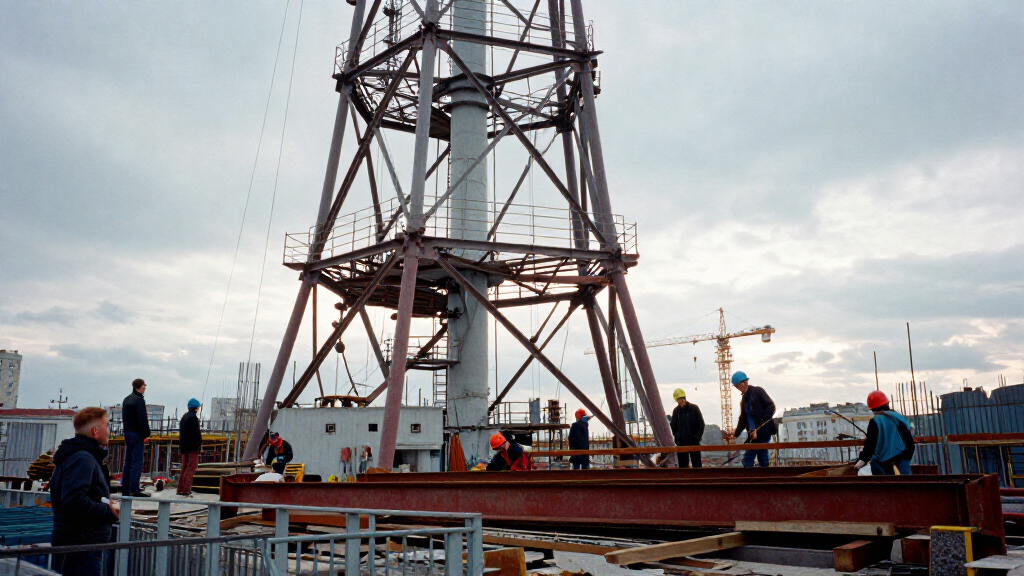
The Russian Television and Radio Broadcasting Network plans to dismantle almost all of Moscow’s 1922 Shukhov Tower this fall and replace it with a replica by 2028. Preservation specialists argue that replacing the original steel would destroy an essential part of engineer Vladimir Shukhov’s work; the reasons for the proposed replacement and the project’s detailed plans remain unclear in the available report.
Built between 1919 and 1922, the tower stands 144 meters (about 470 feet) high in Moscow’s Shabolovka neighborhood. It was designed by engineer Vladimir Shukhov, whose lattice hyperboloid structures used angled, straight metal rods held by rings. The design was strong and relatively light, and allowed wind to pass through the structure.
RTRS, identified by Meduza as the tower’s owner, intends to dismantle nearly all of the existing structure and replace it with a replica by 2028. The report says specialists object that preserving the original metal is as important as retaining the tower’s distinctive form. It does not provide a detailed construction schedule, engineering assessment or cost for the planned work.
The tower was once the Soviet Union’s principal radio and television transmitter. It carried a television signal from 1937, and regular television broadcasts began there on March 10, 1939. Its broadcasting role later shifted as Moscow’s Ostankino Tower was built.
Original Steel at the Center of Dispute
The dispute concerns what it means to preserve an engineering landmark. A replica could retain the tower’s recognizable silhouette, but specialists quoted by Meduza say replacing almost all of its metal would remove original material central to Shukhov’s achievement. The planned work therefore raises a direct question for conservation: whether preserving a structure’s appearance is enough when its historic fabric is replaced.
The tower also has a place in the history of communications in the Soviet Union. Its role as a major radio and television transmitter, and its prominent position in Shabolovka, give the decision significance beyond the fate of one aging structure. The report does not establish what practical or safety concerns led RTRS to propose the overhaul.
Top picks for "moscow about restore"
As an affiliate, we earn on qualifying purchases.
From Radio Tower to Moscow Landmark
The tower was commissioned amid the shortages of the Russian Civil War. The original plan called for a structure 350 meters high, but limited supplies meant it was built to 144 meters, with six sections rather than the planned nine. Meduza recounts that metal was scarce and needed for repairing bridges and railways.
Shukhov’s construction method involved assembling tower sections at ground level and lifting them into place one after another. The design drew on his patented lattice hyperboloid approach, used in structures from the late 19th century. The Shabolovka tower became one of his best-known works and a defining feature of its neighborhood.
“Preserving the original metal matters as much as preserving the tower’s shape.”
— Specialists cited by Meduza
Plans and Preservation Questions
The available report does not specify why RTRS considers dismantling necessary, whether the plan has received all required approvals, or how much original steel would remain in the completed structure. It also gives no detailed engineering report, project budget or account of how the removed material would be handled.
The report describes the work as planned for this fall and the replica as due by 2028, but does not identify specific start or completion dates. It remains unclear whether preservation specialists’ objections could alter the project or its scope.
Fall Work and 2028 Target
RTRS’s stated plan, as reported by Meduza, is to begin dismantling the tower in fall 2026 and complete a replica by 2028. Further details about approvals, engineering, costs and the preservation of original components would clarify how the project will proceed. The report does not say when RTRS will publish those details.
Key Questions
What is planned for the Shukhov Tower?
RTRS plans to dismantle almost all of the existing tower this fall and replace it with a replica by 2028, according to Meduza.
Why are specialists objecting?
Specialists cited in the report say the original steel is part of Shukhov’s work and that reproducing the tower’s shape while replacing most of its material would not preserve the original structure.
When was the tower built?
The 144-meter tower was built between 1919 and 1922 in Moscow’s Shabolovka neighborhood.
What remains unknown about the project?
The report does not give the project’s detailed engineering rationale, budget, approval status, exact schedule or the amount of original steel that might be retained.
Source: rss
Fall Picks
fall essentials
As an affiliate, we earn on qualifying purchases.