
📊 Full opportunity report: ADUs And Backyard Homes: A US Housing Update on IdeaNavigator AI — validation score, market gap, and execution plan.

Get everyday essentials delivered free with Prime
- Fast, free delivery on millions of items
- Prime Video, Amazon Music and more included
- Member-only deals all year
TL;DR
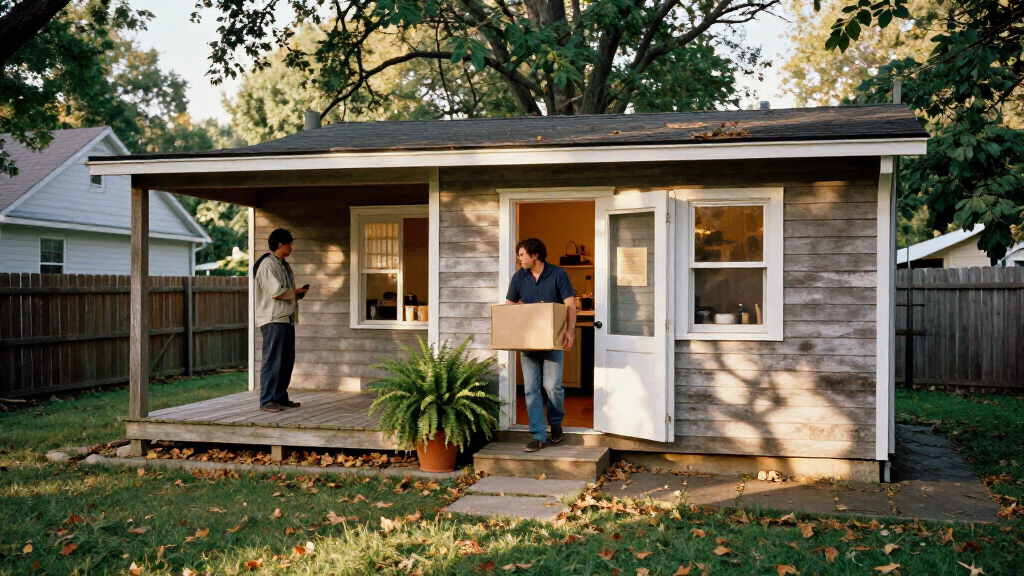
IdeaNavigator AI has outlined a business proposal for reports that estimate whether a specific property can support an accessory dwelling unit and whether construction could make financial sense. The proposal calls for testing demand in one California market by manually researching the first 25 paid orders; it does not report that a service has launched or that the market test has happened.
IdeaNavigator AI has proposed a paid report service that would help U.S. homeowners assess whether their property may support an accessory dwelling unit, or ADU, and estimate its costs and rental potential. The proposal describes a business opportunity and a way to test demand; it does not establish that a product has launched or that homeowners have bought reports.
The proposed report would answer practical questions that can delay a backyard-home decision: whether an ADU may be allowed on a particular lot, where it could fit, how large it might be, what construction could cost and what rent it might generate. Today, the proposal says, homeowners may need to review local zoning rules and arrange a builder site visit before they can judge feasibility. That process can take days or weeks, while builders may spend time screening properties that prove unsuitable.
The suggested first version is a web-based, address-specific service. It would combine county parcel information, such as lot boundaries, size and existing structures, with state ADU law and locally curated zoning rules. A homeowner-facing PDF could include permitted ADU types, size and setback limits, an estimate of buildable area, a construction cost range and projected rent based on local comparisons. The proposal recommends starting in one market and checking rules manually rather than attempting nationwide coverage at launch.
Possible revenue streams include charging homeowners $25 to $75 per report, selling subscriptions or white-label and API access to builders and architects, and referring qualified customers to ADU contractors or renovation lenders. The proposal also suggests a builder-connection option. These are proposed prices and business models; no sales, partnerships or revenue are reported.
A Faster First Feasibility Check
An address-specific screening report could help homeowners decide whether to spend money and time on a full design, permitting review or contractor consultation. If it gives a useful early indication of lot constraints and likely costs, it could also help builders focus on inquiries with a better chance of proceeding. Those outcomes remain hypotheses in the proposal, rather than demonstrated results.
The approach would also place a paid information product at an early point in the ADU process. A homeowner might use it to compare a potential rental unit with other ways of using a yard or financing a renovation. For contractors and lenders, the proposed lead service could provide access to people who have already supplied a property address and expressed interest. Whether a report can be accurate enough to earn homeowner trust, and whether businesses will pay for resulting leads, are central questions for a pilot.
Top picks for "adus backyard hous"
As an affiliate, we earn on qualifying purchases.
California Is the Proposed Starting Point
The proposal points to California’s statewide ADU law, which took effect in 2016, and subsequent rule changes as reasons that a focused service might be timely. It also cites a persistent U.S. housing shortage, mature parcel data and software that can parse regulations. The availability of those inputs does not by itself show that a report can resolve every property’s legal or physical constraints.
To illustrate demand, IdeaNavigator AI states that Los Angeles County permitted more than 45,000 ADUs in 2023 and that ADUs represent roughly one in five new housing units produced in California. The proposal does not provide a linked dataset or define the calculation behind the statewide share, so those figures should be read as claims made in the business case, not independently verified counts here. They describe permitting and housing production, not customer demand for feasibility reports.
The suggested pilot would choose an ADU-friendly metro, such as a county in Los Angeles or the Bay Area, and offer a fixed-price feasibility and return estimate. The team would fulfill the first 25 paid orders by hand, researching each parcel, then track purchases and requests for builder introductions. It would also approach three to five local firms to ask whether they would pay for qualified leads. These are proposed validation steps, not completed milestones.
Accuracy and Demand Remain Untested
No launch date, operating company, completed pilot or customer results are identified in the proposal. It is also unclear which jurisdiction would be selected, what sources would support each zoning determination, or how often locally curated rules would be updated as laws change.
A report’s estimated buildable area, construction cost and rent would not itself be a permit decision, contractor quote or guaranteed return. The proposal does not specify how reports would communicate those limits or handle properties whose rules require case-by-case review. It also offers no measured evidence yet on homeowner willingness to pay or builders’ willingness to buy referrals.
A Manual Pilot Would Test Buyers
The next step described is a concierge pilot in one California market: publish a fixed-price offer, attract local homeowners, and manually research 25 paid properties. The team would measure how many visitors convert to buyers and how often buyers request a builder introduction, then ask three to five local firms whether they would pay for those leads. No schedule is given, and it is not clear whether this pilot has begun. Its results would help determine whether to build automated reports or expand beyond the first market.
Key Questions
Has an ADU report service launched?
The proposal describes a possible product and pilot. It does not report a launch, available service or completed customer orders.
What would a homeowner report include?
The suggested PDF would assess local ADU rules and parcel characteristics, estimate a possible buildable area and provide construction cost and rental income ranges. The proposal does not say that these estimates would amount to an official zoning decision or a contractor quote.
How would the idea be tested?
IdeaNavigator AI proposes manually fulfilling 25 paid orders in one California market, tracking purchases and builder-introduction requests, and asking three to five firms whether they would pay for qualified leads.
How much might a report cost?
The proposed one-time homeowner price is roughly $25 to $75. That is a suggested range, not a confirmed price for a live product.
Source: IdeaNavigator AI
Halloween Picks
halloween
As an affiliate, we earn on qualifying purchases.