
📊 Full opportunity report: The Secret AI Policies That Are Quietly Changing China's Optical-Transceiver Industry on ThorstenMeyerAI.com — validation score, market gap, and execution plan.
TL;DR
The US FCC is drafting a measure to restrict imports of Chinese optical transceivers used in datacenters, aiming to protect AI infrastructure. The measure is in proposal, not yet enacted, and does not affect existing hardware. This signals a focus on controlling network interconnects rather than chips, with significant implications for supply chains and security.
The US Federal Communications Commission is currently drafting a measure to ban the import of new Chinese optical transceivers used in datacenters, according to Reuters. This move aims to safeguard US AI infrastructure from potential data theft, malware, and service disruptions, though the measure remains in proposal form and is not yet enacted. The draft could still be modified or shelved before any official implementation.
On August 4, 2023, Reuters reported that the FCC is developing a measure to restrict the import of new Chinese optical transceivers, devices critical for fiber-optic data transfer in datacenters. The measure’s goal is to enhance security by limiting Chinese hardware’s future deployment in sensitive US infrastructure. Market reactions showed a surge in US optical component stocks, such as Applied Optoelectronics and Coherent, while Chinese supplier Zhongji Innolight faced declines. However, this is a draft, not a final rule, and the FCC could alter or abandon it.
It is important to distinguish that this is an import restriction, not an export control. Unlike controls on chips, which restrict US sales abroad, this measure targets the hardware entering the US market. It focuses on the network interconnect layer, which is increasingly viewed as a strategic choke point in AI infrastructure buildout. The measure aims to prevent future Chinese hardware from entering US networks but does not impact the vast existing installed base of Chinese transceivers, which remains in operation.
A drafted FCC measure would bar imports of new Chinese optical transceivers — the small parts that turn signals into light inside a datacenter. The headline says “US bans Chinese datacenter tech.” It’s wrong in three specific ways.
▲ A draft, not a rule · could be modified or shelved“US bans Chinese datacenter tech” is wrong in three ways that change what the story actually means.
The transceiver is the interconnect — the layer that sets the real bottleneck of modern inference. The US isn’t moving on the compute here. It’s moving on the nervous system that wires the compute together.
- Restricts what US tech is sold to China
- Targets the compute
- The fight everyone has been watching
- Restricts what Chinese gear is imported into the US
- Targets the interconnect / network fabric
- Confirms the wire is now as contested as the chip
Read one way it has a hole you can see through. Read the other way it’s coherent.
Production is the product, and capacity doesn’t teleport. Four frictions stand between the draft and reality.
as strategically contested as the compute. But it’s a draft, and the base is already installed.
Implications of US Draft Restrictions on Chinese Optical Hardware
This development indicates a strategic shift in US policy, emphasizing control over the network fabric that connects AI compute systems rather than the compute chips themselves. It underscores the importance of interconnect infrastructure in AI performance and security. The measure could influence global supply chains, favoring US and allied suppliers, and signal a broader effort to limit Chinese technological influence in critical infrastructure. However, since the measure is only a draft, its actual impact remains uncertain until finalized.

FLYPROFiber- LC to LC Single Mode Fiber Patch Cable OS2 0.2M/0.7ft 6 Pack
- Application Versatility: Supports high-speed Ethernet and data center use
- High Performance: Low insertion loss and high return loss
- Flexible Design: 16mm bend radius for easy installation
As an affiliate, we earn on qualifying purchases.
As an affiliate, we earn on qualifying purchases.
Background on US-China Tech Competition and Optical Transceivers
Over the past year, US authorities have focused on restricting Chinese technology access, primarily through export controls on chips and related components. The recent focus on optical transceivers marks an expansion of this strategy into the network infrastructure layer. Chinese vendors, such as Zhongji Innolight, currently hold about 70% of the global transceiver market, with significant sales to US datacenters. The existing hardware installed in US facilities, largely purchased before these emerging restrictions, accounts for a substantial portion of the current infrastructure, complicating efforts to fully isolate Chinese equipment.
The draft measure follows China's own investments in optical hardware and the US government's classification of Chinese companies like Innolight as linked to military activities, raising concerns over national security and supply chain resilience.
"The US is moving to control the nervous system that wires the compute together, not just the chips themselves."
— Thorsten Meyer

1G SFP LX Optical Transceiver Module, Compatible with Fortinet FN-TRAN-LX FG-TRAN-LX FR-TRAN-LX 1000BASE-LX/LH Mini-GBIC SMF, 1330nm, 20km LC DOM
- Type: 1G SFP LX Optical Transceiver
- Compatibility: Compatible with Fortinet models
- Standards: Supports 1000BASE-LX standards
As an affiliate, we earn on qualifying purchases.
As an affiliate, we earn on qualifying purchases.
Uncertainties Surrounding the Finalization and Impact of the Draft
It is not yet clear whether the FCC will finalize and implement the draft measure, or if modifications will be made. The scope may change, and legal or political challenges could delay or block enforcement. Additionally, the measure does not affect the already installed Chinese transceivers, which constitute the majority of current US datacenter hardware, leaving existing infrastructure unaffected in the near term.

12G SDI Single-Mode Dual-Fiber Optical Transceiver Module, High-Speed Broadcast Video Transmission Transceiver Compatible with Blackmagic Devices
- Multi-Format SDI Support: Supports SD-SDI to 12G-SDI formats
- High-Speed Data Transfer: Up to 12.5Gbps for 4K video
- Long-Distance Fiber Reach: Supports 20km single-mode fiber
As an affiliate, we earn on qualifying purchases.
As an affiliate, we earn on qualifying purchases.
Next Steps and Potential Developments in US-China Tech Policy
The FCC is expected to review public comments and make decisions on the draft in the coming months. Final approval could lead to formal restrictions on Chinese transceiver imports, influencing supply chains and security policies. Monitoring official announcements and industry responses will be critical to understanding the measure's final scope and impact. Additionally, Chinese vendors may seek to diversify markets or accelerate domestic production to mitigate potential losses.
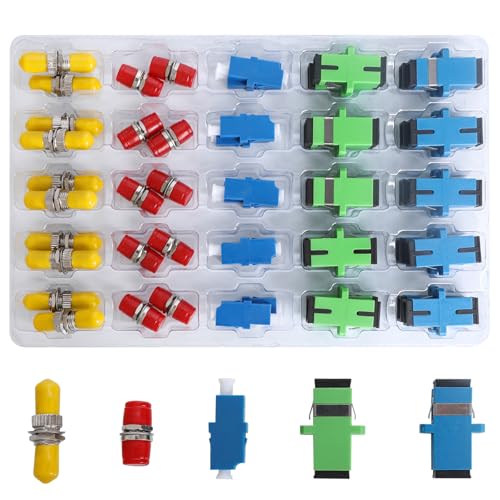
Eardion 50 Pieces Fiber Optic Coupler Kit, SC/UPC, SC/APC, LC, ST, FC Simplex Fiber Optic Adapters for FTTH Data Center Cabling System
- Kit Includes: 50 fiber optic adapters in five types
- Connectivity Compatibility: Supports various fiber optic network needs
- Performance Efficiency: Low insertion loss and high return loss
As an affiliate, we earn on qualifying purchases.
As an affiliate, we earn on qualifying purchases.
Key Questions
What exactly is being proposed by the US FCC?
The FCC is drafting a measure to restrict the import of new Chinese optical transceivers used in datacenters, aiming to limit Chinese hardware's future deployment in US infrastructure.
Does this ban affect existing Chinese transceivers in US datacenters?
No, the measure targets future imports; existing Chinese transceivers already installed are unaffected and will continue to operate.
How does this differ from chip export controls?
This measure is an import restriction managed through the FCC's authorization system, focusing on hardware entering the US, unlike export controls which limit US sales abroad.
What are the security concerns behind this move?
Officials cite risks of data theft, malware, and service disruption from Chinese hardware within sensitive US infrastructure, seeking to prevent future vulnerabilities.
When might this measure be finalized?
The FCC is expected to review public comments and potentially finalize the measure within the next few months, though timing remains uncertain.
Source: ThorstenMeyerAI.com