
📊 Full opportunity report: AI-Driven Sovereignty Market: Real And Marked By A Landmark Sale on ThorstenMeyerAI.com — validation score, market gap, and execution plan.
TL;DR
A major sale involving German AI firm Aleph Alpha and Canadian startup Cohere signals the real and growing market for AI sovereignty in Europe. Infrastructure, funding, and procurement show tangible progress, but questions about model independence remain.
German AI firm Aleph Alpha announced a merger with Canadian startup Cohere on April 24, 2026, in a deal valued at approximately 20 billion dollars. This marks a landmark moment, illustrating both the tangible progress and the complexities of Europe’s push for AI sovereignty amid rising investments and infrastructure developments.
In early 2026, Europe’s AI sovereignty efforts took a significant step forward with the operational launch of the Industrial AI Cloud in Munich, powered by 10,000 NVIDIA GPUs and fully financed by the German Telekom and NVIDIA. Major companies such as SAP, Siemens, Mercedes-Benz, and BMW are already utilizing this infrastructure, demonstrating real deployment of sovereign AI capabilities.
Simultaneously, the German government committed 805 million euros for a European AI gigafactory, with a consortium including SAP, Telekom, Siemens, and Schwarz Group negotiating to establish a major EU-based AI hub, positioning Europe as a competitive player against global hyperscalers. The EU also advanced regulatory frameworks, notably the Cloud and AI Development Act, emphasizing free software principles and aiming to reduce dependency on non-European cloud providers.
Despite these advances, the recent merger between Aleph Alpha and Cohere reveals ongoing structural challenges. The deal, with a combined valuation of around 20 billion dollars, was led by the Schwarz Group, which invested 600 million dollars in Cohere’s Series E funding. This move signals a consolidation in the AI market, with a focus on sovereignty and competitiveness, but also raises questions about the future of European model sovereignty, given the involvement of North American capital and technology.
Der Souveränitäts-Markt ist real geworden —
und hat im selben Quartal seinen Champion verkauft
Tagesaktuell verifizierter Marktpuls · Geld, GPUs und eine Ironie
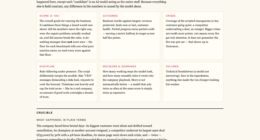
Das Geld ist da — drei Belege
Telekom + NVIDIA in München: ~0,5 ExaFLOPS, +50 % deutsche KI-Rechenleistung, privat finanziert. Schwarz-Gruppe: 11 Mrd. €, perspektivisch 100.000 GPUs.
805 Mio. € Gigafactory-Förderung; Konsortium SAP, Telekom, Siemens, IONOS, Schwarz. SPRIND: 125 Mio. € für eigene KI-Labore.
BfV wählt ChapsVision statt Palantir; Bundeswehr schließt Palantir aus der Cloud aus. Gartner: EU-Sovereign-Cloud +83 % auf 12,6 Mrd. $.
DIE IRONIE · 24. APRIL 2026
Mitten im Souveränitäts-Frühling schließt sich Aleph Alpha mit Kanadas Cohere zusammen — die Schwarz-Gruppe finanziert als Lead-Investor mit 600 Mio. $.
Freundliche Lesart: Konsolidierung unter Gleichgesinnten; 20 Mrd. $ Verbund schlägt unterfinanziertes Startup. Unbequeme Lesart: Deutschlands Modellschicht wird künftig in Toronto mitentschieden — und deutsches Kapital finanziert lieber fremde Champions als eigene.
Souveränität ist eine Schichtenfrage
Das Signal: Die souveräne Betriebsschicht ist jetzt kaufbar und bezahlbar — die Modellschicht bleibt Import. Wer Souveränitätsstrategien baut, sollte sie auf die Schichten bauen, die Europa tatsächlich kontrolliert.

AI Data Center Infrastructure Engineering: Power Distribution, Liquid Cooling, High-Density Networking, and Energy Efficiency for GPU Training … Hardware & Compiler Engineering Series)
As an affiliate, we earn on qualifying purchases.
As an affiliate, we earn on qualifying purchases.
Implications of the Aleph Alpha-Cohere Merger for European AI Sovereignty
This merger underscores the reality that Europe is making tangible progress in building AI infrastructure and attracting investment, yet faces ongoing challenges in achieving full sovereignty at the model level. The involvement of North American firms and capital suggests that sovereignty remains layered, with core hardware and infrastructure controlled locally, but models and AI development still heavily influenced by external players. The deal highlights the importance of controlling the entire AI stack, from hardware to software, to truly attain sovereignty and independence.

Service-Oriented and Cloud Computing: 10th IFIP WG 6.12 European Conference, ESOCC 2023, Larnaca, Cyprus, October 24–25, 2023, Proceedings (Lecture Notes in Computer Science)
As an affiliate, we earn on qualifying purchases.
As an affiliate, we earn on qualifying purchases.
Europe’s Growing AI Infrastructure and Investment Landscape
Since 2026, Europe has seen a surge in AI-related investments and infrastructure projects. The German Telekom and NVIDIA launched the Munich-based Industrial AI Cloud, representing a significant step toward sovereign AI infrastructure. The German government allocated substantial funding for a European gigafactory, and the EU enacted legislation to promote open-source and reduce dependency on non-European cloud providers. These developments are part of a broader strategy to establish Europe as a competitive player in AI, countering dominance by US and Chinese firms.
However, the recent Aleph Alpha-Cohere merger, with a valuation of around 20 billion dollars, signals a shift towards market consolidation. The deal, led by the Schwarz Group, reflects both strategic intent and structural limitations, as European firms seek to compete globally while navigating the dominance of North American and Asian AI models.
“The merger between Aleph Alpha and Cohere demonstrates both the potential and the limitations of European AI sovereignty, especially when external capital plays a significant role.”
— an anonymous researcher

NVIDIA DGX Spark™ – Personal AI Desktop Supercomputer – Desktop GB10 Grace Blackwell Chip
Supercomputer performance directly to your desk in a compact, energy-efficient design, enabling enterprise-scale AI and high-performance computing right…
As an affiliate, we earn on qualifying purchases.
As an affiliate, we earn on qualifying purchases.
Unresolved Questions About Model Sovereignty and Market Control
It remains unclear whether the Aleph Alpha-Cohere merger will lead to sustained European model sovereignty or if external influence will continue to dominate model development and deployment. The involvement of North American capital and the fact that core chips and hardware are still produced outside Europe raise questions about true independence.
Additionally, the long-term impact of the EU’s regulatory frameworks and funding initiatives on market dynamics and sovereignty is still evolving, with potential shifts depending on geopolitical and economic developments.

Accelerate Everything with Tensor Cores: A Developer’s Guide to High-Performance AI, Efficient Training, and Scalable Models
As an affiliate, we earn on qualifying purchases.
As an affiliate, we earn on qualifying purchases.
Next Steps in Europe’s AI Sovereignty Strategy
Europe will likely focus on expanding its AI infrastructure, including the upcoming gigafactory and regulatory support, while monitoring the integration and independence of AI models. The ongoing consolidation in the market, exemplified by the Aleph Alpha-Cohere deal, will be closely watched to assess whether Europe can develop a truly sovereign AI ecosystem. Further investments and policy adjustments are expected in the coming months to reinforce local control over AI development and deployment.
Key Questions
What does the Aleph Alpha-Cohere merger mean for European AI sovereignty?
The merger indicates market consolidation and strategic alignment, but sovereignty at the model level remains uncertain due to external influence and investment structures.
Is Europe becoming independent in AI hardware and infrastructure?
Yes, significant infrastructure like the Munich-based cloud and gigafactory projects are local, but core chips and silicon are still produced outside Europe, so full independence is not yet achieved.
How does government policy support European AI development?
The EU’s Cloud and AI Development Act and national funding initiatives aim to reduce dependency on non-European providers and promote open-source principles, but practical sovereignty remains a layered challenge.
Will the involvement of North American firms threaten European control?
While investments from North American firms can bolster European AI capabilities, they also introduce external influence, especially in model development, which complicates sovereignty efforts.
What are the next major developments to watch?
Further infrastructure projects, regulatory updates, and market consolidations will shape Europe’s AI sovereignty landscape over the coming year.
Source: ThorstenMeyerAI.com