AI-generated characters are changing storytelling by making experiences more personalized and interactive. They can respond to your choices and evolve over time, creating immersive narratives that adapt uniquely to you. However, ensuring they feel authentic and emotionally deep can be challenging, requiring careful design. Ethical questions also arise around authorship and manipulation. By exploring this topic further, you’ll discover how these innovations could reshape the way stories are told and experienced.
Key Takeaways
- AI-generated characters enable dynamic, personalized storytelling that adapts to user choices and evolves over time.
- They introduce new creative possibilities, transforming traditional narrative methods with interactive and immersive experiences.
- Challenges include ensuring emotional authenticity and avoiding superficial responses in AI characters.
- Ethical considerations involve authorship, originality, and avoiding stereotypes or emotional manipulation.
- Technological advancements deepen engagement but require responsible development and transparency to maintain trust.
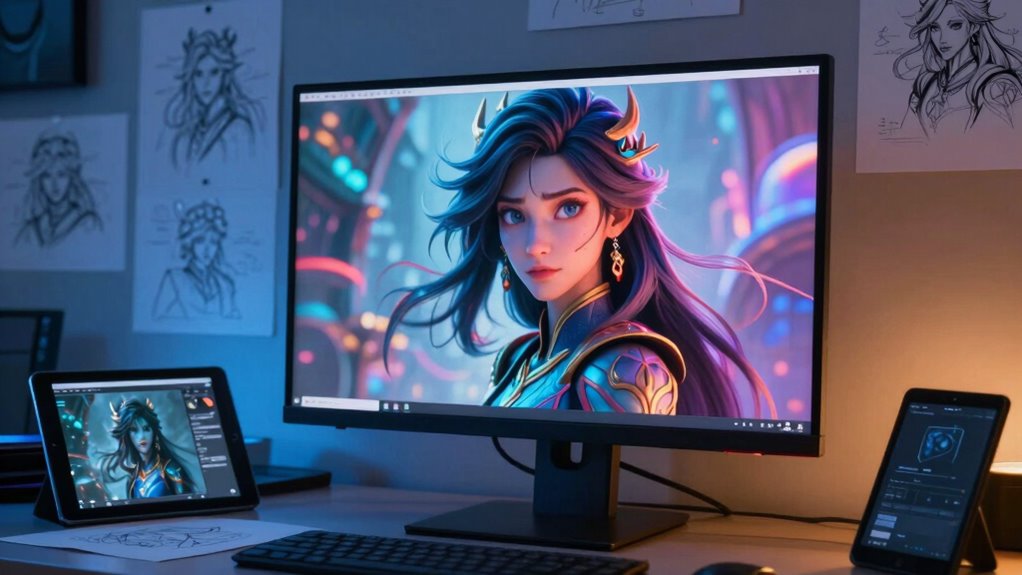
Have you ever wondered how artificial intelligence is transforming storytelling? AI-generated characters are reshaping the way stories are created and experienced, opening new possibilities that were once unimaginable. These characters, crafted by algorithms, can adapt to different narratives, respond dynamically to your choices, and even evolve over time. But as you embrace this innovative approach, it’s essential to contemplate two key aspects: character authenticity and ethical considerations.
Character authenticity becomes a central concern when AI is involved in generating personalities. Unlike human writers who infuse characters with genuine emotion, depth, and complexity, AI relies on patterns, data, and predefined parameters. This can sometimes lead to characters feeling superficial or predictable if not carefully designed. You might find yourself questioning whether these AI characters truly resonate or feel real, especially when their responses seem scripted or lack nuance. Striking a balance between technological efficiency and emotional authenticity is critical; otherwise, storytelling risks becoming hollow or mechanical. When done well, AI can produce characters that surprise, challenge, and engage you in ways traditional methods might not, but it requires meticulous programming and creative input to maintain that sense of genuine character. Additionally, ongoing developments in AI-driven storytelling highlight the importance of thoughtful integration to ensure these characters enhance rather than detract from the narrative depth. Moreover, understanding the role of algorithms in shaping character development helps you appreciate the technological foundation behind these creations.
AI characters can feel superficial without careful design, balancing efficiency with authenticity to create genuinely engaging stories.
Alongside character authenticity, ethical considerations play a significant role in shaping the future of AI-driven storytelling. As you interact with AI-generated characters, questions about authorship, originality, and moral responsibility arise. Who owns the stories these characters help create? Are these characters truly autonomous, or are they reflections of their programmers’ biases? There’s also concern about how AI might perpetuate stereotypes or manipulate emotions, especially if used unethically. Transparency becomes essential—knowing when you’re engaging with a machine rather than a human can influence your trust and emotional investment. Developers and creators must navigate these ethical waters carefully, ensuring that AI enhances storytelling without compromising integrity or exploiting users. Additionally, advancements in home theater projector technology, such as realistic image rendering and immersive visuals, can further deepen your engagement with AI-driven narratives by creating more convincing and captivating environments. Recognizing how AI-generated content impacts creative industries highlights the importance of maintaining human oversight to preserve authenticity and emotional depth.
Furthermore, ongoing research into the impact of AI on creativity underscores the importance of human oversight to preserve the emotional depth that makes storytelling meaningful. Ultimately, AI-generated characters offer exciting opportunities for personalized, immersive stories, but they also demand careful contemplation of authenticity and ethics. Your experience as a reader or viewer hinges on how well these characters are crafted to feel real and how responsibly they’re used. As technology advances, your role may shift from passive recipient to active participant in shaping these narratives. Embracing this evolution means advocating for transparency, authenticity, and ethical standards. When done right, AI can enrich storytelling, making it more engaging and inclusive, but only if creators remain mindful of the profound implications behind these digital characters.
AI-generated storytelling characters
As an affiliate, we earn on qualifying purchases.
As an affiliate, we earn on qualifying purchases.
Frequently Asked Questions
How Do Audiences Typically Respond to Ai-Generated Characters?
You might find audiences are both intrigued and skeptical about AI-generated characters. They often appreciate the virtual authenticity these characters bring, feeling more immersed in the story. However, some worry about losing human touch and the creative autonomy behind storytelling. While AI can enhance engagement, it also raises questions about emotional depth and originality, making audience responses a mix of fascination and concern about the future of storytelling.
Can Ai-Created Characters Evoke Genuine Emotional Connections?
Yes, AI-created characters can evoke genuine emotional connections if they exhibit emotional authenticity and creative originality. When these characters are designed with nuanced personalities and relatable traits, you’ll find yourself emotionally engaged, even if you know they’re artificial. The key lies in the AI’s ability to craft believable emotions and unique stories, making you feel connected to characters that are a product of innovative technology rather than traditional storytelling.
What Are the Ethical Considerations of Using AI in Storytelling?
You need to take into account the ethical implications of using AI in storytelling. Think of the creative process as a delicate brushstroke, where intellectual property rights protect original ideas, and authenticity maintains genuine expression. Using AI responsibly ensures you respect creators’ rights and preserve the integrity of storytelling. If you overlook these ethical questions, you risk eroding trust, infringing on originality, and diminishing the human touch that makes stories truly compelling.
How Do AI Characters Influence Traditional Storytelling Roles?
AI characters influence traditional storytelling roles by shifting the focus toward AI creativity, allowing for innovative narratives and dynamic interactions. You might find that AI-driven characters challenge the authenticity of traditional characters, prompting you to question what makes a character genuine. As AI takes on storytelling roles, you could see new opportunities for personalized stories, but also face concerns about maintaining character authenticity and emotional depth.
Will Ai-Generated Characters Replace Human Writers and Creators?
You might think AI-generated characters will replace human writers, but remember, “The proof of the pudding is in the eating.” AI creativity can produce impressive characters, but human authenticity remains essential for emotional depth and genuine storytelling. While AI tools can assist and inspire, they can’t fully replicate the nuanced understanding and empathy that human creators bring. So, AI will complement, not replace, human storytellers.
interactive AI character devices
As an affiliate, we earn on qualifying purchases.
As an affiliate, we earn on qualifying purchases.
Conclusion
As you explore the evolving landscape of AI-generated characters, you might find yourself gently guided into new storytelling horizons. These digital companions whisper possibilities of deeper connection and endless creativity, inviting you to imagine worlds beyond traditional bounds. Embrace this quiet revolution, where imagination and technology dance softly together, weaving stories that feel both familiar and invigoratingly new. In this gentle shift, your storytelling journey becomes an unfolding adventure, subtly transformed by the artful touch of AI.
personalized storytelling AI apps
As an affiliate, we earn on qualifying purchases.
As an affiliate, we earn on qualifying purchases.
AI character development software
As an affiliate, we earn on qualifying purchases.
As an affiliate, we earn on qualifying purchases.