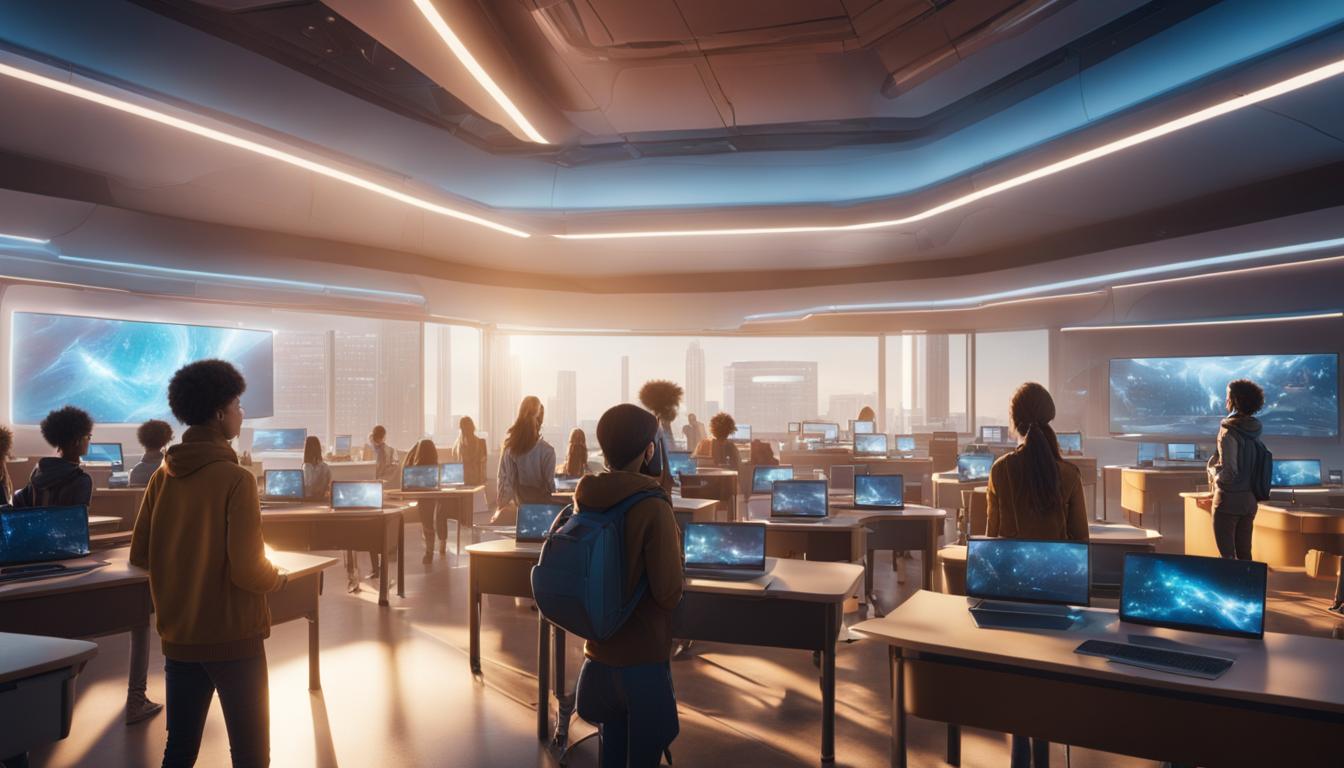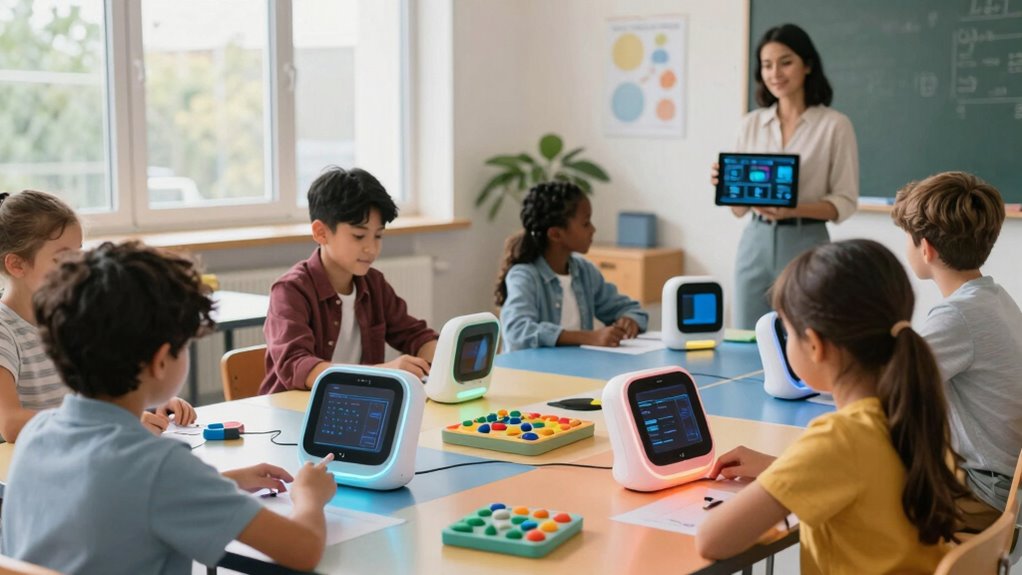

You can see how AI improves accessibility for neurodiverse learners by personalizing sensory environments, reducing overwhelm, and making spaces more comfortable. It also enhances communication with tools like speech generators and translation apps that adapt to individual styles. Additionally, AI collects data to monitor responses and suggest tailored strategies, helping educators intervene early and effectively. If you want to discover more ways AI is shaping inclusive learning, keep exploring how these innovations support every learner’s potential.
Key Takeaways
- AI personalizes sensory environments by dynamically adjusting lighting, sound, and tactile feedback to reduce overwhelm for neurodiverse learners.
- AI-driven communication tools adapt to individual styles, enhancing self-expression and peer interaction.
- Data analysis identifies patterns in responses, enabling tailored interventions and real-time support.
- Adaptive learning platforms and sensory-friendly equipment create inclusive, customized educational spaces.
- Continuous AI advancements improve accessibility, offering tailored environments that foster full potential for neurodiverse students.
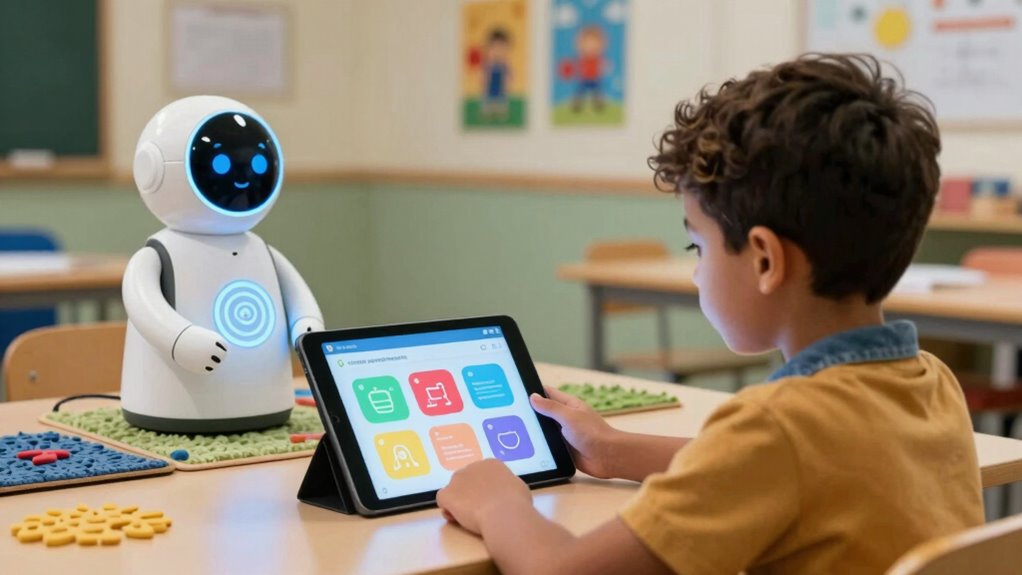
Artificial intelligence is transforming the way we create accessible learning environments, especially for neurodiverse students. With AI, you can tailor educational experiences to meet individual sensory processing needs, making learning more comfortable and engaging. Many neurodiverse learners experience sensory overload or sensitivities to certain stimuli, which can hinder their ability to focus or participate fully. AI-powered tools can analyze how a student responds to different sensory inputs and adjust the environment accordingly. For instance, AI can control lighting, sound levels, or even the tactile feedback in learning devices, creating a personalized sensory experience that minimizes overwhelm. This dynamic adjustment helps students stay engaged without feeling overstimulated, fostering a more inclusive classroom atmosphere.
AI personalizes sensory environments, reducing overwhelm and supporting neurodiverse learners’ engagement and comfort in the classroom.
Communication strategies also see significant improvements through AI integration. For neurodiverse learners, expressing needs or understanding instructions can sometimes be challenging. AI-driven communication tools, like speech-generating devices or real-time translation apps, can bridge these gaps. These tools adapt to each student’s unique communication style, offering alternative methods such as visual supports or simplified language, which enhance understanding and interaction. AI can also analyze speech patterns or gestures, providing immediate feedback or prompting to support clearer communication. As a result, students gain more confidence in expressing themselves and engaging with peers and educators effectively, reducing frustration and increasing participation.
Furthermore, AI can help educators develop more targeted, evidence-based strategies for supporting neurodiverse students. By collecting and analyzing data on how individual students respond to various interventions, AI can identify patterns and suggest tailored approaches. This personalized insight allows you to implement strategies that resonate best with each learner’s sensory and communication needs, promoting a more adaptive and responsive learning environment. Additionally, AI tools can facilitate real-time monitoring, alerting teachers to signs of sensory overload or communication difficulties so they can intervene promptly. This proactive support can prevent crises and ensure students remain comfortable and focused during lessons. Data analysis plays a crucial role in refining these strategies and ensuring continuous improvement.
In essence, AI empowers you to create an educational space where neurodiverse learners can thrive. By addressing sensory processing challenges and enhancing communication strategies, AI not only makes learning more accessible but also more meaningful. It shifts the focus from one-size-fits-all approaches to personalized learning experiences, where every student’s unique needs are recognized and supported. As technology continues to evolve, the potential for AI to make education truly inclusive becomes even greater, helping every neurodiverse learner reach their full potential. Additionally, understanding projector technology and how it can be optimized for different environments can further enhance sensory-friendly educational spaces. Incorporating adaptive learning tools can also help customize content delivery to suit each student’s sensory and communication preferences. Moreover, integrating sensory-friendly equipment can further personalize the learning environment to reduce overstimulation and promote comfort. Recognizing how filter sizing/flow impacts sensory environments can contribute to creating more effective, calming educational settings for neurodiverse learners.
AI sensory environment adjustment tools for neurodiverse students
As an affiliate, we earn on qualifying purchases.
As an affiliate, we earn on qualifying purchases.
Frequently Asked Questions
How Can AI Personalize Learning for Different Neurodiverse Conditions?
You can leverage AI to personalize learning by using adaptive technologies that adjust content and pacing based on your unique needs. AI analyzes your interactions, providing personalized support that helps you stay engaged and overcome challenges. This way, your learning experience becomes more effective, as the system continuously adapts to your progress and preferences, ensuring you receive the right level of assistance and resources tailored specifically to your neurodiverse condition.
What Are Potential Privacy Concerns With Ai-Driven Accessibility Tools?
Think of AI-driven accessibility tools as a treasure chest, but without proper safeguards, your privacy could be the lost gem. You might worry about data security risks or how your personal information is used. Ensuring user consent is like locking the chest; it guarantees you’re in control of what gets shared. Without these protections, sensitive data could be exposed, risking your trust and safety. Always demand clear policies and robust security measures to protect your privacy.
How Cost-Effective Are AI Solutions for Educational Institutions?
AI solutions are generally cost-effective for educational institutions because they reduce long-term expenses by automating personalized learning and support. You can conduct a detailed cost analysis to compare initial investments with ongoing savings. Funding strategies, like grants or partnerships, can ease implementation costs. Overall, integrating AI enhances accessibility efficiently, making it a smart choice for institutions aiming to support neurodiverse learners without overspending.
Can AI Adapt to Rapidly Changing Needs of Neurodiverse Learners?
Yes, AI can adapt quickly to the changing needs of neurodiverse learners. By utilizing emotional recognition, AI detects shifts in mood and adjusts support accordingly. It also offers personalized sensory integration, modifying stimuli to suit individual preferences and sensitivities. You’ll find AI systems becoming more responsive over time, providing tailored learning experiences that enhance engagement, comfort, and progress, all while accommodating the dynamic nature of neurodiverse learners’ needs.
What Training Is Necessary for Educators to Implement AI Tools Effectively?
You need targeted teacher training focusing on technology integration to implement AI tools effectively. This training should cover understanding AI functionalities, troubleshooting issues, and customizing tools to meet neurodiverse learners’ needs. By gaining practical skills and confidence, you can seamlessly incorporate AI into your lessons, ensuring it enhances accessibility. Continuous professional development keeps you updated on evolving AI features, empowering you to adapt quickly and optimize learning experiences for all students.

Talking Keyboards The Wireless Standard – AAC Device for Speech Therapy and Assistive Speaking – AAC Communication Device for Non-Verbal Adults, Speech Impaired Individuals, Post-Operative Patients
- Wireless Talking Keyboard: Wireless standard for speech therapy
- Designed for Adults and Seniors: Suitable for post-op and throat cancer patients
- Portable Speech Device: Battery-powered, no PC needed
As an affiliate, we earn on qualifying purchases.
As an affiliate, we earn on qualifying purchases.
Conclusion
By embracing AI, you open the door to a world where neurodiverse learners can navigate education with the confidence of a seasoned sailor steering through changing seas. These tools act as guiding stars, illuminating personalized pathways and breaking down barriers. When you harness AI’s potential, you’re not just adapting; you’re transforming education into a more inclusive landscape where every learner can thrive, turning obstacles into opportunities and barriers into bridges.
adaptive learning platforms for neurodiverse learners
As an affiliate, we earn on qualifying purchases.
As an affiliate, we earn on qualifying purchases.

Laynertoys Montessori Busy Book Color Sorting Toys for Toddlers 3-5, Autism Educational Toys Preschool Learning Activities for Kids, Sensory Fine Motor Matching Games for 3 Year Old Boys Girls Gifts
- Color Sorting Activities: Includes 12 colors and 48 stickers
- Educational Learning Tool: Enhances fine motor skills and cognition
- Safe and Non-Toxic: Made from high-quality, safe materials
As an affiliate, we earn on qualifying purchases.
As an affiliate, we earn on qualifying purchases.