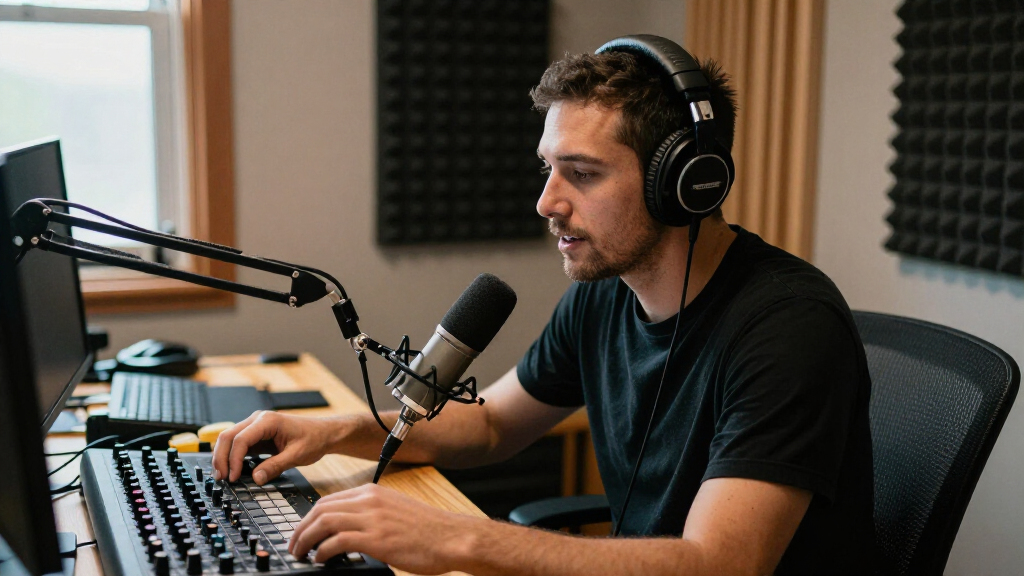

The best wireless headphones for podcasters balance clear monitoring, comfortable long-session wear, and a connection that suits your recording workflow. I’d choose the Audio-Technica ATH-M50xBT2 as the best overall for its studio-focused sound and versatility; the Sony WH-CH720N stands out for noise cancellation, while the OneOdio A70 offers a practical value-oriented option. The main tradeoff is that Bluetooth convenience can bring latency, so wireless headphones may not be ideal for monitoring your own voice live. Comfort, connection options, and how much outside noise you need to block also shape the choice. Read on for the full breakdown and advice on matching a pair to your podcast setup.

Get everyday essentials delivered free — and shop member deals
- Fast, free delivery on millions of items
- Access to Prime Big Deal Days deals on October 6–7
- Prime Video, Amazon Music and more included
Complete the kit


Key Takeaways
- The ATH-M50xBT2 leads for all-around podcast use because its studio-minded positioning and wireless flexibility suit both editing and everyday listening; it costs more in features and focus than simpler picks.
- Noise cancellation serves a different job from accurate monitoring. Sony’s WH-CH720N is the stronger fit for noisy rooms, but active noise control does not replace a reliable wired monitoring path.
- The OneOdio A70 is the practical value pick for podcasters who want flexible listening without prioritizing premium noise cancellation or the most studio-oriented tuning.
- Several models emphasize everyday convenience over recording precision. The TOZO HT3, JLab JBuds Lux ANC, and Soundcore Q20i make more sense for general listening and reducing distractions than for judging subtle edits.
- Wireless should not be the only connection plan. For live mic monitoring, latency and device compatibility can matter more than extra listening features; confirm a wired option works with your interface or recorder.
| Audio-Technica ATH-M20xBT Wireless Over-Ear Headphones, Black |  | Best for Long Recording Days | Driver size: 40 mm | Connectivity: Bluetooth and 3.5 mm audio jack | Bluetooth range: 10 meters | VIEW LATEST PRICE | See Our Full Breakdown |
| OneOdio A70 Bluetooth Over-Ear Headphones |  | Best for Flexible Wired Connections | Type: Over-ear headphones | Drivers: 40 mm neodymium | Connectivity: Bluetooth and wired | VIEW LATEST PRICE | See Our Full Breakdown |
| Audio-Technica ATH-M50xBT2 Wireless Over-Ear Headphones, Black |  | Best for Audio-Focused Monitoring | Driver size: 45 mm | Battery life: Up to 50 hours | Rapid charging: 10 minutes provides up to 3 hours of use | VIEW LATEST PRICE | See Our Full Breakdown |
| Sony WH-CH720N Wireless Noise-Canceling Over-Ear Headphones, Black |  | Best for Noisy Workspaces | Weight: 192 g | Noise cancellation: Dual Noise Sensor technology and Integrated Processor V1 | Battery life: Up to 35 hours | VIEW LATEST PRICE | See Our Full Breakdown |
| TOZO HT3 Hybrid Noise-Cancelling Wireless Over-Ear Headphones |  | Best for Customizable Listening | Driver size: 40 mm | Noise cancellation: Hybrid ANC, up to 45 dB | Battery life: Up to 90 hours | VIEW LATEST PRICE | See Our Full Breakdown |
| JLab JBuds Lux ANC Wireless Over-Ear Headphones, Cloud White |  | Best for Long Recording Days | Driver size: 40 mm | Noise control: Hybrid active noise cancellation, up to 35 dB | Battery life: Up to 70 hours | VIEW LATEST PRICE | See Our Full Breakdown |
| Soundcore by Anker Q20i Hybrid Active Noise Cancelling Headphones, Almond White |  | Best for Wired Studio Compatibility | Type: Over-ear wireless headphones | Noise control: Hybrid active noise cancellation; Transparency mode | Connectivity: Bluetooth 5.0; 3.5 mm headphone jack | VIEW LATEST PRICE | See Our Full Breakdown |
| wireless headphones for podcaster | Battery life | Connectivity | Bluetooth range | Driver size |
|---|---|---|---|---|
| Audio-Technica ATH-M20xBT Wire | Up to 60 hours | Bluetooth and 3.5 mm audio jack | 10 meters | 40 mm |
| OneOdio A70 Bluetooth Over-Ear | — | Bluetooth and wired | 10 meters | — |
| Audio-Technica ATH-M50xBT2 Wir | Up to 50 hours | — | — | 45 mm |
| Sony WH-CH720N Wireless Noise- | Up to 35 hours | — | 10 meters | — |
| TOZO HT3 Hybrid Noise-Cancelli | Up to 90 hours | Bluetooth, 3.5 mm AUX, and USB-C | 20 meters | 40 mm |
| JLab JBuds Lux ANC Wireless Ov | Up to 70 hours | Bluetooth 4; USB-C wired connection | — | 40 mm |
| Soundcore by Anker Q20i Hybrid | Up to 40 hours with ANC on | Bluetooth 5.0; 3.5 mm headphone jack | 10 meters | — |
More Details on Our Top Picks
Audio-Technica ATH-M20xBT Wireless Over-Ear Headphones, Black
The ATH-M20xBT suits podcasters who want reliable wireless listening between recording sessions without frequent charging. Its up to 60-hour battery life outlasts the ATH-M50xBT2’s 50-hour estimate, while multipoint pairing makes it easier to switch between a computer and phone. For editing or monitoring from gear with a headphone output, the included 1.2 m audio cable gives you a wired option; the built-in mic is more useful for calls than as a primary recording microphone. The tradeoff is a simpler feature set: unlike Sony’s WH-CH720N, it has no noise control for reducing distractions in shared spaces. Its three-hour charge time also calls for a little planning, despite rapid-charge support.
Pros:- Up to 60 hours of battery life suits long stretches between charges.
- Multipoint Bluetooth pairing connects to two devices.
- Included 1.2 m cable supports wired listening.
- Rapid charging provides up to three hours of use from a 10-minute charge.
Cons:- No noise control to reduce environmental distractions.
- A full battery charge takes three hours.
- The built-in microphone is intended for calls, not a dedicated recording setup.
Best for: Podcasters who prioritize long battery life, two-device pairing, and a wired fallback for listening to a recording setup.
Not ideal for: People recording or editing in noisy shared rooms who want active noise cancellation, or anyone expecting the built-in mic to replace a dedicated podcast microphone.
- Driver size:40 mm
- Connectivity:Bluetooth and 3.5 mm audio jack
- Bluetooth range:10 meters
- Battery life:Up to 60 hours
- Rapid charging:10 minutes provides up to 3 hours of use
- Included audio cable:1.2 m
- Impedance:36 ohm
Our verdict“Choose the ATH-M20xBT if battery endurance and wired listening matter more than noise cancellation or advanced monitoring features.”
OneOdio A70 Bluetooth Over-Ear Headphones
The OneOdio A70 is the most connection-flexible pick here for podcasters who move between consumer devices and equipment with a full-size headphone jack. Its 3.5 mm and 6.35 mm jacks make wired listening practical across more setups than the ATH-M20xBT, which includes a 3.5 mm cable but not a 6.35 mm connection. Wireless playtime reaches up to 72 hours, and the foldable build is handy for carrying between a home studio and a recording location. A built-in mic can handle calls, but it should not be mistaken for a studio recording mic. The tradeoff is that wired use depends on an audio cable, and audio sharing also needs a cable connection to another pair—less convenient than a simple wireless handoff.
Pros:- Up to 72 hours of wireless playtime.
- 3.5 mm and 6.35 mm jacks accommodate a wider range of wired setups.
- Foldable design and padded earcups suit travel and extended listening.
- Built-in microphone supports calls.
Cons:- Wired listening requires an audio cable.
- Audio sharing requires a cable connection to additional headphones.
- No noise-cancellation feature is listed for blocking room distractions.
Best for: Podcasters who need headphones for both Bluetooth listening and wired connection to equipment with either 3.5 mm or 6.35 mm outputs.
Not ideal for: Creators who want wireless audio sharing or noise cancellation, or who need headphones with a stated weight and detailed fit measurements.
- Type:Over-ear headphones
- Drivers:40 mm neodymium
- Connectivity:Bluetooth and wired
- Headphone jacks:3.5 mm and 6.35 mm
- Bluetooth version:5.3
- Wireless playtime:Up to 72 hours
- Bluetooth range:10 meters
- Microphone:Built-in HD microphone with noise reduction
Our verdict“Pick the A70 if wired compatibility across different audio jacks matters more than wireless sharing or noise control.”
Audio-Technica ATH-M50xBT2 Wireless Over-Ear Headphones, Black
Among these wireless picks, the ATH-M50xBT2 puts the strongest emphasis on detailed listening: its 45 mm drivers are described as delivering clear sound and deep, accurate bass, making it a better fit for reviewing edits than the A70’s more connection-focused design. Dual beamforming microphones also make calls clearer, although neither this feature nor the built-in mics on the other models turn headphones into a substitute for a dedicated podcast mic. You get multipoint pairing, a wired audio cable, and up to 50 hours of battery life. That is less than the ATH-M20xBT’s 60 hours and the OneOdio A70’s 72, so this choice favors listening detail and call clarity over maximum endurance. A full charge takes 3.5 hours.
Pros:- 45 mm drivers are specified for clear sound and deep, accurate bass.
- Dual beamforming microphones support clearer calls.
- Multipoint pairing connects to two Bluetooth devices.
- Includes an audio cable and a carrying pouch.
Cons:- Up to 50 hours of battery life is shorter than the ATH-M20xBT and OneOdio A70.
- A full charge takes 3.5 hours.
- No noise-cancellation feature is listed.
Best for: Podcasters who spend time reviewing edits and want detailed playback, clearer hands-free calls, and both Bluetooth and wired listening.
Not ideal for: People whose main priority is the longest time between charges, or who need active noise cancellation for a busy recording space.
- Driver size:45 mm
- Battery life:Up to 50 hours
- Rapid charging:10 minutes provides up to 3 hours of use
- Bluetooth pairing:Multipoint; connects to two devices
- Microphones:Dual microphones with beamforming technology
- Charging connection:USB-C
- Battery charge time:3.5 hours
- Included accessories:USB charging cable, audio cable, and pouch
Our verdict“Choose the ATH-M50xBT2 for audio-focused editing and clearer calls if you can accept less battery life than the ATH-M20xBT or A70.”
Sony WH-CH720N Wireless Noise-Canceling Over-Ear Headphones, Black
The Sony WH-CH720N is the clearest choice for podcasters who edit or prepare scripts where surrounding noise makes concentration difficult. Its Dual Noise Sensor technology and Integrated Processor V1 provide noise cancellation, a feature missing from the ATH-M20xBT and ATH-M50xBT2. At 192 g, it is also the lightest option in this group with a stated weight, which can help during long listening sessions. Multipoint pairing and hands-free calling suit a workflow split between a computer and phone. The compromises are a shorter 35-hour battery life than the Audio-Technica and OneOdio alternatives, plus limited connection detail: a 3.5 mm jack and headphone cable are included, but the listing does not specify driver size or wired-monitoring performance. Noise cancellation is for listening, not a replacement for quiet recording conditions.
Pros:- Noise cancellation helps reduce distractions during editing and preparation.
- Lightweight 192 g design.
- Multipoint connection supports two devices.
- Quick charge provides up to an hour of playback from three minutes of charging.
Cons:- Up to 35 hours of battery life is shorter than the ATH-M20xBT, ATH-M50xBT2, and OneOdio A70.
- Noise cancellation does not make the headphones a substitute for a quiet recording space.
- The supplied product details do not list driver size or a detailed wired-monitoring specification.
Best for: Podcasters who edit or do production work in noisy shared spaces and value a lightweight fit and active noise cancellation.
Not ideal for: People prioritizing maximum battery life or those who need detailed driver specifications and a clearly defined wired monitoring setup.
- Weight:192 g
- Noise cancellation:Dual Noise Sensor technology and Integrated Processor V1
- Battery life:Up to 35 hours
- Quick charging:3 minutes provides up to 1 hour of playback
- Bluetooth version:5
- Bluetooth range:10 meters
- Multipoint connection:Connects to two devices
- Included accessories:Headphone cable and USB Type-C cable
Our verdict“Choose the WH-CH720N if noise cancellation and low weight matter more than the longer battery life offered by the other models.”
TOZO HT3 Hybrid Noise-Cancelling Wireless Over-Ear Headphones
The TOZO HT3 combines the longest stated battery life in this group with the widest set of listening adjustments. Its hybrid ANC is a useful advantage over the non-noise-cancelling ATH-M50xBT2, while app-based EQ offers 32 modes for tailoring playback when reviewing voices or other audio. Up to 90 hours of battery life and Bluetooth, AUX, and USB-C connections give it more ways to fit into a creator’s routine than the Sony WH-CH720N, whose listed battery life is 35 hours. That flexibility comes with unknowns: the product details give no weight or specific comfort measurements, and its 10-minute quick charge provides up to nine hours, not a full recharge. ANC can help with listening focus, but it does not make a noisy room suitable for recording.
Pros:- Up to 90 hours of battery life, the longest stated figure in this group.
- Hybrid ANC is useful for reducing listening distractions.
- Bluetooth, 3.5 mm AUX, and USB-C connections offer multiple listening options.
- TOZO app provides 32 EQ modes, with dual-device pairing and replaceable ear pads.
Cons:- Product details do not specify weight or detailed comfort measurements.
- The 10-minute quick charge provides up to nine hours rather than fully recharging the headphones.
- Noise cancellation does not replace a quiet room for recording.
Best for: Podcasters who want long battery life, adjustable playback EQ, and noise cancellation for editing in varied environments.
Not ideal for: Buyers who need a stated weight or detailed fit information, or who need headphones to isolate a recording microphone from room noise.
- Driver size:40 mm
- Noise cancellation:Hybrid ANC, up to 45 dB
- Battery life:Up to 90 hours
- Quick charge:10 minutes provides up to 9 hours of playback
- Battery charge time:2 hours
- Connectivity:Bluetooth, 3.5 mm AUX, and USB-C
- Bluetooth range:20 meters
- Audio customization:32 EQ modes via TOZO app
- Design:Foldable over-ear headphones with replaceable ear pads
Our verdict“Pick the HT3 if you want maximum battery endurance and customizable playback, and can accept limited published fit details.”
JLab JBuds Lux ANC Wireless Over-Ear Headphones, Cloud White
The JBuds Lux ANC suits podcasters who want wireless monitoring headphones that can go several long sessions between charges. Its claimed up to 70 hours of battery life exceeds the Q20i’s stated 40 hours with ANC on, reducing the chance of a mid-session charge break. Hybrid ANC and Be Aware Mode also give you options for listening in a noisy room or staying alert to nearby conversation. Bluetooth multipoint is useful when you alternate between a recording computer and a phone, while app-based EQ lets you tailor playback. The tradeoff is limited wired flexibility: unlike the Soundcore Q20i, this model has no headphone jack, and its USB-C wired option may not suit every recording setup. It is also not water resistant, so it is less suited to mobile work in unpredictable conditions.
Pros:- Up to 70 hours of battery life supports long stretches between charges.
- Hybrid ANC and Be Aware Mode offer different listening options for noisy rooms and nearby conversation.
- Bluetooth multipoint supports connection to two devices.
- Customizable EQ and app controls let listeners adjust playback.
Cons:- No 3.5 mm headphone jack limits compatibility with recording equipment that uses a standard analog output.
- Not water resistant, which restricts use in wet or demanding mobile environments.
- The provided data does not specify microphone or monitoring latency performance for recording workflows.
Best for: Podcasters recording long sessions who want extended battery life, ANC, and the ability to stay connected to a phone and computer.
Not ideal for: Podcasters who need a standard 3.5 mm headphone connection for studio gear, or who record outdoors and want water resistance.
- Driver size:40 mm
- Noise control:Hybrid active noise cancellation, up to 35 dB
- Battery life:Up to 70 hours
- Battery charge time:2.5 hours
- Connectivity:Bluetooth 4; USB-C wired connection
- Weight:235 g
- Water resistance:Not water resistant
- Warranty:2 years
Our verdict“Choose the JBuds Lux ANC if long battery life matters more than a standard headphone jack or weather protection.”
Soundcore by Anker Q20i Hybrid Active Noise Cancelling Headphones, Almond White
The Soundcore Q20i is a flexible pick for podcasters who want wireless listening but still need a 3.5 mm connection for compatible recording gear. That jack gives it a practical advantage over the JLab JBuds Lux ANC, which has no headphone jack; the included AUX cable also supports Hi-Res audio. Its hybrid ANC can help reduce surrounding noise during playback, while Transparency mode lets outside sound through when you need awareness between takes. Bluetooth multipoint can keep a phone and computer connected, and the app offers sound adjustments. The tradeoffs matter for studio use: ANC is unavailable in AUX mode, so wired listening does not retain that feature, and the stated 40-hour battery life is with ANC on—shorter than the JLab’s listed maximum. The product data does not specify recording latency or microphone monitoring performance.
Pros:- 3.5 mm headphone jack supports wired connections to compatible recording equipment.
- Hybrid ANC and Transparency mode provide different listening options.
- Up to 40 hours of listening with ANC on.
- Bluetooth multipoint and app-based EQ support flexible device use and sound adjustment.
Cons:- Noise cancellation is unavailable in AUX-in mode.
- Hi-Res audio requires a wired AUX connection rather than Bluetooth.
- Its stated battery life is shorter than the JLab JBuds Lux ANC’s up-to-70-hour claim.
Best for: Podcasters who want Bluetooth convenience alongside a standard AUX connection for compatible studio equipment.
Not ideal for: Podcasters who expect ANC while listening through the AUX cable or want the longest stated battery life between charges.
- Type:Over-ear wireless headphones
- Noise control:Hybrid active noise cancellation; Transparency mode
- Connectivity:Bluetooth 5.0; 3.5 mm headphone jack
- Bluetooth range:10 meters
- Battery life:Up to 40 hours with ANC on
- Battery charge time:2 hours
- Fast charging:5 minutes provides 4 hours of listening
- Included items:Headphones, built-in media cable, USB-C charging cable
Our verdict“Choose the Q20i if a standard wired connection is more useful to your setup than the JLab’s longer battery life.”
How We Picked
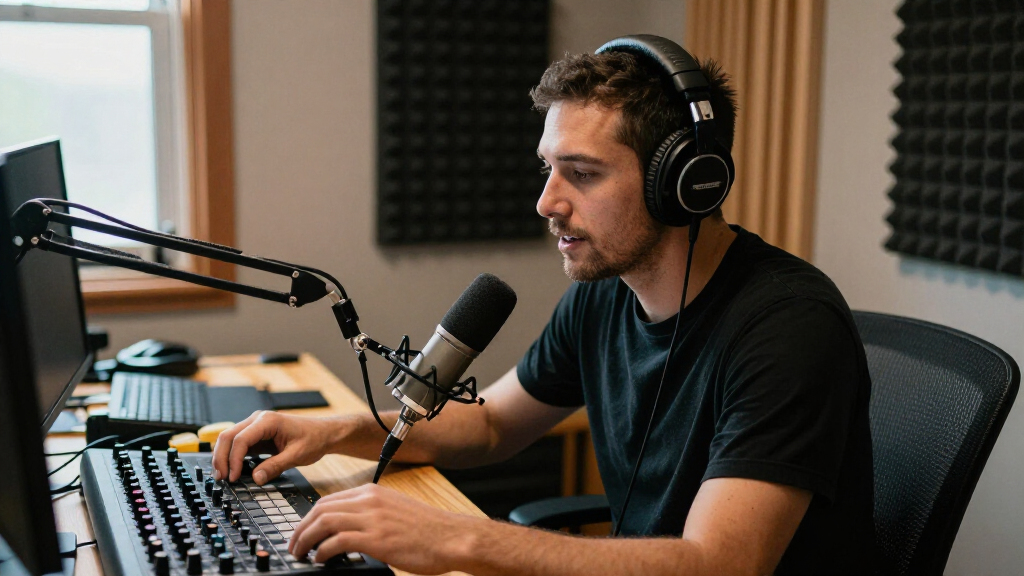
I ranked these headphones around podcast tasks rather than general-purpose listening alone: monitoring a voice, editing spoken-word audio, wearing headphones through long sessions, and working in rooms with distractions. I weighed connection flexibility and the practicality of using a wired connection alongside Bluetooth, since wireless latency can make live self-monitoring uncomfortable. Comfort, controls, noise management, and usefulness beyond the recording desk also shaped the comparison.
The ATH-M50xBT2 takes the overall lead because it is the most podcast-focused all-rounder in this group. The OneOdio A70 ranks as the value-minded alternative, while the Sony WH-CH720N earns a distinct place for listeners who need noise cancellation. The remaining models rank by how well their mix of convenience, comfort, and distraction control fits less demanding monitoring needs; none should be treated as a substitute for checking latency and connection compatibility in a real recording setup.
| wireless headphones for podcaster | Connectivity | Battery life |
|---|---|---|
| Audio-Technica ATH-M20xBT Wire | Bluetooth and 3.5 mm audio jack | Up to 60 hours |
| OneOdio A70 Bluetooth Over-Ear | Bluetooth and wired | — |
| Audio-Technica ATH-M50xBT2 Wir | — | Up to 50 hours |
| Sony WH-CH720N Wireless Noise- | — | Up to 35 hours |
| TOZO HT3 Hybrid Noise-Cancelli | Bluetooth, 3.5 mm AUX, and USB-C | Up to 90 hours |
| JLab JBuds Lux ANC Wireless Ov | Bluetooth 4; USB-C wired connection | Up to 70 hours |
| Soundcore by Anker Q20i Hybrid | Bluetooth 5.0; 3.5 mm headphone jack | Up to 40 hours with ANC on |
Factors to Consider When Choosing Wireless Headphones For Podcasters
Choosing headphones for podcasting means separating recording needs from everyday listening needs. Before paying for noise cancellation or extra features, decide whether you need to monitor a live microphone, edit recordings, or simply focus while preparing scripts. These priorities can point to different models, even when the headphones share a wireless design.
Live Monitoring and Bluetooth Latency
If you need to hear your own voice while recording, wireless convenience can become a drawback: Bluetooth delay may make speech feel disconnected from your delivery. Many podcasters avoid that problem by connecting headphones directly to an audio interface or recorder during recording, then using wireless mode for editing or routine listening. Check that the headset supports a wired connection and that the cable can reach your equipment comfortably. Also verify that your recording device has the right headphone output or adapter. A common mistake is buying for wireless freedom before checking the signal path. If you rarely monitor live, latency matters less than it does for a host recording into a mic.
Choose for Editing, Not Just Listening
Headphones that make music enjoyable do not always reveal the details you need to edit dialogue. Listen for whether speech sounds natural and whether breaths, room noise, and small cuts are easy to notice rather than masked by heavy bass or boosted treble. No consumer wireless headphone turns a treated studio pair into a reference tool, so use consistent volume and compare important edits on another playback device. Avoid making EQ changes based only on one headphone’s sound signature. If you produce heavily processed episodes, clear speech monitoring may matter more than immersive sound. For casual recording, a comfortable, familiar sound can be a sensible compromise.
Comfort for Long Recording Sessions
A short fitting can hide pressure that becomes distracting during a full interview or editing session. Headband force, earcup depth, heat, and how the pads sit around glasses all affect whether you can keep listening attentively. If possible, check the return policy and wear the headphones for a longer stretch before committing. Lightweight designs may help with fatigue, while softer or more enclosing earcups can feel warmer over time. Do not assume a larger earcup will fit better; ear shape and clamp pressure vary from person to person. For remote interviews, comfort can improve focus more than another convenience feature.
Noise Cancellation Versus Hearing Your Room
Active noise cancellation is useful for steady background sounds, such as ventilation or travel noise, but it does not remove every nearby voice or sudden interruption. During recording, strong isolation may also make it harder to stay aware of a doorbell, a co-host, or equipment alerts. Decide whether you need quiet for editing or awareness while hosting, since those needs can conflict. A closed-back fit can reduce some outside sound without relying entirely on electronic cancellation. Avoid treating ANC as a fix for a noisy recording space: it changes what you hear, not what the microphone captures. Improving mic placement and room noise often has more effect on the finished episode.
Connection, Controls, and Device Compatibility
Make a list of the devices you actually use: a phone for calls, a laptop for editing, or an interface for recording. Bluetooth pairing and multipoint features can simplify switching, but they do not guarantee smooth behavior with every operating system or recording app. Check whether the controls are easy to find by touch, since reaching for a laptop during a session can interrupt your workflow. Confirm how the headphones behave when a cable is attached and whether playback controls still work as expected. If you record remotely, prioritize reliable connection and clear call handling over a long list of app features. Test the intended setup before an important interview rather than discovering a pairing issue on recording day.
When Paying More Makes Sense
Spend more when a specific improvement will affect your work repeatedly, such as a more suitable monitoring sound, a more comfortable fit, or better noise control for a shared space. Paying extra for features you will not use can leave less room in your budget for a microphone, interface, or room treatment, which may improve the recording more directly. A beginner recording occasional episodes can start with a practical, comfortable pair and upgrade after identifying a real limitation. A frequent editor may value a model that supports long sessions and reliable wired listening. Think about the cost of a poor fit too: headphones that sit unused are not a bargain. Match spending to the number of hours you wear them and the role they play in your signal chain.
Frequently Asked Questions
Can I use Bluetooth headphones to monitor my voice while recording a podcast?
You can, but Bluetooth delay may make your voice sound late and distract you while speaking. For live monitoring, connect the headphones by cable to your audio interface or recorder when the equipment supports it. Wireless mode can still be useful for editing, reviewing finished episodes, and listening between sessions. Test your full signal path before recording, since latency depends on the devices and software involved. If you do not need to hear yourself live, this limitation may not affect your choice.
Are noise-canceling headphones a good choice for recording in a shared home?
They can help you concentrate while preparing scripts or editing, especially when the background noise is steady. They do not stop your microphone from picking up other people, appliances, or room echo. For recording, improving mic position and reducing noise near the microphone usually matters more than what your headphones block from your ears. Some hosts also prefer to hear enough of their surroundings to stay aware of co-hosts and interruptions. Treat noise cancellation as a listening aid, not a room-treatment solution.
Should I prioritize accurate sound or comfort for podcast editing?
Both matter, but the better priority depends on how long you work and what you edit. If sessions run for hours, discomfort can reduce focus before small differences in sound become useful. For detailed dialogue edits, prioritize clear speech and a presentation that does not hide clicks, breaths, or background noise. Keep your listening volume moderate and check important decisions on another device to avoid overrelying on one pair. A comfortable headphone with a wired option may be a better working tool than a feature-heavy pair that does not suit your ears.
Do I need separate headphones for recording and editing?
Not necessarily. One pair can cover both tasks if it fits comfortably, gives you a useful view of speech, and connects reliably to your recording gear. The complication is live monitoring: a wireless pair may be convenient for editing but introduce delay when monitoring a microphone. Some podcasters use the same headphones with a cable during recording and Bluetooth for other listening. Separate pairs make sense when your recording setup demands a dependable wired monitor and your daily listening needs call for different features.
What should I check before buying headphones for a laptop-and-phone podcast setup?
Confirm that the headphones pair reliably with both devices and check whether they can switch between them in the way you expect. If your laptop is used for recording, find out whether your software and interface support the headphone connection you plan to use. Check for a wired listening option, because Bluetooth is not always suitable for live monitoring. Consider whether the controls are usable during calls and whether the fit stays comfortable through an interview. A brief setup test with your actual devices can reveal compatibility problems before they disrupt a session.
Conclusion
For one pair that can cover monitoring, editing, and everyday listening, I’d pick the Audio-Technica ATH-M50xBT2 as best overall. The OneOdio A70 is my best value choice for a practical setup, while the Sony WH-CH720N is the best fit for podcasters who need noise cancellation around steady background noise. Beginners who want a straightforward, general-use starting point can compare the Soundcore Q20i and TOZO HT3, with comfort and device compatibility deciding between them. For a premium-leaning, studio-focused pick, choose the ATH-M50xBT2; for extended listening or changing environments, consider the JLab JBuds Lux ANC or Sony based on fit and noise-control needs. Whichever you choose, confirm wired monitoring compatibility if you plan to hear your voice live.
Halloween Picks
halloween
As an affiliate, we earn on qualifying purchases.