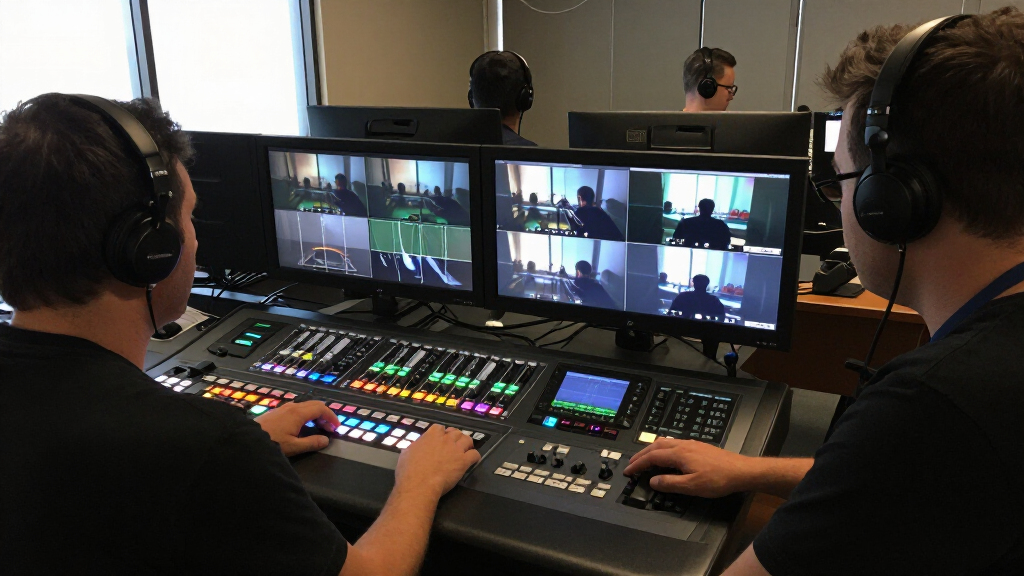

Video production switchers bring multiple camera feeds together for live shows, streams, and events, but the right choice depends on your sources and workflow. I rank the Osee GoStream Duet 8 ISO as the best overall because its ISO recording supports flexible post-production, while the Blackmagic Design ATEM Mini Pro is a capable HDMI-centered pick for streamers and the Tenveo PC500 stands out for mixed HDMI/SDI sources and PTZ control. The main tradeoffs are input compatibility, recording and streaming features, and control complexity—a compact switcher can be easier to run, while a larger production tool may offer more room to grow. No single model suits every camera setup or crew. Continue reading for the full breakdown and advice on matching a switcher to your production.

Get everyday essentials delivered free — and shop member deals
- Fast, free delivery on millions of items
- Access to Prime Big Deal Days deals on October 6–7
- Prime Video, Amazon Music and more included
Key Takeaways
- The Osee GoStream Duet 8 ISO leads for productions that need isolated camera recordings for editing, while a basic program-output workflow may not benefit from that extra capability.
- The Tenveo PC500’s combination of HDMI, SDI, and PTZ control targets camera systems that need format flexibility and remote operation; it is a more specialized fit than an HDMI-only desk setup.
- Blackmagic’s ATEM Mini Pro and ATEM SDI represent different connection priorities: HDMI sources versus SDI infrastructure. Check the cameras and cable runs you already own before choosing between them.
- The RØDE RØDECaster Video models pair switching with audio-focused production tools, making them more relevant when one device must serve a presenter-led show than when switching alone is the priority.
- Compact touch-screen and built-in-screen models such as the RGBlink Mini V3 and CineTreak Mixer Plus options put local control first, while models with broader production workflows may suit crews willing to manage a more involved setup.
| Tenveo PC500 4K HDMI and SDI Video Switcher with PTZ Control |  | Best for PTZ and Mixed-Connector Productions | HDMI inputs: 4; 2 support 4K60fps | SDI inputs: 4 | Video output: Up to 1080p60fps | VIEW LATEST PRICE | See Our Full Breakdown |
| RGBlink Mini V3 4K HDMI Video Switcher with Touch Screen |  | Best for Hands-On HDMI Control | HDMI inputs: 4 | HDMI outputs: 2, 1080p | Screen: 2.1-inch touch screen | VIEW LATEST PRICE | See Our Full Breakdown |
| Blackmagic Design ATEM Mini Pro HDMI Live Stream Switcher |  | Best for Established HDMI Streaming Workflows | HDMI inputs: 4 | HDMI output: 1 | Audio inputs: 2 x 3.5 mm stereo analog | VIEW LATEST PRICE | See Our Full Breakdown |
| FEELWORLD LIVEPRO L1 V1 4-Channel HDMI Video Switcher |  | Best for Compact, Straightforward Switching | HDMI inputs: 4 | HDMI output: 1 | USB output: USB 3.0 | VIEW LATEST PRICE | See Our Full Breakdown |
| Osee GoStream Duet SDI and HDMI Live Streaming Video Mixer |  | Best for Multi-Platform and Portrait Streaming | Inputs: 4 SDI, 4 HDMI, USB-C, NDI HX, and SD/SSD playback | Simultaneous streaming: Up to 3 platforms | Formats: Landscape and portrait | VIEW LATEST PRICE | See Our Full Breakdown |
| Osee GoStream Deck HDMI Live Streaming Video Mixer |  | Best for Multi-Platform Streaming | HDMI inputs: 4 | HDMI outputs: 2 | USB-C ports: 2 | VIEW LATEST PRICE | See Our Full Breakdown |
| Roland V-8HD HD Video Switcher |  | Best for Large HDMI Setups | Video inputs: Up to 8 HDMI sources | Preview monitor: Built-in multi-view monitor | Effects and keying: Five-layer engine | VIEW LATEST PRICE | See Our Full Breakdown |
| RØDE RØDECaster Video S Podcast Video Switcher and Audio Interface |  | Best for Video Podcasts | Video inputs: 4: 3 HDMI and 1 USB | Video resolution: 1080p60 | Audio inputs: 2 Neutrik combo jacks | VIEW LATEST PRICE | See Our Full Breakdown |
| Roland V-1HD+ Compact HD Video Switcher |  | Best Compact Audio-and-Video Switcher | Audio mixer: 14-channel | Connector type: HDMI | Ports: 4 | VIEW LATEST PRICE | See Our Full Breakdown |
| CineTreak Mixer Plus 4-Channel HDMI Video Switcher with 4.5-Inch LCD |  | Best for Built-In Multiview Monitoring | HDMI inputs: 4 | Display: 4.5-inch multiview LCD | Transition effects: 30 adjustable, including Mix and DIP | VIEW LATEST PRICE | See Our Full Breakdown |
| Osee GoStream Duet 8 ISO Live Streaming Video Switcher |  | Best for ISO Recording and Mixed Camera Rigs | Video inputs: 4 HDMI 2.0 and 4 3G-SDI | HDMI input support: Up to 4K60 | Output: 1080p | VIEW LATEST PRICE | See Our Full Breakdown |
| RØDE RØDECaster Video Professional Video Switcher and Audio Interface |  | Best for Video Podcasts and Studio Audio | Video inputs: 6 total: 4 HDMI and 2 USB | Multi-source scenes: 7 | Resolution: 1080p60 | VIEW LATEST PRICE | See Our Full Breakdown |
| CINETREAK Mixer Plus 4-Input HDMI Video Switcher with 4-Inch Built-In Screen |  | Best Compact Option with Built-In Monitoring | HDMI inputs: 4 | Display: 4-inch built-in screen | Transition effects: 30 | VIEW LATEST PRICE | See Our Full Breakdown |
| Blackmagic Design ATEM SDI Live Production Switcher |  | Best for Straightforward SDI Production | SDI inputs: 4 x 3G-SDI | Video support: 10-bit HD | Video conversion: Real-time frame-rate, format, and color-space conversion | VIEW LATEST PRICE | See Our Full Breakdown |
| video production switcher | Weight | HDMI inputs | Dimensions |
|---|---|---|---|
| Tenveo PC500 4K HDMI and SDI V | — | 4; 2 support 4K60fps | — |
| RGBlink Mini V3 4K HDMI Video | 0.49 kg | 4 | — |
| Blackmagic Design ATEM Mini Pr | 1.2 pounds | 4 | 4.07 x 9.35 x 1.38 inches |
| FEELWORLD LIVEPRO L1 V1 4-Chan | 500 g | 4 | 1.7 x 7.48 x 4.3 inches |
| Osee GoStream Duet SDI and HDM | 1 kg | — | 4.2 x 10.6 x 1.94 inches |
| Osee GoStream Deck HDMI Live S | — | 4 | — |
| Roland V-8HD HD Video Switcher | — | — | — |
| RØDE RØDECaster Video S Podcas | 875 g | — | 10.4 × 10 × 5.05 inches (D × W × H) |
| Roland V-1HD+ Compact HD Video | 5.2 pounds | — | 16.61 × 8.86 × 6.46 inches (D × W × H) |
| CineTreak Mixer Plus 4-Channel | — | 4 | — |
| Osee GoStream Duet 8 ISO Live | 3 pounds | — | — |
| RØDE RØDECaster Video Professi | 1275 g | — | 30.59 x 13.25 x 6.14 inches (D x W x H) |
| CINETREAK Mixer Plus 4-Input H | — | 4 | 8 x 8 x 3 inches |
| Blackmagic Design ATEM SDI Liv | — | — | — |
More Details on Our Top Picks
Tenveo PC500 4K HDMI and SDI Video Switcher with PTZ Control
The Tenveo PC500 is the strongest fit here for productions that combine HDMI and SDI cameras with remote-controlled PTZs. Its four HDMI and four SDI inputs, plus USB and NDI|HX3 support, give it more connection flexibility than the four-HDMI Blackmagic ATEM Mini Pro. PTZ control for up to four cameras with presets can also reduce the need for separate camera-control gear. Dual streaming, recording to USB drives or SD cards, audio mixing, multiview, and keying effects make it suited to a more involved live setup.
The main tradeoff is that 4K input support does not mean 4K output: program output tops out at 1080p60. The listing also gives conflicting descriptions of its input channels, so I would verify the exact configuration before buying. This is a broader production hub than the compact FEELWORLD LIVEPRO L1 V1, but it brings more setup complexity.
Pros:- Four HDMI and four SDI inputs accommodate mixed camera connections.
- PTZ control supports up to four cameras with presets.
- Dual-channel streaming and USB or SD-card recording support flexible workflows.
- Includes multiview, audio mixing, and keying effects.
Cons:- Program output is limited to 1080p60 despite support for some 4K60 inputs.
- The supplied listing has conflicting input-channel descriptions.
- Its broader controls and connection options may add setup overhead for simple productions.
Best for: Live event teams using a mix of HDMI and SDI cameras, especially productions that need PTZ control, multiview, and simultaneous streaming or recording.
Not ideal for: Creators who need a 4K program output or a straightforward four-camera HDMI switcher; the 1080p60 output limit and broad feature set may not suit them.
- HDMI inputs:4; 2 support 4K60fps
- SDI inputs:4
- Video output:Up to 1080p60fps
- Streaming protocols:SRT, RTMP, RTSP, NDI|HX3
- Recording:USB drive, HDD, or SD card; H.264
- PTZ control:Up to 4 cameras; 10 presets per camera
- Outputs:SDI PGM, HDMI PGM, HDMI AUX, USB 3.0 UVC
- Audio inputs:2 independent 3.5 mm microphone inputs
Our verdict“Choose the PC500 if your production needs PTZ control and mixed HDMI/SDI inputs, but skip it if you require 4K output or a simpler setup.”
RGBlink Mini V3 4K HDMI Video Switcher with Touch Screen
The RGBlink Mini V3 suits operators who want a compact physical control surface rather than relying entirely on software. Four HDMI inputs cover a typical multi-camera stream, while the 2.1-inch touch screen and T-bar provide direct ways to monitor and switch sources. Dual HDMI outputs can separate program and preview duties, and UVC mode lets a computer recognize the unit as a webcam. USB recording adds a local capture option.
Compared with the Blackmagic ATEM Mini Pro, the Mini V3 makes its small screen and T-bar more central to operation, but its HDMI outputs are specified at 1080p and some advanced functions require optional TAO Cloud licensing. It is less connection-flexible than the Tenveo PC500, which adds SDI and Ethernet streaming. The Mini V3 makes most sense for HDMI-only setups where tactile switching matters more than extensive broadcast connectivity.
Pros:- Four HDMI inputs support a multi-camera setup.
- Touch screen and T-bar provide direct switching controls.
- Two HDMI outputs can serve program and preview workflows.
- Supports UVC webcam mode and USB recording up to 2TB.
Cons:- Some advanced features require optional TAO Cloud licensing.
- HDMI outputs are specified at 1080p.
- A 35W-or-higher USB-C PD adapter is recommended.
Best for: Solo operators and small production teams who want four HDMI sources, a built-in touch screen, and a T-bar for direct switching.
Not ideal for: Productions using SDI cameras, buyers who need every advanced feature without optional cloud licensing, or operators who cannot supply a recommended 35W-or-higher USB-C power adapter.
- HDMI inputs:4
- HDMI outputs:2, 1080p
- Screen:2.1-inch touch screen
- Recording:USB drives up to 2TB
- Power:USB-C PD; 35W or higher adapter recommended
- Weight:0.49 kg
- Warranty:1 year
Our verdict“Pick the Mini V3 for a compact, hands-on HDMI workflow, but choose a more connected model such as the Tenveo PC500 for SDI or broader streaming needs.”
Blackmagic Design ATEM Mini Pro HDMI Live Stream Switcher
The ATEM Mini Pro is a focused choice for teams building around four HDMI cameras and computer-based live production. Its built-in multiview helps an operator check sources before taking them live, while the audio mixer, transition and keying options, Ethernet connection, and USB-C webcam output cover the core tasks of a stream. Compared with the FEELWORLD LIVEPRO L1 V1, it offers a more developed set of mixing tools, while staying compact enough for a small desk or travel kit.
Its limits are clear: there are only four HDMI inputs, and the listed connections do not include SDI or a headphone output. The Tenveo PC500 is a better match for mixed HDMI/SDI rigs and PTZ control; the ATEM is a more straightforward fit when a production is already HDMI-based and needs a recognized set of live-production functions. Buyers should confirm their monitoring needs before choosing it.
Pros:- Multiview supports source checks during a live production.
- Built-in audio mixer and transition and keying options support a fuller switching workflow.
- USB-C webcam output connects the switcher to a computer.
- Compact 1.2-pound design is suited to desk and portable setups.
Cons:- Limited to four HDMI inputs.
- No SDI input is listed.
- No 3.5 mm headphone output is listed.
Best for: Small studios and stream operators with up to four HDMI sources who need multiview, audio mixing, and USB-C webcam output.
Not ideal for: Crews with SDI cameras, more than four sources, or a requirement for a listed 3.5 mm headphone output.
- HDMI inputs:4
- HDMI output:1
- Audio inputs:2 x 3.5 mm stereo analog
- Ethernet:1 x RJ45
- USB:1 x USB-C 3.1 Gen 1
- Weight:1.2 pounds
- Dimensions:4.07 x 9.35 x 1.38 inches
Our verdict“Choose the ATEM Mini Pro for a compact, four-camera HDMI stream with integrated mixing tools, but look to the Tenveo PC500 if your rig needs SDI or PTZ control.”
FEELWORLD LIVEPRO L1 V1 4-Channel HDMI Video Switcher
The FEELWORLD LIVEPRO L1 V1 keeps the job narrow: switch among four HDMI sources, monitor them on the built-in display, and send the feed to a computer over USB 3.0. That makes it a practical match for a modest stream where the operator needs on-device preview without building around a larger control surface. At 500 g, it is also easier to fit into a compact kit than the more connector-rich Tenveo PC500.
The tradeoff is a simpler workflow. Its supported video tops out at 1080p, and remote operation depends on a LAN connection and XPOSE software. The Blackmagic ATEM Mini Pro offers a broader set of listed mixing options, while the LIVEPRO L1 V1 puts more emphasis on built-in preview and basic computer streaming. I would choose it for uncomplicated HDMI switching, not for a production that needs extensive effects or multiple output paths.
Pros:- Four HDMI inputs allow real-time switching between camera or video sources.
- Built-in 2-inch display supports preview and monitoring.
- USB 3.0 output connects to a computer for streaming.
- Compact 500 g body supports tripod mounting.
Cons:- Supported video is limited to 1080p.
- Remote operation requires LAN access and XPOSE software.
- The supplied specifications list one HDMI output.
Best for: Small event operators and educators who need a compact four-camera HDMI switcher with built-in preview and USB output to streaming software.
Not ideal for: Productions requiring 4K video, SDI connections, or remote control without a LAN connection and XPOSE software.
- HDMI inputs:4
- HDMI output:1
- USB output:USB 3.0
- Display:2-inch LCD
- Supported video:Up to 1080p
- Weight:500 g
- Dimensions:1.7 x 7.48 x 4.3 inches
Our verdict“Choose the LIVEPRO L1 V1 for compact, basic HDMI switching with on-device preview, but step up to the ATEM Mini Pro for a broader mixing feature set.”
Osee GoStream Duet SDI and HDMI Live Streaming Video Mixer
The GoStream Duet is the lineup’s most adaptable pick for productions that need mixed input types and multiple destinations. Its listed connections include four SDI and four HDMI inputs, plus USB-C, NDI HX, and SD/SSD playback. It can stream to up to three platforms at once and supports landscape and portrait formats, so one production can serve conventional video feeds and vertical-first channels. Control is also flexible, with a built-in GUI, Mac/Windows software, and Bitfocus Companion support.
Compared with the Tenveo PC500, the Duet places more emphasis on portrait workflows and three-platform streaming, while both offer extensive SDI and HDMI connectivity. Its feature range may be unnecessary for a simple four-camera stream like one built around the FEELWORLD LIVEPRO L1 V1. NDI HX support requires the latest firmware for free use, so I would check the firmware path before planning a network-based workflow.
Pros:- Accepts SDI, HDMI, USB-C, NDI HX, and SD/SSD playback sources.
- Supports landscape and portrait formats for varied delivery channels.
- Can stream to up to three platforms simultaneously.
- Offers built-in, desktop software, and Bitfocus Companion control.
Cons:- Free NDI HX support requires downloading the latest firmware.
- Its broad input and control options may add unnecessary complexity to simple productions.
- The listed built-in media includes the mixer and power adapter.
Best for: Event producers and streaming teams that need SDI and HDMI sources, portrait and landscape output, and simultaneous streams to multiple platforms.
Not ideal for: Buyers who only need a basic four-input HDMI switcher or who want a plug-and-play NDI HX setup without checking firmware requirements.
- Inputs:4 SDI, 4 HDMI, USB-C, NDI HX, and SD/SSD playback
- Simultaneous streaming:Up to 3 platforms
- Formats:Landscape and portrait
- Control methods:Built-in GUI, Mac/Windows software, and Bitfocus Companion
- Ports:16
- Dimensions:4.2 x 10.6 x 1.94 inches
- Weight:1 kg
Our verdict“Choose the GoStream Duet for mixed SDI/HDMI production with portrait output and multi-platform streaming, but choose the FEELWORLD LIVEPRO L1 V1 for a simpler HDMI-only job.”
Osee GoStream Deck HDMI Live Streaming Video Mixer
The GoStream Deck is a flexible choice for producers who need to route several HDMI sources while recording and sending a live show to multiple destinations. Its four HDMI inputs, two HDMI outputs, and streaming to as many as three platforms give it a broader distribution focus than the compact Roland V-1HD+, which is centered on switching and audio mixing. Recording to an SD card or USB SSD and playing MP4 files also help keep playback and capture within the same workflow. Chroma key, picture-in-picture, and portrait-production support add range for varied formats. The tradeoff is that some streaming setups rely on a computer and software such as OBS or vMix; buyers seeking a self-contained workflow should check their setup needs before choosing it.
Pros:- Four HDMI inputs and two outputs support multi-camera setups and separate display feeds.
- Can stream to up to three platforms and output to a PC over USB.
- Records to an SD card or USB SSD and plays MP4 files.
- Chroma key, picture-in-picture, and portrait-production support suit varied show formats.
Cons:- Some streaming workflows require a PC and software such as OBS or vMix.
- The listed Type B power plug is intended for North American outlets.
Best for: Small production teams that need four HDMI sources, local recording, and simultaneous streams to multiple platforms.
Not ideal for: Buyers who want every streaming workflow to run without a connected computer or who need inputs beyond HDMI.
- HDMI inputs:4
- HDMI outputs:2
- USB-C ports:2
- Ethernet ports:1
- Audio inputs:2
- Recording media:SD card or USB SSD
- Streaming:Up to 3 platforms
- Model:GoStream Deck
Our verdict“Choose the GoStream Deck if multi-platform streaming and onboard recording matter more than a fully computer-free workflow.”
Roland V-8HD HD Video Switcher
When a production needs more camera and playback connections than a four-input switcher can offer, the Roland V-8HD stands out with support for up to eight HDMI sources. That capacity separates it from the Roland V-1HD+, which is a more compact four-port option, and the RØDECaster Video S, which pairs switching with podcast-focused audio tools. The V-8HD also includes a built-in multi-view monitor, an AUX feed for a separate video destination, and an 18-channel audio mixer, so operators can manage a more layered live show from one unit. Effects, keying, still graphics, macros, and preset memories add production control. Its main limit is format flexibility: the supplied description specifies HDMI inputs only, and the optional external display is not included.
Pros:- Accepts up to eight HDMI sources, more than the four-input models in this group.
- Built-in multi-view monitoring reduces reliance on an external preview display.
- 18-channel digital audio mixer includes effects and sync delay on every channel.
- AUX output, keying, still graphics, macros, and preset memories support complex shows.
Cons:- The supplied description specifies HDMI sources only.
- An external display is optional, not included, for setups that need a larger preview screen.
Best for: Event and studio crews switching numerous HDMI cameras, computers, or playback sources while mixing audio on the same console.
Not ideal for: Teams using SDI sources or buyers who need a switcher with more connection formats than HDMI.
- Video inputs:Up to 8 HDMI sources
- Preview monitor:Built-in multi-view monitor
- Effects and keying:Five-layer engine
- Audio mixer:18-channel digital mixer
- AUX output:Supports a separate video feed
- Video frame rates:23.98, 24, 25, 29.97, and 30 Hz
- Still image formats:BMP, JPEG, and transparent PNG
- Control features:Sequencing, macros, and preset memories
Our verdict“Pick the V-8HD for a busy HDMI-based production that needs eight-source switching and integrated audio control.”
RØDE RØDECaster Video S Podcast Video Switcher and Audio Interface
The RØDECaster Video S is the lineup’s clearest fit for podcasts and interview shows where clean audio and video switching need to share a desk. Its integrated audio mixer and two Neutrik combo inputs make it more audio-centered than the Osee GoStream Deck, whose strengths lean toward multi-platform streaming and recording. Three HDMI inputs plus one USB video input cover up to four sources, while custom scenes and production effects help turn repeatable podcast formats into ready-to-switch layouts. Streaming, standard recording, and isolated recordings for post-editing give editors more options after a show. The limitation is source capacity: the Roland V-8HD handles up to eight HDMI sources, while this console stops at four and devotes space to its audio workflow.
Pros:- Combines video switching with an integrated professional audio mixer.
- Supports four video sources across HDMI and USB connections.
- Isolated recordings give editors separate sources for post-production.
- Custom scenes and production effects support repeatable show layouts.
Cons:- Four video inputs may constrain larger multi-camera productions.
- The supplied product details do not specify compatibility or setup requirements.
Best for: Podcast hosts and interview producers who want video switching, professional audio connections, and isolated recordings in one compact console.
Not ideal for: Live event crews with more than four video sources or productions that need the eight HDMI inputs available on the Roland V-8HD.
- Video inputs:4: 3 HDMI and 1 USB
- Video resolution:1080p60
- Audio inputs:2 Neutrik combo jacks
- Ports:11
- Weight:875 g
- Dimensions:10.4 × 10 × 5.05 inches (D × W × H)
- Warranty:2 years
- Model:RCVS
Our verdict“Choose the RØDECaster Video S for a podcast workflow where integrated audio and isolated video recordings matter more than a high input count.”
Roland V-1HD+ Compact HD Video Switcher
The Roland V-1HD+ makes sense for crews who want a portable switcher with substantial audio control but do not need a large input bank. Its 14-channel audio mixer is a notable strength for a four-port unit, giving it a more flexible sound workflow than a basic HDMI switcher. Compared with the Roland V-8HD, it is easier to target at a smaller production, but it gives up four HDMI inputs and the V-8HD’s built-in multi-view monitor. Eight presets can speed up changes between recurring layouts, while automatic switching, effects, and keying add polish without requiring a larger console. The tradeoff is clear: four ports limit growth, and the supplied description lists HDMI connectivity rather than a wider range of source types.
Pros:- 14-channel audio mixer adds substantial sound control to a compact switcher.
- Eight memory presets help recall recurring visual layouts quickly.
- Automatic switching, effects, and keying support polished live productions.
- Compact form suits portable event and streaming setups.
Cons:- Four ports limit the number of connected sources.
- The supplied description specifies HDMI connectivity only.
Best for: Mobile event operators and small livestream teams that need four HDMI sources, substantial audio mixing, and quick layout recall.
Not ideal for: Productions expecting to expand beyond four sources or needing the Roland V-8HD’s eight-input capacity and built-in multi-view monitor.
- Audio mixer:14-channel
- Connector type:HDMI
- Ports:4
- Memory presets:8
- Weight:5.2 pounds
- Dimensions:16.61 × 8.86 × 6.46 inches (D × W × H)
- Model:V-1HD+
- Warranty:1 year
Our verdict“Pick the V-1HD+ for a compact four-source setup where audio mixing and preset recall matter more than expansion capacity.”
CineTreak Mixer Plus 4-Channel HDMI Video Switcher with 4.5-Inch LCD
The CineTreak Mixer Plus is a strong fit for operators who want to monitor inputs and program output without adding a separate screen. Its 4.5-inch multiview LCD makes it more self-contained than the Roland V-1HD+, whose supplied details do not include a built-in display. Four HDMI inputs, USB 3.0 UVC streaming, and 30 adjustable transitions cover the needs of a compact live setup, while PTZ control and tools such as chroma key, picture-in-picture, and logo overlays offer room for more designed productions. It also provides an assignable AUX output and audio monitoring connections. The tradeoff is that PTZ control depends on compatible cameras, and the four-input limit is well below the Roland V-8HD’s eight-source capacity.
Pros:- Built-in 4.5-inch multiview screen supports monitoring without a separate display.
- USB 3.0 UVC output works with compatible streaming software such as OBS.
- Thirty adjustable transitions and production tools support varied show styles.
- VISCA-over-IP PTZ control can manage up to four compatible cameras.
Cons:- PTZ control depends on compatible cameras and their setup.
- Four HDMI inputs offer less capacity than the Roland V-8HD.
Best for: Solo operators and small crews who need four HDMI sources, on-device multiview, and direct USB streaming to compatible software.
Not ideal for: Crews with more than four sources or buyers who need PTZ control without first confirming camera compatibility.
- HDMI inputs:4
- Display:4.5-inch multiview LCD
- Transition effects:30 adjustable, including Mix and DIP
- PTZ control:VISCA over IP; up to 4 compatible cameras with 4 presets each
- Streaming:USB 3.0 UVC
- Video tools:Chroma key, luma key, PIP, DSK, and logo overlay
- Audio connections:Two 3.5 mm inputs and headphone output
- Model:EAUS-CTK00030
Our verdict“Choose the CineTreak Mixer Plus if a built-in multiview screen and USB streaming matter more than a higher source count.”
Osee GoStream Duet 8 ISO Live Streaming Video Switcher
The GoStream Duet 8 ISO suits productions that need both flexible connections and footage to edit later. Its four HDMI and four 3G-SDI inputs let a crew combine newer HDMI cameras with SDI gear, while eight isolated recordings plus the program feed preserve options for a more polished edit. Compared with the Blackmagic Design ATEM SDI, it offers HDMI inputs and substantially more recording feeds; the ATEM is a simpler fit for an all-SDI setup. The GoStream can also send streams to three RTMP destinations and accept network sources, which helps when one production needs several distribution paths. The tradeoff is that its output tops out at 1080p even though it accepts HDMI up to 4K60. Its recording, audio, and graphics tools also call for more setup than a basic switching workflow.
Pros:- Combines four HDMI and four 3G-SDI inputs for mixed camera setups
- Records eight isolated inputs alongside the program output
- XLR and 3.5mm connections include mic/line support and 48V phantom power
- Can stream to up to three RTMP destinations and supports network video protocols
Cons:- Program output is limited to 1080p despite accepting HDMI signals up to 4K60
- Advanced recording, audio, and graphics options add setup work
- Its extensive toolset may be unnecessary for straightforward single-destination streams
Best for: Small production crews mixing HDMI and SDI cameras that need isolated recordings for post-production and multiple RTMP streams.
Not ideal for: Teams delivering in 4K or crews seeking a simple plug-and-switch setup without time to configure recording, audio, and graphics.
- Video inputs:4 HDMI 2.0 and 4 3G-SDI
- HDMI input support:Up to 4K60
- Output:1080p
- Audio connections:XLR and 3.5mm; mic/line support
- Recording:8 isolated feeds plus program output
- Recording formats:H.264 or H.265
- Network protocols:NDI|HX, SRT, RTMP
- Simultaneous RTMP destinations:Up to 3
- Weight:3 pounds
Our verdict“Choose the GoStream Duet 8 ISO when mixed HDMI/SDI inputs and isolated camera recordings matter more than 4K output or simple operation.”
RØDE RØDECaster Video Professional Video Switcher and Audio Interface
The RØDECaster Video is built for productions where mic handling matters as much as camera cuts. It combines six video sources, a six-channel audio mix, media playback, and custom scenes, so a podcast team can manage conversation audio and on-screen layouts from one production system. Its two Neutrik combo mic inputs with Revolution Preamps make it more focused on microphone-led shows than the Osee GoStream Duet 8 ISO, which offers more camera inputs and isolated video feeds for edit-heavy work. Seven multi-source scenes can speed recurring layouts, while streaming and recording over network or USB add workflow options. The compromise is a listed footprint of roughly 30.6 by 13.3 inches, which may be awkward on a crowded desk. Buyers should also verify current software support details, since the supplied data does not specify an update support date.
Pros:- Combines video switching and an integrated six-channel audio mixer
- Supports six video sources and seven customizable multi-source scenes
- Two combo microphone inputs use Revolution Preamps
- Supports streaming and recording through network and USB connections
Cons:- Listed dimensions may make it difficult to fit on a small desktop
- Only four of the six video inputs are HDMI; the other two are USB
- Software update support date is not specified in the supplied product data
Best for: Video podcast and interview teams that want camera switching, microphone mixing, and reusable show scenes in one system.
Not ideal for: Portable crews, large camera setups needing more than six sources, or buyers who prioritize a compact control surface.
- Video inputs:6 total: 4 HDMI and 2 USB
- Multi-source scenes:7
- Resolution:1080p60
- Audio channels:6
- Microphone inputs:2 Neutrik combo jacks with Revolution Preamps
- Connectivity:HDMI, USB, XLR, Wi-Fi, Ethernet
- Dimensions:30.59 x 13.25 x 6.14 inches (D x W x H)
- Weight:1275 g
- Warranty:2 years
Our verdict“Pick the RØDECaster Video for a studio podcast workflow centered on microphones and reusable scenes, not for the smallest or most camera-heavy rig.”
CINETREAK Mixer Plus 4-Input HDMI Video Switcher with 4-Inch Built-In Screen
The CINETREAK Mixer Plus puts a multiview display directly on an 8-by-8-inch switcher, making it a practical fit when a separate monitor would take up too much space. Four HDMI inputs, scene presets, and PTZ control for up to four cameras give a small crew useful production tools without a larger console. It also includes chroma and luma keying, picture-in-picture, and an AUX output, unlike a basic HDMI switcher such as the Blackmagic Design ATEM Mini Pro. That extra flexibility may suit presentations or small events, but the supplied specifications do not state supported video resolutions or the number of HDMI outputs. Buyers should confirm those details against their cameras and display chain before choosing it. This is a compact feature-led option, not the clearest pick for a workflow with strict format requirements.
Pros:- Built-in 4-inch display supports source monitoring without a separate screen
- Four HDMI inputs and zero-latency switching
- VISCA over IP control supports up to four PTZ cameras
- Includes chroma key, luma key, picture-in-picture, logo overlays, and configurable AUX output
Cons:- Supported video resolutions are not specified in the supplied product data
- The number of HDMI outputs is not specified
- The one-year warranty is shorter than the two-year coverage listed for the ATEM SDI
Best for: Solo operators and small event crews who need four HDMI sources, an onboard multiview screen, and PTZ controls in a compact unit.
Not ideal for: Production teams that must confirm specific output resolutions or HDMI port counts before building a fixed broadcast workflow.
- HDMI inputs:4
- Display:4-inch built-in screen
- Transition effects:30
- Scene presets:4 user-defined
- PTZ camera control:VISCA over IP; up to 4 cameras with 4 presets each
- Video features:Chroma key, luma key, PIP, DSK, logo overlay
- Audio output:Headphone
- Dimensions:8 x 8 x 3 inches
- Warranty:1 year
Our verdict“Choose the Mixer Plus when compact onboard monitoring and PTZ tools matter most, after confirming its format and output compatibility for your rig.”
Blackmagic Design ATEM SDI Live Production Switcher
The Blackmagic Design ATEM SDI is the focused choice for crews whose cameras and other sources already use SDI. Four 3G-SDI inputs accept 10-bit HD, with real-time frame-rate, format, and color-space conversion helping sources work together without adding separate converters. Its USB-C webcam output also gives a direct route into computer-based streaming, while the Fairlight audio tools add compression, gating, and EQ to the six-input mixer. Compared with the Osee GoStream Duet 8 ISO, this ATEM has fewer inputs and no HDMI connections, but it offers a more direct match for an all-SDI setup. That narrower format is also its main limitation: HDMI cameras need conversion, and the four-input ceiling can constrain larger productions. Corded power makes it less suited to locations where power access is limited.
Pros:- Four 3G-SDI inputs support 10-bit HD
- Built-in frame-rate, format, and color-space conversion simplifies mixed SDI sources
- USB-C webcam output connects directly to computer-based streaming workflows
- Six-input audio mixer includes Fairlight compressor, gate, and EQ
Cons:- Limited to four SDI inputs and has no listed HDMI inputs
- HDMI sources require separate conversion
- Corded power limits flexibility where mains power is unavailable
Best for: Small broadcast and event crews using up to four SDI sources who want format conversion, onboard audio processing, and USB webcam output.
Not ideal for: Teams with HDMI-only cameras, productions needing more than four sources, or mobile setups that cannot rely on corded power.
- SDI inputs:4 x 3G-SDI
- Video support:10-bit HD
- Video conversion:Real-time frame-rate, format, and color-space conversion
- Audio mixer:6 inputs
- Audio processing:Fairlight compressor, gate, and EQ
- Connectivity:Ethernet and USB Type-C 2.0
- Item weight:998 g
- Power source:Corded electric
- Warranty:2 years
Our verdict“Choose the ATEM SDI for a compact, all-SDI HD workflow; skip it if HDMI inputs or more than four sources are central to your setup.”
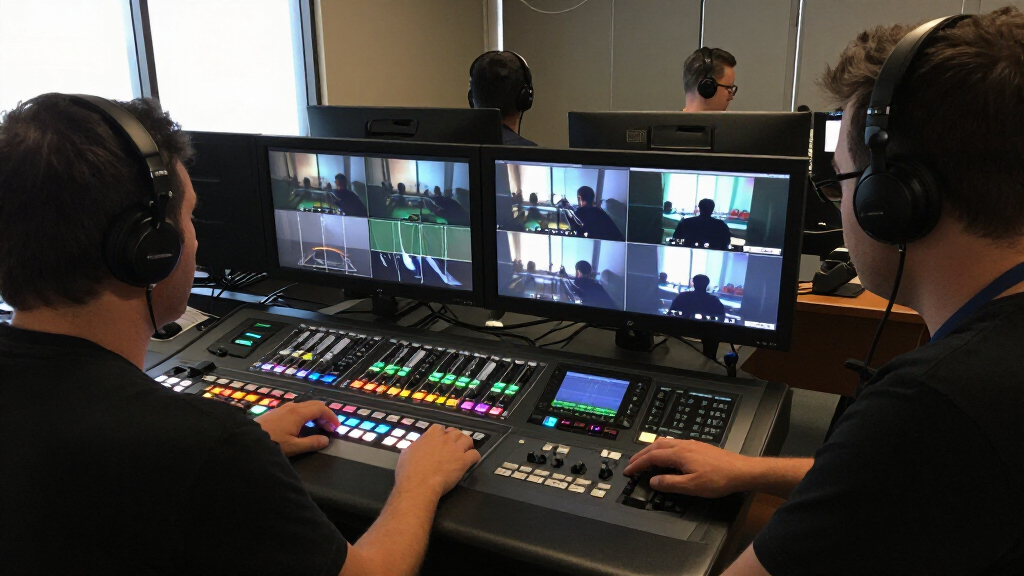
How We Picked
I compared these 14 video production switchers by how well their stated features support real production tasks: connecting common camera formats, switching sources reliably, handling streaming or recording needs, and giving an operator usable controls. I also weighed built-in screens, PTZ support, audio integration, portability, and the ability to grow into a more involved workflow. Those details matter because a switcher that fits the signal chain and crew is more useful than one with a longer feature list.
The ranking favors flexible production utility first, then clear advantages for a defined use case. That puts the Osee GoStream Duet 8 ISO ahead for teams that value isolated recordings, while the ATEM Mini Pro, Tenveo PC500, and other models rise for more specific setups. Compactness and ease of operation count, but they do not outweigh a mismatch in video connections or required recording features. I also account for tradeoffs: a device with audio tools or PTZ control can add value to the right show, but may be unnecessary for a simple multi-camera stream.
Factors to Consider When Choosing Video Production Switchers
Before choosing among video production switchers, map the job from camera output to audience or recording. A few setup decisions can prevent buying a model that has the wrong connectors, adds complexity your crew will not use, or leaves a needed recording step to another device.
Match inputs to your cameras and cable runs
Start with the outputs on every camera you plan to connect, including any cameras you may add later. HDMI is common in compact and creator setups, while SDI is often chosen for production systems with longer cable runs and more permanent infrastructure. A switcher accepting one format does not automatically make it compatible with the other, so check for native inputs or a converter in your signal plan. Converters add equipment, setup steps, and potential points of failure. Count the sources you need at once, not just the number of cameras you own. A spare input can be useful for a computer, graphics feed, or guest camera, but paying for unused capacity may not improve the show.
Choose a recording workflow before buying
A live program recording and separate recordings of each camera solve different problems. A program file is enough when the finished show goes out live with little editing; isolated recordings give an editor more freedom to change cuts, repair mistakes, or reframe the story afterward. ISO workflows can also place greater demands on storage, file handling, and post-production organization. Confirm what the switcher records, where files go, and how your editing setup will ingest them. A common mistake is to focus on live switching features and assume every model can record the source material you need. If someone else handles editing, ask that person what files and handoff process fit their workflow.
Separate switching from streaming requirements
Some productions need only clean switching and send the result to a computer or external encoder; others need the switcher itself to support a direct streaming path. These approaches place different demands on setup, troubleshooting, and network planning. Direct streaming can reduce the number of devices in the chain, but a computer-based workflow may suit teams already using software for titles, graphics, or remote guests. Check the required platform support and connection method rather than assuming that a device described as a live streaming switcher handles every online workflow. Also plan for a backup recording or alternate output if a live stream is a high-stakes event. Keeping switching, encoding, and recording roles clear makes failures easier to diagnose.
Decide how much control the operator needs
Touch screens, physical buttons, software control, and PTZ operation each suit different working styles. A solo presenter may value direct, visible controls and fewer devices, while a crew can divide switching, camera operation, and audio tasks across people. PTZ control has the most value when cameras are remotely operated; it adds little to a setup with fixed or manually operated cameras. Think through how the operator will find sources, trigger transitions, and recover from a wrong selection while the show is live. Controls that look convenient in a feature list can be harder to manage if they are too small, buried in menus, or unfamiliar to the team. Practice the full sequence, including the opening shot, graphics, and a fallback source, before a live event.
Treat audio as part of the signal plan
Decide whether audio will enter through cameras, a separate mixer, a computer, or an integrated production unit. Combining audio tools and video switching can reduce desk clutter for a small show, but it may be less flexible than keeping those jobs on separate equipment. Check how microphone signals, embedded camera audio, monitoring, and program output interact instead of assuming the switcher will mix every source as needed. A frequent misstep is buying for video inputs alone, then discovering that the show needs a separate audio interface or a different monitoring arrangement. If spoken audio is central to the production, test the complete chain with the microphones and headphones you intend to use. For music, remote guests, or several presenters, prioritize the audio workflow as highly as camera switching.
Plan for portability, setup time, and expansion
A compact switcher can make a travel kit easier to carry and faster to set up, but small controls and limited connection options may become a constraint as productions grow. A larger unit can support a more involved control surface or connection plan while taking up more space and requiring more operator familiarity. Consider where the device will live, how it will be powered, and whether the same system must move between a studio and event locations. Leave room in the plan for cabling, adapters, a monitor, and any encoder or recording media the switcher needs. Buying only for the current shoot can lead to a replacement when you add a computer feed or another camera. At the same time, expansion features are poor value if they complicate a simple show and will remain unused.
Frequently Asked Questions
Should I choose an HDMI or SDI video production switcher?
Choose based on the outputs of your cameras and the distances your cables need to cover. HDMI often fits compact desk setups and cameras that already provide HDMI, while SDI can suit installed systems and longer cable runs. If your sources use both formats, look for a switcher with the matching input mix or account for converters in the full setup. Converters add cost, cabling, and another device to troubleshoot, so native compatibility is usually simpler. Check the exact model’s input types rather than relying on the product family name.
Do I need ISO recording, or is a program recording enough?
A program recording captures the switched show as it was sent out, which works when you plan to publish the live cut with little revision. ISO recording saves camera feeds separately, giving an editor options to change cuts or use a different angle later. That flexibility is most useful when post-production is part of the plan, but it also means managing more files and storage. Before choosing, ask who will edit the material and what they need delivered. If no one will use the separate feeds, a simpler recording workflow may be the better fit.
Can one person operate a multi-camera live production?
Yes, but the number of sources is only part of the workload. The operator may also need to manage graphics, audio, streaming, camera movement, and recording, so simpler controls and a rehearsed shot plan can matter more than having every feature available. PTZ control can help with remotely operated cameras, but it also adds decisions during the show. Reduce live tasks by setting camera positions, titles, and audio levels in advance. For an important production, assigning a second person to audio or camera operation can reduce the chance of missed cues.
Is an all-in-one video switcher with audio tools better than separate devices?
An integrated unit can make a small presenter-led setup easier to transport and connect, since fewer separate devices may be needed. Separate video and audio equipment can provide more choice in how each part of the production is configured and upgraded. Neither approach is automatically simpler: an all-in-one device may have a learning curve, while separate components require more cabling and coordination. List every microphone, camera, computer feed, and monitoring need before deciding. The best fit is the system your operator can set up and troubleshoot confidently.
What should I check before taking a switcher to a live event?
Test the entire signal path using the same cameras, cables, display, audio gear, and streaming destination planned for the event. Confirm that every source appears correctly, the program output is usable, and any recording media or computer connection works as expected. Bring compatible spare cables and adapters, and know which source can serve as a fallback if a camera feed fails. Rehearse switching and audio checks with the person who will operate the system. A successful bench test can catch format or workflow mismatches before they disrupt a live show.
Conclusion
For a production team that needs post-production flexibility, I recommend the Osee GoStream Duet 8 ISO as the best overall, thanks to its focus on isolated camera recording. The Blackmagic Design ATEM Mini Pro is my best value-style pick for HDMI streaming setups that do not need the Duet’s ISO workflow, while the RØDE RØDECaster Video Professional is the best premium direction for buyers who want video switching alongside audio production tools. Beginners should favor a setup whose inputs and controls match their current cameras, rather than paying for features they must learn but may not use; the RGBlink Mini V3 offers a compact touch-screen approach worth comparing for that need. For mixed HDMI/SDI sources and remote camera operation, the Tenveo PC500 is the specific-fit choice. Check your camera outputs, recording plan, and operator workload against those roles before making the final pick.
Halloween Picks
halloween
As an affiliate, we earn on qualifying purchases.