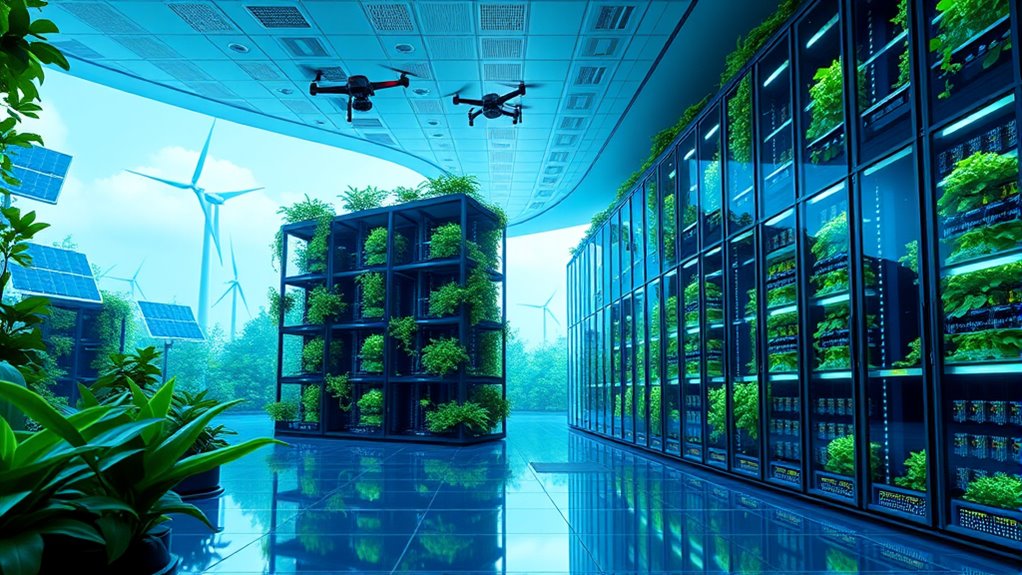

Future data centres will prioritize sustainability by harnessing renewable energy sources like solar and wind, reducing reliance on traditional grid power. Advanced cooling methods, such as liquid cooling and free cooling techniques, will cut energy costs and environmental impact. Smart AI and IoT systems will optimize energy use automatically, responding to changing demands. These innovations will create resilient, eco-friendly infrastructures that support increasing digital needs—keeping you ahead in building a sustainable, intelligent digital future.
Key Takeaways
- Future data centres will integrate renewable energy sources like solar and wind to power sustainable AI operations.
- Advanced cooling technologies, such as liquid and immersion cooling, will reduce energy consumption and environmental impact.
- AI and IoT will enable real-time optimization of energy and cooling systems for increased efficiency.
- Sustainable infrastructure will enhance resilience and lower operational costs through renewable and innovative cooling solutions.
- Emphasis on eco-friendly design will support scalable, energy-efficient AI workloads within environmentally responsible data centres.
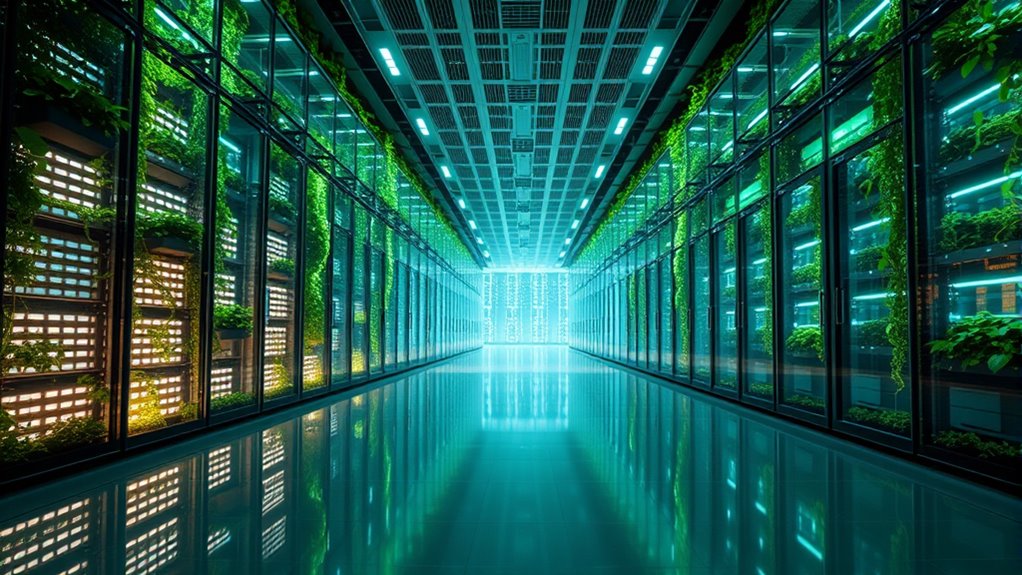
The data centres of the future will revolutionize how we store and manage information, driven by rapid technological advancements and growing demand for sustainable solutions. As you look ahead, you’ll notice that renewable energy plays a critical role in powering these facilities. Instead of relying solely on traditional grid electricity, future data centres will harness solar, wind, and other renewable sources, drastically reducing their carbon footprint. This shift isn’t just environmentally responsible; it also guarantees more reliable and cost-effective energy supply, helping data centres operate continuously without interruptions. You’ll see that integrating renewable energy requires innovative planning, such as onsite solar farms or partnerships with local wind farms, making these centres more autonomous and resilient.
Future data centres will rely on renewable energy, reducing carbon footprint and boosting resilience through innovative integration.
Cooling innovations will be equally essential in shaping the future of data centres. Traditional cooling methods consume enormous amounts of energy, often accounting for a substantial portion of operational costs. To address this, new cooling technologies will emerge, focusing on efficiency and sustainability. You might encounter liquid cooling systems that directly target heat-generating components, reducing energy waste. Free cooling techniques, which leverage ambient air temperatures, will minimize the need for mechanical refrigeration, further lowering energy consumption. Additionally, innovative designs like immersion cooling and modular cooling units will allow data centres to adapt quickly to changing demands while maintaining ideal operating temperatures. These cooling innovations will not only cut costs but also greatly diminish environmental impact, aligning with the broader goal of creating greener infrastructure.
In the future, data centres will also embrace smarter, more adaptable systems that optimize energy use in real time. With the integration of AI and IoT technologies, cooling and energy systems will become more responsive, automatically adjusting to workload fluctuations and external environmental conditions. This dynamic approach will enhance efficiency and reduce waste. You’ll find that these advancements are driven by the necessity to meet increasing data demands while adhering to stricter sustainability standards. Moreover, advancements in sound design techniques and tools can contribute to quieter, more energy-efficient data centre environments, supporting healthier working conditions and reducing noise pollution. The combination of renewable energy sources and cutting-edge cooling innovations creates a powerful synergy—making data centres more environmentally friendly, cost-effective, and capable of supporting the growing digital economy.
Ultimately, the future of data centres hinges on sustainable practices that balance technological progress with environmental responsibility. By prioritizing renewable energy and cooling innovations, you’ll see data centres evolve into energy-efficient, resilient hubs that serve the world’s digital needs today and tomorrow. This transformation isn’t just about keeping up with technology—it’s about leading the way toward a more sustainable, smarter digital infrastructure for generations to come.
solar powered data center equipment
As an affiliate, we earn on qualifying purchases.
As an affiliate, we earn on qualifying purchases.
Frequently Asked Questions
What Emerging Technologies Will Most Impact Sustainable AI Infrastructure?
You’ll see edge computing and quantum computing transform sustainable AI infrastructure markedly. Edge computing reduces data transfer and energy use by processing data closer to users, making operations more efficient. Quantum computing promises to optimize complex AI algorithms with less power, cutting down resource consumption. Together, these technologies will make AI infrastructure more eco-friendly, scalable, and capable of supporting future innovations without harming the environment.
How Can AI Optimize Data Centre Energy Efficiency?
You can optimize data centre energy efficiency by leveraging AI cooling systems that adapt in real-time, reducing power consumption. Simultaneously, server virtualization minimizes hardware needs, cutting energy waste. While hardware demands grow, AI-driven insights guarantee cooling and resource use stay optimized. This juxtaposition of advanced AI cooling and virtualization creates a smarter, greener infrastructure, lowering costs and environmental impact without sacrificing performance.
What Are Cost Implications of Sustainable Data Centre Solutions?
You’ll find that sustainable data centre solutions involve higher initial investments, but they often lead to significant cost savings over time through reduced energy bills and improved efficiency. Conducting a thorough cost analysis helps you weigh upfront costs against long-term benefits. Implementing smart investment strategies guarantees you allocate resources effectively, balancing environmental sustainability with economic viability, ultimately making your data centre more resilient and cost-efficient in the future.
How Will Future Policies Influence Data Centre Sustainability Practices?
Future policies will considerably influence your data centre sustainability practices by driving policy shifts and establishing stricter regulatory frameworks. These changes will push you to adopt greener technologies, improve energy efficiency, and reduce environmental impact. You’ll need to stay adaptable and proactive, leveraging new regulations as opportunities to innovate. Ultimately, evolving policies will shape your strategies, ensuring your data centre remains compliant, sustainable, and forward-looking in a rapidly changing regulatory landscape.
What Role Do Renewable Energy Sources Play in Future AI Infrastructure?
Did you know that renewable energy sources account for over 40% of global electricity generation? In future AI infrastructure, renewable integration is essential, as it reduces carbon footprints and enhances sustainability. You’ll see more data centers adopting green energy solutions like solar and wind power, making AI operations cleaner and more eco-friendly. By embracing renewable energy, you help create a sustainable tech future that benefits both the environment and your business.

Dynatron L29 All in One Liquid Cooler for AMD sWRX8/sTRX4/TR4/SP3 Socket 1U Server &Up
All in One Liquid Cooler
As an affiliate, we earn on qualifying purchases.
As an affiliate, we earn on qualifying purchases.
Conclusion
As you envision the data centres of the future, see them as the heartbeat of a sustainable world—pulsing with green energy and innovative AI. These centers symbolize hope, transforming how we store and process information responsibly. By embracing this future, you’re not just supporting technology; you’re nurturing the planet’s essentiality. Together, let’s turn these symbols of progress into realities, ensuring a brighter, greener tomorrow for generations to come.

Liquid Cooling for Data Centers: Design, Implementation, and Optimization for Sustainable Computing
As an affiliate, we earn on qualifying purchases.
As an affiliate, we earn on qualifying purchases.

Environmental Monitoring with AI and IoT: Smart Systems for a Sustainable Future
As an affiliate, we earn on qualifying purchases.
As an affiliate, we earn on qualifying purchases.