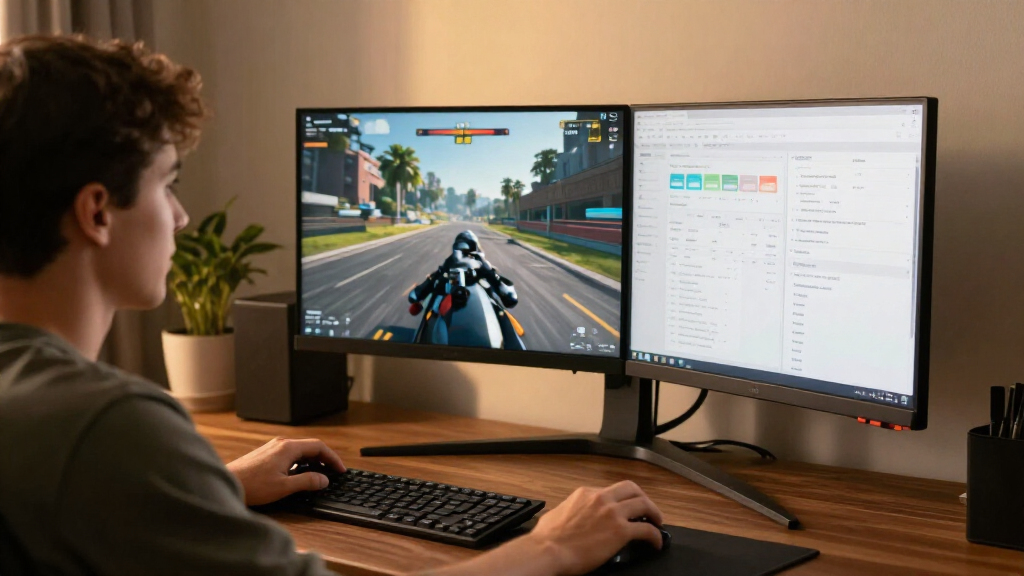

🔍 Read the full analysis: Explore 9 Ultrawide Monitors For Gaming And Productivity In 2027 on ThorstenMeyerAI.com

Get everyday essentials delivered free with Prime
- Fast, free delivery on millions of items
- Prime Video, Amazon Music and more included
- Member-only deals all year
TL;DR
ThorstenMeyerAI.com’s 2027 guide compares nine ultrawide monitors for gaming and productivity, highlighting the Dell S3425DW for mixed-use versatility and Samsung’s Odyssey G9 for its 49-inch Dual QHD workspace. The guide also points to tradeoffs in desk depth, panel type, refresh rate and connectivity; prices and independent test results are not provided in the supplied material.
ThorstenMeyerAI.com’s 2027 guide compares nine ultrawide monitors for gaming and productivity, naming the Dell S3425DW its best overall pick for combining a 120Hz refresh rate with USB-C connectivity. The guide also singles out the Samsung 49-inch Odyssey G9 for its broad Dual QHD workspace, while warning that its pronounced curve can make it a poor fit for shallow desks.
The guide frames the main buying choice, as discussed in the original analysis, as a balance between immersive screen size and practical fit. It says 34-inch WQHD models can offer a middle ground between screen space and graphics demands, while the 49-inch Samsung’s 5120-by-1440 resolution creates a much wider workspace and can call for more capable gaming hardware, as explored in this ultrawide monitor roundup.
For laptop users, the guide favors the Dell S3425DW’s USB-C hub and power delivery, which it says can reduce cable clutter. It identifies the CRUA 34-inch WQHD as a lower-cost option with a high refresh rate, and says budget monitors from CRUA and Sceptre offer rates between 165Hz and 180Hz but may compromise on color uniformity and stand adjustment, tradeoffs also relevant to high-refresh-rate gaming monitors.
The other models named in the source are the LG 34-inch WFHD IPS and Sceptre ultrawides, but it does not supply a complete nine-model list or individual specifications for every pick. It describes LG’s white chassis and IPS panel as distinctive, with wide viewing angles that may suit design work. The source does not include prices, testing methods, or measured color results.
The 9 picks
- 1
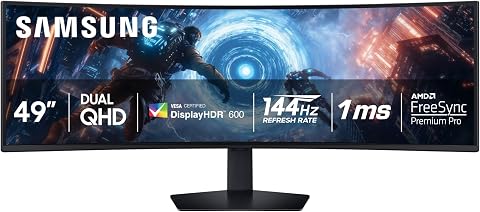 Samsung 49-Inch Odyssey G9 Curved Dual QHD Gaming Monitor, 144Hz, FreeSync Pr…View on Amazon →
- 2
 Z-Edge UG49W 49-Inch Curved Ultrawide Monitor, 5120×1440, 165HzView on Amazon →
- 3
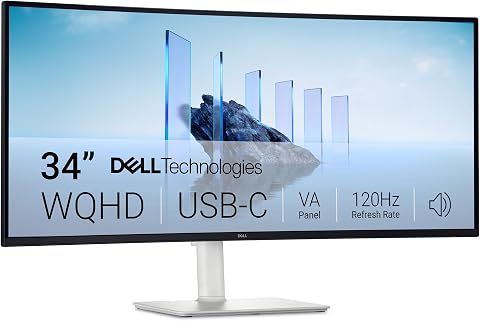 Dell 34 Plus USB-C Curved Monitor (S3425DW) – 34" WQHD, 120Hz, FreeSync PremiumView on Amazon →
- 4
 LG 34WR55QK-B 34-Inch Curved UltraWide WQHD MonitorView on Amazon →
- 5
 Samsung 34-inch ViewFinity S50GC Ultra-WQHD MonitorView on Amazon →
- 6
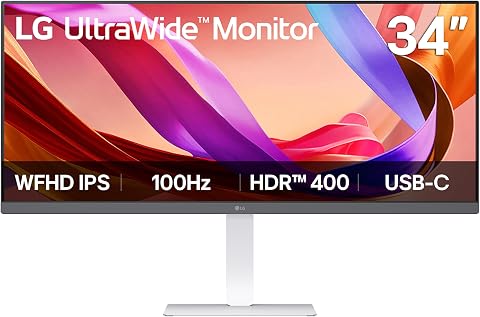 LG 34-inch UltraWide WFHD IPS Monitor, 100Hz, DisplayHDR 400, USB-C, HDMI and…View on Amazon →
- 7
 SANSUI 34-Inch Curved UWQHD Gaming Monitor (3440 x 1440, 200Hz)View on Amazon →
- 8
 CRUA 34-inch WQHD 165Hz Ultrawide Curved Gaming Monitor (1500R, FreeSync)View on Amazon →
- 9
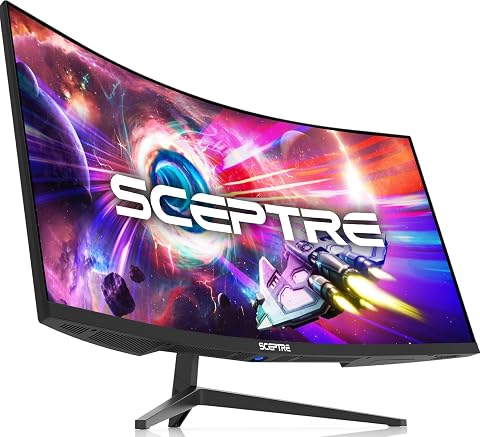 Sceptre 34-inch Curved Ultrawide WQHD Monitor (3440 x 1440), 180Hz, 1ms, Disp…View on Amazon →
Choosing Between Desk Space and Screen Space
The comparison matters because an ultrawide can change both a gaming setup and a work desk, but the largest display is not automatically the best fit. A 49-inch screen can provide room for side-by-side windows, yet its footprint and resolution may be demanding. A 34-inch model may be easier to accommodate and less taxing on a gaming PC.
Connectivity and ergonomics also affect daily use. A monitor with USB-C power delivery may simplify a laptop workstation, while a limited stand can make long sessions less comfortable. The guide’s emphasis on panel type and curve helps readers match features to tasks rather than treating refresh rate or screen size as the only measures of value.
Products Worth Considering

Jackery Explorer 300 Portable Power Station with 40W Solar Panel, 292Wh

Logitech MX Keys S Combo Wireless Keyboard and Mouse, Graphite

Apple Watch Series 12 GPS 42mm Smartwatch
As an affiliate, we earn on qualifying purchases.
The Features Behind the Rankings
The source says its comparison weighs refresh rate and response time for gaming, alongside color coverage, connectivity and panel type for productivity. It characterizes VA panels as offering higher contrast, with a possible downside of dark-motion smearing, while IPS panels can provide wider viewing angles but less deep blacks. These are general panel tradeoffs described by the guide, not results from independently reported tests in the supplied material.
Curvature is another dividing line: the guide associates 1000R to 1500R curves with a more enveloping gaming feel and flatter curves with less distortion for spreadsheet or design work. It also recommends checking desk depth and stand movement before buying. Its stated selection approach considers height, tilt and swivel adjustment, as well as value, but the source gives no product-by-product scoring or prices.
“The primary tradeoff usually lies between immersion and practical desk space.”
— ThorstenMeyerAI.com guide
Missing Model and Test Details
The supplied source does not identify all nine monitor models by full name, despite the guide’s title promising nine picks. It also provides no prices, publication date, links to product listings, measurement data or detailed testing results to verify comparisons such as color uniformity and value.
It is also unclear which exact configurations are being compared, since monitor specifications can vary by region or model version. The source mentions power delivery as a useful feature but does not state the Dell’s wattage, and it does not provide model-specific input lists or stand measurements. Readers should check current manufacturer specifications and retailer listings before making a purchase.
Verify Specifications Before Buying
The guide offers a shortlist and selection criteria, but the next step for readers is to compare current prices and exact model numbers against manufacturer information. Buyers should confirm resolution, refresh rate, adaptive-sync support, USB-C power delivery, stand adjustment and physical dimensions for the configuration available to them.
No follow-up testing or additional publication is announced in the supplied material. Until more detail is available, the rankings should be treated as the source’s recommendations rather than a fully documented, independently verified comparison.
Key Questions
Which monitor does the guide recommend overall?
ThorstenMeyerAI.com names the Dell S3425DW its best overall choice, citing its 120Hz refresh rate and USB-C hub. The supplied source does not provide independent test results or current pricing.
What is the main drawback of the Samsung Odyssey G9?
The guide says the 49-inch Odyssey G9 offers a 5120-by-1440 Dual QHD workspace, but its pronounced curvature may require a deeper desk. Its high resolution may also demand more from a gaming computer.
Which lower-cost options does the guide name?
It points to the CRUA 34-inch WQHD and Sceptre models, describing refresh rates in the 165Hz-to-180Hz range. It also warns of possible tradeoffs in color uniformity and stand adjustment.
Does the source list all nine monitors?
No. The supplied material names the Dell, Samsung, CRUA and an LG 34-inch WFHD IPS model, and refers to Sceptre picks, but it does not provide a complete list of nine distinct models.
What should buyers check before choosing an ultrawide?
Check the monitor’s dimensions, resolution, refresh rate, panel type, connectivity and stand adjustment, along with the desk space and computer hardware needed to use it. Laptop users may also want to confirm USB-C power delivery and its wattage.
Source: ThorstenMeyerAI.com