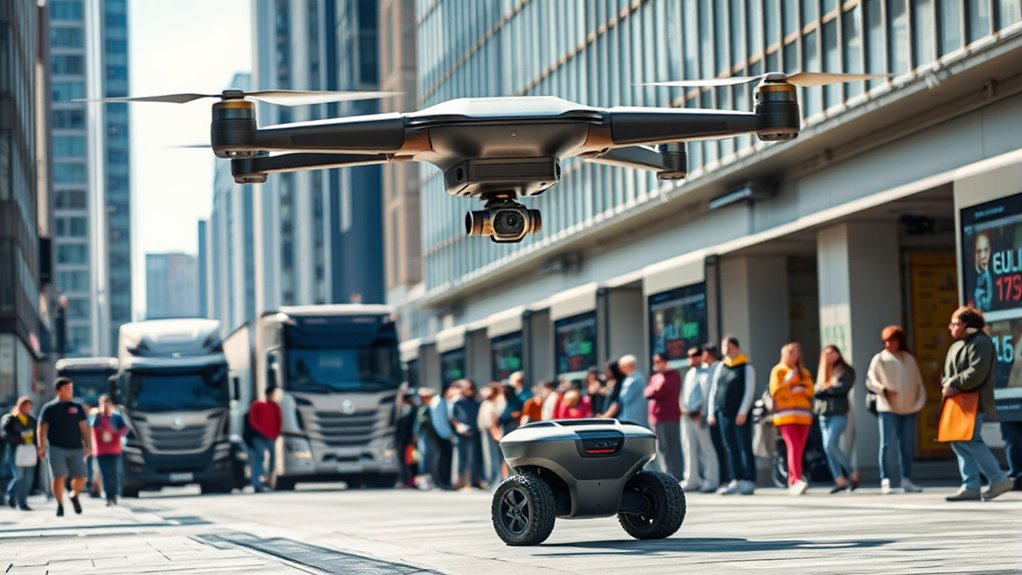

AI is transforming supply chain logistics by powering autonomous deliveries, making last-mile operations faster, more reliable, and cost-efficient. With AI-driven route optimization, real-time traffic and weather analysis, and autonomous vehicles or drones, you can better meet customer demands and navigate disruptions effectively. These advancements reduce reliance on human drivers, improve delivery predictability, and enhance supply chain resilience. To discover how these innovations are shaping the future of logistics, continue exploring this exciting topic.
Key Takeaways
- AI optimizes last-mile delivery routes, reducing costs and improving speed through predictive analytics and real-time traffic data.
- Autonomous vehicles and drones enable scalable, efficient, and safe delivery operations, minimizing human driver dependency.
- Warehouse automation with AI-driven robots streamlines inventory management and package sorting, accelerating order processing.
- AI enhances supply chain resilience by anticipating disruptions and dynamically adjusting logistics plans.
- Continuous AI advancements improve responsiveness, enabling companies to meet customer expectations with reliable autonomous deliveries.
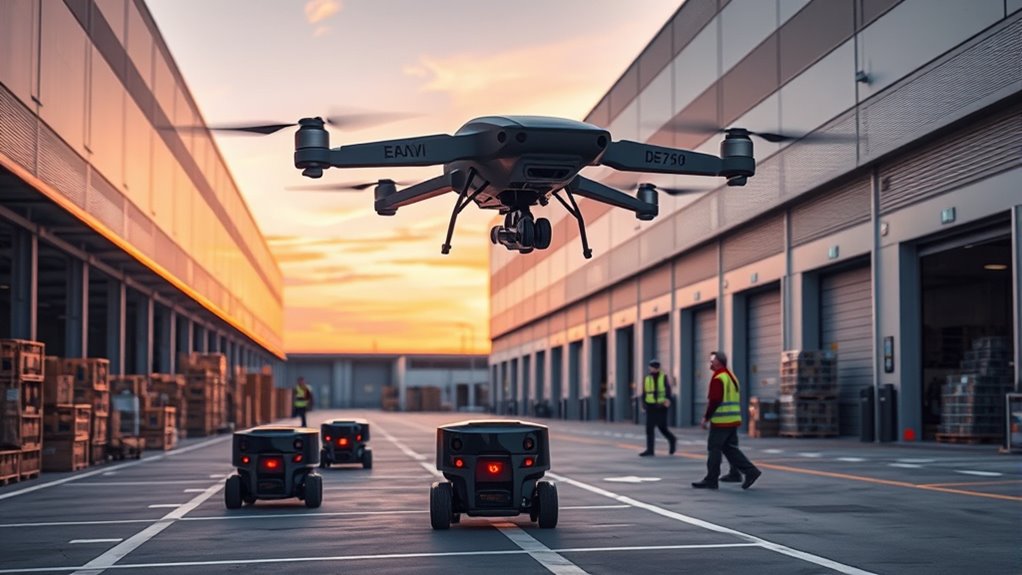
Artificial Intelligence is transforming supply chain logistics by enabling companies to optimize operations, improve forecasting accuracy, and respond more swiftly to market changes. One of the most significant advancements is the integration of autonomous deliveries, which leverage AI-powered systems to streamline the movement of goods from warehouses to customers. At the core of this transformation is warehouse automation, where AI-driven robots and automated systems work together to manage inventory, sort packages, and prepare shipments with minimal human intervention. This automation reduces errors, accelerates processing times, and cuts operational costs, allowing you to handle higher volumes of orders more efficiently.
Predictive analytics plays a crucial role in autonomous deliveries by forecasting demand patterns, optimizing delivery routes, and anticipating potential disruptions. By analyzing historical data, traffic conditions, weather forecasts, and other variables, AI systems can determine the most efficient routes for autonomous vehicles or drones, ensuring faster deliveries and lower fuel consumption. This proactive approach lets you stay ahead of logistical challenges, minimize delays, and improve customer satisfaction. As these systems become more sophisticated, they learn from new data, constantly refining their predictions and route planning, which means your delivery network becomes more reliable over time.
Autonomous delivery vehicles—whether drones, self-driving trucks, or robots—are transforming last-mile logistics, which is often the most complex and costly part of the supply chain. These vehicles operate based on AI algorithms that enable them to navigate safely through urban environments, avoid obstacles, and adapt to changing conditions. Warehouse automation feeds into this ecosystem by ensuring that goods are ready to be dispatched at a moment’s notice, with AI systems scheduling pickups and deliveries in real time. This seamless coordination allows your supply chain to be more agile, capable of fulfilling urgent or same-day orders without the delays associated with traditional methods.
Furthermore, AI-driven autonomous deliveries reduce the dependency on human drivers, addressing labor shortages and safety concerns. They provide a consistent, predictable delivery schedule that can be scaled up or down depending on demand. As AI tools continue to evolve, they’ll increasingly incorporate real-time data to adjust routes dynamically, respond to traffic congestion, and reroute deliveries if necessary. This level of responsiveness ensures your logistics operations are not only faster but also more resilient against unforeseen disruptions. In addition, vetted solutions ensure that these autonomous systems meet safety and reliability standards, which is crucial for maintaining operational integrity.
In short, by harnessing warehouse automation and predictive analytics, you can optimize your autonomous delivery strategies, stay competitive in a fast-changing market, and deliver exceptional service to your customers.
Frequently Asked Questions
What Are the Legal Regulations for Autonomous Delivery Vehicles?
You need to understand that legal regulations for autonomous delivery vehicles mainly focus on liability frameworks and privacy regulations. Liability frameworks determine who’s responsible if the vehicle causes an accident, which varies by jurisdiction. Privacy regulations protect user data collected during deliveries, ensuring companies handle it responsibly. You should stay updated on local laws and standards to guarantee compliance, as these regulations are evolving alongside autonomous vehicle technology.
How Do Autonomous Deliveries Handle Complex Urban Environments?
You navigate complex urban environments with autonomous delivery vehicles by relying on advanced urban navigation systems that map and adapt to dynamic city layouts. These vehicles use sophisticated obstacle detection sensors to identify pedestrians, vehicles, and other obstacles, ensuring safe and efficient deliveries. By continuously updating their surroundings in real-time, they can maneuver through tight streets, avoid hazards, and reach destinations accurately without human intervention.
What Cybersecurity Risks Are Associated With Ai-Powered Logistics?
You’re sailing close to the wind with AI-powered logistics, facing cybersecurity threats that can compromise your data privacy. Hackers might target autonomous delivery systems, leading to theft or disruption. These risks include malware, data breaches, and unauthorized access. To stay afloat, implement strong security measures like encryption and regular updates. Remember, a fortress around your data is key to preventing breaches and safeguarding your supply chain’s integrity.
How Do Autonomous Systems Adapt to Supply Chain Disruptions?
You can rely on autonomous systems to adapt to supply chain disruptions through dynamic routing and real-time adaptation. When disruptions occur, these systems analyze current data, identify alternative routes, and adjust delivery plans on the fly. This rapid response helps you minimize delays, optimize resources, and maintain efficient operations despite unforeseen issues, ensuring your supply chain stays resilient and responsive in a constantly changing environment.
What Is the Environmental Impact of Autonomous Delivery Fleets?
You’ll find that autonomous delivery fleets can positively impact the environment by promoting sustainable practices and reducing pollution. These fleets often use electric vehicles, cutting down emissions compared to traditional trucks. By optimizing routes and delivery schedules, they lower fuel consumption and traffic congestion. Overall, autonomous deliveries can help you contribute to a cleaner planet, making logistics more eco-friendly and supporting the broader goal of sustainability.
Conclusion
You can confidently capitalize on AI’s capabilities, creating a connected, clever, and cost-efficient supply chain. By embracing autonomous deliveries, you’ll streamline shipments, surpass standards, and stay ahead of the competition. With wisdom in automation and wit in workflows, you’ll witness the wonderful way AI transforms your logistics landscape. So seize this sustainable, smart, and scalable solution—success is just a smart step away!