📊 Full opportunity report: A Simple Way To Manage Phone-Free Venue Operations on IdeaNavigator AI — validation score, market gap, and execution plan.

Get everyday essentials delivered free with Prime
- Fast, free delivery on millions of items
- Prime Video, Amazon Music and more included
- Member-only deals all year
TL;DR
IdeaNavigator AI has proposed a software tool to help phone-free venues manage check-in, pouch inventory, exceptions and emergency unlocks. The proposal calls for pilots at five venues and three schools; no product launch, pilot results or adoption have been reported.
IdeaNavigator AI has proposed a software tool for operators of phone-free shows, comedy clubs, schools and courts that use locked phone pouches, with a suggested pilot at five venues and three schools. The proposal targets the operational work around pouch systems, including check-in, exceptions and emergency access; it does not report that a product has been built or that pilots have begun.
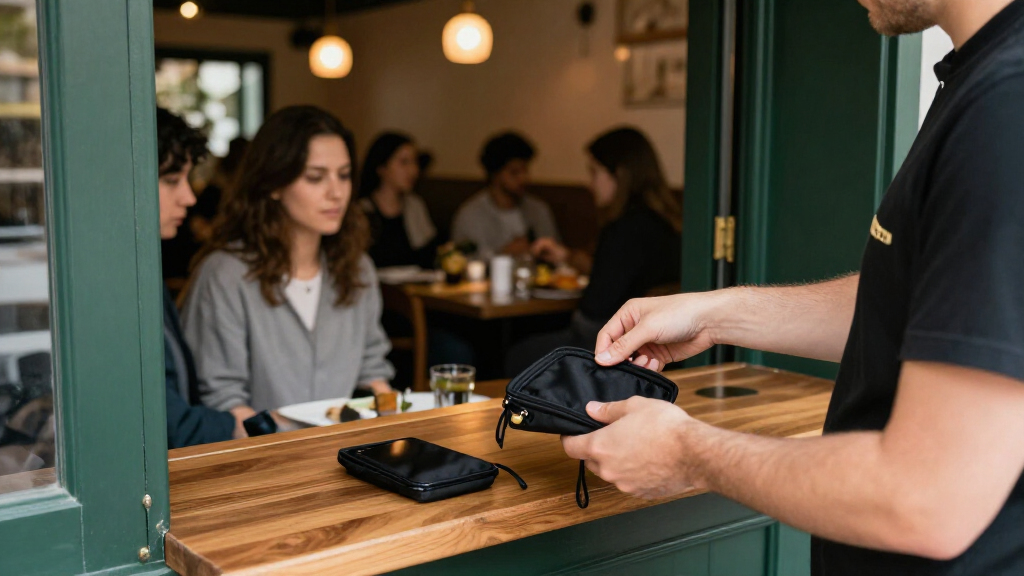
The proposed tool would bring several tasks into one operational workflow: check-in and exception records, pouch inventory tracking, designated emergency-unlock stations and post-event reports. The exception registry is intended to cover cases such as medical needs or people who must remain on call. The proposal says the software should work alongside different pouch systems rather than depend on one hardware provider.
For emergency unlocks, the concept includes stations where staff could open a pouch and record the reason. The proposal does not specify who would be authorized to approve an unlock, what verification would be required, or how a venue would handle urgent situations while preserving privacy. Those details would need to be established by operators before deployment.
IdeaNavigator AI suggests testing the workflow against venues’ current improvised processes, measuring exception-handling time and the completeness of incident logs. It also identifies per-event or per-site subscriptions as possible pricing approaches. These are recommendations in a product proposal, not confirmed features, commercial terms or results from customer trials.
Reducing Friction at Phone-Free Events
Phone restrictions can add work for staff beyond collecting and securing devices. Operators may have to account for pouches, address exceptions, respond to requests for access and manage movement back into a venue. A software workflow could give staff a consistent record of those tasks and make operational gaps easier to identify.
The proposal’s focus on time to handle exceptions and incident-log completeness makes its intended value measurable. If a pilot found that the tool reduced delays or improved records compared with existing procedures, operators could use that evidence when deciding whether to adopt it. No such outcome is available yet, and the proposal provides no cost, staffing or customer data to show whether the approach would be worthwhile.
For attendees, the operational details may affect how smoothly phone restrictions are applied, particularly when someone has a legitimate need for access or must leave and return. A system that records decisions could support consistency, but it would also need clear rules for access to sensitive exception and incident information.
Products Worth Considering

Jackery Explorer 300 Portable Power Station, 292Wh

Anker SOLIX C1000 Gen 2 Portable Power Station with 200W Solar Panel

DJI Osmo 360 Road Cycling First-Person Combo Action Camera
As an affiliate, we earn on qualifying purchases.
Pouch Systems Need Staff Procedures
The idea is aimed at organizations that already use lockable phone pouches at events or in institutional settings. Its stated audience includes live shows, comedy clubs, schools and courts. The proposal describes staff relying on improvisation for problems such as lost pouches, medical exceptions, emergency unlocks and re-entry lines.
It frames demand as growing alongside phone-free policies in schools, comedy tours and courtrooms. However, it supplies no adoption figures, named customers or market research to quantify that expansion. The proposed product is an operations layer around existing hardware, not a new pouch or a policy requiring organizations to ban phones.
Pilot Results and Safeguards Pending
No pilot results are reported, and it is not clear whether any venues or schools have agreed to participate. The proposal does not give a development timeline, a product name, a budget or evidence that operators have tested demand.
Several practical questions also remain open: how staff would verify and approve exceptions, who could access incident records, how long those records would be retained, and what the process would be during a medical emergency. The suggested measures—handling time and log completeness—are not accompanied by target benchmarks or a method for comparing sites. Until those points are addressed, the concept’s operational and privacy effects cannot be assessed.
Testing the Workflow at Sites
The next step proposed by IdeaNavigator AI is a pilot across five venues and three schools, comparing the tool with each site’s current process. The suggested evaluation would track how long staff take to handle exceptions and whether incident records are complete. The proposal gives no dates or confirms that a pilot is underway.
If operators take part, the results could show whether a shared workflow fits different settings and pouch systems, and whether the measures capture improvements that matter to staff and attendees. Further decisions would include how emergency approvals work, what data is stored, and whether pricing per event or per site fits customers’ operations. Until those decisions and test results are available, the tool remains a proposed product opportunity rather than an established service.
Source: IdeaNavigator AI
Key Questions
What is the proposed phone-free venue tool?
It is a proposed software workflow for managing check-in, pouch inventory, exceptions, emergency unlocks and post-event reports at organizations that use phone pouches.
Has the tool launched or been tested?
The proposal does not report a launch or completed tests. It recommends a pilot at five venues and three schools, but does not say whether participants have signed on.
How would the proposed pilot be evaluated?
IdeaNavigator AI suggests measuring the time needed to handle exceptions and how complete incident logs are, comparing the results with each site’s current improvised process.
How might the tool make money?
The proposal lists per-event or per-site subscriptions as possible pricing models. It provides no prices or finalized business terms.
Source: IdeaNavigator AI